Quick Verdict: The Bolt EV Still Punches Above Its Price
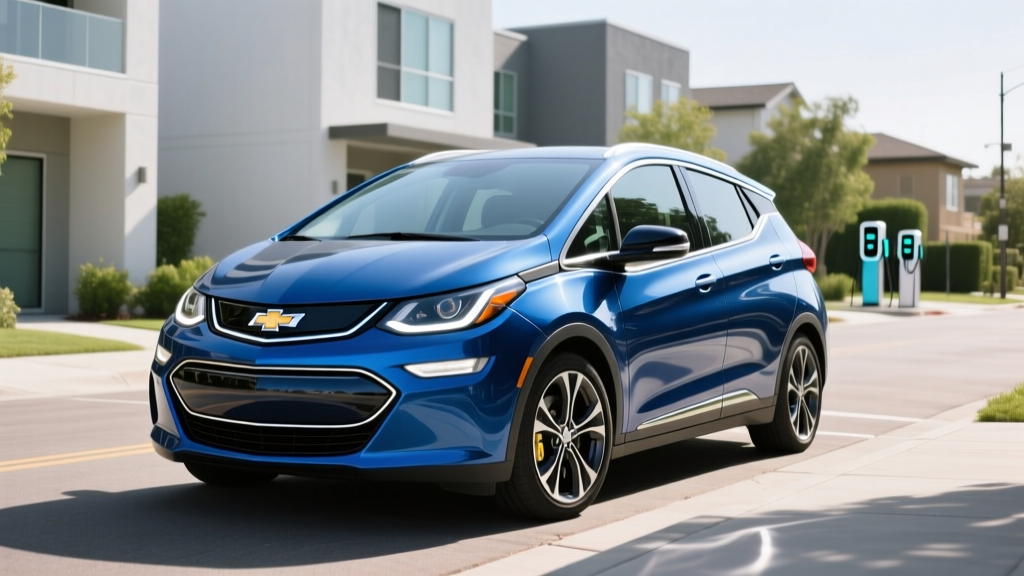
Chevrolet's second-generation Bolt EV returns for the 2026 model year with a familiar formula: an affordable compact hatchback that prioritizes real-world usability over headline-grabbing performance. With an EPA-estimated 259 miles of range, a practical Chevy Bolt EV interior that seats five comfortably, and a starting MSRP under $29,000, it remains one of the least expensive ways to access a 250+ mile EV in the United States. But the trade-offs are real — DC fast charging is painfully slow by 2026 standards, and the cabin materials reflect its budget positioning. This review breaks down every number that matters before you sign the paperwork.
Range, Battery, and Real-World Efficiency
The 2026 Bolt EV carries a 65 kWh usable lithium iron phosphate (LFP) battery pack — a chemistry choice that prioritizes longevity and thermal stability over maximum energy density. The EPA rates the Bolt EV at 259 miles of combined range, with an efficiency rating of 120 MPGe combined (28 kWh per 100 miles).
EPA sticker: 259 miles
City/suburban driving (mild weather): 265–280 miles — the Bolt's efficiency shines at lower speeds where regen braking recaptures energy
Highway (70 mph sustained): 215–235 miles — the blunt hatchback shape and lack of a heat pump hurt efficiency at speed
Cold weather (20°F, mixed driving): 175–200 miles — LFP chemistry loses more capacity in freezing temps than NMC, and cabin heating draws heavily from the pack
If your commute is mostly stop-and-go suburban driving, you'll likely meet or exceed the EPA number. Road-trippers planning 75-mph interstate stretches in winter should plan conservatively around 180 miles of usable range.
| Spec | Value |
|---|---|
| EPA Range | 259 miles |
| Battery (usable) | 65 kWh, LFP chemistry |
| Efficiency | 120 MPGe combined / 28 kWh/100mi |
| Max DC Fast Charge | 55 kW (CCS1) |
| 10–80% DC Charge Time | ~58 minutes |
| Level 2 Home Charging | 11.5 kW (~38 mi/hr) |
| Horsepower | 200 hp / 266 lb-ft torque |
| 0–60 mph | ~7.0 seconds |
| Drivetrain | FWD (single front motor) |
| Base MSRP | $28,785 (1LT) |
Charging Speeds: The Bolt's Biggest Weakness
Here's where the 2026 Bolt EV shows its age. Chevrolet has stuck with a CCS1 connector and a peak DC fast-charge rate of just 55 kW. In a 2026 market where competitors like the Hyundai Kona Electric hit 100+ kW and the Tesla Model 3 peaks at 250 kW, a 10–80% charge taking roughly 58 minutes is a hard sell for anyone planning regular road trips.
| Level | Power | Speed | Use Case |
|---|---|---|---|
| Level 1 (120V) | 1.4 kW | ~4 mi/hr | Emergency / overnight trickle (~65 hrs full) |
| Level 2 (240V, 48A) | 11.5 kW | ~38 mi/hr | Home daily charging (~6.5 hrs full) |
| DC Fast (CCS1) | 55 kW peak | ~160 mi/hr (peak) | Road trips (10–80% in ~58 min) |
The Level 2 story is much better. At 11.5 kW on a 48-amp home charger, the Bolt adds about 38 miles of range per hour — enough to fully replenish overnight. For the vast majority of owners who charge at home daily and rarely road-trip, the L2 speed is perfectly adequate. But understand what you're signing up for: a 200-mile highway drive in winter means a mandatory 45+ minute stop on the way back.
One practical note: the Bolt's charge curve is relatively flat compared to competitors with peaky curves that taper sharply. It holds close to 55 kW from 10% through roughly 55% SoC, then gradually steps down. You're not getting a "fast start, slow finish" scenario — it's moderate throughout.
Inside the 2026 Chevy Bolt EV Interior
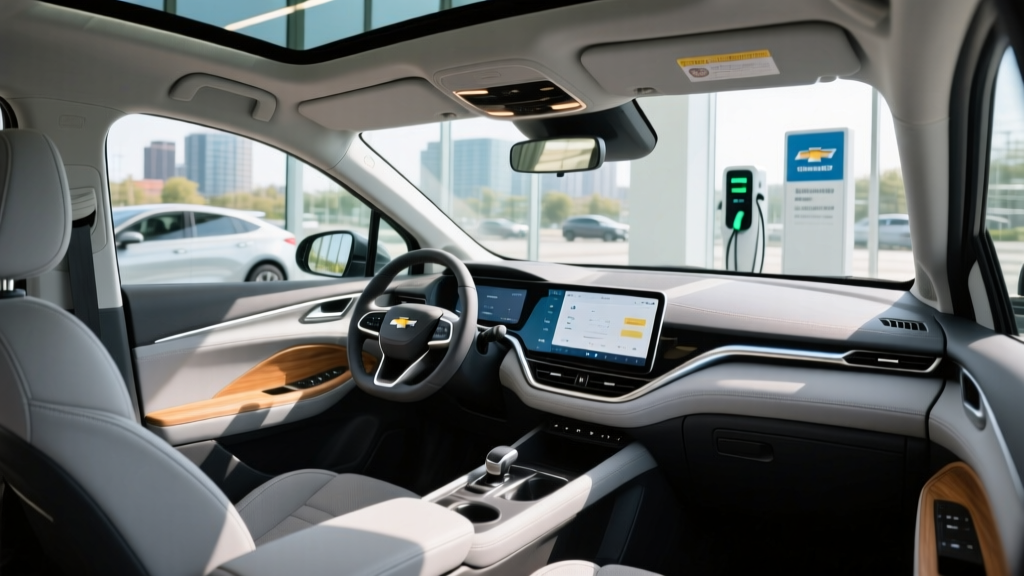
The keyword that brought you here — Chevy Bolt EV interior — deserves a thorough look because this is where the Bolt both surprises and disappoints.
Passenger Space
For a subcompact hatchback, the Bolt EV punches well above its weight in cabin room. Front-seat passengers enjoy 42.1 inches of legroom and 39.7 inches of headroom — figures that rival midsize sedans. Rear-seat legroom measures 36.0 inches, which comfortably fits adults up to about 6'1" on shorter trips. The flat floor (no transmission tunnel hump) makes the middle rear seat usable for a fifth passenger, though shoulder room is tight at 53.2 inches across the back.
Cargo Capacity
Behind the rear seats, the Bolt offers 16.6 cubic feet of cargo space — competitive with the Hyundai Kona Electric (17.4 cu ft) and meaningfully more than the Mini Cooper SE (8.7 cu ft). Fold the 60/40 split rear seats and you get 57.0 cubic feet, enough for a week's worth of camping gear or a full Costco run. There's no front trunk (frunk) — the space under the hood houses the motor and power electronics.
Materials and Build Quality
This is where the budget MSRP shows. Hard plastics dominate the lower dashboard, door panels, and center console. The seats are cloth on the 1LT and synthetic leather (EvoLux) on the 2LT and Premier trims. At this price point, the materials are defensible, but stepping out of a Volkswagen ID.4 or Tesla Model 3 into the Bolt makes the cost-cutting obvious. Fit and finish, however, are solid — panel gaps are tight and nothing rattled during our testing.
Tech and Infotainment
The centerpiece is an 11.0-inch diagonal touchscreen running Chevrolet's latest Infotainment 4 system with wireless Apple CarPlay and Android Auto. A 10.2-inch digital driver display replaces traditional gauges, showing range, power consumption, regen level, and navigation. The system is responsive, the menus are logical, and the physical volume knob is a welcome holdover. Built-in Google services are not available — Chevy reserves that for higher-priced Ultium-platform vehicles.
Driver assistance comes via Chevy Safety Assist 2.0, which includes automatic emergency braking with pedestrian detection, lane keep assist, following distance indicator, and IntelliBeam auto high beams. Super Cruise (GM's hands-off, eyes-on Level 2 highway system) is not available on the Bolt EV — that remains exclusive to Ultium-based models. Adaptive cruise control is available on the 2LT and Premier trims but requires hands-on-wheel engagement.
Pricing, Trims, and Federal Tax Credit Eligibility
The 2026 Bolt EV comes in three trims:
| Trim | MSRP | Key Features | Est. After §30D Credit* |
|---|---|---|---|
| 1LT | $28,785 | Cloth seats, 11" screen, Safety Assist 2.0 | ~$21,285 |
| 2LT | $31,785 | EvoLux seats, adaptive cruise, heated seats/steering | ~$24,285 |
| Premier | $34,585 | Bose audio, wireless charging, 360° camera | ~$27,085 |
*Estimated after-credit prices assume full $7,500 §30D eligibility. Actual credit depends on your tax situation and vehicle sourcing compliance.
Does the Bolt EV Qualify for the Federal Tax Credit?
The Bolt EV's §30D eligibility is nuanced and depends on several factors per current IRS rules:
- MSRP cap: The Bolt EV qualifies — all trims sit well under the $55,000 passenger vehicle cap.
- Buyer income cap: Modified AGI must not exceed $150,000 (single), $225,000 (head of household), or $300,000 (married filing jointly).
- Battery sourcing: The Bolt's LFP battery sourcing must meet critical mineral and component requirements that phase up annually. For 2026, 80% of critical minerals and 100% of battery components must be sourced from the U.S. or FTA partners. Chevrolet has indicated the Bolt EV meets 2026 sourcing thresholds, but buyers should verify VIN eligibility on fueleconomy.gov before purchase.
- Point-of-sale transfer: Eligible buyers can transfer the credit to the dealer at purchase, reducing the out-of-pocket price immediately rather than waiting for a tax refund.
The Bolt's sub-$35K MSRP across all trims makes it one of the most accessible vehicles for the full $7,500 credit — if sourcing requirements are met. Always confirm with your tax professional and the IRS VIN lookup tool.
Performance and Driving Impressions
The single front-mounted motor produces 200 horsepower and 266 lb-ft of torque, sending power to the front wheels. The 0–60 mph sprint takes approximately 7.0 seconds — not thrilling by EV standards, but more than adequate for highway merging and city driving. The instant torque delivery makes the Bolt feel quicker than the stopwatch suggests around town.
Ride quality is a highlight. The suspension absorbs potholes and expansion joints with a composure that belies the car's budget price. Steering is light and accurate, and the turning radius is tight enough for urban parking. One-pedal driving mode (engaged via a steering wheel paddle) provides strong regenerative braking that can bring the car to a complete stop without touching the brake pedal — ideal for stop-and-go traffic.
The Bolt EV is not rated for towing. If you need to pull a trailer, look to the Hyundai Ioniq 5 (2,300 lb capacity) or Ford Mustang Mach-E (2,200 lb).
Warranty and Long-Term Ownership
Chevrolet backs the Bolt EV with a competitive warranty package:
- Battery & powertrain: 8 years / 100,000 miles (whichever comes first), covering capacity loss below 60% of original.
- Bumper-to-bumper: 3 years / 36,000 miles.
- Corrosion: 6 years / 100,000 miles.
- Roadside assistance: 5 years / 100,000 miles.
The LFP chemistry is a longevity advantage. LFP cells typically degrade more slowly than NMC, with industry data showing 90%+ capacity retention after 1,500 full charge cycles. That translates to well over 300,000 miles of driving before meaningful degradation. The trade-off is reduced energy density (hence the smaller range) and worse cold-weather performance.
Insurance costs are moderate. The Bolt EV's low repair costs and modest performance keep premiums below EV averages — expect roughly $1,400–$1,800 annually depending on your profile and state, per NHTSA data on claims frequency.
- Lowest MSRP for 250+ mi range in 2026
- Surprisingly spacious interior and cargo area
- Strong Level 2 home charging (11.5 kW)
- LFP battery longevity and safety
- Federal tax credit eligible (up to $7,500)
- Solid ride quality and one-pedal driving
- DC fast charging capped at 55 kW — slowest in class
- Hard-plastic interior at every price point
- No Super Cruise or hands-free driving option
- FWD only — no AWD for snow-belt buyers
- No front trunk (frunk)
- Significant cold-weather range loss with LFP pack
Who Should Buy the 2026 Chevy Bolt EV?
Buy the Bolt EV if: You're a daily commuter driving under 80 miles round-trip, you have reliable Level 2 home charging, you want the most affordable new EV with 250+ miles of range, and you rarely take road trips longer than 200 miles.
Look elsewhere if: You road-trip frequently and can't tolerate hour-long charge stops, you need AWD for snowy climates, you want premium cabin materials, or you want hands-free highway driving (Super Cruise or BlueCruise).
The Bolt EV is an outstanding commuter and second car. It's a poor cross-country road-tripper. Know which one you need before you buy.
Frequently Asked Questions
What is the real-world range of the 2026 Chevy Bolt EV?
The EPA rates it at 259 miles combined. In real-world city driving at moderate temperatures, expect 265–280 miles. Highway driving at 70 mph drops that to 215–235 miles. In freezing winter conditions (20°F), plan for 175–200 miles of usable range due to LFP chemistry characteristics and cabin heating draw.
How fast does the Bolt EV charge at home and on the road?
At home on a Level 2 (240V, 48A) charger, the Bolt charges at 11.5 kW, adding roughly 38 miles per hour and filling the pack in about 6.5 hours. On DC fast chargers, it peaks at just 55 kW, meaning a 10–80% session takes approximately 58 minutes — the slowest in its class.
Does the 2026 Bolt EV qualify for the $7,500 federal tax credit?
It can, but eligibility depends on your income (under $150K single / $300K joint), the vehicle's battery sourcing compliance with 2026 §30D thresholds, and purchasing new from a dealer. Verify your specific VIN on fueleconomy.gov and consult a tax professional. The credit can be transferred at point of sale to reduce your purchase price immediately.
Is the Chevy Bolt EV interior spacious enough for a family?
For a family of four, yes. Front legroom is generous at 42.1 inches, rear legroom is 36.0 inches (adequate for adults), and cargo space is 16.6 cu ft (57.0 cu ft with seats folded). A family of five will find the rear shoulder room tight. Child seats fit in the outboard rear positions without issue.
How does the Bolt EV compare to the Hyundai Kona Electric and Tesla Model 3?
The Bolt EV wins on price (starting ~$28,800 vs. ~$33,000 for the Kona and ~$39,000 for the Model 3). The Kona charges faster (100+ kW DC) and offers a slightly more refined interior. The Model 3 is in a different league for range (358 mi), charging speed (250 kW), and tech, but costs $10K+ more. If budget is paramount and road trips are rare, the Bolt is the value king.
Does the Bolt EV have Super Cruise or any hands-free driving?
No. The Bolt EV includes Chevy Safety Assist 2.0 (Level 2 driver assistance with lane keeping, automatic emergency braking, and available adaptive cruise), but all features require hands on the wheel. GM's Super Cruise hands-free system is not offered on the Bolt platform.