Quick Answer: Is the All Electric Bolt Worth It in 2026?
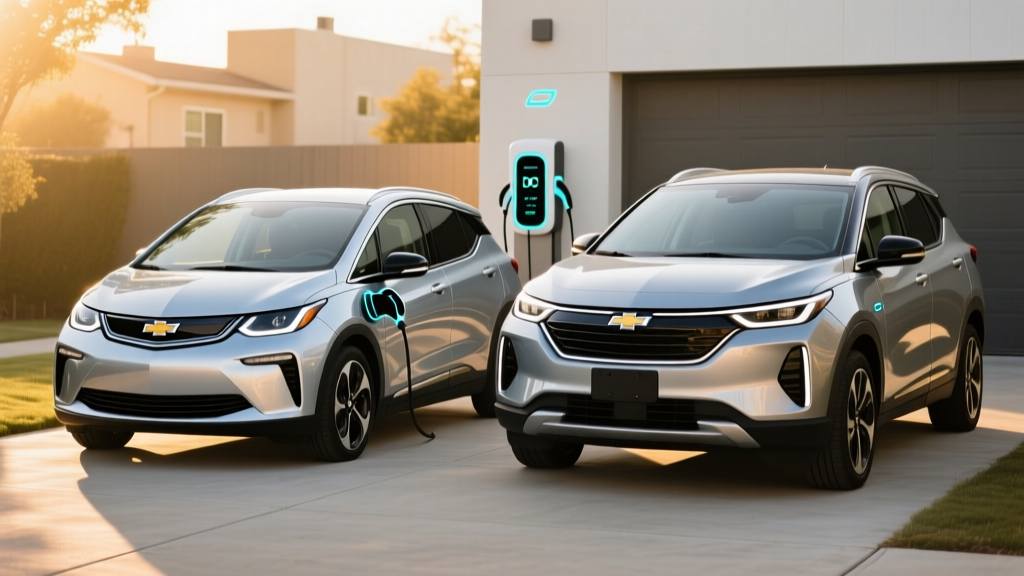
The 2026 Chevrolet Bolt EV (259 mi EPA) and Bolt EUV (261 mi EPA) remain the most affordable long-range EVs in the U.S. market, starting around $26,500 before incentives. With a 65 kWh NMC battery, 115 MPGe combined, and eligibility for up to $7,500 in federal tax credits (subject to income, MSRP, and battery-sourcing rules under IRS §30D), the effective price can drop below $20,000 for qualifying buyers. The trade-off: DC fast charging peaks at roughly 55 kW, meaning 10–80% takes about 45–50 minutes — slower than modern rivals. If you can charge at home and mostly drive under 200 miles a day, the Bolt is a practical, low-cost entry into EV ownership. If you road-trip frequently or rely solely on public fast charging, the slow charge rate is a real limitation.
Specs That Matter: 2026 Bolt EV and Bolt EUV at a Glance
Chevrolet refreshed the Bolt lineup with a new-generation Ultium-based platform, addressing the most common complaint about earlier models: DC fast-charge speed. The 2026 all electric Bolt still uses a front-mounted permanent-magnet motor, but battery capacity and charge rates have improved.
| Spec | Bolt EV (Hatchback) | Bolt EUV (Crossover) |
|---|---|---|
| EPA Range | 259 mi | 261 mi |
| Battery (usable) | 65 kWh, NMC | 65 kWh, NMC |
| Motor Output | 200 hp / 266 lb-ft | 200 hp / 266 lb-ft |
| 0–60 mph | ~6.5 sec | ~6.8 sec |
| MPGe (city/hwy/combined) | 125 / 104 / 115 | 122 / 102 / 113 |
| DC Fast Charge (peak) | ~55 kW (CCS/NACS adapter) | ~55 kW (CCS/NACS adapter) |
| 10–80% DC Time | ~45–50 min | ~45–50 min |
| Level 2 (240V) Rate | 11.5 kW (~39 mi/hr) | 11.5 kW (~39 mi/hr) |
| Base MSRP | ~$26,500 | ~$28,200 |
| Battery/Powertrain Warranty | 8 yr / 100,000 mi | 8 yr / 100,000 mi |
Real-World Range Expectations
The EPA sticker says 259 miles for the Bolt EV. In real-world highway driving at 70–75 mph with mild temperatures, expect 220–235 miles. In freezing weather (below 30°F), cabin heating and battery resistance can reduce range by 20–30%, bringing usable range down to roughly 180–200 miles. The Bolt lacks a heat pump, so cold-weather efficiency drops more noticeably than in EVs equipped with one (like the Hyundai Ioniq 5 or Tesla Model 3). Plan road trips around this reality — not the EPA number.
Bolt EV vs. a Comparable Gas Car: The Real Cost Breakdown
Many buyers cross-shop the Bolt against compact gas hatchbacks and subcompact SUVs like the Honda Civic Hatchback, Toyota Corolla Cross, or Hyundai Kona. Here is how a five-year ownership comparison looks when you run the numbers.
| Cost Factor (5 Years) | 2026 Bolt EV | Gas Compact (30 MPG avg) |
|---|---|---|
| Purchase Price (base) | $26,500 | $25,000 |
| Federal Tax Credit (§30D) | Up to –$7,500* | $0 |
| Effective Purchase | ~$19,000 | $25,000 |
| Fuel / Electricity (75,000 mi) | ~$3,900 (home charging, $0.14/kWh avg) | ~$8,750 ($3.50/gal) |
| Maintenance (5 yr) | ~$1,200 | ~$3,000 |
| Insurance (5 yr avg) | ~$7,500 | ~$6,500 |
| Total 5-Year Cost | ~$31,600 | ~$43,250 |
*Federal tax credit eligibility depends on buyer income caps, MSRP limits, and battery critical-mineral and component sourcing under IRS §30D rules. Verify current-year requirements with a tax professional. The credit can be transferred to the dealer at point of sale as an instant discount.
The math is clear: even though the Bolt's sticker price is slightly higher than a gas compact, the combination of the federal tax credit, dramatically lower fueling costs, and reduced maintenance (no oil changes, fewer brake replacements thanks to regenerative braking) results in over $11,000 in savings over five years. Insurance is the one area where the Bolt may cost more — EV premiums run 10–20% higher on average due to repair costs for battery and structural components.
Charging the Bolt at Home: What You Actually Need
Home charging is where the Bolt shines. Level 2 charging at 11.5 kW adds roughly 39 miles of range per hour. A full overnight charge (8 hours) replenishes the entire 65 kWh battery — meaning you start every morning with a full 259 miles.
Home Charging Setup Costs
| Item | Cost Range |
|---|---|
| Level 2 Charger (40A–48A, hardwired) | $300–$700 |
| Electrical Panel Upgrade (if needed, 100A→200A) | $1,500–$3,000 |
| Electrician Labor + Permit | $500–$2,000 |
| 240V Outlet (NEMA 14-50, if plug-in) | $200–$500 |
| Total Estimated Install | $1,000–$5,700 |
If your electrical panel has capacity and the run from panel to garage is short, expect to pay around $1,000–$1,500. If you need a panel upgrade or a long conduit run, costs can climb to $4,000+. Always get a quote from a licensed electrician before committing — panel capacity is the most common surprise.
Charging Without Home Access
Not everyone can install a home charger. Apartment dwellers and street-parkers face a real challenge with the Bolt's 55 kW DC fast-charge rate. A typical weekly top-up from 20% to 80% at a public station takes roughly 45 minutes. Compare that to a Hyundai Ioniq 5 (peaking at 240 kW, 10–80% in ~18 minutes) or a Tesla Model 3 (250 kW on Superchargers, ~15 minutes). If public charging is your only option, the Bolt's slower charge rate becomes a meaningful inconvenience — plan accordingly.
Tax Credits and Incentives: What the Bolt Qualifies For
The Bolt EV and EUV have historically been strong candidates for the full $7,500 federal tax credit under IRS §30D. However, eligibility is not automatic — it depends on several factors that change yearly:
- MSRP Cap: The vehicle must be under $55,000 (cars) or $80,000 (SUVs/trucks). The Bolt easily qualifies at ~$26,500–$33,000.
- Buyer Income Cap: Modified AGI must not exceed $150,000 (single), $225,000 (head of household), or $300,000 (joint).
- Battery Sourcing: Critical minerals and battery components must meet escalating domestic/free-trade-partner thresholds. GM has worked to North-Americanize the Bolt's supply chain, but the specific percentage for 2026 must be confirmed on the IRS eligible-vehicle list at the time of purchase.
- Point-of-Sale Transfer: As of 2024, qualifying buyers can transfer the credit to the dealer, receiving the discount instantly at purchase rather than waiting for a tax refund.
Many states and utilities also offer additional rebates — California's CVRP, Colorado's innovative motor vehicle credit, and various utility off-peak charging incentives. Check fueleconomy.gov and your local utility for current programs.
Common Misconceptions About the Bolt EV
| Myth | Fact |
|---|---|
| "EV batteries need replacing every few years." | GM warranties the Bolt's battery for 8 years/100,000 miles with a capacity-retention threshold (typically 60–70% of original capacity). Real-world NMC degradation data from earlier Bolt generations shows most batteries retain 90%+ capacity after 100,000 miles under normal use. |
| "The Bolt can't handle road trips." | It can, but you need to plan. At 55 kW DC peak, expect 45–50 minutes at each fast-charge stop. That's viable for 2–3 stops on a 600-mile trip, but noticeably slower than 150–250 kW rivals. Preconditioning the battery (available via navigation-based routing) helps optimize charge speed. |
| "Charging an EV costs as much as gas." | At the U.S. average residential rate of ~$0.16/kWh, fully charging the Bolt's 65 kWh battery costs about $10.40 — for 259 miles of range. That's roughly 4¢ per mile. A 30 MPG gas car at $3.50/gal costs about 12¢ per mile. Home charging is 3x cheaper per mile. |
| "EVs don't work in cold weather." | They work, but range drops. Expect 20–30% loss in sub-freezing temps. The Bolt's 259-mile EPA range becomes roughly 180–200 miles in deep cold. Preconditioning while plugged in, using seat heaters instead of cabin heat, and planning shorter legs mitigate this. |
| "The Bolt is discontinued." | GM ended the previous-generation Bolt in 2023 but revived the nameplate on the Ultium platform for 2025/2026. The current Bolt EV and EUV are in production and available new. |
Who Should Buy the All Electric Bolt — And Who Shouldn't
Decision Framework
Choose the Bolt EV if:
- You have access to Level 2 home or workplace charging
- Your daily driving is under 200 miles round-trip
- You want the lowest possible purchase price for a 250+ mile EV
- You qualify for the federal tax credit (income under caps)
- You primarily commute and run errands, with occasional road trips
Choose the Bolt EUV if:
- You want more rear-seat legroom (3.3 inches more than the EV hatchback)
- You prefer a crossover ride height and styling
- You're willing to pay ~$1,700 more for slightly larger dimensions
Look at alternatives (Ioniq 5, Model 3, Equinox EV) if:
- You rely exclusively on public DC fast charging (the Bolt's 55 kW peak will frustrate you)
- You road-trip more than 500 miles regularly and need 15–20 minute charge stops
- You live in a region with extreme winters and want a heat pump for better cold-weather efficiency
- You need all-wheel drive (the Bolt is front-wheel drive only)
First-Time EV Buyer Checklist: What to Know Before You Sign
- Verify your home electrical capacity. A 48A Level 2 charger requires a 60A dedicated circuit. Get an electrician quote before purchasing.
- Confirm tax-credit eligibility at the point of sale. The dealer can run the §30D eligibility check. Do not assume you qualify — battery sourcing rules change, and the IRS eligible-vehicle list updates periodically.
- Test the charge-port location. The Bolt's charge port is on the driver-side front fender. Make sure this works with your garage or driveway layout.
- Understand regenerative braking. The Bolt offers one-pedal driving mode — lifting off the accelerator engages strong regen that can bring the car to a stop without touching the brake. It takes a few days to adjust but significantly reduces brake wear.
- Budget for insurance. Get quotes before buying. EV insurance is typically 10–20% higher than equivalent gas cars.
- Download charging apps. PlugShare, ChargePoint, EVgo, and Electrify America apps let you map DC fast chargers along your routes. For the Bolt's 55 kW rate, plan stops at locations with reliable 50+ kW chargers — the Bolt cannot take advantage of 150–350 kW stations.
- Learn preconditioning. When you set a destination in the Bolt's navigation that includes a DC fast charger, the car warms the battery to optimize charge speed. This is critical in cold weather — without preconditioning, charge speeds can drop to 20–30 kW.
Frequently Asked Questions
How long does the Bolt EV battery last?
GM warranties the 65 kWh NMC battery for 8 years or 100,000 miles against capacity loss below a defined threshold (typically 60–70%). Based on real-world data from previous Bolt generations, most owners report 8–12% degradation after 100,000 miles, meaning the battery retains roughly 88–92% of its original capacity. With proper care — avoiding frequent 100% charges and deep discharges — the battery should last well beyond 150,000 miles before needing attention. Full battery replacement, if ever needed, currently costs in the range of $14,000–$16,000 at a dealer, though prices continue to decline as battery manufacturing scales.
Can the Bolt EV use Tesla Superchargers?
Yes. GM transitioned to NACS (North American Charging Standard) compatibility. The 2026 Bolt can access Tesla Superchargers either via a built-in NACS port or a GM-approved CCS-to-NACS adapter. This dramatically expands the Bolt's road-trip charging network — there are over 20,000 Supercharger stalls in North America. Note that the Bolt's 55 kW peak charge rate still applies; it will not charge faster on a Supercharger than on any other DC fast station.
What is the real cost per mile to drive the Bolt?
At the U.S. average residential electricity rate of approximately $0.16/kWh and the Bolt's efficiency of roughly 3.4 miles per kWh (115 MPGe), the cost is about $0.047 per mile when charging at home. Public DC fast charging is more expensive — typically $0.30–$0.48/kWh, bringing the cost to roughly $0.09–$0.14 per mile. By comparison, a 30 MPG gas car at $3.50/gallon costs about $0.12 per mile.
Is the Bolt EV or EUV eligible for the $7,500 federal tax credit?
Both the Bolt EV and EUV are designed to qualify, but eligibility depends on current-year battery-sourcing requirements under IRS §30D, buyer income limits, and the vehicle MSRP cap. The Bolt's low price easily clears the MSRP cap. The critical-mineral and battery-component sourcing percentages increase each year — always verify the vehicle's eligibility on the IRS clean-vehicle list at the time of purchase. The credit can be applied as a point-of-sale discount through a participating dealer.
How does the Bolt compare to the Chevy Equinox EV?
The Equinox EV (315 mi EPA range, ~150 kW DC peak charge, starting around $33,000) is a step up in range, charge speed, and interior space — but costs roughly $6,500 more before incentives. If your budget is tight and 259 miles of range covers your needs, the Bolt is the value pick. If you road-trip often or need faster charging and more cargo room, the Equinox EV is worth the premium.