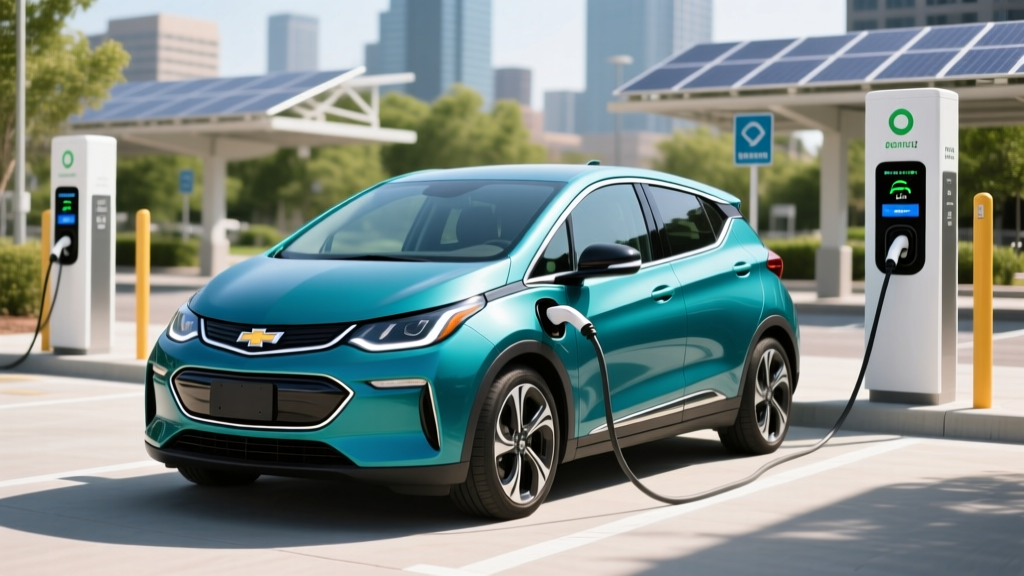
The Chevrolet Bolt EV and Bolt EUV occupy a rare space in the American electric-vehicle market: affordable, practical, and widely available. With a starting MSRP hovering near $26,500 for the Bolt EV, it undercuts nearly every competitor while still delivering over 250 miles of EPA-estimated range. But value on paper doesn't always translate to value in the driveway. This review examines the Bolt lineup with the data that matters — real-world range, charging realities, ownership economics, and whether the Bolt's platform limitations are deal-breakers in 2026.
Chevrolet Bolt EV and EUV: Quick Specs at a Glance
| Spec | Bolt EV (2LT) | Bolt EUV (Premier) |
|---|---|---|
| EPA Range | 259 miles | 247 miles |
| Battery (usable) | 65 kWh, NMC lithium-ion | 65 kWh, NMC lithium-ion |
| Efficiency | 120 MPGe (28 kWh/100 mi) | 115 MPGe (29 kWh/100 mi) |
| Motor Output | 200 hp / 266 lb-ft | 200 hp / 266 lb-ft |
| Drivetrain | FWD (single motor) | FWD (single motor) |
| 0–60 mph | ~6.5 seconds | ~6.8 seconds |
| Max DC Fast Charge | 55 kW (CCS) | 55 kW (CCS) |
| 10–80% DC Time | ~52 minutes | ~52 minutes |
| Level 2 Home Charge | 11.5 kW (~39 mi/hr) | 11.5 kW (~37 mi/hr) |
| Cargo Volume | 16.6 cu ft (57.0 folded) | 36.3 cu ft (63.6 folded) |
| Rear Legroom | 36.0 in | 39.1 in |
| Base MSRP | $26,500 | $27,800 |
| Battery Warranty | 8 yr / 100,000 mi | 8 yr / 100,000 mi |
Real-World Range: What the EPA Sticker Doesn't Tell You
Real-World Expectation: ~230–250 miles in mixed city/highway driving at moderate temperatures; ~180–210 miles sustained highway at 75+ mph; ~160–190 miles in sub-freezing winter conditions.
The Bolt's 65 kWh NMC (nickel manganese cobalt) battery pack delivers strong city efficiency thanks to aggressive regenerative braking and the car's relatively low curb weight (~3,560 lbs for the EV). Around town at 35–45 mph, many owners report matching or slightly exceeding the EPA number. This is where the Bolt shines — stop-and-go commuting with one-pedal driving engaged maximizes energy recapture.
Highway driving tells a different story. The Bolt's aerodynamic profile is upright, and without a heat pump (resistance heating is standard), energy consumption climbs noticeably at sustained speeds above 70 mph. On a 200-mile highway run at 75 mph in 70°F weather, expect to use roughly 32–34 kWh/100 miles, translating to approximately 190–210 miles of practical range before you'd want to find a charger.
Cold weather compounds the issue. In temperatures below 32°F, the resistance cabin heater draws significant power — often 2–4 kW continuously. Combined with reduced battery efficiency in cold conditions, real-world winter range can drop 25–35%. Preconditioning the battery while plugged in helps, but the Bolt lacks the sophisticated thermal management systems found in Hyundai's E-GMP or Tesla's heat-pump-equipped models. According to fueleconomy.gov, the Bolt EV rates at 120 MPGe combined, which is competitive for its class but trails the Hyundai Kona Electric's 120 MPGe and Tesla Model 3 RWD's 132 MPGe.
Charging Speed: The Bolt's Biggest Compromise
| Charging Level | Power (kW) | Rate (mi/hr added) | Notes |
|---|---|---|---|
| Level 1 (120V outlet) | ~1.2 kW | ~4 mi/hr | Emergency / overnight trickle only |
| Level 2 (240V home) | 11.5 kW | ~39 mi/hr | Full charge in ~6.5 hours |
| DC Fast Charge (CCS) | 55 kW peak | ~190 mi/hr (peak) | 10–80% in ~52 min; tapers sharply above 80% |
Home Level 2 charging is where the Bolt performs well. The 11.5 kW onboard charger is generous for this price segment — some competitors cap at 7.2 kW or even 6.6 kW. Plug in at 10 PM with a depleted battery, and you'll wake up to a full charge by 5 AM. A 40-amp or 48-amp Level 2 home station (hardwired, NEMA 14-50, or J1772 connector) is the ideal setup.
DC fast charging, however, is the Bolt's most significant weakness in 2026. The 55 kW peak charge rate is a legacy limitation of the Bolt's older BEV2 platform. While competitors like the Hyundai Kona Electric (peak ~100 kW), Tesla Model 3 (peak ~170 kW), and even the newer Chevrolet Equinox EV (peak ~150 kW) can add 150+ miles in 15–20 minutes, the Bolt requires nearly an hour to go from 10–80%. The charge curve is relatively flat up to about 50% SoC, then tapers progressively. Above 80%, charging slows to roughly 20–25 kW, making top-ups above that threshold painfully slow on road trips.
For daily commuters who charge at home overnight and rarely road-trip, this limitation is manageable. For anyone relying on public DC fast chargers for regular long-distance travel, it's a meaningful drawback. Plan road trips around longer stops — a 30-minute lunch break won't add enough range for the next leg.
Performance, Ride Quality, and Daily Drivability
The Bolt's single front-mounted motor produces 200 horsepower and 266 lb-ft of torque, delivered instantly as with all EVs. The 0–60 mph time of approximately 6.5 seconds (Bolt EV) feels quicker in practice because electric torque is available from zero RPM. Highway merging and passing maneuvers are confident. The car is not slow — it simply isn't sporty.
Ride quality is compliant but firm over sharp bumps, typical of a compact hatchback on a smaller wheelbase. The Bolt EUV, with its 2.9-inch longer wheelbase, absorbs road imperfections slightly better and offers noticeably more rear-seat legroom (39.1 inches vs. 36.0 inches). Neither variant offers all-wheel drive — FWD only — which limits appeal in regions with heavy snow, though the low center of gravity from the floor-mounted battery aids stability.
Driver-assist technology includes Chevy Safety Assist as standard: automatic emergency braking, forward collision alert, lane keep assist with lane departure warning, following distance indicator, and IntelliBeam automatic high beams. Available Super Cruise (on EUV Premier trim) enables hands-free driving on over 400,000 miles of mapped highways — a genuine SAE Level 2 system that requires driver attention and eye monitoring. It is not autonomous driving.
Pricing, Trims, and Federal Tax Credit Eligibility
| Trim | MSRP | Est. After §30D Credit* | Key Features |
|---|---|---|---|
| Bolt EV 2LT | $26,500 | ~$19,000 | 10.2" touchscreen, wireless CarPlay/Android Auto, heated seats |
| Bolt EV Premier | $29,400 | ~$21,900 | Leather, Bose audio, adaptive cruise, 360° camera |
| Bolt EUV LT | $27,800 | ~$20,300 | More cargo/legroom, same powertrain, roof rails |
| Bolt EUV Premier | $31,900 | ~$24,400 | Super Cruise eligible, ventilated seats, panoramic sunroof |
*Federal tax credit estimates assume buyer eligibility under current IRS §30D rules. The credit is up to $7,500, split into two halves: $3,750 for critical minerals sourcing and $3,750 for battery component manufacturing. Eligibility depends on:
- MSRP cap: Vehicles must be under $55,000 (sedans/hatchbacks) — all Bolt trims qualify.
- Buyer income cap: Modified AGI must not exceed $150,000 (single), $225,000 (head of household), or $300,000 (joint).
- Battery sourcing: Critical minerals and battery components must meet escalating domestic/free-trade-partner thresholds. Verify current-year compliance at the point of sale, as supply chains shift annually.
- Point-of-sale transfer: As of 2024+, eligible buyers can transfer the credit to the dealer for an immediate price reduction rather than claiming it at tax time.
The Bolt's sub-$30,000 starting price is its headline advantage. After a full $7,500 credit (assuming all sourcing requirements are met), a base Bolt EV 2LT can be acquired for roughly $19,000 — a price point no other new EV in the U.S. market matches. Consult a tax professional to confirm your personal eligibility.
Cargo, Interior Space, and Practicality
The Bolt EV offers 16.6 cubic feet of cargo space behind the rear seats, expanding to 57.0 cubic feet with seats folded. That's competitive with the Nissan Leaf and slightly less than the Kona Electric. The Bolt EUV significantly improves on this with 36.3 cubic feet (63.6 folded), making it viable for small families or active lifestyles requiring gear transport.
Interior materials are hard-plastic-heavy — a direct reflection of the price point. The 10.2-inch infotainment touchscreen is responsive, supports wireless Apple CarPlay and Android Auto, and includes a Wi-Fi hotspot. The driver information cluster is a configurable 8-inch display. There is no frunk (front trunk); the space under the hood houses the power electronics and onboard charger.
Seating is comfortable for four adults, though the rear center position is tight. The EUV's extra legroom makes it the clear choice for families with rear-facing child seats or tall passengers.
Pros and Cons: The Honest Assessment
Pros
- Lowest MSRP of any new EV with 250+ miles of range
- Strong Level 2 home charging (11.5 kW onboard charger)
- Generous federal tax credit potential — under $20K net price
- Peppy 200 hp motor with instant torque
- Standard wireless CarPlay/Android Auto and Chevy Safety Assist
- EUV variant offers excellent rear legroom and cargo space
- 8-year/100,000-mile battery warranty
Cons
- DC fast charging capped at 55 kW — slowest in class
- No heat pump — significant winter range loss
- FWD only — no AWD option for snow-belt buyers
- Interior materials feel budget-tier
- Older BEV2 platform limits tech and packaging
- No frunk for additional storage
- CCS connector (no native NACS; adapter required for Tesla Superchargers)
Is the Chevy Bolt Worth It vs. Key Competitors?
Choose the Bolt EV/EUV if: You primarily commute and charge at home, your budget is under $30,000, you want maximum value after the federal tax credit, and you rarely take road trips over 200 miles without overnight stops.
Look elsewhere if: You need fast DC charging for regular road trips (consider Hyundai Kona Electric or Tesla Model 3), you need AWD (Subaru Solterra, Hyundai Ioniq 5), you want the latest platform with a heat pump and 800V architecture, or you want a more premium interior.
The Bolt's closest competitor on price, the Nissan Leaf, offers less range (212 miles on SV Plus) and uses the increasingly obsolete CHAdeMO DC connector. The Kona Electric charges faster but starts ~$6,000 higher. The Tesla Model 3 RWD delivers superior range (272 mi EPA), faster charging, and Supercharger network access, but starts around $38,990 — over $12,000 more than a base Bolt.
For the specific use case of a budget-conscious commuter with home charging access, the Bolt is arguably the most rational EV purchase available in 2026. The math is simple: low purchase price, low operating cost, and adequate range for daily needs. Just know what you're giving up before signing.
Frequently Asked Questions
What is the real-world range of the Chevy Bolt?
Expect 230–250 miles in mixed driving at moderate temperatures. Highway driving at 75+ mph reduces this to roughly 190–210 miles. In sub-freezing winter conditions, plan for 160–190 miles due to the lack of a heat pump and battery efficiency loss.
How fast does the Chevy Bolt charge at home and on the road?
At home on a 240V Level 2 charger, the Bolt accepts up to 11.5 kW, adding about 39 miles of range per hour and fully charging in roughly 6.5 hours. On DC fast chargers, it peaks at 55 kW, taking approximately 52 minutes to go from 10–80%. This is significantly slower than most 2026 competitors.
Does the Chevy Bolt qualify for the federal EV tax credit?
The Bolt EV and EUV are on the IRS list of eligible vehicles for the §30D Clean Vehicle Credit. However, the full $7,500 credit depends on battery sourcing requirements that change annually, plus buyer income caps ($150K single / $300K joint). Verify eligibility with your dealer at the point of sale and consult a tax professional.
Is the Chevy Bolt a good car for road trips?
It's workable but not ideal. The 55 kW DC fast-charge rate means longer stops (50+ minutes for a meaningful charge). With 259 miles of EPA range, you'll need to charge roughly every 3.5–4 hours of highway driving. If road trips are frequent, a vehicle with 150+ kW charging capability is a better fit.
How long will the Bolt's battery last?
Chevrolet warrants the battery for 8 years or 100,000 miles against defects and excessive capacity loss (typically below 60–70% of original capacity). NMC batteries in liquid-cooled packs like the Bolt's generally retain 85–90% capacity after 100,000 miles based on fleet data. Avoid routinely charging to 100% or draining to 0% for optimal longevity.
Can I charge a Chevy Bolt at Tesla Superchargers?
The Bolt uses a CCS1 connector natively. Tesla has opened select Supercharger stalls to non-Tesla EVs via the built-in Magic Dock adapter (CCS-compatible). You can also use third-party NACS-to-CCS adapters, but verify compatibility and safety certifications before purchasing. Access is not universal — check the Tesla app for participating stations.