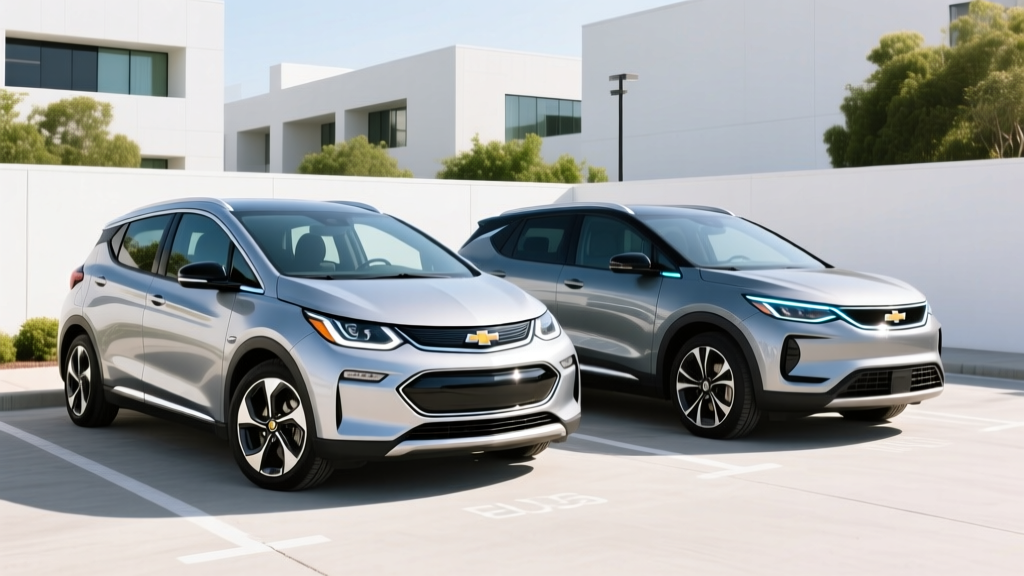
The bottom line on the Chevy Bolt: The 2026 Chevrolet Bolt EV (and its longer-wheelbase sibling, the Bolt EUV) remains one of the most affordable new electric cars on the market, starting near $28,000 before incentives. With an EPA-estimated 259 miles of range (Bolt EV) and up to 247 miles (Bolt EUV), it delivers practical daily drivability at a price point gas cars struggle to match. However, its DC fast-charging speed — capped at 55 kW — is the Bolt's biggest real-world limitation, making it best suited for buyers with reliable home Level 2 charging who rarely take long road trips.
What the 2026 Chevy Bolt Actually Offers
Chevrolet reintroduced the Bolt on GM's updated Ultium platform after the original generation ended in 2023. The new Bolt EV and Bolt EUV carry forward the formula that made the original a bestseller: compact dimensions, strong value pricing, and usable range — but now with NACS (Tesla-style) charge ports, faster Level 2 onboard charging, and GM's latest software stack.
| Spec | 2026 Bolt EV | 2026 Bolt EUV |
|---|---|---|
| EPA Range | 259 miles | 247 miles |
| Battery (usable) | ~65 kWh (LFP) | ~65 kWh (LFP) |
| Motor Output | 200 hp / 236 lb-ft | 200 hp / 236 lb-ft |
| 0–60 mph | ~6.5 sec | ~6.8 sec |
| Max DC Fast Charge | 55 kW (CCS/NACS adapter) | 55 kW |
| 10–80% DC Charge | ~55 min | ~55 min |
| Level 2 Onboard Charger | 11.5 kW | 11.5 kW |
| MPGe (combined) | 120 MPGe | 115 MPGe |
| Base MSRP (est.) | $27,995 | $29,495 |
| Battery/Powertrain Warranty | 8 yr / 100,000 mi | 8 yr / 100,000 mi |
The shift to lithium iron phosphate (LFP) battery chemistry is a key change. LFP cells trade some energy density for longer cycle life, greater thermal stability, and lower cost. For a budget-oriented EV like the Bolt, that's a smart trade — you can charge to 100% daily without the degradation concerns that NMC batteries carry above 80% state of charge.
Bolt EV vs. Gas Car: Real Cost Comparison
The strongest argument for the Bolt isn't performance or tech — it's economics. Let's compare the 2026 Bolt EV against a similarly priced compact gas car, like a 2026 Honda Civic, over a 5-year ownership period assuming 12,000 miles per year.
| Cost Factor (5 years / 60k mi) | 2026 Chevy Bolt EV | 2026 Honda Civic (gas) |
|---|---|---|
| Purchase Price (base MSRP) | $27,995 | $25,500 |
| Fed. Tax Credit (§30D, if eligible) | −$7,500* | $0 |
| Effective Purchase Price | $20,495 | $25,500 |
| Fuel / Energy (60,000 mi) | $2,700 (home charging at $0.14/kWh) | $6,900 (30 MPG avg at $3.45/gal) |
| Maintenance (est.) | $900 | $2,800 |
| Insurance (est. 5-yr total) | $7,200 | $6,000 |
| Total 5-Year Cost | $31,295 | $41,200 |
*The §30D federal tax credit eligibility depends on your income, the vehicle's MSRP cap compliance, battery sourcing, and point-of-sale transfer rules. See IRS.gov for current-year requirements. Always confirm with a tax professional.
The Bolt saves roughly $9,900 over five years in this scenario, even before accounting for potential state incentives. The fuel savings alone — about $4,200 — nearly cover the Bolt's higher insurance premiums. Maintenance costs are dramatically lower: no oil changes, no transmission fluid, fewer brake replacements thanks to regenerative braking.
Energy Cost Per Mile: Bolt vs. Civic
| Cost/Mile | Annual (12k mi) | |
|---|---|---|
| Bolt EV (home, $0.14/kWh) | $0.045 | $540 |
| Bolt EV (public DC, $0.40/kWh avg) | $0.11 | $1,320 |
| Honda Civic (30 MPG, $3.45/gal) | $0.115 | $1,380 |
Key insight: Home charging is where the Bolt's economics shine. If you rely entirely on public DC fast charging at current rates, your per-mile cost nearly equals a gas car — and you'll spend far more time stopped.
The Charging Reality: Bolt's Strength and Weakness
Understanding the Bolt's charging profile is essential before buying. Here's what each level looks like in practice:
| Level | Power | Miles Added/Hour | Full Charge Time | Use Case |
|---|---|---|---|---|
| Level 1 (120V outlet) | ~1.4 kW | ~4 mi/hr | ~46 hours | Emergency / overnight top-up only |
| Level 2 (240V home) | 11.5 kW | ~38 mi/hr | ~6.5 hours | Primary daily charging |
| DC Fast Charge | 55 kW peak | ~180 mi/hr (peak) | 10–80% in ~55 min | Road trips (plan extra stops) |
The 55 kW DC fast-charging cap is the Bolt's Achilles' heel. Competing EVs like the Hyundai Kona Electric (peak 100+ kW) and Tesla Model 3 (peak 170+ kW) charge roughly 2–3x faster on road trips. On a 300-mile drive, you'll spend 55+ minutes at a charger in the Bolt versus 20–25 minutes in a faster-charging rival.
However, for daily driving with home Level 2 charging, the Bolt's DC speed is irrelevant. You plug in at night, wake up to a full battery, and the 11.5 kW onboard charger refills the pack in about 6.5 hours — more than enough for any daily commute under 200 miles.
Real-World Range vs. EPA Sticker
EPA: 259 miles (Bolt EV)
Expect in practice:
- City/mixed driving (55–70°F): 250–270 miles
- Highway (75 mph sustained): 215–235 miles
- Cold weather (below 32°F): 180–210 miles (30–35% loss is normal for EVs without a heat pump)
- Cold + highway: 165–190 miles — plan road trips conservatively
The Bolt's LFP battery holds up well to daily 100% charging, so you can use the full 259-mile envelope without long-term degradation worry. Source: fueleconomy.gov
Federal Tax Credit: Does the Bolt Qualify?
The 2026 Bolt's eligibility for the $7,500 §30D federal clean vehicle credit hinges on several IRS requirements that change periodically. Here's the current checklist:
- MSRP cap: The Bolt's base price (~$27,995) falls well below the $55,000 cap for cars ($80,000 for SUVs/pickups). ✅
- Buyer income cap: AGI must not exceed $150,000 (single), $225,000 (head of household), or $300,000 (joint). Check your tax return.
- Battery sourcing: A percentage of critical minerals and battery components must be sourced from the US or free-trade-agreement countries. GM has been working to meet these thresholds, but eligibility can shift by model year and production batch.
- Point-of-sale transfer: You can apply the credit as an immediate dealer discount rather than waiting for tax filing — but you must elect this at purchase and your tax return must confirm eligibility.
- Final assembly: Must occur in North America. The Bolt is assembled in Michigan. ✅
Bottom line: The Bolt is a strong candidate for the full credit, but always verify current eligibility at IRS.gov and with your dealer before signing. State incentives (California, Colorado, New York, and others) may stack on top — check your state's energy office.
Common Bolt Misconceptions — Fact vs. Fiction
| Myth | Fact |
|---|---|
| "The Bolt will need a new battery in 5 years" | LFP batteries are rated for 3,000+ charge cycles with minimal degradation. At 259 miles per cycle, that's 775,000+ miles before reaching 80% capacity. GM's 8-year/100,000-mile warranty covers defects and excessive degradation (below 60–70% capacity). |
| "You can't road-trip an EV" | You can, but in the Bolt you'll plan around its 55 kW charge rate. Apps like PlugShare and A Better Routeplanner make this manageable — just expect 2–3 stops on a 500-mile trip instead of 1. |
| "EVs are more expensive to insure" | Sometimes true. Bolt insurance averages 15–20% higher than a comparable gas car due to higher repair costs for battery/collision damage. Shop quotes before buying. |
| "I need a special electrical panel" | Most homes with a 200-amp panel can support a 48-amp Level 2 charger (the Bolt's 11.5 kW rate). Older homes with 100-amp panels may need an upgrade ($1,500–$3,000). Get a licensed electrician's quote. |
| "The Bolt can't handle cold weather" | It handles cold fine mechanically — range drops 20–35% in sub-freezing temps, like all EVs. Preconditioning the battery while plugged in mitigates this and protects charging speed. |
Who Should Buy the Bolt — Decision Framework
Choose the Chevy Bolt EV/EUV if:
- You have (or can install) a Level 2 home charger — this is the single biggest factor in Bolt satisfaction
- Your daily round-trip commute is under 100 miles (most Americans average 35–40 miles)
- You want the lowest-cost entry into a new EV with 250+ miles of range
- You take road trips fewer than 4–5 times per year and don't mind planning charge stops
- You qualify for the §30D credit, bringing the effective price below $21,000
Look elsewhere if:
- You frequently drive 300+ miles in a day — the 55 kW DC speed will frustrate you (consider a Hyundai Ioniq 5 or Tesla Model 3 instead)
- You lack home charging access and must rely on public chargers daily
- You need AWD or high towing capacity (the Bolt is FWD only, no tow rating)
- You live in extreme cold and regularly need the full EPA range — consider an EV with a heat pump for better winter efficiency
First-Time EV Buyer Checklist for the Bolt
- Get a Level 2 home charger quote first. A 48-amp hardwired unit on a 60-amp circuit delivers the Bolt's full 11.5 kW. Expect $500–$800 for the charger and $800–$2,000 for installation (varies by panel proximity and local permitting).
- Verify your §30D eligibility. Use the IRS tool and confirm with your dealer that the specific VIN qualifies.
- Insurance shop before purchase. Get quotes for the exact trim — EV premiums vary widely by insurer and ZIP code.
- Download PlugShare and A Better Routeplanner. Map your most common long trips to see real charge-stop logistics.
- Test the regen braking. The Bolt offers one-pedal driving mode — most owners adapt within a week, but it feels unusual at first.
- Precondition in winter. Use the Chevy app to warm the cabin and battery while plugged in — this preserves range and enables faster DC charging on cold days.
How long does the Chevy Bolt battery last?
GM warranties the Bolt's battery for 8 years or 100,000 miles against defects and capacity loss below the stated threshold. LFP chemistry is known for excellent longevity — industry data suggests 80%+ capacity retention well past 150,000 miles under normal use. Full battery replacement (if ever needed outside warranty) currently costs $8,000–$14,000 depending on labor.
Can I charge the Bolt at Tesla Superchargers?
The 2026 Bolt ships with a NACS charge port, making it compatible with Tesla Superchargers that offer NACS connectors (the majority of the network). For older CCS-equipped Bolts, a GM-approved NACS adapter enables access.
Is the Bolt EUV bigger than the Bolt EV?
Yes. The EUV has about 3 extra inches of rear legroom and slightly more cargo space, but a marginally shorter EPA range (247 vs. 259 miles) due to higher weight and less aerodynamic profile. If rear-seat passengers are a priority, the EUV is the better pick.
What happens if I run out of charge?
The same thing as running out of gas — you stop. But the Bolt gives multiple low-battery warnings starting around 20 miles remaining, and navigation will route you to the nearest charger. Roadside assistance (included with the Bolt for 5 years/60,000 miles) can provide a flatbed tow to a charger if needed. Running out is far rarer than EV skeptics suggest — it requires ignoring multiple warnings.
How does the Bolt compare to a plug-in hybrid (PHEV)?
A PHEV like the Toyota RAV4 Prime offers ~42 miles of electric range plus a gas engine for longer trips. If you can't install a home charger or take frequent 400+ mile road trips, a PHEV eliminates range concern. But for daily driving under 100 miles with home charging, the Bolt's zero tailpipe emissions and $0.045/mile energy cost beat any PHEV. See our EPA comparison tool for side-by-side efficiency data.