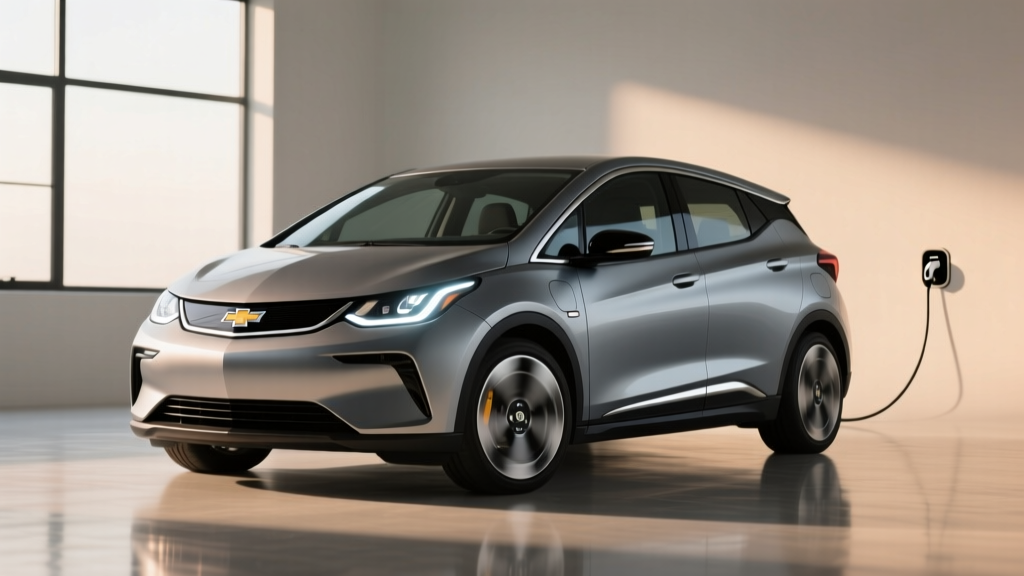
The Chevrolet Bolt EV has held the title of America's most affordable long-range electric vehicle since its debut, and the 2026 model year continues that tradition with a 259-mile EPA range and a starting MSRP under $27,000. But with GM confirming a platform transition that effectively ends the current Bolt EV and Bolt EUV production cycle by 2027, buyers are asking a critical question: should you grab one before it's gone, or wait for the next-generation Ultium-based replacement?
This profile covers everything you need to make that decision — from real-world range and charging realities to tax-credit eligibility and how the Bolt stacks up against an increasingly competitive sub-$35,000 EV market in 2026.
2026 Chevy Bolt EV: Core Specifications at a Glance
| Spec | 2026 Chevy Bolt EV (2LT) |
|---|---|
| EPA Range | 259 miles |
| Battery Capacity | 65 kWh (usable), NMC lithium-ion |
| Drivetrain | FWD, single front motor |
| Horsepower / Torque | 200 hp / 266 lb-ft |
| 0–60 mph | 6.5 seconds |
| Max DC Fast Charge | 55 kW (CCS1) |
| 10–80% DCFC Time | ~62 minutes |
| Level 2 Charge Rate | 11.5 kW (~39 miles/hr) |
| Efficiency | 120 MPGe combined / 28 kWh/100 mi |
| Cargo Volume | 16.3 cu ft (rear seats up) / 56.6 cu ft (folded) |
| Rear Legroom | 36.5 inches |
| Battery Warranty | 8 years / 100,000 miles |
| Base MSRP (1LT) | $26,500 |
| As-Tested (2LT w/ packages) | ~$31,200 |
Real-World Range: Beyond the 259-Mile EPA Sticker
EPA Estimated: 259 miles
Real-World Highway (70 mph, moderate climate): ~215–230 miles
Cold Weather (below 32°F, mixed driving): ~170–195 miles
City / Suburban Commute: ~245–260 miles (regen-heavy routes can match or exceed EPA)
The Bolt EV's 259-mile EPA figure is legitimate for mixed driving in mild conditions, and the car's efficiency — 28 kWh per 100 miles according to fueleconomy.gov — is competitive with vehicles costing $15,000 more. But EPA testing doesn't capture sustained highway speeds or winter temperature effects.
In real-world highway testing at 70–75 mph, expect to use roughly 32–34 kWh/100 mi, which drops effective range to around 215–230 miles on a full charge. Winter driving compounds this: the Bolt EV lacks a heat pump (it uses resistive cabin heating), so cold-weather range loss of 25–35% is typical. If your commute is 80 miles round-trip in a northern climate, you'll want to charge nightly rather than stretching to every other day in January.
On the positive side, the Bolt's regenerative braking is strong enough for genuine one-pedal driving in city traffic, and suburban drivers who rarely touch the highway will find the 259-mile figure easy to approach.
Charging Speed: The Bolt's Most Conspicuous Weakness
If there's one spec that defines the Bolt EV's ownership experience — and the one most likely to push buyers toward competitors — it's DC fast-charging speed. The Bolt peaks at just 55 kW on a CCS1 connector.
| Charging Level | Power / Rate | Time or Miles Added |
|---|---|---|
| Level 1 (120V, 12A) | ~1.4 kW | ~4 miles per hour |
| Level 2 (240V, 48A) | 11.5 kW | ~39 miles per hour / full charge ~7 hours |
| DC Fast Charge (CCS1) | 55 kW peak | 10–80% in ~62 minutes |
To put 55 kW in context: the Hyundai Kona Electric charges at up to 100 kW, the Volkswagen ID.4 at 135 kW, and the Tesla Model 3 at up to 170 kW. On a road trip, the Bolt requires roughly twice the charging stop time of these rivals. A 10–80% session takes over an hour, meaning a 300-mile trip with one stop will add 60–70 minutes of downtime.
The charge curve is relatively flat — the Bolt sustains close to its peak rate through much of the session, which is actually a positive compared to vehicles that spike to 150 kW and taper to 40 kW within minutes. But 55 kW is 55 kW, and no curve trickery changes that math.
For home charging, the 11.5 kW Level 2 rate is solid. A full charge from empty takes about 7 hours on a hardwired 48-amp Level 2 station, meaning overnight replenishment is effortless. If you're installing a home charger, budget $500–$1,500 for a quality Level 2 unit plus electrician labor — more if your panel needs a 240V circuit added.
Performance and Driving Dynamics
The Bolt EV's 200-horsepower front-mounted motor delivers a 0–60 mph time of 6.5 seconds — genuinely quick for a sub-$30,000 hatchback. Instant electric torque makes the Bolt feel faster than the number suggests in city driving, and merging onto highways is confident.
The single-motor FWD layout means no AWD option, which matters for buyers in snow-belt states. The car's low center of gravity (battery pack under the floor) gives it composed handling, though the eco-oriented tires prioritize efficiency over grip. Ride quality is firm but controlled — it's a compact car, not a luxury cruiser, and rough pavement makes that clear.
One-pedal driving mode is well-calibrated, and the Regen on Demand paddle behind the steering wheel lets you dial in additional braking without committing to full one-pedal mode. This flexibility is a GM hallmark and genuinely useful in stop-and-go traffic.
Pricing, Trims, and Federal Tax Credit Eligibility
The 2026 Bolt EV is offered in two trims:
| Trim | MSRP | Est. After §30D Credit | Key Features |
|---|---|---|---|
| 1LT | $26,500 | ~$19,000* | 10.2" touchscreen, wireless CarPlay/Android Auto, Chevy Safety Assist |
| 2LT | $29,700 | ~$22,200* | Leather seats, Bose 7-speaker audio, heated steering wheel, 360° camera |
*Tax-credit-adjusted prices assume full $7,500 §30D eligibility. Actual credit varies by buyer income, battery sourcing, and point-of-sale transfer rules. Consult IRS.gov §30D guidelines and a tax professional.
2026 §30D Federal Tax Credit Requirements:
- MSRP Cap: Vehicle MSRP must not exceed $55,000 (sedans/hatchbacks) — the Bolt EV clears this easily.
- Buyer Income Cap: Modified AGI ≤ $150,000 (single) / $300,000 (joint) / $225,000 (head of household).
- Battery Sourcing: Critical minerals and battery component requirements phase in annually. GM's North American battery supply chain (Ultium Cells plants) positions the Bolt well, but verify current-year compliance on the IRS qualified vehicle list.
- Point-of-Sale Transfer: As of 2024+, buyers can transfer the credit to the dealer at purchase, reducing the sale price directly rather than waiting for a tax refund.
The Bolt EV's sub-$27,000 starting price is its defining competitive advantage. After a full $7,500 credit, the effective price drops to roughly $19,000 — territory that no other new EV with 250+ miles of range can match. This is the car to buy if minimizing upfront cost is your top priority.
Interior, Tech, and Cargo
The Bolt EV's cabin is functional rather than luxurious. Hard plastics dominate the lower dash and door panels, though the 2LT trim's leather seats and soft-touch upper surfaces improve the impression. The 10.2-inch infotainment touchscreen runs GM's latest interface with wireless Apple CarPlay and Android Auto — a genuine convenience that eliminates cable clutter.
Cargo space is a strong suit: 16.3 cubic feet behind the rear seats is generous for the hatchback segment, and folding the 60/40 split rear bench opens up 56.6 cubic feet — enough for a week's camping gear or a Costco run. Rear legroom at 36.5 inches is adequate for adults on shorter trips, though taller passengers will notice the upright seatback angle.
Chevy Safety Assist comes standard and includes automatic emergency braking, lane-keeping assist, following-distance indicator, and IntelliBeam auto high beams. Super Cruise (GM's hands-off Level 2 highway system) is not available on the Bolt EV — that feature is reserved for Ultium-platform vehicles like the Equinox EV and Blazer EV.
The Discontinuation Question: Buy Now or Wait?
GM has signaled that the current Bolt EV and EUV — built on the older BEV2 platform — will be phased out as the company transitions to its Ultium architecture across all segments. While GM has announced a next-generation Bolt on Ultium (expected to carry the nameplate forward with faster charging and updated tech), the timeline for that replacement extends into the 2027–2028 window, meaning the current Bolt may be unavailable for a gap period.
Buy the current Bolt EV now if:
- You need the lowest-cost, longest-range new EV available today.
- You charge primarily at home and rarely take road trips over 200 miles.
- You want to lock in the current §30D credit before sourcing rules tighten further.
- You prefer a proven, well-reviewed platform over a first-year new design.
Wait for the next-gen Bolt (or choose a competitor) if:
- You need DC fast-charging speed for regular road trips (55 kW is a real limitation).
- You want AWD or Super Cruise availability.
- You can stretch your budget to $33,000–$38,000 for a Hyundai Kona Electric, VW ID.4, or Tesla Model 3 RWD.
Pros and Cons
Pros
- Lowest MSRP of any 250+ mile EV on the market
- Strong real-world efficiency (28 kWh/100 mi)
- Genuinely quick 0–60 for the price (6.5 sec)
- Generous cargo space for a compact hatch
- Wireless CarPlay/Android Auto standard
- Full $7,500 §30D credit eligibility likely
- Proven battery durability data from high-mileage owners
Cons
- 55 kW DC fast-charging is the slowest in its class
- No heat pump — significant cold-weather range loss
- No AWD option
- No Super Cruise or advanced hands-free driving assist
- Interior materials feel budget-tier
- CCS1 connector (NACS adapters available but add cost)
- Discontinuation uncertainty may affect long-term parts/service
Frequently Asked Questions
What is the real-world range of the 2026 Chevy Bolt EV?
The EPA rates the Bolt EV at 259 miles, but expect roughly 215–230 miles on highway-heavy drives and as low as 170–195 miles in sub-freezing winter conditions. City commuters using regenerative braking can approach or slightly exceed the EPA figure.
How fast does the Bolt EV charge at home and on the road?
At home on a 240V Level 2 charger (48A), the Bolt adds about 39 miles of range per hour and charges fully in roughly 7 hours. On DC fast chargers, it peaks at 55 kW — meaning a 10–80% session takes approximately 62 minutes, which is the slowest in its competitive set.
Does the Chevy Bolt EV qualify for the federal EV tax credit?
Yes, the Bolt EV is expected to qualify for the full $7,500 §30D credit in 2026, subject to buyer income limits ($150K single / $300K joint), the $55,000 MSRP cap (easily met), and current-year battery-sourcing requirements. Verify eligibility on the IRS qualified vehicles list before purchasing, and consider the point-of-sale transfer option to reduce your purchase price directly.
Is the Bolt EV worth buying vs. the Hyundai Kona Electric or Tesla Model 3?
If price is your primary concern, the Bolt EV is unmatched — roughly $19,000 effective after the tax credit is thousands less than any competitor. However, the Kona Electric charges at 100 kW (nearly twice as fast), and the Model 3 offers 170 kW charging, Supercharger network access, and a more premium interior at higher prices ($33K–$39K after credit). For road-trip-heavy buyers, the Bolt's 55 kW charging is a genuine dealbreaker. For home-charging commuters, it's the best value in the segment.
Should I buy before the Chevy Bolt EV is discontinued?
If the current Bolt meets your needs — especially the price-to-range ratio — buying before the BEV2 platform is phased out (expected around 2027) locks in a proven vehicle at a historically low effective price. The next-generation Ultium-based Bolt will likely offer faster charging and updated tech, but may debut at a higher MSRP and could face first-year production growing pains. There may also be a gap between current-model discontinuation and next-gen availability.
What is the Bolt EV's battery warranty?
Chevrolet covers the Bolt EV's battery and electric powertrain for 8 years or 100,000 miles, whichever comes first. The warranty guarantees the battery will retain a minimum level of capacity (typically 60–70% of original, per GM's terms). Real-world degradation data from high-mileage Bolt owners has been encouraging, with many reporting less than 10% capacity loss after 80,000+ miles.