Quick Verdict: The Value King That Redefined Affordable EVs
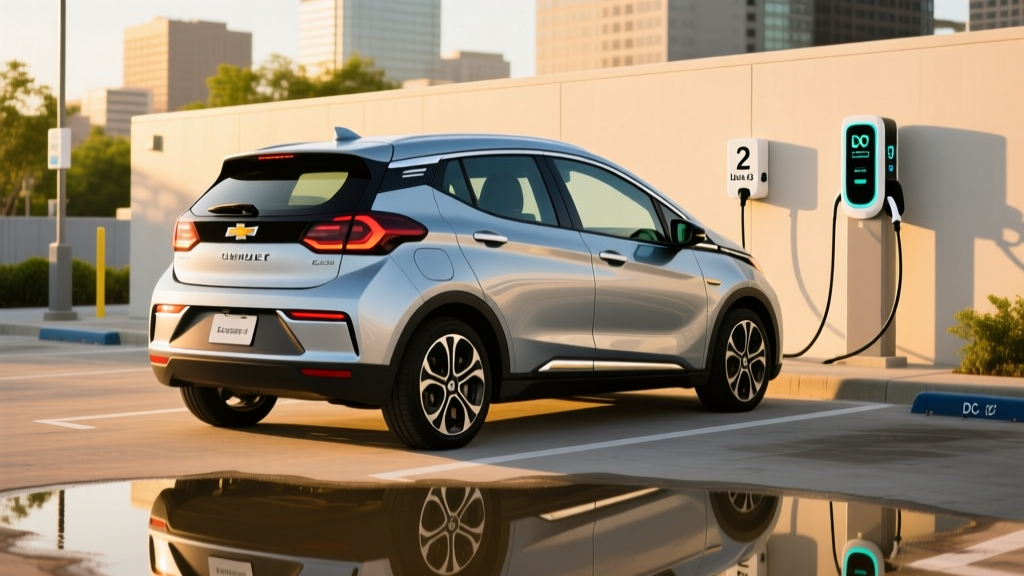
The 2023 Chevrolet Bolt EV arrived with a radical price cut that made it the cheapest new electric vehicle in America. Starting at just $26,500 before incentives, it undercut every competitor by thousands while delivering a 259-mile EPA range that outpaced many vehicles costing $15,000 more. Now available only on the used market since production ended in late 2023, the Bolt EV remains one of the smartest EV purchases for budget-conscious buyers who prioritize daily range over DC fast-charging speed.
This is not a road-trip champion. Its 55 kW peak DC charging rate means long highway stops. But as a commuter, city runabout, or second car, the 2023 Bolt EV is nearly impossible to fault at its price point — especially when the federal used-EV tax credit can knock up to $4,000 off the purchase price.
Range, Battery & Real-World Efficiency
Real-World Expectation: 230–250 miles in mixed city/highway driving; 195–220 miles at sustained 75 mph highway speeds; 175–200 miles in freezing temperatures with cabin heat. The Bolt EV's efficiency shines in stop-and-go city traffic where regenerative braking recovers energy, often exceeding the EPA estimate. Highway driving and cold weather are its kryptonite.
The 2023 Bolt EV uses a 65 kWh (usable) lithium-ion battery pack with GM's NMC (nickel manganese cobalt) chemistry. This is a conventional energy-density-optimized pack — not the newer Ultium platform found in the Equinox EV or Blazer EV. The pack is liquid-cooled and actively thermally managed, which helps preserve long-term State of Health (SoH) compared to passively cooled competitors like the older Nissan Leaf.
Efficiency on the combined cycle is rated at 120 MPGe (city: 131 MPGe / highway: 109 MPGe) per fueleconomy.gov. In energy terms, that translates to roughly 28 kWh per 100 miles combined — a strong figure for a crossover-hatchback of this size. In real-world driving during mild weather (60–75°F), owners commonly report 3.5–4.0 miles per kWh, which aligns with or slightly exceeds the EPA rating.
| Spec | Value |
|---|---|
| EPA Range | 259 miles |
| Battery (Usable) | 65 kWh, NMC chemistry |
| Motor | Single permanent-magnet, FWD |
| Horsepower | 200 hp (150 kW) |
| Torque | 266 lb-ft |
| 0–60 mph | 6.5 seconds |
| EPA Efficiency | 120 MPGe combined / 28 kWh/100mi |
| Max DC Fast Charge | 55 kW (CCS1) |
| Level 2 Onboard Charger | 11.5 kW |
| Cargo Volume | 16.6 cu ft (rear seats up) / 57.0 cu ft (folded) |
| Base MSRP (2023) | $26,500 (1LT) / $30,600 (2LT) |
| Battery Warranty | 8 years / 100,000 miles |
Charging Speeds: The Bolt EV's Biggest Compromise
Here's where the 2023 Bolt EV shows its budget origins. The DC fast-charging system peaks at 55 kW on CCS1 connectors — a figure that was mediocre at launch and feels increasingly dated as competitors push 150–350 kW. A 10–80% DC fast charge takes approximately 55–65 minutes, and the charge curve is relatively flat with minimal taper until the very end. That means you're adding roughly 130–150 miles of range in an hour at a fast charger — adequate for occasional road trips but frustrating on longer journeys.
GM did upgrade the Level 2 onboard charger for 2022–2023 to 11.5 kW (up from the prior 7.2 kW), which is a meaningful improvement for home charging. On a 48-amp Level 2 home station, you'll add approximately 39 miles of range per hour, meaning a full 0–100% charge takes about 7 hours. This makes overnight home charging completely practical and is where the Bolt EV actually performs well.
| Charging Level | Power (kW) | Miles of Range Added per Hour | 0–100% / 10–80% Time |
|---|---|---|---|
| Level 1 (120V, 12A) | ~1.4 kW | ~4 mi/hr | ~46 hours (full) |
| Level 2 (240V, 48A) | 11.5 kW | ~39 mi/hr | ~7 hours (full) |
| DC Fast Charge (CCS1) | 55 kW peak | ~140 mi/hr (avg) | ~55–65 min (10–80%) |
Charging-curve reality check: Unlike many EVs that peak briefly and then taper aggressively, the Bolt's 55 kW rate is fairly sustained from 10% to about 70% SoC, then tapers to roughly 30–35 kW from 70–80%, and drops further above 80%. The modest peak rate means the taper is less punishing in absolute terms — you're not losing a dramatic peak — but the overall session time is still long compared to a Hyundai Ioniq 5 or Tesla Model 3.
Performance & Driving Dynamics
The single front-mounted electric motor produces 200 horsepower and 266 lb-ft of torque, sending power exclusively to the front wheels. The 0–60 mph time of 6.5 seconds is genuinely quick for a sub-$30,000 vehicle and makes highway merging effortless. Instant torque delivery means the Bolt EV feels punchier than its numbers suggest in city driving.
Ride quality is firm but well-damped, with the low center of gravity (battery pack under the floor) keeping body roll controlled through corners. The steering is light and numb — this is not a driver's car — but the turning radius is tight, making it excellent for urban maneuvering. One-pedal driving is available via the "L" shifter position and a steering-wheel regen paddle, allowing you to modulate regenerative braking intensity on the fly. It's one of the best regen implementations in the segment.
There is no AWD option, and towing is not recommended. This is strictly a passenger vehicle for pavement.
Interior, Tech & Practicality
The cabin uses hard plastics throughout — a direct consequence of the price point — but the layout is logical and the 10.2-inch touchscreen running Chevrolet Infotainment 3 Plus is responsive, supports wireless Apple CarPlay and Android Auto, and includes built-in Google Maps navigation on higher trims. The digital instrument cluster is a 10.2-inch configurable display that shows range, energy flow, and driving statistics.
Passenger space is generous for the vehicle's compact footprint. Front legroom is 42.1 inches and rear legroom is 36.0 inches — enough for adults on shorter trips. Headroom is excellent thanks to the tall roofline. The cargo area offers 16.6 cubic feet behind the rear seats and 57.0 cubic feet with the 60/40 split rear bench folded — competitive with compact crossovers like the Honda HR-V.
Driver-assistance features include Chevrolet's Driver Confidence II suite on the 2LT trim: automatic emergency braking, forward collision alert, lane keep assist with lane departure warning, following distance indicator, and IntelliBeam auto high beams. Adaptive cruise control is available on the 2LT. This is an SAE Level 2 system in its most advanced configuration — it assists with steering and speed but requires the driver to remain fully engaged at all times.
Notable drawbacks: no spare tire (tire-inflator kit only), rear visibility is compromised by thick C-pillars (a backup camera is standard), and the front seats lack lumbar adjustment on the 1LT. The most glaring omission is the slow DC charging, which becomes the defining limitation for anyone planning regular road trips over 300 miles.
Pricing, Trims & Tax Credit Eligibility
At launch, the 2023 Bolt EV was offered in two trims:
| Trim | Original MSRP | Typical Used Price (2026) | Federal Used-EV Credit (§25E) | Effective Price After Credit |
|---|---|---|---|---|
| 1LT | $26,500 | $15,000–$19,000 | Up to $4,000 (30% of sale price, max $4,000) | $11,000–$15,000 |
| 2LT | $30,600 | $18,000–$22,000 | Up to $4,000 | $14,000–$18,000 |
Federal tax credit rules for used EV purchases (IRS §25E): As a discontinued model, the 2023 Bolt EV is now purchased on the used market. The federal used clean vehicle credit provides 30% of the sale price, up to $4,000, subject to these requirements per irs.gov:
- Vehicle price cap: Sale price must be $25,000 or less
- Buyer income limits: AGI must not exceed $75,000 (single), $112,500 (head of household), or $150,000 (joint)
- Vehicle age: Must be at least 2 model years old (2023 models qualify in 2025 and beyond)
- Dealer requirement: Must purchase from a licensed dealer (private-party sales excluded)
- One-time use: Buyer cannot have claimed the used-EV credit in the prior 3 years
- Point-of-sale transfer: Credit can be transferred to the dealer at purchase for an immediate price reduction
The new-vehicle §30D credit is no longer available for the Bolt EV since it is no longer sold new. However, when it was sold new, the 2023 Bolt EV did not qualify for the full $7,500 new-vehicle credit due to battery-sourcing and critical-mineral requirements under the Inflation Reduction Act. This made the used-market path ironically more advantageous for eligible buyers.
Ownership Costs, Warranty & Long-Term Value
The battery and powertrain are covered by GM's 8-year/100,000-mile warranty, which guarantees the battery will retain at least 60% of its original capacity during that period. Real-world degradation data from Bolt owners suggests the liquid-cooled NMC pack holds up well — most reports indicate 5–8% capacity loss over the first 50,000 miles, which is within the expected range for this chemistry.
Operating costs are extremely low. At the national average residential electricity rate of roughly $0.17/kWh, a full charge costs approximately $11.05 and delivers ~230 real-world miles — a fuel cost of about $0.048 per mile. Compare that to a 30 MPG gas car at $3.50/gallon ($0.117/mile) and the Bolt EV saves roughly $0.07 per mile, or about $1,050 per year at 15,000 miles annually.
Insurance premiums for the Bolt EV tend to be moderate — typically 5–10% higher than a comparable gas-powered compact car, far less than the insurance surcharge on many premium EVs. Maintenance is minimal: no oil changes, no transmission fluid, and regenerative braking significantly extends brake-pad life. Expect to replace cabin air filters, wiper blades, and eventually tires (EVs tend to wear tires faster due to instant torque and heavier curb weight).
Pros & Cons
Pros
- Lowest cost per mile of range of any EV at its price point
- 259-mile EPA range eliminates daily range anxiety entirely
- Strong city efficiency with excellent regenerative braking
- 11.5 kW Level 2 onboard charger enables fast home charging
- Generous cargo space for its compact footprint
- Eligible for up to $4,000 federal used-EV tax credit
- Proven, reliable powertrain with strong warranty coverage
Cons
- 55 kW DC fast charging is painfully slow for road trips
- CCS1 connector — NACS adapter required for Tesla Supercharger access
- Hard-plastic interior reflects its budget origins
- No AWD or towing capability
- Rear visibility is compromised by thick pillars
- Production ended — no new units available
- Resale value uncertain as newer, faster-charging EVs enter the used market
Who Should Buy the 2023 Chevy Bolt EV?
The 2023 Bolt EV is ideal for: daily commuters with home charging who drive 30–80 miles round-trip; urban and suburban drivers who rarely take road trips over 200 miles; second-car households that already have a gas vehicle for long trips; and budget-first EV buyers who want maximum range per dollar and can accept the charging-speed trade-off.
It is not ideal for: frequent road-trippers who need fast DC charging; drivers in regions with limited public charging infrastructure; those who need AWD for snow or towing capacity; or buyers who prioritize premium interior materials and the latest infotainment technology.
Look elsewhere if: You regularly drive 300+ miles between charges, need fast public charging, or want AWD. Consider a used Hyundai Ioniq 5 (150+ kW DC charging), Tesla Model 3 (Supercharger network + NACS), or a used Chevrolet Bolt EUV for slightly more rear-seat room.
Frequently Asked Questions
What is the real-world range of the 2023 Chevy Bolt EV?
Expect 230–250 miles in mixed driving during mild weather. Highway-only driving at 75 mph drops this to roughly 195–220 miles. In freezing temperatures with cabin heating, plan for 175–200 miles. City driving with regenerative braking can exceed the 259-mile EPA estimate.
How fast does the Bolt EV charge at home and on DC fast chargers?
On a Level 2 home charger (240V, 48A), the 11.5 kW onboard charger adds about 39 miles of range per hour, with a full charge taking roughly 7 hours. On a DC fast charger, the 55 kW peak rate means a 10–80% session takes approximately 55–65 minutes — the Bolt's most significant limitation.
Does the 2023 Bolt EV qualify for any federal tax credit?
Since the Bolt EV is no longer sold new, the new-vehicle §30D credit does not apply. However, as a used purchase, it may qualify for the §25E used clean vehicle credit: up to $4,000 (30% of sale price), subject to buyer income caps ($75K single / $150K joint), a $25,000 sale-price cap, and purchase through a licensed dealer. Consult a tax professional for your specific eligibility.
Is the 2023 Bolt EV worth buying in 2026 versus competitors?
If your priority is the lowest possible cost for 250+ miles of daily range and you charge at home, the Bolt EV remains one of the best values on the used market. Its 55 kW DC charging speed is its main weakness versus a used Ioniq 5, Tesla Model 3, or Volkswagen ID.4 — all of which charge significantly faster but cost more on the used market.
Can the Bolt EV use Tesla Superchargers?
The 2023 Bolt EV has a CCS1 charge port. To access Tesla Superchargers (which now use NACS connectors), you'll need a CCS-to-NACS adapter. GM has confirmed adapter compatibility, but charging speed remains limited by the Bolt's 55 kW hardware regardless of the station's capability.
How long will the Bolt EV battery last?
GM warranties the battery for 8 years/100,000 miles against capacity loss below 60%. Real-world data from high-mileage Bolt owners suggests the liquid-cooled NMC pack typically retains 85–92% capacity at 50,000 miles. With proper care (avoiding frequent 100% charges and extreme heat exposure), the pack should deliver well over 150,000 miles before significant degradation.