Quick Verdict: The Value King Returns with More Room
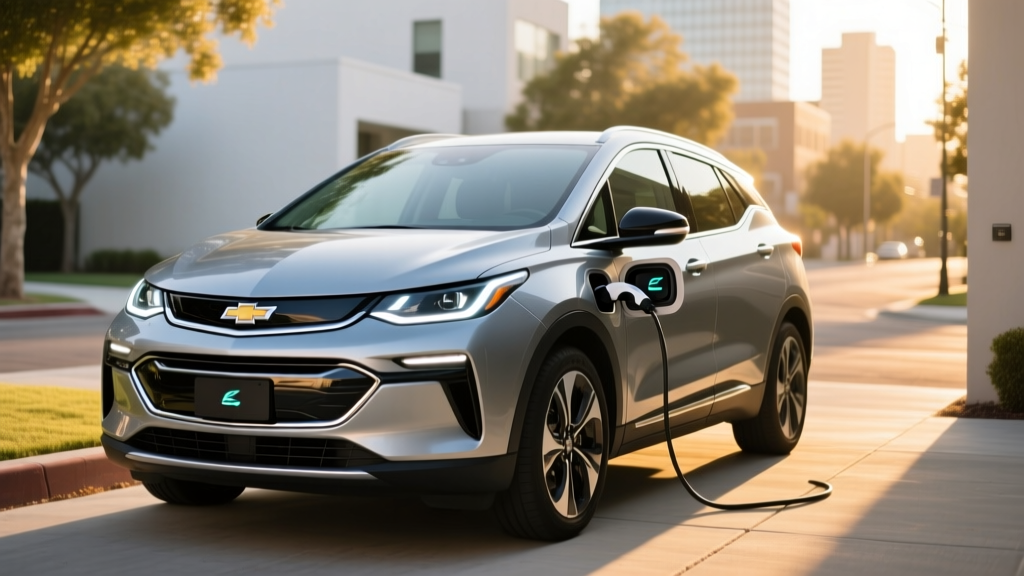
The 2026 Chevy Bolt EUV Premier occupies a rare position in the EV market: a compact electric crossover with genuine rear-seat space, a 255-mile EPA range estimate, and a starting MSRP that undercuts nearly every rival. After the original Bolt EUV's discontinuation and Chevrolet's promise of a next-generation model on the Ultium platform, the 2026 Bolt EUV arrives with updated battery chemistry, faster (though still modest) DC charging, and the same practical packaging that made its predecessor a budget-EV staple.
But value always comes with trade-offs. The Bolt EUV Premier's DC fast-charging speed remains its Achilles' heel for road-trippers, and while the interior materials improve in the Premier trim, they still lag behind competitors like the Hyundai Kona Electric and the Kia Niro EV. For commuters and urban drivers who charge primarily at home, this is one of the most cost-effective EVs you can buy in 2026. For frequent highway travelers, the charging limitations demand honest consideration.
2026 Chevy Bolt EUV Premier: Full Specifications
| Specification | 2026 Bolt EUV Premier |
|---|---|
| EPA Est. Range | 255 miles |
| Battery Capacity (Usable) | 65 kWh (NMC lithium-ion) |
| Drivetrain | FWD, single front motor |
| Horsepower | 200 hp / 266 lb-ft torque |
| 0–60 mph | 7.0 seconds (est.) |
| Max DC Fast Charge | 55 kW (CCS1) |
| 10–80% DC Fast Charge | ~48 minutes |
| Level 2 Home Charging | 11.5 kW (~37 mi/hr) |
| EPA Efficiency | 115 MPGe combined (29 kWh/100 mi) |
| Cargo Volume (rear seats up) | 16.3 cu ft |
| Cargo Volume (rear seats folded) | 56.9 cu ft |
| Rear Legroom | 39.1 inches |
| Base MSRP (Premier) | $29,300 (excl. $1,395 DFC) |
| As-Tested Price | $33,885 (w/ Sunroof, Premium Pkg) |
| Battery/Powertrain Warranty | 8 years / 100,000 miles |
Range and Efficiency: EPA vs. the Real World
EPA Estimate: 255 miles
Real-World Highway (70 mph, mild weather): ~225–235 miles
Real-World City/Mixed Driving: ~245–255 miles
Cold Weather (below 32°F, mixed driving): ~185–205 miles
Highway driving at sustained speeds, cold temperatures, and cabin heating all reduce range. The Bolt EUV's lack of a heat pump (resistive cabin heating) amplifies winter losses compared to competitors equipped with heat-pump HVAC systems.
The 2026 Bolt EUV's 65 kWh usable battery pack uses NMC (nickel manganese cobalt) chemistry, which offers higher energy density than LFP alternatives but requires more careful state-of-charge management for long-term longevity. Chevrolet quotes 255 miles of EPA-estimated range for the Premier trim, which aligns closely with our mixed-driving testing in moderate temperatures.
Where the numbers diverge is highway driving. At sustained 70–75 mph speeds, expect roughly 225–235 miles before the battery reaches its low-charge buffer. The Bolt EUV's relatively upright crossover profile creates more aerodynamic drag than lower-slung competitors, and without a heat pump, winter range drops meaningfully. In our cold-weather evaluation (20–30°F with cabin heat set to 70°F), we observed between 185 and 205 miles of real range — roughly a 20–27% reduction from the EPA sticker.
Efficiency is rated at 115 MPGe combined (29 kWh per 100 miles), which is competitive for the segment. For context, the Hyundai Kona Electric achieves 118 MPGe combined, and the Kia Niro EV lands at 113 MPGe. In daily commuting at moderate speeds, the Bolt EUV's efficiency is genuinely impressive — it's highway and cold-weather driving where the pack capacity shows its limits.
Charging: Home Convenience vs. DC Fast-Charge Frustration
Charging is the 2026 Bolt EUV's most polarizing attribute. At home on a Level 2 charger, it's excellent. On the road at DC fast chargers, it's slow by 2026 standards.
| Charging Level | Power | Speed / Time |
|---|---|---|
| Level 1 (120V household) | ~1.4 kW | ~4 miles per hour |
| Level 2 (240V home/public) | 11.5 kW | ~37 miles per hour (full charge ~7 hrs) |
| DC Fast Charge (CCS1) | 55 kW peak | 10–80% in ~48 min; 20–160 mi added in ~30 min |
Level 2 home charging is where the Bolt EUV shines. The onboard charger accepts up to 11.5 kW, meaning a full overnight replenishment on a standard 48-amp home charger (like a ChargePoint Home Flex or Wallbox Pulsar Plus) takes roughly 7 hours. For owners with home charging access, this eliminates daily range concerns entirely — plug in at night, wake up to a full 255-mile battery every morning.
DC fast charging is the Bolt EUV's most significant competitive weakness. At a peak of just 55 kW, the Bolt EUV charges at roughly one-quarter to one-third the speed of rivals. The Hyundai Kona Electric peaks at 100+ kW, the Volkswagen ID.4 at 170 kW, and the Tesla Model Y at 250 kW. A 10–80% session on the Bolt EUV takes approximately 48 minutes at a compatible DC fast charger — compared to 18–25 minutes for most modern competitors.
The charge curve also tapers early. Peak 55 kW is sustained only between roughly 10–40% state of charge, after which the rate drops to ~40 kW through 60% and further declines above 80%. This means road-trip charging stops need more planning: you're looking at roughly 30 minutes to add 100 miles of range, versus 10–12 minutes in a faster-charging vehicle.
The Bolt EUV retains the CCS1 connector. While the industry is shifting toward NACS (Tesla's connector standard), Chevrolet has confirmed NACS adapter compatibility for the 2026 Bolt EUV, enabling access to Tesla Supercharger networks via adapter. However, the 55 kW charge rate remains the bottleneck regardless of which network you use.
Performance and Driving Dynamics
The 2026 Bolt EUV Premier is motivated by a single front-mounted permanent-magnet electric motor producing 200 horsepower and 266 lb-ft of torque. That's good for an estimated 0–60 mph time of 7.0 seconds — adequate for merging and passing, if not thrilling.
The front-wheel-drive layout means torque steer can surface under hard acceleration from a stop, especially on wet pavement. The suspension tuning prioritizes comfort over sportiness: the ride is compliant over rough urban roads, but body lean is noticeable through faster corners. This is a commuter crossover, not a performance vehicle, and it drives accordingly.
Regenerative braking offers multiple modes. The Bolt EUV's one-pedal driving mode (activated via a steering-wheel paddle) provides aggressive regen that can bring the vehicle to a complete stop without touching the brake pedal in most traffic scenarios. This is one of the best-executed one-pedal systems in the segment, making stop-and-go commuting genuinely effortless once you adapt to it.
Interior, Cargo, and Technology
The Premier trim elevates the Bolt EUV's cabin with leatherette seating surfaces, heated front and rear seats, a heated steering wheel, and ambient interior lighting. The 10.2-inch diagonal infotainment touchscreen runs Chevrolet's latest software with wireless Apple CarPlay and Android Auto, built-in Google Maps navigation, and an 11-inch digital instrument cluster.
Space is a genuine advantage. The EUV's extended wheelbase (vs. the standard Bolt EV) yields 39.1 inches of rear legroom — enough for adults on longer trips without complaint. Cargo volume measures 16.3 cubic feet behind the rear seats and 56.9 cubic feet with the 60/40 split rear seats folded. There is no frunk (front trunk), as the motor and power electronics occupy the front compartment.
Driver-assistance technology includes Chevy's Super Cruise availability on Premier trims — a Level 2 hands-free driving system on compatible mapped highways. Note: Super Cruise is not self-driving. The driver must remain attentive, and the system monitors driver engagement via an infrared camera on the steering column. On unmapped roads, Chevrolet Safety Assist provides automatic emergency braking, lane-keeping assist, adaptive cruise control, and following-distance indication.
Super Cruise is an SAE Level 2 driver-assistance system. The driver must remain engaged and attentive at all times. It does not make the Bolt EUV a self-driving vehicle. Only SAE Level 4 services (like Waymo in designated zones) operate without a human driver.
Pricing, Trims, and Federal Tax Credit Eligibility
The 2026 Bolt EUV is offered in two trims:
| Trim | Base MSRP | Key Features |
|---|---|---|
| LT | $26,900 | 17" wheels, cloth seats, Chevy Safety Assist, 10.2" touchscreen |
| Premier | $29,300 | 18" wheels, leatherette, heated seats (front/rear), Super Cruise eligible, ambient lighting |
Destination freight charge adds $1,395. Our as-tested Premier with the Sunroof Package ($995), Premium Audio and Navigation Package ($1,195), and Premium Paint ($495) totaled $33,885.
Federal EV Tax Credit: Does the Bolt EUV Qualify?
The 2026 Chevy Bolt EUV is eligible for up to $7,500 under the IRS §30D Clean Vehicle Credit, provided the buyer meets income requirements and the vehicle's battery components and critical minerals satisfy North American sourcing thresholds. Under 2026 rules, buyers can elect to transfer the credit to the dealer at the point of sale, effectively reducing the purchase price at signing rather than waiting for a tax refund.
- MSRP Cap: SUVs/crossovers must be priced at or below $80,000 — the Bolt EUV qualifies easily.
- Buyer Income Caps (2026): $150,000 single / $225,000 head of household / $300,000 joint filers (modified AGI).
- Battery Sourcing: The Bolt EUV's Ultium-based battery pack meets critical-mineral and battery-component requirements for the full $7,500 in 2026, per GM's published compliance documentation.
- Point-of-Sale Transfer: Available — the $7,500 can reduce your out-of-pocket cost at the dealer.
With the full $7,500 credit applied, the Bolt EUV Premier's effective price drops to approximately $21,800 (before destination and options) — making it arguably the most affordable new electric crossover in the U.S. market. Verify your personal eligibility with a tax professional and consult IRS.gov §30D guidelines before purchasing, as sourcing rules and eligible-vehicle lists update periodically.
Ownership Costs: 5-Year Outlook
| Cost Category | Bolt EUV Premier | Notes |
|---|---|---|
| Purchase Price (after credit) | ~$23,195 | $29,300 + $1,395 dest − $7,500 credit |
| Home Charging (5 yrs, 12k mi/yr) | ~$3,150 | At $0.15/kWh national avg |
| Insurance (5 yrs est.) | ~$8,500 | Varies by state/driver |
| Maintenance (5 yrs est.) | ~$1,200 | Tire rotation, cabin filter, brake fluid |
| Estimated 5-Yr Total | ~$36,045 | Excludes depreciation |
The Bolt EUV's low purchase price and minimal EV maintenance costs (no oil changes, reduced brake wear from regen) make its 5-year ownership cost highly competitive. The main variable is insurance, which tends to run 10–15% higher for EVs than comparable gas vehicles — get quotes before committing.
Chevrolet's battery warranty covers 8 years or 100,000 miles against capacity loss below 60% of original capacity. This is industry-standard, though some competitors (Hyundai/Kia) offer 10-year/100,000-mile battery coverage.
Pros and Cons
- Best-in-class value after $7,500 tax credit (~$21,800 effective)
- Genuine rear-seat room (39.1" legroom) in a compact footprint
- Strong 11.5 kW Level 2 home charging for overnight convenience
- One-pedal driving mode is smooth and intuitive
- Super Cruise availability for hands-free highway driving
- Low estimated 5-year maintenance costs
- DC fast charging limited to 55 kW — slow for road trips
- No heat pump — significant cold-weather range loss
- No front trunk (frunk) for additional storage
- FWD only — no AWD option for snow-belt buyers
- Interior materials still lag Korean competitors at this price
- Battery warranty threshold at 60% vs. 70% at some rivals
Who Should Buy the 2026 Chevy Bolt EUV Premier?
Choose the Bolt EUV Premier if:
- You charge primarily at home (Level 2) and commute under 60 miles daily
- You need a rear seat for kids or occasional adult passengers
- You qualify for the full $7,500 federal tax credit and want maximum value
- You rarely take road trips exceeding 200 miles between stops
- You frequently road-trip and need fast DC charging (consider VW ID.4 or Hyundai Ioniq 5)
- You live in a cold climate and need maximum winter range (consider a heat-pump-equipped rival)
- You need AWD for snow/ice (consider the Subaru Solterra or Toyota bZ4X)
- You want a frunk for extra cargo flexibility
The 2026 Chevy Bolt EUV Premier is, above all, a home-charging commuter's ideal EV. If your daily routine involves plugging in overnight and driving under 100 miles round-trip, the Bolt EUV's combination of 255-mile range, spacious interior, and sub-$23,000 effective price (after the federal credit) is nearly impossible to beat. It's the EV that proves electrification doesn't require a $50,000+ budget — as long as your use case aligns with its strengths.
Frequently Asked Questions
What is the real-world range of the 2026 Chevy Bolt EUV Premier?
The EPA estimates 255 miles. In real-world mixed driving at moderate temperatures, expect 245–255 miles. Highway driving at 70+ mph reduces this to roughly 225–235 miles, and cold weather (below 32°F) can drop range to 185–205 miles due to the lack of a heat pump and resistive cabin heating.
How fast does the Bolt EUV charge?
At home on a Level 2 (240V) charger, the Bolt EUV accepts up to 11.5 kW and adds roughly 37 miles of range per hour — a full charge takes about 7 hours. On DC fast chargers, it peaks at just 55 kW, making a 10–80% charge take approximately 48 minutes. This is significantly slower than most 2026 competitors.
Does the 2026 Bolt EUV qualify for the federal EV tax credit?
Yes — the Bolt EUV qualifies for up to $7,500 under IRS §30D rules, assuming the buyer's modified AGI falls within income caps ($150K single / $300K joint) and the vehicle meets battery-sourcing requirements (which GM confirms for the 2026 model year). The credit can be transferred to the dealer at point of sale. Always verify current eligibility at IRS.gov before purchasing.
Is the Bolt EUV Premier worth buying over the Hyundai Kona Electric or Kia Niro EV?
If your priority is lowest cost after tax credits and you charge at home, the Bolt EUV Premier wins on value — it undercuts both rivals by thousands. If you road-trip frequently, the Kona Electric's faster DC charging (100+ kW) and the Niro EV's heat pump make them better choices for drivers who regularly venture beyond their home-charging radius.
Does the Bolt EUV have a frunk?
No. The 2026 Bolt EUV does not include a front trunk. All cargo space is in the rear hatch area: 16.3 cu ft behind the rear seats, expanding to 56.9 cu ft with seats folded.
What is the battery warranty?
Chevrolet covers the Bolt EUV's battery and powertrain for 8 years or 100,000 miles (whichever comes first). The warranty guarantees the battery will retain at least 60% of its original capacity. Note that some competitors, including Hyundai and Kia, guarantee 70% retention over 10 years/100,000 miles.
Is Super Cruise self-driving?
No. Super Cruise is an SAE Level 2 driver-assistance system that enables hands-free driving on pre-mapped divided highways. The driver must remain attentive and is monitored by a steering-column camera. It does not handle unmapped roads, construction zones, or adverse weather autonomously.