Quick Verdict: The Budget EV King Returns with a Better Battery
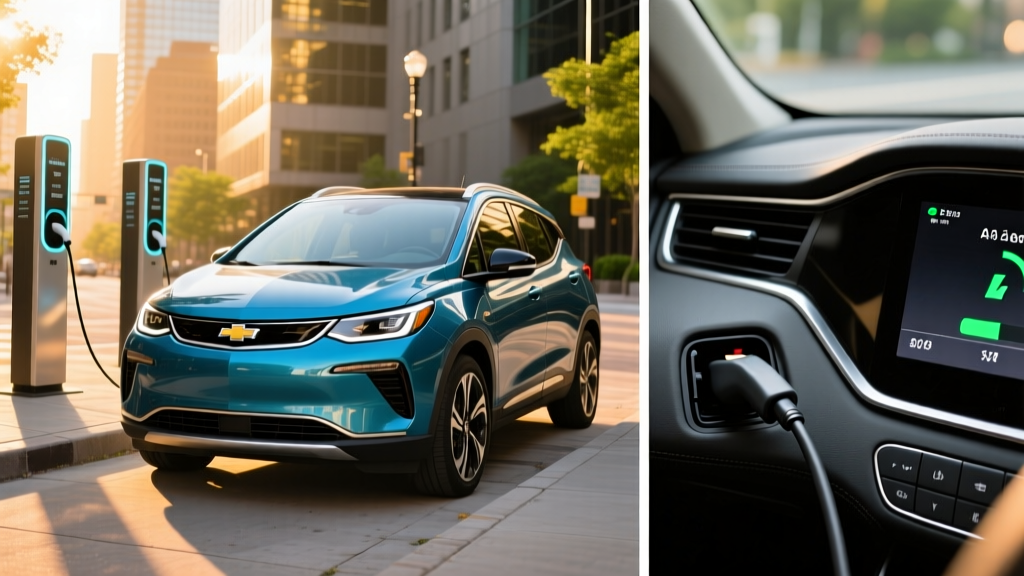
The 2025 Chevy Bolt EUV is back after a one-year hiatus, and it addresses the original model's single biggest flaw: slow DC fast charging. Built on an updated version of GM's BEV3 platform, the refreshed Bolt EUV pairs a 65 kWh lithium iron phosphate (LFP) battery with a CCS2/NACS-compatible charge port capable of accepting up to 150 kW at a public fast charger. With a starting MSRP of $28,900 and potential eligibility for the full $7,500 federal tax credit under IRS §30D, it remains the most affordable way into a practical, long-range electric crossover in 2025.
But the real-world picture is more nuanced. Highway range drops noticeably, cold weather still bites hard on any LFP pack, and the interior, while improved, doesn't rival Hyundai or Tesla for tech polish. Here's everything you need to know before signing a lease or purchase agreement.
Range, Efficiency, and the Real-World Reality
EPA Estimated: 247 miles (combined city/highway)
Real-World Highway (70 mph, moderate temps): ~210–225 miles
Real-World Cold Weather (below 32°F, mixed driving): ~170–190 miles
LFP chemistry is more resilient to degradation over time but still loses 20–30% range in freezing conditions due to cabin heating demand and reduced battery efficiency.
The EPA's 247-mile combined figure is achievable in suburban and city driving where regenerative braking recaptures energy and speeds stay below 50 mph. On a flat, 70-mph highway run in 65–75°F weather, expect to see between 210 and 225 miles before hitting a 10% state of charge (SoC). Push speeds to 80 mph or climb mountain grades and that number compresses further to roughly 195 miles.
Cold weather is the universal EV tax, and the Bolt EUV's LFP pack is no exception. Below freezing, plan on 170–190 miles of usable range with the heat running. The 2025 model does include a heat pump for the first time in the Bolt lineup, which reduces cabin-heating energy draw by approximately 30% compared to the resistive heater in the pre-2024 Bolt — a meaningful improvement for northern-climate owners.
Efficiency lands at 115 MPGe combined (29 kWh/100 miles) per EPA data on fueleconomy.gov. That's competitive with the Hyundai Kona Electric and slightly behind the Tesla Model Y RWD, which benefits from a more aerodynamic profile.
Battery Chemistry: Why LFP Matters for the Bolt EUV
The 2025 Bolt EUV uses a 65 kWh usable capacity LFP (lithium iron phosphate) battery pack. GM moved from the NMC (nickel manganese cobalt) chemistry in the original Bolt to LFP for three reasons:
| Factor | LFP (Bolt EUV 2025) | NMC (Typical Long-Range EVs) |
|---|---|---|
| Cycle Life | 3,000+ cycles to 80% SoH | 1,000–2,000 cycles to 80% SoH |
| Daily Charging to 100% | Recommended — no degradation penalty | Not recommended — accelerates wear above 80% |
| Energy Density | Lower — heavier pack for same kWh | Higher — lighter, more range per kg |
| Cold-Weather Performance | More range loss in freezing temps | Slightly better cold-weather retention |
| Cost | Lower — no cobalt or nickel | Higher — commodity-sensitive pricing |
| Thermal Runaway Risk | Very low | Low but higher than LFP |
The practical takeaway: LFP owners can (and should) charge to 100% daily without the guilt that NMC owners feel. The trade-off is a slightly heavier vehicle and more noticeable range compression in winter. Over a 150,000-mile ownership cycle, LFP packs are projected to retain 90%+ of original capacity — a significant longevity advantage.
Charging Speed: The Big Upgrade Over the Old Bolt
The original Bolt's 55 kW DC fast-charge ceiling was its Achilles' heel, turning road trips into endurance tests. The 2025 Bolt EUV leaps to 150 kW peak DC fast charging, a nearly threefold improvement. Here's the full charging profile:
| Charging Level | Power (kW) | Speed | Notes |
|---|---|---|---|
| Level 1 (120V household) | 1.4 kW | ~4 miles/hour | Emergency/trickle only |
| Level 2 (240V, 48A) | 11.5 kW | ~34 miles/hour | Full charge in ~6.5 hours |
| DC Fast Charge (peak) | 150 kW | 10–80% in ~28 minutes | Tapers significantly above 80% SoC |
The 10–80% DC fast-charge time of approximately 28 minutes is a legitimate road-trip enabler. On a 350 kW Electrify America or Tesla Supercharger (with NACS adapter) pedestal, the Bolt EUV will sustain close to its 150 kW peak between 10% and roughly 55% SoC, then taper progressively. Expect 80–90% of the session's energy to transfer in the first 20 minutes, with the final 25% (55–80%) taking the remaining 8 minutes. Charging above 80% slows dramatically — plan your stops to 80% and move on.
At home on a 48-amp Level 2 charger (requiring a 60-amp dedicated circuit), the 11.5 kW onboard charger replenishes the full 65 kWh pack in about 6.5 hours. Most owners plugging in overnight after a typical 40-mile commute will see a full battery by morning with only 1.5–2 hours of charge time needed.
Connector note: The 2025 Bolt EUV ships with a native CCS2 port. GM has committed to NACS (Tesla-style) adoption across its lineup, and a factory NACS port is expected for the 2026 model year. For 2025, GM includes a CCS-to-NACS adapter in the box, granting access to Tesla Supercharger stations — a significant network advantage.
Performance and Drivetrain
The Bolt EUV is a front-wheel-drive, single-motor EV producing 200 horsepower and 266 lb-ft of torque. The permanent-magnet synchronous motor delivers instant torque from a standstill, making it feel punchier than the numbers suggest in city driving.
- 0–60 mph: 7.0 seconds
- Top speed: 93 mph (electronically limited)
- Drivetrain: FWD, single-speed reduction gear
- Curb weight: ~3,850 lbs
- Towing capacity: Not rated for towing
Seven seconds to 60 is adequate for highway merging and passing but won't thrill anyone coming from a Tesla Model Y Performance or even a Ford Mustang Mach-E GT. The FWD layout means torque steer is mildly present under hard acceleration, and the all-season tires prioritize efficiency over grip. This is a commuter appliance, not a sports crossover — and that's fine for the price point.
Regenerative braking offers two modes: standard (mild regen, coasting feel) and one-pedal driving (aggressive regen that can bring the vehicle to a complete stop without touching the brake pedal). The one-pedal mode is well-calibrated and among the smoother implementations in the segment.
Interior, Cargo, and Technology
The 2025 Bolt EUV's cabin is a clear step up from the plasticky, budget-feeling interior of the pre-2024 Bolt. Soft-touch materials cover the dash and door uppers, and the seats are adequately supportive for long drives. Rear legroom is generous at 39.1 inches — more than the Hyundai Kona Electric and close to the VW ID.4.
| Measurement | Specification |
|---|---|
| Front headroom | 40.0 in |
| Front legroom | 42.1 in |
| Rear headroom | 38.8 in |
| Rear legroom | 39.1 in |
| Cargo (behind rear seats) | 27.0 cu ft |
| Cargo (rear seats folded) | 56.3 cu ft |
| Frunk | None |
The 27 cubic feet of cargo space behind the rear seats is competitive for the subcompact crossover class, though the lack of a frunk (front trunk) means you lose the bonus storage that the Tesla Model Y and Ford Mach-E provide. Fold the 60/40 split rear seats and 56.3 cubic feet is available — enough for a weekend's worth of camping gear or a Costco run.
Infotainment: A 17.3-inch diagonal touchscreen dominates the dashboard, running GM's latest Google Built-in software with native Google Maps navigation, Google Assistant voice control, and access to the Play Store for apps like Spotify and Audible. Wireless Apple CarPlay and Android Auto are standard. The system is responsive, though the screen's sheer size means some climate controls are buried in menus — a physical volume knob returns for 2025, thankfully.
Driver assistance: The Chevy Safety Assist suite is standard on all trims and includes:
- Automatic emergency braking with pedestrian detection
- Lane keep assist with lane departure warning
- Following distance indicator
- Intelligent headlamp assist
- Adaptive cruise control (available on 2LT and Premier trims)
Super Cruise — GM's hands-off, eyes-on Level 2 highway driving system — is not available on the 2025 Bolt EUV. GM reserves it for higher-priced models in its portfolio. The standard adaptive cruise and lane centering work adequately but require hands-on-wheel input at all times. This is an SAE Level 2 system; the driver remains fully responsible for vehicle operation.
Pricing, Trims, and Federal Tax Credit Eligibility
| Trim | MSRP | Key Features |
|---|---|---|
| LT (base) | $28,900 | 17.3" screen, heated front seats, CCS+NACS adapter, Safety Assist suite |
| 2LT | $31,500 | Adds adaptive cruise, panoramic sunroof, heated steering wheel, Bose audio |
| Premier | $34,200 | Leather seats, ventilated front seats, HD surround vision camera, power liftgate |
The destination charge adds $1,195 to all trims. A fully loaded Premier with optional paint and floor mats lands around $36,000 before incentives.
The 2025 Bolt EUV is expected to qualify for the full $7,500 federal tax credit based on current IRS guidance, but eligibility depends on multiple factors:
- MSRP cap: Must be ≤ $80,000 for SUVs/crossovers — Bolt EUV qualifies ✓
- Buyer income cap: AGI ≤ $150,000 (single) / $300,000 (joint) — verify with your tax professional
- Battery sourcing: Critical minerals and battery components must meet phased-in domestic-content thresholds per IRS §30D rules. GM sources LFP cells from LG Energy Solution's U.S. plants, but final critical-mineral compliance for 2025 should be confirmed at point of sale.
- Point-of-sale transfer: Beginning 2024, buyers can transfer the credit to the dealer for an immediate price reduction — this effectively drops the LT trim to ~$21,400 if fully eligible.
Always confirm credit eligibility with your dealer and tax advisor before purchase. Rules are subject to change. See irs.gov for current guidance.
Ownership Costs and Warranty
GM backs the 2025 Bolt EUV with a competitive warranty package:
- Battery & powertrain: 8 years / 100,000 miles (whichever comes first), covering capacity loss below 70% of original
- Bumper-to-bumper: 3 years / 36,000 miles
- Corrosion: 6 years / 100,000 miles
- Roadside assistance: 5 years / 60,000 miles
The 70% capacity retention threshold is industry-standard but worth noting: if your 65 kWh pack drops to 45.5 kWh usable capacity within the warranty window, GM will repair or replace it. Given LFP's superior cycle life, hitting that threshold within 100,000 miles is statistically unlikely under normal use.
Insurance costs for the Bolt EUV are moderate — expect $1,400–$1,800 annually for a 35-year-old driver with a clean record, varying significantly by state and carrier. Get quotes before purchasing; EV insurance premiums remain 15–25% higher than comparable gas vehicles on average due to repair-cost data.
Maintenance is minimal: no oil changes, no transmission fluid, no spark plugs. Budget for cabin air filter replacement (~$40 every 20,000 miles), tire rotation, and eventual tire replacement. EVs tend to wear tires 20–30% faster than gas cars due to instant torque and heavier curb weight.
Pros and Cons
✓ Pros
- Lowest MSRP in the long-range EV crossover segment
- LFP battery with excellent longevity and daily 100% charging tolerance
- Dramatically improved DC fast charging (150 kW vs 55 kW in old Bolt)
- Spacious rear seat with 39.1" of legroom
- Google Built-in infotainment with native navigation
- NACS adapter included — Supercharger access from day one
- Heat pump standard for improved cold-weather efficiency
✗ Cons
- No Super Cruise availability — basic Level 2 ADAS only
- FWD only — no AWD option for snow-belt buyers
- 28-minute 10–80% DC charge still trails Hyundai/Kia E-GMP platforms (~18 min)
- No front trunk (frunk) for bonus cargo space
- Not rated for any towing
- Cold-weather range loss significant on LFP chemistry
- Tax credit eligibility not 100% guaranteed — verify battery sourcing at purchase
Who Should Buy the 2025 Chevy Bolt EUV?
- Budget-conscious commuters who want a 200+ mile EV under $30,000 (after credit)
- Apartment dwellers with workplace or public charging access who don't need a home garage setup
- Second-car households replacing a gas commuter with an electric daily driver
- Rideshare drivers who want low operating costs and don't need luxury branding
- You regularly road-trip 400+ miles and need sub-20-minute charging (consider Hyundai Ioniq 5)
- You need AWD for mountain or heavy-snow driving (consider Tesla Model Y AWD or VW ID.4 AWD)
- You want cutting-edge ADAS like Super Cruise or FSD (look at Cadillac Lyriq or Tesla)
- You tow a trailer of any size
Frequently Asked Questions
What is the real-world range of the 2025 Chevy Bolt EUV?
The EPA rates it at 247 miles combined. In real-world highway driving at 70 mph, expect 210–225 miles. In freezing weather with cabin heat, plan on 170–190 miles. The heat pump helps, but LFP chemistry is more temperature-sensitive than NMC.
How fast does the Bolt EUV charge at home and on the road?
At home on a 240V Level 2 charger (48A), it charges at 11.5 kW — about 34 miles per hour, or a full charge in ~6.5 hours. On a DC fast charger, it peaks at 150 kW and charges from 10–80% in approximately 28 minutes.
Does the 2025 Bolt EUV qualify for the $7,500 federal tax credit?
It is expected to qualify, but eligibility depends on your income (≤$150K single / ≤$300K joint), the vehicle's MSRP (under the $80K cap — it qualifies), and battery critical-mineral sourcing compliance under current IRS §30D rules. Confirm with your dealer and tax professional at point of sale.
Is the Bolt EUV worth buying over the Hyundai Kona Electric or Tesla Model Y?
If price is the primary factor, the Bolt EUV wins — it undercuts both by $5,000–$10,000 after incentives. The Kona Electric charges slightly faster and has a more polished interior. The Model Y offers AWD, Super Cruise-class Autopilot, more range, and Supercharger-native access — but starts $15,000+ higher. For pure value, the Bolt EUV is hard to beat.
Does the Bolt EUV have Super Cruise?
No. Super Cruise is not available on any 2025 Bolt EUV trim. It comes with Chevy Safety Assist (automatic emergency braking, lane keep assist) and available adaptive cruise control on higher trims. All features are SAE Level 2 — the driver must remain engaged at all times.
Can I charge the Bolt EUV at Tesla Superchargers?
Yes. The 2025 Bolt EUV ships with a CCS-to-NACS adapter in the box, enabling access to Tesla's Supercharger network. Native NACS ports are expected for the 2026 model year.