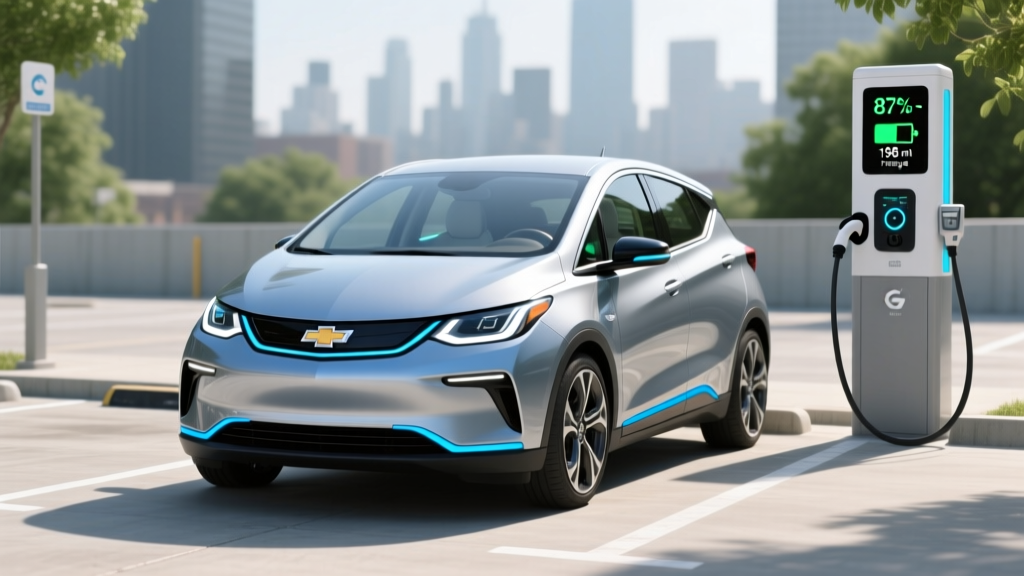
The Chevrolet Bolt EV and Bolt EUV ended production in late 2023, and as of 2026, the nameplate remains off Chevrolet's new-vehicle lineup. For bargain-hunting EV shoppers, however, the Bolt lives on in the used and certified-pre-owned market, where it remains one of the most compelling budget electric vehicles ever sold in the United States. If you've been searching "chevy bolt discontinued" and wondering whether a leftover or pre-owned Bolt still makes sense in 2026, this guide covers the specs that matter: real-world range, charging limitations, battery longevity, and whether the used-EV tax credit can make it an unbeatable deal.
Why the Chevy Bolt Was Discontinued
GM retired the original Bolt platform after the 2023 model year to make room for vehicles built on its Ultium architecture. The Bolt's aging BEV2 platform — which debuted for the 2017 model year — lacked the 800-volt electrical architecture, NACS connector compatibility, and advanced driver-assist hardware that GM wanted across its lineup. Despite a 2022 price cut that made the Bolt EV the cheapest new EV in America at $26,500, GM signaled that the next-generation Bolt (if it arrives) will ride on an updated Ultium-based platform with faster charging and modernized electronics.
As of early 2026, Chevrolet has not officially announced a next-gen Bolt or confirmed a return date. That leaves a significant gap in the sub-$35,000 EV segment — one that the used Bolt market has rushed to fill.
2023 Chevy Bolt EV & EUV: Final-Year Specs at a Glance
Since the 2023 model year was the last, here are the definitive specifications every used-Bolt shopper should memorize. These figures apply to both the compact Bolt EV hatchback and the slightly longer Bolt EUV crossover.
| Spec | Bolt EV (Hatchback) | Bolt EUV (Crossover) |
|---|---|---|
| EPA Range | 259 miles | 247 miles |
| Battery (usable) | 65 kWh (NMC) | 65 kWh (NMC) |
| Motor / Drivetrain | 200 hp / 266 lb-ft, FWD | 200 hp / 266 lb-ft, FWD |
| 0–60 mph | ~6.5 seconds | ~7.0 seconds |
| Max DC Fast Charge | 55 kW (CCS1) | 55 kW (CCS1) |
| 10–80% DC Time | ~55 minutes | ~55 minutes |
| Level 2 Home Charge | 11.5 kW (~39 mi/hr) | 11.5 kW (~39 mi/hr) |
| Combined MPGe | 120 MPGe | 115 MPGe |
| Energy Consumption | 28 kWh/100 mi | 29 kWh/100 mi |
| Cargo (behind rear seats) | 16.6 cu ft | 16.3 cu ft |
| Cargo (seats folded) | 57.0 cu ft | 56.9 cu ft |
| Rear Legroom | 36.0 in | 39.1 in |
| Battery Warranty | 8 yr / 100,000 mi | 8 yr / 100,000 mi |
| Final Base MSRP (2023) | $26,500 | $28,200 |
Real-World Range: What the EPA Sticker Doesn't Tell You
The Bolt's 65 kWh NMC (nickel manganese cobalt) battery pack provides excellent energy density for its class, but it lacks the active liquid thermal management sophistication found in newer Ultium-based EVs. In extreme heat or cold, preconditioning the battery while plugged in is essential to preserve range and protect long-term health. For daily commuting within a 60-mile round trip, the Bolt's real-world range is more than sufficient — even in a Minnesota January.
Charging: The Bolt's Biggest Limitation in 2026
Here's where honest assessment matters. The Bolt's DC fast-charging speed is its most significant drawback by modern standards. While competitors like the Hyundai Ioniq 5 (peak 240 kW) and Tesla Model 3 (peak 250 kW) can add 150+ miles in 15 minutes, the Bolt tops out at a modest 55 kW on a CCS1 connector.
| Charging Level | Power (kW) | Miles Added per Hour | Full Charge Time |
|---|---|---|---|
| Level 1 (120V household) | ~1.4 kW | ~4 mi/hr | ~65 hours (0–100%) |
| Level 2 (240V home/public) | 11.5 kW | ~39 mi/hr | ~7 hours (0–100%) |
| DC Fast Charge (CCS1) | 55 kW peak | ~150 mi/hr (peak) | ~55 min (10–80%) |
The charging curve reality: The Bolt sustains close to its 55 kW peak from roughly 10% to 50% State of Charge, then tapers progressively. From 80% to 100%, charging slows dramatically — expect an additional 45+ minutes just for that final 20%. This makes the Bolt a poor choice for frequent long-distance road trippers who rely on DC fast charging. A 300-mile trip will require at least one 45–60-minute stop, compared to 15–20 minutes in a modern 800V EV.
However, for the vast majority of Bolt owners who charge at home overnight on Level 2, the 11.5 kW onboard charger is actually excellent. A full recharge from near-empty takes about 7 hours — perfectly suited for overnight replenishment. If you can install a Level 2 home charger (typically $500–$1,500 for equipment and electrician work on an existing 240V circuit), the Bolt's slow DC charging becomes largely irrelevant for daily use.
Connector note: The Bolt uses the CCS1 connector. With the industry shifting to NACS (Tesla's connector standard), adapters are available, and many public networks now offer both CCS and NACS cables. Check your local Electrify America or ChargePoint stations for CCS availability before relying on public fast charging.
Driving Experience, Tech, and Safety
The Bolt's 200-horsepower, front-wheel-drive powertrain delivers punchy acceleration from a stop — the instant 266 lb-ft of torque makes it surprisingly quick in urban merging situations. The 0–60 mph time of roughly 6.5 seconds (Bolt EV) won't embarrass you at a stoplight, though it trails the Tesla Model 3 RWD (5.8 seconds) and Hyundai Ioniq 5 RWD (7.0 seconds but with a more refined chassis).
Inside, the 2023 Bolt features a 10.2-inch touchscreen infotainment system with wireless Apple CarPlay and Android Auto, a digital instrument cluster, and Chevrolet's Super Cruise availability on the EUV Premier trim — a notable inclusion at this price point. Super Cruise is an SAE Level 2 driver-assistance system that enables hands-free driving on over 400,000 miles of compatible divided highways, but the driver must remain attentive and eyes on the road at all times. It is not autonomous driving.
Safety ratings are strong: the 2023 Bolt EV earned a 5-star overall rating from NHTSA, and the IIHS gave it top marks in most crash-test categories. The battery pack is mounted low in the chassis, contributing to a low center of gravity and stable handling for a front-drive compact.
Used Bolt Pricing and the Federal Tax Credit in 2026
Since the Bolt is no longer sold new, the relevant tax credit for 2026 buyers is the §25E Used Clean Vehicle Credit, not the §30D new-vehicle credit. Here's how the economics break down:
| Item | Estimated Amount |
|---|---|
| Used Bolt EV (2022–2023, avg. market price) | $16,000–$22,000 |
| Used Bolt EUV (2022–2023, avg. market price) | $18,000–$24,000 |
| §25E Used EV Tax Credit (30% of sale price, max $4,000) | Up to $4,000 |
| Effective Price After Credit (Bolt EV example) | ~$12,000–$18,000 |
§25E eligibility requirements (per IRS guidelines):
- The vehicle must be at least 2 model years old (2023 Bolts qualify in 2025 and beyond)
- Sale price must be $25,000 or less
- Buyer income caps: $75,000 single / $112,500 head of household / $150,000 married filing jointly
- Credit equals 30% of the sale price, up to a maximum of $4,000
- Available once per buyer per 3-year period
- Must be purchased from a licensed dealer (private-party sales do not qualify)
At a $18,000 sale price, the credit would be $4,000 (30% of $18,000 = $5,400, but capped at $4,000). That makes the effective cost as low as $14,000 — extraordinary value for a 259-mile-range EV with a modern infotainment system and strong safety ratings. Consult a tax professional to confirm your personal eligibility, as IRS rules are subject to change.
Battery Longevity and Warranty Remaining
The Bolt's NMC battery pack carries an 8-year/100,000-mile warranty from GM, guaranteeing a minimum of 60% capacity retention. In practice, Bolt batteries have demonstrated excellent longevity. Real-world data from high-mileage Bolt owners and fleet operators suggests typical degradation of 8–12% over the first 100,000 miles — meaning a 2022 Bolt with 40,000 miles might still retain 90–93% of its original capacity.
For a 2022–2023 Bolt purchased in 2026, you'll have roughly 4–6 years and 60,000–80,000 miles of factory battery warranty remaining, assuming average mileage accumulation. This is a significant advantage over used gas cars, where powertrain warranties typically expire at 60,000 miles.
GM's battery recall (2021–2022, related to rare manufacturing defects that could cause fires) has been fully addressed on all affected vehicles. Any used Bolt you consider should have documentation that the recall remedy was completed. Check the VIN on NHTSA's recall lookup before purchasing.
Pros and Cons: The Honest Bolt Assessment
Pros
- Outstanding value as a used EV ($12K–$18K after credit)
- 259-mile EPA range is practical for most daily needs
- 120 MPGe combined keeps electricity costs extremely low
- Strong Level 2 home charging at 11.5 kW
- 5-star NHTSA safety rating
- Generous remaining battery warranty on 2022–2023 models
- Wireless CarPlay/Android Auto standard
- Super Cruise available on EUV Premier trim
- Proven battery longevity with minimal degradation
Cons
- 55 kW DC fast charging is painfully slow for road trips
- CCS1 connector requires adapters for NACS-only stations
- No longer available new — limited to used/CPO market
- Front-wheel drive only; no AWD option
- Rear seat is tight in the EV hatchback (36.0" legroom)
- No active liquid battery preconditioning for DC charging
- Cargo space is modest vs. crossover competitors
- Chevrolet infotainment can feel dated vs. Tesla/Tesla-style interfaces
Who Should Buy a Used Chevy Bolt in 2026?
Ideal Bolt Buyer Profile
Choose the used Bolt if: You're a daily commuter with home Level 2 charging access, your round trip is under 100 miles, you want the lowest possible cost per mile, and you rarely take road trips over 250 miles. The Bolt is an exceptional second car, apartment-friendly EV (if you have charging access), or budget-first EV for new adopters who want to avoid the depreciation hit of a new vehicle.
Look elsewhere if: You frequently drive 300+ mile highway trips, need AWD for snow-belt winters, require more than 16.6 cu ft of cargo space, or want the latest in fast-charging technology. Consider the used Hyundai Ioniq 5, Tesla Model 3, or Volkswagen ID.4 instead — all offer faster DC charging, though at higher used-market prices.
Frequently Asked Questions
Is the Chevy Bolt coming back?
As of early 2026, GM has not confirmed a next-generation Bolt. CEO Mary Barra has hinted at an affordable Ultium-based EV, but no official nameplate, timeline, or pricing has been announced. If a new Bolt arrives, expect it no earlier than the 2027 model year with updated NACS charging and faster DC capability.
What is the real-world range of a used Chevy Bolt?
Expect 220–240 miles on highway-heavy drives and 180–210 miles in sub-freezing weather from the Bolt EV. The EUV delivers about 10 fewer miles in each scenario. City commuters with heavy regenerative braking often match or slightly exceed the 259-mile EPA sticker.
How fast does the Bolt charge at home?
On a 240V Level 2 charger at 11.5 kW, the Bolt adds approximately 39 miles of range per hour. A full charge from near-empty takes about 7 hours, making overnight charging convenient and complete by morning.
Does a used Chevy Bolt qualify for any tax credit in 2026?
Yes — the §25E Used Clean Vehicle Credit provides up to $4,000 (30% of the sale price) if you buy from a dealer, the sale price is under $25,000, and your income falls below IRS thresholds ($75K single / $150K married). The vehicle must be at least 2 model years old, which all Bolts now are.
Is the Bolt's battery reliable long-term?
Yes. Bolt NMC batteries have demonstrated 8–12% degradation over 100,000 miles in real-world use. With the 8-year/100,000-mile warranty, a 2022–2023 Bolt purchased in 2026 still has substantial factory coverage remaining. Verify the 2021–2022 recall remedy was completed via NHTSA's VIN lookup.
Should I buy a Bolt EV or EUV?
Choose the EUV if rear-seat passengers are a priority — it offers 3.1 additional inches of rear legroom (39.1" vs 36.0"). Choose the EV hatchback if you want maximum range (259 vs 247 miles) and a slightly lower price. Cargo space is nearly identical between the two.