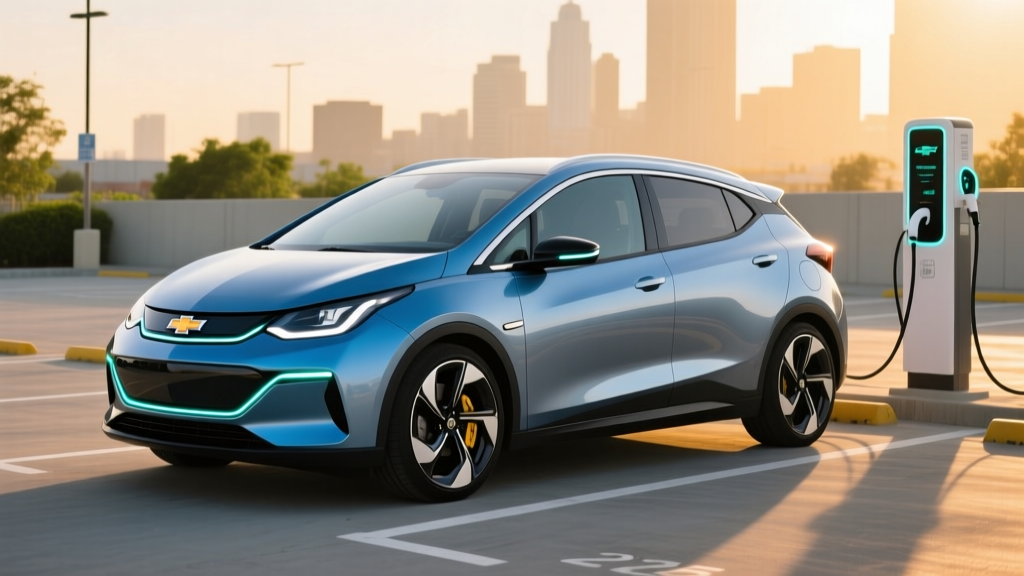
The original Chevrolet Bolt was the budget EV king before GM pulled the plug in late 2023. Now, a next-generation Bolt is returning on the Ultium platform with faster charging, a fresh design, and a price that undercuts nearly every electric vehicle on the market. But the single most common question we hear is: when is the Chevy Bolt availability date? Here's everything confirmed and estimated about the 2026 Bolt, including range, pricing, charging, and whether it'll qualify for the federal tax credit.
Chevy Bolt Availability Date: When Can You Actually Buy One?
General Motors officially confirmed the next-generation Chevrolet Bolt for production, with assembly slated at the Orion Assembly plant in Michigan — the same facility that built the original Bolt EV and EUV. Based on GM's public statements and production timelines, the 2026 Chevy Bolt availability date is expected in late 2025 as a 2026 model-year vehicle, with customer deliveries likely beginning in early 2026.
Dealers are expected to begin taking reservations closer to the launch window, though exact reservation dates have not been published as of this writing. GM has indicated that the new Bolt will be one of its most affordable Ultium-based vehicles, positioning it as a direct competitor to the Nissan Leaf successor, Hyundai Kona Electric, and base Tesla Model 3.
Range, Battery, and Efficiency: What to Expect
The outgoing Bolt EV featured a 65 kWh NMC (nickel manganese cobalt) battery delivering an EPA-estimated 259 miles of range. The 2026 Bolt is expected to adopt GM's Ultium battery architecture, which supports both NMC and LFP (lithium iron phosphate) chemistries depending on the application.
For a vehicle targeting this price segment, industry analysis suggests GM will likely use a 65–75 kWh usable Ultium pack, with an EPA-estimated range target of approximately 250–280 miles. The LFP chemistry route would offer lower cost and longer cycle life at the expense of slightly lower energy density, while NMC would maximize range per kWh.
While the EPA sticker is projected around 260–280 miles, real-world conditions tell a different story:
- Highway driving (70+ mph): Expect roughly 220–245 miles — aerodynamic drag hits compact crossovers hard at sustained speeds.
- Cold weather (below 32°F): Range can drop 20–30%, putting winter range in the 180–210 mile bracket. Battery preconditioning and a heat pump (if equipped) help mitigate this.
- City/commuter driving: This is where the Bolt thrives. Regenerative braking and low-speed efficiency can push real-world city range close to or slightly above the EPA estimate.
For a daily commuter with home charging, 250+ EPA miles is more than sufficient. Road-trippers should plan charging stops every 180–200 miles to stay comfortable.
| Spec | Estimate / Target |
|---|---|
| EPA Range | ~260–280 miles (preliminary) |
| Battery Capacity | ~65–75 kWh usable (Ultium) |
| Battery Chemistry | LFP or NMC (TBD by GM) |
| Efficiency | ~120–130 MPGe est. / ~26–28 kWh/100mi |
| 0–60 mph | ~6.5–7.5 seconds (est.) |
| Horsepower | ~200 HP (single motor FWD) |
| Drivetrain | FWD (AWD possible on higher trim) |
| Base MSRP | ~$26,000–$28,000 (est.) |
| Battery Warranty | 8 years / 100,000 miles (GM standard) |
Charging Speed: The Bolt's Biggest Upgrade
The original Bolt's Achilles heel was DC fast charging — capped at roughly 55 kW, making 10–80% top-ups take over an hour. GM has confirmed the next-gen Bolt will feature significantly faster DC fast-charging capability on the Ultium platform.
Based on Ultium's architecture and comparable GM vehicles, the 2026 Bolt is expected to support peak DC fast charging around 115–150 kW. This would slash 10–80% charging times to approximately 25–35 minutes — a massive improvement and competitive with the Hyundai Kona Electric and Kia Niro EV.
| Charging Level | Power | Speed / Time |
|---|---|---|
| Level 1 (120V household) | ~1.4 kW | ~4 miles per hour |
| Level 2 (240V home/public) | ~11.5 kW | ~35–40 miles per hour; full charge ~7 hrs |
| DC Fast Charge | ~115–150 kW peak | 10–80% in ~25–35 min (est.) |
Understanding the charge curve: Peak kW is only sustained at lower states of charge (typically 10–40%). Above 60% SoC, charging power tapers significantly to protect the battery. A 150 kW peak doesn't mean 150 kW sustained — expect an average of roughly 80–100 kW across the 10–80% window. This is normal for all EVs and is why we report 10–80% times rather than peak rates alone.
For home charging, a Level 2 wall connector on a 48-amp circuit will fully replenish the Bolt overnight. Installation typically costs $500–$1,500 depending on your electrical panel's proximity to the garage and whether a panel upgrade is needed.
Performance and Driving Dynamics
The previous Bolt delivered 200 horsepower and 266 lb-ft of torque from a single front-mounted motor, achieving 0–60 mph in approximately 6.5 seconds. The 2026 Ultium-based Bolt is expected to maintain or slightly improve on these figures.
GM's Ultium platform supports front-wheel, rear-wheel, and all-wheel drive configurations. The base Bolt will almost certainly remain front-wheel drive with a single motor, prioritizing efficiency and cost. An AWD dual-motor variant is possible but unconfirmed for launch.
The driving experience should be familiar to Bolt fans: peppy off the line thanks to instant electric torque, quiet at cruising speeds, and nimble in urban environments. The low center of gravity from the underfloor battery pack keeps body roll in check on winding roads, though the comfort-tuned suspension prioritizes ride quality over sportiness.
Pricing, Trims, and Federal Tax Credit Eligibility
GM CEO Mary Barra has publicly stated that the next-generation Bolt will be one of the most affordable EVs in the Chevrolet lineup. Industry estimates place the base MSRP between $26,000 and $28,000, with higher trims (potentially including an RS or Activ variant) reaching $32,000–$35,000 fully loaded.
| Trim | Est. MSRP | After §30D Credit |
|---|---|---|
| Base (LS/LT) | ~$26,000–$28,000 | ~$18,500–$20,500 |
| Mid (2LT) | ~$30,000–$32,000 | ~$22,500–$24,500 |
| Top (RS/Premier) | ~$33,000–$35,000 | ~$25,500–$27,500 |
Federal tax credit eligibility (§30D): The Bolt is expected to qualify for up to $7,500 under the IRS §30D clean vehicle credit, but eligibility depends on several factors that change periodically. Key requirements include:
- MSRP cap: The vehicle must be priced below $55,000 (cars/hatchbacks) — the Bolt clears this easily.
- Buyer income cap: Modified adjusted gross income must not exceed $150,000 (single), $225,000 (head of household), or $300,000 (joint). Check irs.gov for current limits.
- Battery sourcing: A percentage of critical minerals and battery components must be sourced from the US or free-trade-agreement countries. This threshold increases annually. GM's Ultium battery supply chain has been progressively domesticizing, but exact credit amounts (full $7,500 vs. partial $3,750) depend on the model year's sourcing requirements.
- Point-of-sale transfer: Under current rules, buyers can transfer the credit to the dealer at purchase, reducing the purchase price directly rather than waiting for a tax refund.
Always verify current eligibility on fueleconomy.gov and consult a tax professional before relying on credit amounts for purchase decisions.
Interior, Cargo, and Technology
The original Bolt offered a surprisingly spacious interior for its compact footprint, with 16.3 cubic feet of cargo space behind the rear seats and 56.2 cubic feet with seats folded. The 2026 Bolt is expected to maintain or slightly expand these figures, potentially reaching 17–18 cu ft cargo / 57+ cu ft max thanks to Ultium's more space-efficient battery packaging.
Passenger space should remain generous for the class, with approximately 42 inches of front legroom and 36 inches rear — adequate for adults on shorter trips.
On the technology front, expect:
- Infotainment: An 11-inch (or larger) touchscreen running GM's latest Google Built-in interface, with wireless Apple CarPlay and Android Auto.
- Driver assistance: Chevy Safety Assist suite including automatic emergency braking, lane-keeping assist, adaptive cruise control, and blind-spot monitoring. GM's Super Cruise hands-free driving may be offered on higher trims, though this is unconfirmed for the Bolt specifically.
- Unique features: One-pedal driving mode, Regen on Demand paddle, and potentially Vehicle-to-Load (V2L) capability via the Ultium platform.
- Expected sub-$28K starting price — one of the cheapest new EVs
- Major charging speed upgrade over the original Bolt
- Proven compact hatchback practicality
- Strong federal tax credit eligibility potential
- Low operating costs (~$0.04–$0.06/mile on home charging)
- Not yet available — Chevy Bolt availability date still pending
- FWD only at launch (AWD unconfirmed)
- DC fast charging still slower than 800V rivals (Hyundai Ioniq 5, Kia EV6)
- Compact size limits towing (likely unrated or 1,000 lb max)
- GM's public charging network reliability still lags Tesla's
Who Should Buy the 2026 Chevy Bolt?
The next-gen Bolt is purpose-built for a specific buyer profile:
Ideal for: Budget-conscious commuters, apartment dwellers with workplace or public charging access, first-time EV buyers, and households adding a second car for daily errands and school runs. If your daily driving is under 60 miles round-trip and you can charge at home overnight, the Bolt's range and cost equation are hard to beat.
Less suited for: Frequent road-trippers who need 300+ miles between stops, families needing three rows, or anyone who requires towing capability. The Bolt is a commuter and city car first — it'll handle occasional highway trips fine, but it's not a cross-country cruiser in the mold of a Tesla Model Y or Hyundai Ioniq 5.
How Does the Bolt Compare to Key Competitors?
Once available, the 2026 Bolt will face stiff competition in the affordable EV segment:
- Hyundai Kona Electric: Similar price range, ~261 miles EPA, slightly faster DC charging. The Kona is the Bolt's most direct rival.
- Nissan Leaf (if continued): Aging platform with CHAdeMO connector and lower range. The Bolt should outclass it in every metric.
- Tesla Model 3 (base RWD): More expensive (~$38K+) but offers Supercharger access, more range, and stronger performance. Different buyer profile.
- Chevrolet Equinox EV: Larger, more expensive, but offers 300+ miles and more cargo room. The Bolt sits below it as the entry-level Chevy EV.
The Bolt's primary advantage is price. If GM delivers on a sub-$28K MSRP with tax credit eligibility, the effective cost drops below $21,000 — making it the most affordable new EV in America by a wide margin.
Frequently Asked Questions
What is the confirmed Chevy Bolt availability date?
GM has announced the next-generation Bolt for production but has not published an exact on-sale date. Based on production timelines at Orion Assembly, expect late 2025 production with customer deliveries in early 2026. Dealer reservations may open several months before production begins.
Will the 2026 Bolt use the NACS (Tesla) charging connector?
GM has committed to adopting the NACS (North American Charging Standard) connector across its EV lineup. The 2026 Bolt is expected to ship with NACS natively or include a CCS-to-NACS adapter, granting access to Tesla Supercharger stations. This is a significant advantage over the original Bolt's CCS-only setup.
Does the new Bolt qualify for the full $7,500 federal tax credit?
It's expected to, but final eligibility depends on battery-sourcing compliance at the time of purchase. The MSRP and buyer income requirements are easily met. Check irs.gov for the latest sourcing thresholds and consult a tax professional. The credit can be transferred to the dealer at point of sale, reducing your purchase price directly.
How does cold weather affect the Bolt's range?
Like all EVs, the Bolt will lose range in freezing temperatures — expect a 20–30% reduction in extreme cold (below 20°F). This means a 270-mile EPA rating could drop to 190–215 miles in winter. Preconditioning the battery while plugged in and using seat/steering wheel heaters instead of cabin heat can help preserve range.
Is the Bolt worth waiting for vs. buying a current EV now?
If you need an EV today, the Hyundai Kona Electric, Chevrolet Equinox EV, and Tesla Model 3 are all available now with strong specs. But if budget is your top priority and you can wait, the Bolt's projected sub-$28K price and tax credit potential make it one of the most compelling value propositions in the EV market. The trade-off is uncertainty on exact specs and timing.