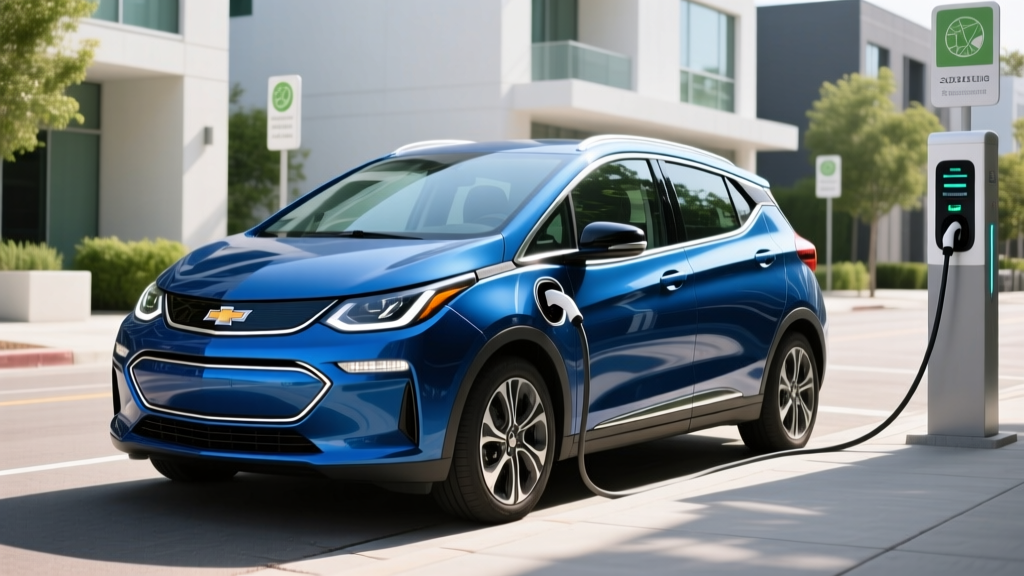
The 2021 Chevrolet Bolt EV occupies a strange space in 2026. It is no longer sold new — GM replaced it with the redesigned 2025 Bolt EV (and the crossover Bolt EUV) — but it remains one of the most-searched used electric vehicles on the market. The reason is simple arithmetic: a 2021 Bolt with a healthy battery can deliver 259 miles of EPA-rated range for well under $20,000 after the federal used-EV tax credit, making it the cheapest way to access 250+ miles of range in America.
But buying a five-year-old EV is not the same as buying a five-year-old Camry. Battery health, DC fast-charging speed (or the lack of it), and shifting tax-credit rules all demand scrutiny. This review breaks down the 2021 Bolt EV with the same spec-driven rigor we apply to new models — and tells you exactly what to check before you sign the paperwork.
Quick Verdict: Still the Budget-Range Champion
If your priority is maximizing EPA range per dollar on the used market, the 2021 Bolt EV has no serious rival. A well-maintained example with 40,000 miles typically lists between $14,000 and $18,000 before incentives. Apply the §25E used-EV credit (up to $4,000, subject to income and dealer requirements), and effective cost drops to roughly $10,000–$14,000 for 259 miles of range. No other used EV — not the Nissan Leaf, not the first-gen Hyundai Kona Electric — matches that ratio.
The trade-offs are real: DC fast charging peaks at just 55 kW, meaning road-trip stops stretch past 45 minutes. The interior materials feel firmly subcompact-economy. And the 2021 model year predates GM's shift to the Ultium platform, so parts availability and software support warrant monitoring. For a commuter who charges at home and rarely road-trips, these compromises are easy to live with. For a one-car household that drives 400 miles every holiday weekend, they are not.
Range, Battery, and Real-World Efficiency
The 2021 Bolt EV carries a 66 kWh (gross) lithium-ion battery pack using LG Energy Solution NMC (nickel-manganese-cobalt) pouch cells. Usable capacity is approximately 65 kWh thanks to a small top/bottom buffer. The EPA rates the car at 259 miles of combined range and 118 MPGe (28 kWh per 100 miles).
EPA sticker: 259 mi combined. In real-world driving, expect:
• City / mild-weather commuting: 260–280 mi (regenerative braking recovers energy; NMC cells are efficient at low speeds)
• Highway (70 mph, 75°F): ~220–235 mi
• Highway in cold weather (30°F or below): ~170–200 mi — a 25–35% loss is typical for NMC packs without a heat pump
• Worst-case (75 mph, 20°F, headwind, mountain terrain): as low as 150 mi
The 2021 Bolt does not have a heat pump; it relies on resistive cabin heating, which draws heavily from the traction battery in cold weather. If you live in the upper Midwest or New England and lack access to Level 2 charging at work or home, plan your winter commute around a 180-mile practical ceiling to preserve a safety margin.
Battery Chemistry and Longevity
NMC chemistry offers higher energy density than LFP (lithium iron phosphate), which is why GM squeezed 259 miles into a compact hatchback. The trade-off is slightly faster calendar degradation and a preference for staying between 20% and 80% state of charge for daily use. Based on fleet data from Bolt owners reporting on forums like InsideEVs and Reddit r/BoltEV, typical five-year degradation for a 2021 model sits between 4% and 8% — meaning a car that started at 259 miles now realistically delivers 238–249 miles EPA-equivalent when new-cell performance is referenced. Always verify state of health (SoH) with an OBD-II reader and the MyChevrolet app before purchase.
Spec Table: 2021 Chevy Bolt EV at a Glance
| Spec | Value |
|---|---|
| EPA Range | 259 mi (combined) |
| Battery (gross / usable) | 66 kWh / ~65 kWh |
| Chemistry | NMC (LG Energy Solution pouch) |
| Efficiency | 118 MPGe / 28 kWh/100 mi |
| Motor Output | 200 hp / 266 lb-ft torque |
| 0–60 mph | 6.5 seconds |
| Drivetrain | FWD (single front motor) |
| Max DC Fast Charge | 55 kW (CCS1) |
| 10–80% DC Time | ~60 minutes |
| Level 2 Rate | 11.5 kW (~39 mi/hr) |
| Cargo Volume | 16.9 cu ft (rear seats up) / 56.6 cu ft (folded) |
| Battery Warranty (orig.) | 8 yr / 100,000 mi |
| Original MSRP (LT / Premier) | $36,500 / $41,700 |
Source: EPA Fuel Economy, Chevrolet archives.
Charging: The Bolt's Biggest Compromise
Charging is where the 2021 Bolt EV reveals its age. The CCS1 DC fast-charging port is capped at 55 kW peak — and that peak holds only briefly between roughly 10% and 40% state of charge before tapering sharply. A 10% to 80% session on a 150 kW Electrify America or EVgo stall takes approximately 60 minutes. For context, a 2026 Hyundai Ioniq 5 does the same run in about 18 minutes. On a road trip, that difference compounds into hours.
Charging Speed Breakdown
| Level | Power | Rate | Notes |
|---|---|---|---|
| Level 1 (120V) | ~1.4 kW | ~4 mi/hr | Emergency/trickle only |
| Level 2 (240V, 48A) | 11.5 kW | ~39 mi/hr | Full charge in ~7 hr |
| DC Fast (CCS1) | 55 kW peak | ~160 mi/hr (peak) | 10–80% in ~60 min; tapers above 40% |
At home on a Level 2 wall connector (ChargePoint Home Flex, Tesla Universal Wall Connector with J1772 adapter, or similar), the Bolt's 11.5 kW onboard charger is genuinely excellent. A full 0–100% replenishment takes about 7 hours — meaning an overnight session easily covers even high-mileage commutes. For the owner who charges nightly at home and only uses DC fast charging a handful of times per year, the Bolt's slow DC speed is a minor inconvenience rather than a dealbreaker.
Preconditioning note: The 2021 Bolt lacks battery preconditioning for DC fast charging. In cold weather (below 40°F), expect your first DC session of the day to be even slower than 55 kW until the pack warms up. Plan accordingly.
Performance and Drivetrain
The single front-mounted permanent-magnet motor produces 200 horsepower and 266 lb-ft of torque, routed to the front wheels. The 0–60 mph sprint takes 6.5 seconds — genuinely quick for a subcompact hatchback and sufficient for confident highway merging. Instant electric torque gives the Bolt a punchy feel around town that belies its modest price.
Ride quality is compliant, though the 2,500+ lb battery pack keeps the center of gravity low and body roll moderate. Steering is numb but accurate. Regenerative braking offers two modes: a conventional "D" setting with mild regen and a "L" (Low) mode that enables near-one-pedal driving. Most owners settle into L mode and use the steering-wheel regen paddle for additional deceleration when needed.
There is no all-wheel-drive option, no performance variant, and no towing rating. This is a commuter, full stop.
Interior, Tech, and Driver Assists
The cabin is where the 2021 Bolt shows its budget origins. Hard plastics dominate, seats are manually adjusted (even on the Premier trim), and the rear seat is tight for adults over six feet. Cargo space is a practical 16.9 cubic feet behind the rear seats and 56.6 cubic feet with the 60/40 split folded — competitive with a Honda Fit and adequate for weekly groceries or a weekend's worth of luggage for two.
Infotainment
The 10.2-inch touchscreen running Chevrolet Infotainment 3 is a bright spot. Wireless Apple CarPlay and Android Auto are standard on all trims — rare for 2021. The interface is responsive, and the physical volume knob and climate buttons are a usability win over the touch-capacitive controls in some rivals. An 8-inch digital driver display provides speed, range, and power-flow graphics.
Driver Assistance
The Chevy Safety Assist suite is standard on every 2021 Bolt and includes:
- Automatic emergency braking with pedestrian detection
- Forward collision alert
- Lane-keep assist with lane-departure warning
- Following-distance indicator
- IntelliBeam automatic high beams
Adaptive cruise control is available on the Premier trim. Note: Super Cruise is not offered on the 2021 Bolt EV — it was reserved for the 2022+ Bolt EUV and Cadillac models. This is SAE Level 1–2 driver assistance, meaning you must remain fully engaged with hands on the wheel. It is not self-driving.
Pricing, Used Market, and Tax Credits
Because the 2021 Bolt is available only on the used market in 2026, the relevant tax credit is IRC §25E (Used Clean Vehicle Credit), not the new-vehicle §30D credit.
• Credit amount: 30% of sale price, up to $4,000 maximum
• Vehicle sale price cap: $25,000
• Buyer income caps (MAGI): $75,000 single / $112,500 head of household / $150,000 joint
• Vehicle must be at least 2 model years old (2021 qualifies in 2026)
• Must purchase from a licensed dealer (private-party sales do not qualify)
• Credit can be transferred at point of sale as a down-payment reduction
• Source: IRS §25E
Typical Used Pricing (Q1 2026)
| Trim | Avg. Dealer Price | After §25E Credit |
|---|---|---|
| LT (40k–60k mi) | $14,500–$16,500 | ~$10,500–$12,500 |
| Premier (40k–60k mi) | $16,500–$18,500 | ~$12,500–$14,500 |
| Low-mile LT (<25k mi) | $17,500–$19,500 | ~$13,500–$15,500 |
At these prices, the 2021 Bolt undercuts even the cheapest new EVs (like the 2026 Nissan Leaf S at ~$28,000) by a wide margin. Total cost of ownership is exceptionally low: electricity at $0.14/kWh yields a fuel cost of roughly $3.90 per 100 miles, versus ~$12 per 100 miles for a 30-MPG gas car at $3.50/gallon.
Original Battery Warranty Status
GM's original battery warranty was 8 years / 100,000 miles, guaranteeing the pack would retain at least 60% of original capacity. A 2021 Bolt purchased in 2026 is roughly halfway through that window. Critical: Confirm the vehicle's warranty status via a GM dealer using the VIN. Any car with a salvage title, unauthorized battery modification, or odometer discrepancy may have voided coverage. Also check whether the car was part of the 2021–2022 battery recall (certain VINs received full pack replacements — a significant value-add if documented).
Pros, Cons, and Who Should Buy
- 259 mi EPA range — class-leading for price
- Excellent 11.5 kW Level 2 home charging
- Punchy 200 hp / 6.5-sec 0–60
- Wireless CarPlay/Android Auto standard
- Spacious hatchback cargo (56.6 cu ft)
- Eligible for up to $4,000 used-EV credit
- Strong Chevy Safety Assist suite
- 55 kW DC fast charging is painfully slow for road trips
- No battery preconditioning for cold-weather DC charging
- Resistive cabin heater = big winter range loss
- Cheap interior plastics, manually adjusted seats
- Rear seat tight for tall adults
- No Super Cruise / no advanced driver-assist option
- NMC pack prefers 20–80% SoC (not ideal for 100% daily charging)
Who It Suits Best
- Commuters with home Level 2 charging and sub-120-mile daily round trips — the Bolt's sweet spot.
- Second-car households wanting an EV for daily errands while keeping a gas vehicle for long hauls.
- Budget-conscious buyers who want genuine 250+ mile range without a $35,000+ new-EV purchase.
- Rideshare drivers in urban markets (Uber/Lyft) — low operating cost, adequate range, compact size.
Who Should Look Elsewhere
- Frequent road trippers — the 55 kW DC speed will test your patience.
- Cold-climate one-car households without reliable Level 2 access — winter range drops are steep.
- Families needing rear-seat space — consider the Bolt EUV or a used Tesla Model Y instead.
- Towing or cargo-heavy use — the Bolt is not rated for towing.
2021 Bolt EV vs. Used Competitors
| Model (2021 MY) | EPA Range | DC kW | 10–80% | Avg. Used Price |
|---|---|---|---|---|
| Chevy Bolt EV | 259 mi | 55 kW | ~60 min | $14.5k–$18.5k |
| Nissan Leaf Plus | 226 mi | 100 kW (CHAdeMO) | ~45 min | $14k–$17k |
| Hyundai Kona Electric | 258 mi | 75 kW | ~47 min | $17k–$21k |
| Tesla Model 3 SR+ | 263 mi | 170 kW | ~28 min | $20k–$24k |
The Kona Electric matches the Bolt's range but charges faster and costs more. The Tesla Model 3 dominates on DC charging and Supercharger access but commands a $5,000–$7,000 premium. The Leaf Plus uses the obsolete CHAdeMO connector (shrinking infrastructure) and relies on passive air cooling for its battery, raising longevity concerns in hot climates. For pure value-per-mile-of-range, the Bolt wins.
Frequently Asked Questions
What is the real-world range of the 2021 Chevy Bolt EV?
The EPA rates it at 259 miles combined. In real-world driving, expect 260–280 miles in mild city conditions, 220–235 miles on the highway at 70 mph, and 170–200 miles in cold-weather highway driving. Worst-case winter scenarios can push range as low as 150 miles.
How fast does the 2021 Bolt charge?
On a DC fast charger, it peaks at 55 kW and takes about 60 minutes from 10% to 80% state of charge. At home on a Level 2 (240V, 48A) charger, it accepts up to 11.5 kW, adding roughly 39 miles of range per hour and achieving a full charge in about 7 hours. Level 1 (120V) is limited to ~4 miles per hour.
How much does a used 2021 Bolt cost after tax credits?
Dealer prices typically range from $14,500 to $18,500 depending on trim and mileage. Qualified buyers (income under $75k single / $150k joint, buying from a dealer, sale price under $25,000) can apply the §25E used-EV credit of up to $4,000, bringing effective cost to roughly $10,500–$14,500.
Is the 2021 Bolt EV worth buying versus competitors?
Yes, if your priority is lowest cost per mile of range and you primarily charge at home. No, if you road-trip frequently (the 55 kW DC speed is a major limitation) or need a spacious rear seat. A used Tesla Model 3 is better for road trips; a used Kona Electric charges faster on DC but costs more.
What are the biggest pros and cons?
Pros: 259-mile range at a bargain price, strong Level 2 charging, punchy performance, wireless phone integration, spacious hatchback cargo, up to $4,000 used-EV credit. Cons: Slow DC fast charging (55 kW), no battery preconditioning, heavy winter range loss, cheap interior, no Super Cruise, NMC battery prefers partial state of charge.
Does the 2021 Bolt qualify for the federal EV tax credit?
It qualifies for the §25E used clean-vehicle credit (up to $4,000) — not the §30D new-vehicle credit, since it is no longer sold new. Eligibility requires: buyer income under caps ($75k single / $150k joint), purchase from a licensed dealer, sale price under $25,000, and the vehicle must be at least 2 model years old. Confirm current rules at IRS.gov.
How do I check the battery health on a used 2021 Bolt?
Use an OBD-II dongle with an app like Torque Pro or the MyChevrolet app to read state of health (SoH). A healthy 2021 Bolt should show 92–96% SoH at five years old. Also request the vehicle's charge-history log and verify whether the car was part of the 2021–2022 battery recall (some VINs received full pack replacements, which is a major plus).
Is the 2021 Bolt safe?
The 2021 Bolt EV earned a 5-star overall safety rating from NHTSA and a Top Safety Pick designation from IIHS (with acceptable-rated headlights on specific trims). The Chevy Safety Assist suite is standard.
Bottom Line
The 2021 Chevrolet Bolt EV is the best value-per-mile-of-range used EV you can buy in 2026 — provided your lifestyle fits its limitations. If you charge at home, commute under 120 miles daily, and road-trip rarely (or don't mind 60-minute DC charging stops), a Bolt with a healthy battery and documented service history is hard to beat at $10,000–$14,000 after the used-EV credit. If you need fast DC charging, a roomy back seat, or cold-weather confidence without range anxiety, look at a used Tesla Model 3 or the redesigned 2025+ Bolt on the new Ultium platform instead. Either way, verify battery SoH, confirm warranty status, and check recall completion before you sign.