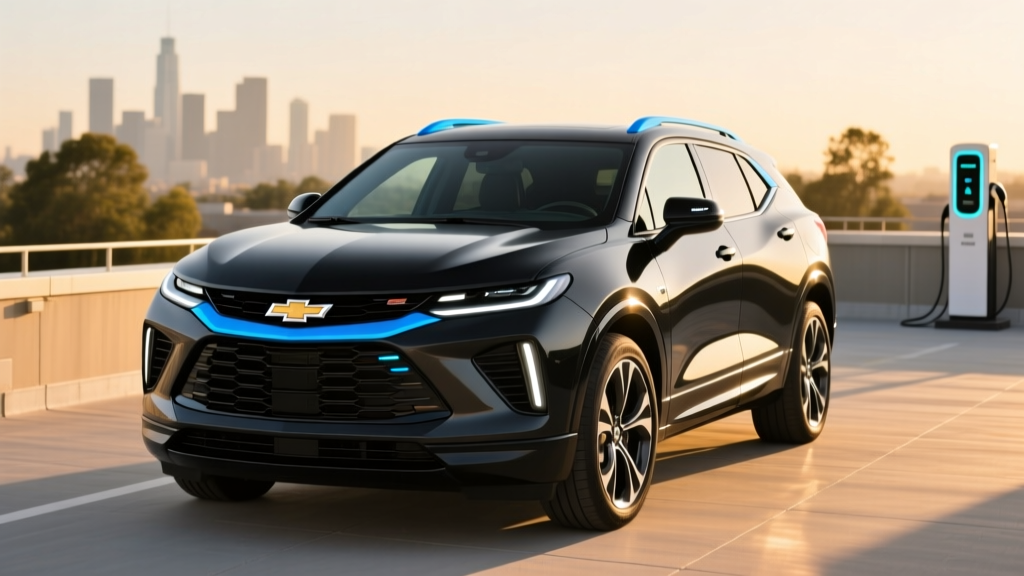
The Chevy Blazer EV SS occupies a narrow but compelling niche: a midsize electric crossover that prioritizes straight-line performance without abandoning daily-driver practicality. For 2026, GM has refined the Ultium-based platform with improved thermal management and software stability over the troubled 2024 launch, making the SS trim a legitimate contender against the Ford Mustang Mach-E GT, Hyundai Ioniq 5 N, and Tesla Model Y Performance. But performance SUVs live and die by how well they manage the tension between speed and efficiency. Here's what the numbers actually look like when you drive, charge, and own one.
Range, Efficiency, and the Real-World Reality Check
The 2026 Blazer EV SS carries a 102 kWh usable lithium-ion battery pack using GM's Ultium NMC (nickel manganese cobalt) pouch cells. The EPA rates it at 290 miles of combined range — a figure that drops compared to lesser trims because the SS runs standard all-wheel drive, a performance-tuned dual-motor setup, and 21-inch wheels with stickier rubber.
| Condition | Estimated Range | Notes |
|---|---|---|
| EPA Combined | 290 miles | Official sticker figure |
| Highway (70-75 mph, 70°F) | ~245–260 miles | Aerodynamic drag and higher speeds cut efficiency ~10-15% |
| City / Suburban Mixed | ~275–295 miles | Regen braking recovers energy in stop-and-go |
| Cold Weather (20°F, highway) | ~195–225 miles | Battery heating + cabin HVAC draw can reduce range 25-30% |
| Towing (est. 3,500 lb trailer) | ~150–175 miles | Heavy loads dramatically increase consumption |
Efficiency lands at 87 MPGe combined (39 kWh/100 mi) per fueleconomy.gov. That's thirstier than a base RWD Blazer EV (which achieves up to 324 miles EPA on the same platform) but roughly on par with the Mach-E GT. The trade-off for 615 horsepower is real at the charger and on your electricity bill — expect roughly $0.065–$0.08 per mile on residential electricity at $0.16/kWh, compared to $0.12–$0.15/mile for a comparable gas sport SUV.
Charging Speed: DC Fast, Level 2, and the Curve
Charging performance is where Ultium-based vehicles have drawn criticism, and the Blazer EV SS is competent but not class-leading. The peak DC fast-charge rate is 190 kW via its CCS connector (NACS adapter now included for Tesla Supercharger access as of 2025).
| Charging Level | Power / Rate | Time / Miles Added | Best Use Case |
|---|---|---|---|
| Level 1 (120V household) | ~1.4 kW | ~3–4 miles per hour | Emergency top-ups, PHEV overnight |
| Level 2 (240V, 48A home charger) | 11.5 kW | ~33 miles per hour; full charge ~9 hrs | Daily overnight charging at home |
| Level 2 (240V, 80A) | 19.2 kW | ~55 miles per hour; full charge ~5.5 hrs | High-amperage home or destination charging |
| DC Fast Charge (peak 190 kW) | Up to 190 kW | 10–80% in ~30 minutes | Road trip stops, Electrify America / EVgo |
| DC Fast Charge (sustained avg) | ~120–140 kW avg | 10–80% realistically ~35 min | Charge curve tapers significantly above 60% SoC |
The charge curve matters more than the peak number. The Blazer EV SS hits 190 kW briefly between roughly 15–40% state of charge, then progressively tapers. By 70% SoC, you're looking at roughly 90–100 kW, and above 85% it drops below 50 kW to protect battery longevity. This means a realistic 10–80% session takes about 30–35 minutes at a 350 kW-capable station — adequate for road trips but slower than Hyundai/Kia's 800V architecture (which manages 10–80% in ~18 minutes).
On the NACS front, GM's Supercharger adapter gives Blazer EV owners access to Tesla's V3 and V4 stations, though at Tesla's 250 kW peak (the adapter and Blazer's onboard limit cap you at 190 kW regardless). Preconditioning the battery via the navigation system is essential for achieving peak charge rates — arrive at a DC station without preconditioning and you'll see significantly slower speeds, especially in cold weather.
Performance: 615 HP and What It Feels Like
The SS badge isn't cosmetic. The dual-motor AWD powertrain delivers 615 horsepower and 650 lb-ft of torque, launching the Blazer EV SS from 0–60 mph in 3.4 seconds with GM's Velocity Max launch mode engaged. That puts it in the same territory as a Porsche Macan GTS or a BMW X3 M, but with instant electric torque delivery that makes it feel even quicker in real-world passing situations.
| Spec | 2026 Blazer EV SS |
|---|---|
| Powertrain | Dual-motor AWD (Ultium) |
| Horsepower | 615 hp |
| Torque | 650 lb-ft |
| 0–60 mph | 3.4 seconds |
| Top Speed | ~130 mph (electronically limited) |
| Battery (usable) | 102 kWh, NMC pouch cells |
| EPA Range | 290 miles |
| MPGe (combined) | 87 MPGe / 39 kWh/100 mi |
| Max DC Fast Charge | 190 kW (CCS / NACS adapter) |
| 10–80% DC Charge Time | ~30 minutes |
| Level 2 Home Charge (48A) | 11.5 kW (~33 mi/hr) |
| Cargo Volume (behind rear seats) | 26.4 cu ft |
| Cargo Volume (rear seats folded) | 59.3 cu ft |
| Front Trunk (Frunk) | Not available (AWD motor occupies space) |
| Rear Legroom | 38.9 inches |
| Front Legroom | 42.2 inches |
| Towing Capacity | Up to 1,500 lbs (est.) |
| Curb Weight | ~5,800 lbs |
| Base MSRP (SS trim) | $60,200 (incl. destination) |
| Battery/Powertrain Warranty | 8 years / 100,000 miles |
| Bumper-to-Bumper Warranty | 3 years / 36,000 miles |
Driving dynamics are the SS's strongest card. GM's FE3 performance suspension with continuous damping control keeps the heavy battery pack well-managed through corners, and the low center of gravity from the floor-mounted Ultium pack gives it a planted feel unusual for a crossover of this size. Steering is direct if slightly artificial, and the Brembo brakes provide strong, predictable stopping power with adjustable regen levels accessible through paddle shifters.
The trade-off is ride comfort. On 21-inch wheels, the SS transmits more road imperfections into the cabin than the comfort-oriented 2LT or RS trims. For daily commuting on well-maintained roads, it's composed. On broken pavement, you'll notice the firmness.
Interior, Tech, and Daily Livability
The Blazer EV's cabin is a mixed bag that leans positive in the SS trim. The 17.7-inch diagonal infotainment touchscreen dominates the dash and runs GM's latest Ultifi-powered software — a significant improvement over the buggy 2024 launch version. Wireless Apple CarPlay and Android Auto are standard, the Google Built-In interface handles navigation and voice commands well, and the physical volume knob is a welcome retention.
The driver faces an 11-inch digital instrument cluster with configurable layouts including a dedicated performance mode showing G-meter, torque distribution, and battery temperature data.
Notable tech features:
- Super Cruise hands-free driving on 400,000+ miles of mapped highways (standard on SS — a Level 2 SAE system requiring driver attention)
- Regen on Demand paddle-shift braking with one-pedal driving mode
- myChevrolet app with remote preconditioning, charge scheduling, and energy tracking
- Vehicle-to-Load (V2L) capability via available adapter — power devices or small appliances from the pack
- Over-the-air updates for powertrain calibration, infotainment, and ADAS improvements
Drawbacks worth noting:
- No front trunk (frunk) — the front motor eliminates this storage area on AWD models
- Rear visibility is compromised by the sloping roofline and thick C-pillars; the digital rear camera mirror (standard on SS) helps significantly
- Cargo volume at 26.4 cu ft trails the Hyundai Ioniq 5 (27.2 cu ft) and Tesla Model Y (30.2 cu ft) with rear seats up
- Some hard plastics on the lower door panels and center console feel out of place at a $60K+ price point
GM's Super Cruise is one of the best Level 2 driver-assistance systems available, allowing hands-free operation on pre-mapped divided highways. However, per SAE automation definitions, it requires continuous driver supervision. Your eyes must remain on the road, monitored by a driver-attention camera. It does not handle construction zones, unmapped roads, or severe weather autonomously. You are the driver at all times.
Pricing, Trims, and Federal Tax Credit Eligibility
The 2026 Blazer EV SS starts at $60,200 including destination. Key competitors price as follows: the Ford Mustang Mach-E GT at ~$59,875, the Hyundai Ioniq 5 N at ~$67,500, and the Tesla Model Y Performance at ~$52,490. Fully loaded with the SS Convenience Package, panoramic sunroof, and premium paint, expect an as-tested price around $65,000–$67,000.
The Blazer EV SS may qualify for up to $7,500 in federal tax credits, but eligibility depends on several requirements that change frequently. Per IRS §30D guidelines:
- MSRP Cap: SUVs must have an MSRP at or below $80,000 — the Blazer EV SS qualifies at $60,200 base.
- Buyer Income Cap: Modified AGI must not exceed $300,000 (joint), $225,000 (head of household), or $150,000 (single).
- Battery Sourcing: The $7,500 credit splits into $3,750 for critical-minerals sourcing and $3,750 for battery-component sourcing. GM has worked to domesticate Ultium cell production (at plants in Ohio and Tennessee), but critical-mineral compliance depends on current-year supply chain rules. Check the latest fueleconomy.gov tax credit listings before purchasing.
- Point-of-Sale Transfer: Eligible buyers can transfer the credit to the dealer at purchase, reducing the out-of-pocket price directly — no need to wait for a tax refund.
- Final Assembly: Must be assembled in North America (the Blazer EV is built in Ramos Arizpe, Mexico — verify current-year compliance as plant sourcing can affect eligibility).
Always confirm eligibility with your tax professional and the IRS before relying on the credit in your purchase decision. Rules change annually.
| Trim | Drivetrain | EPA Range | Base MSRP | Est. After $7,500 Credit |
|---|---|---|---|---|
| 2LT | RWD | 324 mi | $44,600 | ~$37,100 |
| 2LT | AWD | 293 mi | $47,600 | ~$40,100 |
| RS | AWD | 293 mi | $51,900 | ~$44,400 |
| SS | AWD (Performance) | 290 mi | $60,200 | ~$52,700 |
How It Stacks Up: Blazer EV SS vs. the Competition
| Spec | Chevy Blazer EV SS | Ford Mach-E GT | Hyundai Ioniq 5 N | Tesla Model Y Perf. |
|---|---|---|---|---|
| 0–60 mph | 3.4 sec | 3.5 sec | 3.3 sec | 3.5 sec |
| Horsepower | 615 hp | 480 hp | 641 hp | 510 hp |
| EPA Range | 290 mi | 292 mi | 221 mi | 303 mi |
| Battery (usable) | 102 kWh NMC | 91 kWh NMC | 84 kWh NMC | ~75 kWh NMC |
| Max DC Charge | 190 kW | 150 kW | 240 kW (800V) | 250 kW |
| 10–80% DC Time | ~30 min | ~38 min | ~18 min | ~27 min |
| Cargo (seats up) | 26.4 cu ft | 29.7 cu ft | 27.2 cu ft | 30.2 cu ft |
| Base MSRP | $60,200 | $59,875 | $67,500 | $52,490 |
| ADAS Highlight | Super Cruise | BlueCruise | Highway Drive Assist | Autopilot (FSD opt.) |
- You want Super Cruise for highway commuting and value hands-free driving quality
- You prefer GM's ride-and-handling tuning and the SS performance suspension feel
- You want a distinctive design that doesn't look like every other crossover
- You value a proven Level 2 ADAS system with extensive highway coverage
- Maximum DC charging speed is your priority — the Ioniq 5 N's 800V architecture is significantly faster
- Cargo space is paramount — the Model Y and Mach-E offer more volume
- Budget is tight — the Model Y Performance undercuts by nearly $8,000 before credits
- You need a frunk for cable storage and daily gear
Ownership Costs, Warranty, and Long-Term Outlook
GM backs the Blazer EV's battery and powertrain with an 8-year / 100,000-mile warranty, with a capacity-retention threshold of 70% — meaning if your battery degrades below 70% of original capacity within that window, GM will repair or replace it. The bumper-to-bumper warranty is a more modest 3 years / 36,000 miles. Chevrolet's warranty portal provides full terms.
Insurance for the SS trim runs 15–25% higher than the 2LT due to the performance rating and repair-cost profile. Expect annual premiums in the $2,200–$3,000 range depending on your profile and state.
Maintenance savings are real: no oil changes, no transmission fluid, no spark plugs, and brake pad life is extended significantly by regenerative braking. Budget for cabin air filter replacement (~$50–80/yr), tire rotation, and eventual tire replacement (performance tires on 21-inch wheels run $300–$400 per corner and may need replacement at 25,000–35,000 miles depending on driving style).
Pros and Cons at a Glance
- 615 hp and 3.4-sec 0–60 deliver genuine sports-SUV thrills
- Super Cruise is best-in-class for hands-free highway driving
- 102 kWh battery provides solid 290-mi EPA range for a performance model
- FE3 adaptive suspension balances handling and daily comfort
- NACS adapter included for Supercharger access
- Distinctive styling stands out in a sea of generic crossovers
- Competitive pricing vs. Ioniq 5 N and European performance SUVs
- 190 kW peak DC charging is slower than 800V competitors
- No frunk on AWD models
- Cargo space (26.4 cu ft) trails Mach-E and Model Y
- Firm ride on 21-inch wheels over rough pavement
- Some interior hard plastics don't match the $60K price
- Real-world cold-weather range drops to ~200 mi on highway
- Mexico assembly may affect federal tax credit eligibility — verify before purchase
Frequently Asked Questions
What is the real-world range of the Chevy Blazer EV SS?
The EPA rates the Blazer EV SS at 290 miles combined. In real-world highway driving at 70–75 mph in moderate temperatures, expect roughly 245–260 miles. In cold weather (below freezing) on the highway, range can drop to 195–225 miles due to battery heating demands and cabin HVAC draw. City driving with regenerative braking gets you closer to the EPA sticker.
How fast does the Blazer EV SS charge at home and on the road?
At home on a 240V Level 2 charger at 48 amps, the Blazer EV SS charges at 11.5 kW, adding roughly 33 miles of range per hour — a full charge takes about 9 hours overnight. On a DC fast charger, it peaks at 190 kW, achieving a 10–80% charge in approximately 30 minutes. The charge curve tapers significantly above 60% state of charge, so plan for 35 minutes realistically at a road-trip stop.
How much does the Blazer EV SS cost after tax credits?
The base MSRP is $60,200. If you qualify for the full $7,500 federal tax credit under IRS §30D (meeting income, MSRP, and battery-sourcing requirements), the effective price drops to approximately $52,700. State incentives may reduce this further. However, because the Blazer EV is assembled in Mexico, confirm current critical-mineral and assembly eligibility on fueleconomy.gov before relying on the credit.
Does the Blazer EV SS qualify for the federal EV tax credit?
It may qualify for up to $7,500, but eligibility is not guaranteed. The MSRP is under the $80,000 SUV cap, and most buyers will fall within income limits. The complicating factor is battery sourcing and final assembly location. GM has moved significant battery production to US plants, but the vehicle itself is assembled in Mexico. Check the latest fueleconomy.gov listing and consult a tax professional before purchase.
Is the Blazer EV SS worth buying over the Mustang Mach-E GT or Model Y Performance?
It depends on your priorities. The Blazer EV SS wins on Super Cruise highway capability and distinctive design. The Mach-E GT offers more cargo space and slightly better efficiency. The Model Y Performance is cheaper and charges faster on Tesla's network. The Ioniq 5 N is the driver's choice with its 800V architecture and track-focused features but sacrifices range (221 mi EPA) and costs more. Test-drive all four — the SS's ride quality and tech suite will either win you over or send you to a competitor.
How long will the Blazer EV SS battery last?
GM warranties the Ultium battery for 8 years or 100,000 miles against degradation below 70% capacity. Based on data from earlier Ultium-based vehicles and industry NMC cell longevity, expect roughly 8–12% total degradation over the first 100,000 miles with normal use. Avoiding frequent DC fast charging above 80% and not regularly draining below 10% will help preserve long-term state of health. Full battery replacement outside warranty, if ever needed, currently runs an estimated $15,000–$20,000 for a pack of this size.