Leasing a Chevy Blazer EV in Rochester: What the Numbers Actually Look Like
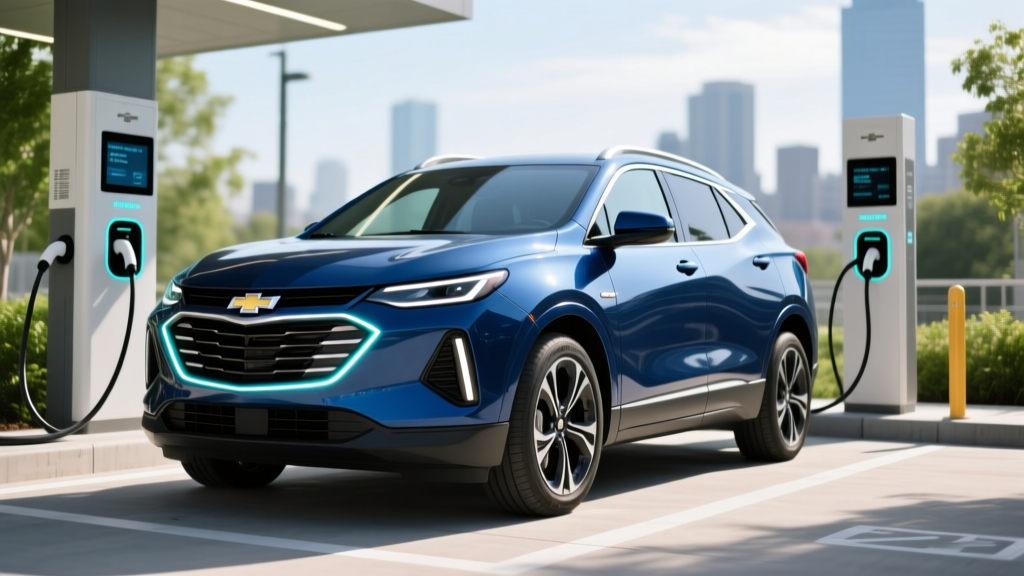
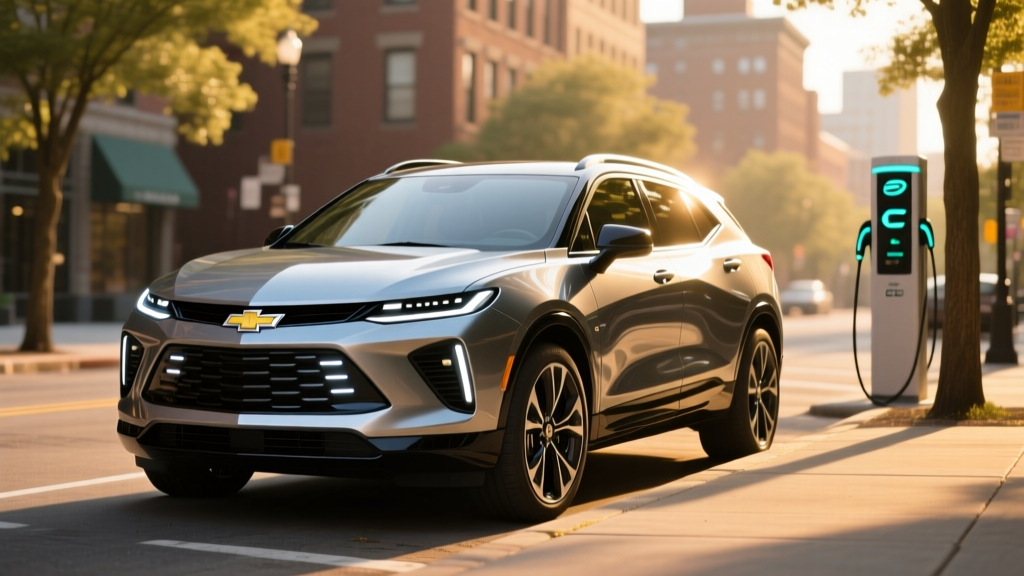
If you're researching a Chevy Blazer EV lease in Rochester, you're navigating one of the more complex purchase decisions in the EV market right now. The Blazer EV is a compelling midsize crossover — it offers up to 324 miles of EPA range, DC fast charging up to 190 kW, and a spacious interior. But the real question isn't just the monthly payment. It's what you'll actually spend over the life of the lease on electricity, insurance, maintenance, and what happens at the end.
Rochester, New York adds its own variables: cold winters that compress range, access to relatively affordable utility electricity (RG&E), and a patchwork of New York State incentives that can meaningfully reduce your out-of-pocket cost. This guide breaks down every number you need — from the federal §30D tax credit as it applies to leased vehicles, to per-mile fuel costs in Monroe County, to the insurance premiums you should actually budget for.
EPA Range: Up to 324 mi (2LT AWD with larger battery) | Expect ~260–285 mi real-world highway; ~220–250 mi in Rochester winter (sub-30°F)
Battery: ~102 kWh usable, NMC chemistry
DC Fast Charging: Peak 190 kW, 10–80% in ~28 minutes (tapers significantly above 80%)
Level 2 Charging: 11.5 kW onboard charger (~34 mi/hr added)
Power: Up to 288 hp / 336 lb-ft (AWD)
0–60 mph: ~6.2 seconds (AWD)
Starting MSRP: ~$44,600 (2LT FWD) to ~$52,400 (RS AWD) — destination included
Warranty: 3 yr / 36,000 mi bumper-to-bumper; 8 yr / 100,000 mi battery & powertrain
The Federal Tax Credit and Leasing: How §30D Actually Works for a Blazer EV
This is where leasing gets interesting — and where a lot of online advice gets it wrong. Under IRS §30D, the federal clean vehicle credit of up to $7,500 is available for qualifying new EVs. However, the credit has strict eligibility requirements around buyer income, vehicle MSRP, and battery component/mineral sourcing.
Here's the critical nuance for a Chevy Blazer EV lease: under the "commercial vehicle" loophole in §45W, leasing companies (lessors) can claim the $7,500 credit and pass it through as a capitalized cost reduction — essentially lowering your effective lease price. This means even if the Blazer EV doesn't qualify for the direct purchase credit (due to battery sourcing rules or your income), the lease may still capture the full $7,500 benefit. Many GM Financial lease offers in 2025–2026 have structured deals that apply this pass-through.
- MSRP Cap: SUVs/crossovers (including Blazer EV) must have MSRP ≤ $80,000 — all Blazer EV trims qualify
- Buyer Income Cap (purchase): AGI ≤ $150,000 single / $225,000 head of household / $300,000 joint — income caps may not apply to lease pass-through
- Battery Sourcing: Critical minerals and battery components must meet phased-in domestic/free-trade-partner thresholds; GM has adjusted supply chains but verify current-year compliance with your dealer
- Point-of-Sale Transfer: For purchases, you can transfer the credit to the dealer for an immediate price reduction (requires IRS registration); for leases, the lessor claims and passes through
- Assembly: Must be assembled in North America — the Blazer EV is built in Ramos Arizpe, Mexico, which qualifies under USMCA for the lease commercial credit path
⚠ Rules change frequently. Confirm current eligibility at irs.gov and with your tax professional before signing.
5-Year Total Cost of Ownership: Blazer EV vs. Gas Crossover in Rochester
To understand what a Blazer EV lease or purchase actually costs, we need to model five years of ownership in the Rochester area. Below, we compare the Blazer EV 2LT AWD against a similarly equipped gas midsize crossover (like the Chevy Blazer with the 2.0T, rated at ~24 MPG combined) over 60,000 miles.
| Cost Category | Blazer EV 2LT AWD | Gas Crossover (24 MPG) |
|---|---|---|
| Vehicle Price (MSRP) | $47,800 | $42,500 |
| Federal Credit Applied | −$7,500 | $0 |
| Effective Purchase/Lease Basis | $40,300 | $42,500 |
| Fuel/Energy (60,000 mi) | $4,320 | $8,750 |
| Maintenance (5 years) | $1,800 | $3,600 |
| Insurance (5 years) | $11,400 | $9,000 |
| Estimated Depreciation | $18,500 | $15,200 |
| 5-Year Total Cost | $36,020 | $36,550 |
Key takeaway: With the federal credit applied, the Blazer EV's 5-year total cost is competitive with — or slightly lower than — a comparable gas crossover, even accounting for higher insurance and steeper EV depreciation. The savings on fuel and maintenance offset the premium purchase price and insurance gap.
Note: These figures assume 80% home charging at RG&E residential rates (~$0.15/kWh), 20% public DC fast charging (~$0.40/kWh), and gas at $3.50/gallon. Your actual numbers will shift based on driving habits, charging mix, and utility plan.
Charging Costs vs. Gas: The Per-Mile Math for Rochester Drivers
The Blazer EV's efficiency is roughly 2.9–3.1 miles per kWh in mixed driving (per fueleconomy.gov). That translates to about 32–34 kWh per 100 miles. Let's break down what that costs in the Rochester area.
| Scenario | Cost per kWh / Gallon | Cost per Mile | 60,000 mi Total |
|---|---|---|---|
| Home charging (RG&E residential, ~$0.15/kWh) | $0.15/kWh | $0.049 | $2,940 |
| Public DC fast charging (~$0.40/kWh) | $0.40/kWh | $0.131 | $7,860 |
| 80/20 home/public blend | $0.20/kWh avg | $0.065 | $3,900 |
| Gas crossover (24 MPG, $3.50/gal) | $3.50/gal | $0.146 | $8,750 |
At an 80/20 home-to-public charging blend, the Blazer EV costs roughly $0.065 per mile in energy — less than half the per-mile fuel cost of a 24 MPG gas crossover. Over 60,000 miles, that's approximately $4,850 in fuel savings.
The catch: if you can't charge at home and rely entirely on public DC fast chargers, your per-mile cost jumps to $0.13 — nearly matching gas. Home Level 2 charging is essential to realizing EV fuel savings. A 240V Level 2 installation in the Rochester area typically runs $800–$2,000 depending on panel proximity and whether your electrical panel needs an upgrade to 200A service.
Maintenance Savings: What You Won't Pay For
EVs eliminate several recurring maintenance items that gas vehicles require. The Blazer EV has no engine oil, no transmission fluid (the single-speed reduction gear is sealed), no spark plugs, no timing belt, and no exhaust system. Here's what the maintenance picture looks like over five years:
| Maintenance Item | Blazer EV Cost (5 yr) | Gas Crossover (5 yr) |
|---|---|---|
| Oil changes (every 5,000–7,500 mi) | $0 | $600–$900 |
| Brake pads (regen braking extends life) | $0–$200 | $600–$1,000 |
| Transmission fluid/service | $0 | $200–$400 |
| Tire rotation & replacement | $800–$1,200 | $600–$1,000 |
| Cabin air filter, wipers, misc. | $300–$500 | $300–$500 |
| Coolant system service | $100–$200 | $200–$400 |
| Total Estimated Maintenance | $1,200–$2,100 | $2,500–$4,200 |
One important note: EV tires tend to wear faster due to the vehicle's higher weight (the Blazer EV weighs ~5,600 lbs) and instant torque delivery. Budget for tire replacement at 30,000–40,000 miles rather than the 50,000+ miles typical of lighter gas crossovers. EV-specific tires like the Michelin Pilot Sport EV or Continental CrossContact LX25 can help manage this.
The regenerative braking system in the Blazer EV significantly reduces brake pad wear. Many EV owners report original brake pads lasting 80,000+ miles because regen handles most deceleration. In Rochester's stop-and-go traffic on I-490 and the Inner Loop, this is a genuine advantage.
Insurance Reality: Budget 20–30% More Than a Gas Crossover
This is where EV ownership gets more expensive, and it's a factor that many online calculators undercount. The Blazer EV typically costs 20–30% more to insure than a comparably priced gas crossover. In the Rochester/Monroe County area, expect annual premiums in the range of $2,100–$2,500 for a driver with a clean record, compared to $1,600–$1,900 for a gas equivalent.
Why the premium? Three reasons:
- Higher repair costs: EV battery packs and power electronics are expensive to replace after collision damage. Even minor rear-end impacts can trigger battery safety inspections that add thousands to repair bills.
- Specialized labor: Fewer body shops have high-voltage certification, which drives up labor rates for EV repairs.
- Vehicle value: The Blazer EV's higher MSRP means higher comprehensive and collision payouts for insurers.
Shop quotes from multiple carriers — GEICO, Progressive, State Farm, and USAA (if eligible) all price EVs differently, and some offer EV-specific discounts. Bundling home and auto can offset 5–10% of the premium.
Depreciation and Resale Value: The Honest EV Picture
EV depreciation has been steeper than gas vehicles over the past few years, and it's important to factor this into your lease decision. Industry data from sources like iSeeCars and Kelley Blue Book show that mainstream EVs have depreciated 45–55% over three years, compared to 35–45% for comparable gas crossovers.
For the Blazer EV specifically, expect roughly 40–50% depreciation over 5 years from the effective (post-credit) purchase price. On a $47,800 MSRP with a $7,500 credit applied (effective cost: $40,300), that projects to a 5-year residual value of approximately $20,000–$24,000.
This is actually where leasing can protect you. A lease locks in the residual value at signing. If EV depreciation accelerates further (due to price wars, battery tech improvements, or market saturation), that's the leasing company's problem, not yours. You walk away at lease-end regardless of market value. For Rochester buyers uncertain about long-term EV resale trends, a 36-month lease is a lower-risk entry point than a purchase.
New York State and Rochester-Area Incentives
The incentives below apply to New York State residents as of 2026. Always verify current availability with official sources, as programs can be modified, exhausted, or renewed.
- NY Drive Clean Rebate: New York offers a point-of-sale rebate of up to $2,000 for qualifying new EVs (income-adjusted; full $2,000 available for households earning under $167,000). The Blazer EV qualifies. Check current funding at the NYSERDA Drive Clean Rebate page.
- RG&E EV Rate Plan: RG&E offers time-of-use (TOU) rates that can reduce home charging costs to ~$0.08–$0.10/kWh during off-peak hours (overnight). This significantly improves the fuel-cost advantage.
- Home Charging Equipment Rebate: Some NYS programs and utility offers provide rebates of $250–$500 toward Level 2 home charger purchase and installation. Check with RG&E and NYSERDA for current offers.
- E-ZPass Discounts: NY Thruway offers Green Vehicle discounts (currently 10%) on E-ZPass tolls for registered EVs — helpful for Rochester commuters on I-90.
These incentives stack with the federal credit. A Rochester buyer could potentially combine $7,500 federal + $2,000 state + utility rebates for $10,000+ in total savings. Confirm each program's current status before committing.
Rochester Winter Range: What Cold Weather Does to the Blazer EV
Rochester averages 60+ days per year below 30°F and frequent lake-effect snow. This matters for EV range. Lithium-ion batteries (the Blazer EV uses NMC chemistry) lose efficiency in cold temperatures, and cabin heating draws significant energy.
Expect 20–35% range reduction in sustained sub-freezing temperatures. The Blazer EV's 324-mile EPA rating could drop to 210–260 miles on a 15°F January day with highway driving and cabin heat at 70°F. The Blazer EV does include a heat pump (on most trims), which mitigates some of this loss compared to resistive heating systems, but the physics of cold batteries can't be fully engineered away.
Practical tips for Rochester owners:
- Precondition while plugged in: Use the MyChevrolet app to warm the battery and cabin while still connected to your Level 2 charger. This uses grid power instead of battery power and improves range.
- Garage parking helps: Even an unheated garage keeps the battery 10–15°F warmer than outdoor parking, improving both range and charge acceptance.
- Plan for longer charge times in winter: Cold batteries accept DC fast charging more slowly. A 10–80% charge that takes 28 minutes in summer could take 40+ minutes at 20°F unless you precondition the battery via navigation to a charger.
Frequently Asked Questions
How much does it really cost to own a Chevy Blazer EV over 5 years in Rochester?
Based on our modeling, the 5-year total cost (including effective purchase price after credits, energy, maintenance, insurance, and depreciation) is approximately $36,000–$38,000 for a Blazer EV 2LT AWD, assuming 60,000 miles driven, 80% home charging, and current Rochester-area electricity and insurance rates. This is roughly on par with a gas crossover when the federal credit applies.
Do I qualify for the $7,500 federal tax credit on a Blazer EV lease?
Under the commercial vehicle lease pathway (§45W), the leasing company claims the credit and typically passes it through as a cap cost reduction. This path has fewer restrictions on buyer income and battery sourcing than the direct purchase credit (§30D). Most Blazer EV lease offers in 2026 are structured to capture this benefit. Confirm with your dealer that the specific lease offer includes the credit pass-through, and consult a tax professional for your situation.
How much will I save on fuel and maintenance vs. a gas Blazer?
At Rochester electricity rates with 80% home charging, expect to save approximately $4,000–$5,000 on fuel and $1,500–$2,500 on maintenance over 5 years / 60,000 miles compared to a 24 MPG gas crossover. Combined savings of $5,500–$7,500 are typical, though this is partially offset by $2,000–$3,000 in additional insurance costs.
Are EVs more expensive to insure in New York?
Yes, typically 20–30% more than a comparable gas vehicle. For the Blazer EV in Monroe County, budget $2,100–$2,500 annually. The higher cost reflects expensive battery repairs, specialized labor, and the vehicle's higher MSRP. Shop multiple carriers and ask about EV-specific discounts.
How well does the Chevy Blazer EV hold its value?
EV depreciation has been steeper than gas vehicles — expect roughly 40–50% depreciation over 5 years from the post-credit effective price. This makes leasing attractive: you're not exposed to residual value risk. If you purchase, plan for a lower trade-in value than you'd get from a gas equivalent, and consider holding the vehicle longer to amortize the depreciation hit.
Can I charge the Blazer EV at home in Rochester, and what will it cost to install?
Yes, if you have a garage or driveway with electrical access. A Level 2 (240V) home charger installation in the Rochester area typically costs $800–$2,000, including the charger unit ($400–$700) and electrician labor. If your home's electrical panel needs a 200A upgrade, add $1,500–$3,000. RG&E's TOU rate plan can reduce your per-kWh cost to under $0.10 for overnight charging.
Is the Blazer EV a good choice for Rochester winters?
It's a solid choice with caveats. The AWD system provides confident traction in snow, and the heat pump helps preserve range. But expect 20–35% range loss in sustained cold, and plan your charging routine around preconditioning. If your daily commute is under 60 miles round-trip, the Blazer EV handles Rochester winters well. For frequent long-distance winter driving (Rochester to NYC, for example), you'll need to plan DC fast charging stops more carefully.
Bottom Line: Should You Lease the Blazer EV in Rochester?
- You can install a Level 2 charger at home (garage or driveway with 240V access)
- Your daily driving is under 80 miles round-trip (covers most Rochester commutes with margin)
- You want to avoid depreciation risk during a volatile EV resale market
- The lease offer includes the $7,500 federal credit pass-through as a cap cost reduction
- You value the NY Drive Clean Rebate stacking on top of federal incentives
- You live in an apartment or lack home charging access (reliance on public charging erases most fuel savings)
- You frequently drive 200+ miles in winter without time for DC fast charging stops
- Your insurance quotes come back significantly above $2,500/year (get quotes before signing)
- You plan to keep the vehicle 8+ years (purchasing may make more sense than leasing in that scenario)
The Chevy Blazer EV is a competitive midsize electric crossover, and for Rochester buyers with home charging access, the economics work — especially when you stack federal, state, and utility incentives. The key is going in with realistic numbers: winter range loss, higher insurance, and EV depreciation are real costs, but the fuel and maintenance savings plus incentive stacking bring the total cost of ownership into line with gas alternatives. Get specific lease quotes from Rochester-area Chevy dealers, pull insurance estimates for your ZIP code, and verify current incentive availability before you sign.