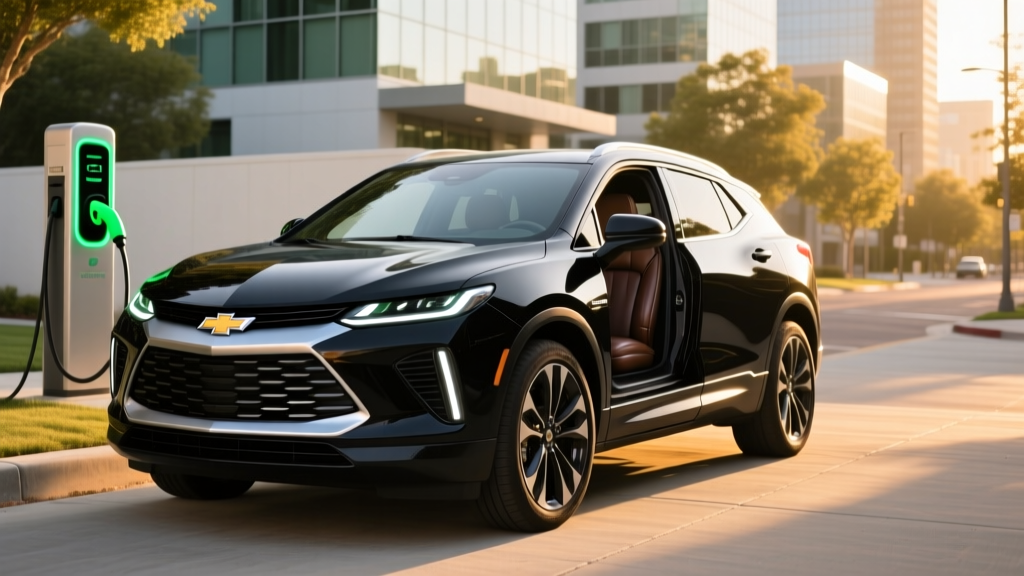
If you've been scrolling through Chevy Blazer EV lease deals, the advertised monthly payment is only the beginning. The 2LT trim starts around $41,900 MSRP for the 2026 model year, and a typical 36-month lease might land near $349–$449 per month depending on your region, dealer incentives, and whether the federal tax credit is applied as a capitalized-cost reduction. But the real question isn't just what you'll pay the dealer — it's what the Blazer EV costs to fuel, insure, maintain, and eventually walk away from over five years of ownership or leasing.
This guide dissects the true economics behind the Blazer EV, using EPA data, IRS §30D rules, and real-world ownership variables to help you decide whether those lease numbers actually pencil out.
2026 Chevy Blazer EV: The Numbers That Matter
Before running the cost math, here's the spec sheet you need. The 2026 Blazer EV is offered in 2LT, RS, and SS trims with two battery pack options and front-, rear-, or all-wheel-drive configurations.
| Spec | 2LT (FWD) | RS (AWD) | SS (AWD) |
|---|---|---|---|
| Base MSRP | $41,900 | $49,400 | $56,200 |
| Battery (usable, NMC) | 85 kWh | 102 kWh | 102 kWh |
| EPA Range | 293 mi | 321 mi | 290 mi |
| MPGe (combined) | 90 MPGe | 87 MPGe | 83 MPGe |
| Peak DC Fast Charge | 190 kW | 190 kW | 190 kW |
| 10–80% DC Charge | ~28 min | ~32 min | ~32 min |
| Level 2 Charge Rate | 11.5 kW | 11.5 kW | 11.5 kW |
| Horsepower | 220 hp | 293 hp | 557 hp |
| 0–60 mph | ~7.5 sec | ~6.0 sec | ~3.4 sec |
| Battery/Powertrain Warranty | 8 years / 100,000 miles | ||
Federal Tax Credit: Does the Blazer EV Qualify for §30D?
The IRS §30D Clean Vehicle Credit can deliver up to $7,500 — but eligibility depends on your income, the vehicle's MSRP, and where the battery minerals and components are sourced. Here's the 2026 checklist:
- Income Cap: Modified AGI ≤ $150,000 (single), $225,000 (head of household), $300,000 (married filing jointly)
- MSRP Cap: Vehicle MSRP must not exceed $80,000 for SUVs/pickups/vans (the Blazer EV qualifies at all trims)
- Battery Sourcing: Critical minerals must meet escalating domestic/free-trade-partner thresholds (40%+ in 2024, rising annually). Verify current compliance at IRS.gov
- Assembly: Final assembly must occur in North America (the Blazer EV is built in Ramos Arizpe, Mexico — check current IRS guidance as this may affect eligibility)
- Point-of-Sale Transfer: You can transfer the credit to the dealer at purchase or lease signing, reducing your upfront cost immediately
- Leasing Loophole: Under §45W, the commercial clean vehicle credit may pass through to lessees via reduced lease payments — even if purchase eligibility is limited by sourcing rules
Key nuance for lessees: When you lease a Blazer EV, the $7,500 credit technically goes to the lessor (GM Financial or similar). However, most competitive Chevy Blazer EV lease deals in 2026 factor this credit into the capitalized cost, effectively passing the savings to you as a lower monthly payment or reduced due-at-signing amount. Always ask the dealer to show you the "lease cash" or "EV incentive" line item on the deal sheet.
For definitive sourcing and eligibility updates, consult the IRS Clean Vehicle Credit page and fueleconomy.gov.
5-Year Total Cost of Ownership: Blazer EV vs. Gas Midsize SUV
Let's compare the Blazer EV RS AWD ($49,400 MSRP) against a typical gas-powered midsize SUV averaging 24 MPG combined, assuming 15,000 miles per year, home charging at $0.14/kWh, and gas at $3.50/gallon.
| Cost Category (5 Years) | Blazer EV RS AWD | Gas SUV (24 MPG) |
|---|---|---|
| Purchase/Lease (after $7,500 credit) | $41,900 | $42,000 |
| Fuel / Charging | $3,940 | $10,940 |
| Maintenance | $1,800 | $4,200 |
| Insurance (avg.) | $11,400 | $9,000 |
| Depreciation (est.) | $22,000 | $18,500 |
| 5-Year Total | $81,040 | $84,640 |
Charging Cost vs. Gas: The Per-Mile Math
The Blazer EV RS AWD consumes roughly 35 kWh per 100 miles (2.86 mi/kWh). Here's how fuel costs break down across different charging scenarios:
| Charging Method | Cost per kWh | Cost per Mile | Annual (15k mi) |
|---|---|---|---|
| Home Level 2 (national avg.) | $0.14 | $0.049 | $735 |
| Home Level 2 (California, $0.30/kWh) | $0.30 | $0.105 | $1,575 |
| Public DC Fast (avg. $0.48/kWh) | $0.48 | $0.168 | $2,520 |
| Gas SUV (24 MPG, $3.50/gal) | — | $0.146 | $2,190 |
If you can charge at home at or below the national average, the Blazer EV costs roughly one-third as much per mile as a gas equivalent. But if you rely exclusively on public DC fast charging at current rates, the EV can actually cost more per mile than a 24-MPG gas SUV. Home charging access is the single biggest variable in EV economics.
Maintenance Savings: What You Won't Pay For
EVs eliminate several routine maintenance items that gas vehicles require. Here's a direct comparison over five years and 75,000 miles:
| Maintenance Item | Blazer EV | Gas SUV |
|---|---|---|
| Oil Changes | $0 | $1,200 (10 changes) |
| Transmission Fluid | $0 | $300 |
| Brake Pads/Rotors | $400 (regen extends life) | $1,200 |
| Coolant Flush | $150 | $300 |
| Air Filters (engine) | $0 | $250 |
| Tire Rotation/Replacement | $1,100 (EVs wear tires faster due to torque + weight) | $900 |
| Cabin Air Filter | $150 | $250 |
| Total (5-yr est.) | $1,800 | $4,400 |
The Blazer EV saves approximately $2,600 in maintenance over five years. Regenerative braking significantly reduces brake pad wear — many EV owners report original pads lasting 80,000+ miles. However, EVs are heavier and produce instant torque, which accelerates tire wear. Budget for a tire replacement around 35,000–45,000 miles.
Insurance Reality: The Hidden EV Premium
EV insurance costs are typically 15–25% higher than comparable gas vehicles. For the Blazer EV, expect average annual premiums of $2,100–$2,500 (national average), compared to $1,600–$1,900 for a gas midsize SUV.
Why EVs cost more to insure:
- Higher repair costs: Battery packs, power electronics, and specialized sensors require trained technicians and OEM-certified parts
- Higher vehicle values: The Blazer EV's MSRP exceeds many gas competitors in its segment
- Collision repair complexity: Post-crash battery diagnostics and high-voltage safety protocols add labor time
- Total-loss thresholds: Minor battery enclosure damage can trigger a total-loss declaration
Shop quotes from insurers with dedicated EV programs (Geico, Progressive, and Liberty Mutual all offer EV-specific policies). Some states mandate discounts for clean vehicles — check with your insurance commissioner.
Depreciation and Resale: The EV Wildcard
EV depreciation has been volatile. According to industry data from iSeeCars and Kelley Blue Book, three-year-old EVs lost an average of 45–52% of their value in 2024–2025, compared to 35–40% for gas vehicles. The primary drivers:
- Tesla price cuts: Aggressive Model Y/3 repricing in 2023–2024 reset the entire used-EV market
- Lease returns: A surge of off-lease EVs flooded the used market
- Battery anxiety: Used buyers remain cautious about long-term battery health, even though most 8-year/100k-mile warranties transfer
- Charging standard transition: CCS-to-NACS migration created uncertainty about older models
For the Blazer EV specifically, expect ~44–50% depreciation over five years (~$22,000–$25,000 on a $49,400 RS). If you lease, depreciation risk falls on the lessor — which is one reason Chevy Blazer EV lease deals can be attractive despite higher monthly payments than some gas alternatives.
State, Local, and Utility Incentives
Beyond the federal §30D credit, additional incentives can shift the Blazer EV's economics significantly:
- State rebates: California (CVRP, up to $2,000 for income-qualified buyers), Colorado (up to $5,000 state tax credit), Massachusetts (MOR-EV, up to $3,500), and New York (Charge NY, up to $2,000) all offer additional EV incentives
- Utility rebates: Many electric utilities offer $500–$1,500 rebates for home Level 2 charger installation, plus time-of-use rate plans that drop charging costs to $0.06–$0.09/kWh during off-peak hours
- HOV lane access: States including California, Colorado, Virginia, and Maryland grant solo HOV lane access to qualifying EVs — a significant commute-time savings
- Local incentives: Some cities offer free public charging, reduced registration fees, or parking perks
These programs vary dramatically by jurisdiction and change frequently. Check your state energy office, utility provider, and the Alternative Fuels Data Center for current offerings in your area.
Frequently Asked Questions
How much does it really cost to own a Chevy Blazer EV over 5 years?
With the $7,500 federal credit, home charging at $0.14/kWh, and 15,000 miles per year, expect approximately $81,000 over five years for the RS AWD — roughly $3,600 less than a comparable gas SUV. Without the credit, the EV costs ~$7,500 more. Your actual costs depend heavily on electricity rates, insurance premiums in your state, and whether you charge at home or rely on public infrastructure.
Do I qualify for the $7,500 federal tax credit on the Blazer EV?
You qualify if your modified AGI is under $150K (single) / $300K (joint), the MSRP is under $80K (all Blazer EV trims qualify), and the battery meets critical-mineral and component sourcing thresholds. Because the Blazer EV is assembled in Mexico, verify current IRS guidance — assembly location and battery sourcing rules have been evolving. When leasing, the credit may pass through as a capitalized-cost reduction regardless of your personal eligibility under the commercial vehicle credit (§45W).
How much do I save on fuel and maintenance vs. a gas SUV?
Assuming home charging at the national average of $0.14/kWh and 15,000 miles/year, you'll save roughly $7,000 on fuel and $2,600 on maintenance over five years — totaling about $9,600 in operational savings. If you're in a high-electricity-rate state (California, Northeast) or rely on DC fast charging, fuel savings shrink to $3,000–$5,000.
Are EVs more expensive to insure than gas cars?
Yes, typically 15–25% more. For the Blazer EV, expect $2,100–$2,500 annually vs. $1,600–$1,900 for a gas equivalent. Higher repair costs, battery replacement risk, and vehicle value drive the premium. Get quotes from at least three insurers before signing a lease or purchase agreement.
How well does the Chevy Blazer EV hold its value?
Expect 44–50% depreciation over five years, meaning the RS AWD ($49,400 MSRP) would be worth roughly $24,700–$27,600 at year five. This is worse than gas SUVs (35–40% depreciation) but consistent with the broader EV market. Leasing transfers this depreciation risk to the lessor, which is why many Blazer EV lease deals are structured aggressively.
Can I use the federal tax credit to lower my Blazer EV lease payment?
Yes, indirectly. When you lease, the $7,500 credit goes to the leasing company under the §45W commercial clean vehicle credit. Most manufacturers, including GM, pass this through as "lease cash" that reduces the capitalized cost, lowering your monthly payment or the amount due at signing. Confirm with your dealer that the incentive is reflected in the deal structure.