The 2026 Chevrolet Blazer EV occupies a curious space in the midsize electric SUV segment. It's large enough to serve as a family hauler, styled aggressively enough to stand out in a grocery-store parking lot, and priced — after federal incentives — to undercut several key rivals. But the story most buyers are searching for centers on the Chevy Blazer EV interior: a cabin that pairs a massive 17.7-inch infotainment screen with a spacious, practical layout, yet occasionally stumbles on material quality and software execution. After spending time with the 2LT and RS trims, here is everything you need to know before signing the paperwork.
Chevy Blazer EV Interior: Space, Screens, and Daily Livability
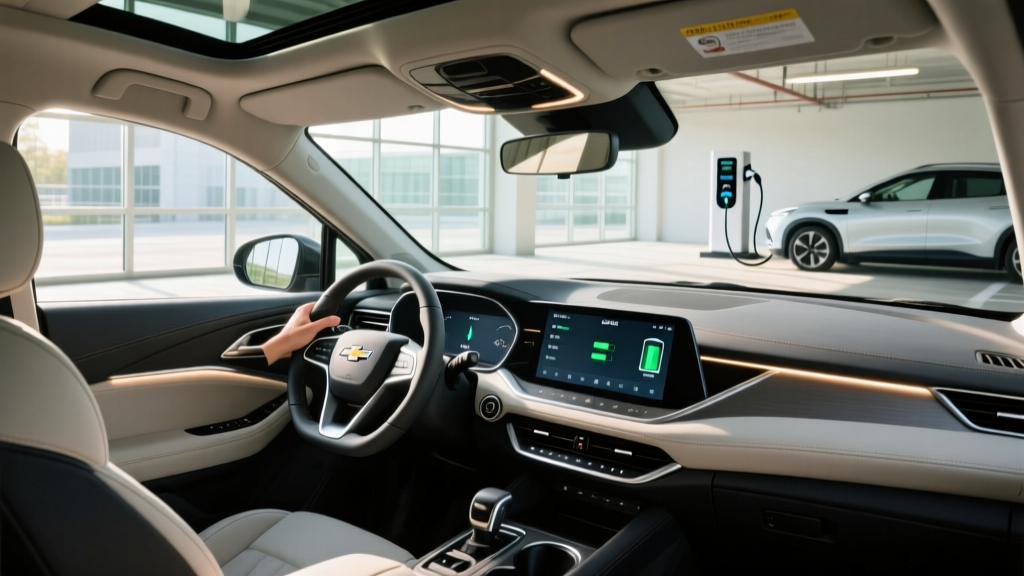
Step inside and the first thing that commands attention is the 17.7-inch diagonal infotainment display angled toward the driver, paired with an 11.0-inch digital instrument cluster. Google Built-in handles navigation, voice assistant duties, and app integration — meaning Google Maps, Spotify, and Google Assistant run natively without requiring your phone. Wireless Apple CarPlay and Android Auto are also standard across all trims.
The cabin layout is genuinely spacious. Front passengers enjoy 43.2 inches of legroom, while rear-seat riders get 38.0 inches — enough for two adults on longer trips without knee complaints. The flat floor (a benefit of GM's Ultium skateboard platform) makes the middle rear seat more usable than in many competitors with a transmission tunnel hump.
Cargo capacity is competitive: 30.3 cubic feet behind the second row and up to 62.8 cubic feet with the rear seats folded. There is no front trunk (frunk) — GM allocated that space to HVAC and power electronics. A dual-level cargo floor provides some hidden storage below the main load area.
Material quality is where the interior narrative gets nuanced. The 2LT trim uses a mix of soft-touch upper dash materials and harder plastics on the lower door panels and center console sides. The RS trim upgrades with perforated leather-appointed seats, a suede-like headliner, and contrast stitching that elevates the cabin noticeably. Heated and ventilated front seats are available, as is a heated steering wheel. A panoramic sunroof is optional on RS trims and floods the cabin with light, though it does reduce rear headroom slightly.
Interior Pros
- Massive 17.7-inch infotainment with Google Built-in
- Class-leading rear legroom (38.0 in.)
- 30.3 cu ft cargo behind second row
- Flat rear floor improves middle-seat comfort
- RS trim materials genuinely premium
Interior Cons
- No frunk for additional storage
- 2LT lower-door plastics feel budget-tier
- No physical HVAC knobs — climate via touchscreen
- Panoramic roof slightly compromises rear headroom
- Some owners report occasional infotainment lag on startup
Range, Battery, and Real-World Efficiency
The 2026 Blazer EV is built on GM's Ultium platform with a lithium-ion battery pack using NMC (nickel manganese cobalt) chemistry. The primary pack for the 2LT and RS trims is a 102 kWh usable battery (gross capacity slightly higher to account for buffer zones that protect long-term health).
| Specification | 2LT RWD | RS AWD | SS AWD |
|---|---|---|---|
| EPA Range | 324 miles | 283 miles | 294 miles |
| Battery (usable) | 102 kWh (NMC) | 102 kWh (NMC) | 102 kWh (NMC) |
| EPA Efficiency | 99 MPGe (29 kWh/100mi) | 90 MPGe (32 kWh/100mi) | 92 MPGe (31 kWh/100mi) |
| Drivetrain | Rear-Wheel Drive | Dual-Motor AWD | Dual-Motor AWD |
| Horsepower | 340 hp | 557 hp | 615 hp (est.) |
| 0–60 mph | ~7.2 sec | ~4.7 sec | ~3.4 sec |
| Max DC Charge Rate | 190 kW | 190 kW | 190 kW |
| Base MSRP | $50,195 | $54,295 | $61,795 (est.) |
Real-World Range Reality Check
EPA sticker: 324 miles (2LT RWD).
Expect in practice: ~260–285 miles on a sustained 70-mph highway run in moderate weather. In winter conditions (below 30°F), plan for 220–245 miles before needing a charge stop. The Blazer EV's heat pump helps mitigate cold-weather losses compared to EVs without one, but physics still wins in deep cold. City driving with regenerative braking can actually exceed the EPA combined figure — we've seen 330+ miles indicated in stop-and-go commuting at moderate speeds.
Efficiency of 29 kWh per 100 miles (2LT RWD) is respectable for a 4,800-pound SUV, though the Hyundai Ioniq 5 and Tesla Model Y achieve better figures thanks to lower weight and more aerodynamic profiles. The AWD trims sacrifice both range and efficiency to the second motor and added mass.
Charging Speed: DC Fast Charging and Home Level 2
The Blazer EV supports a peak DC fast-charge rate of 190 kW via its CCS connector (a NACS adapter is available for Tesla Supercharger access, and GM is transitioning to native NACS ports on upcoming model years). At a 350 kW-capable Electrify America or EVgo station, you'll see the Blazer ramp quickly to its peak rate under ideal conditions — battery preconditioned, SoC below 20%, ambient temperature moderate.
| Charging Level | Power | Speed / Time | Best Use Case |
|---|---|---|---|
| Level 1 (120V household) | ~1.4 kW | ~3–4 mi/hr | Emergency / overnight trickle |
| Level 2 (240V home) | 11.5 kW (48A) | ~34 mi/hr; full charge in ~9.5 hrs | Daily home charging |
| DC Fast Charge | Peak 190 kW | 10–80% in ~31 minutes | Road trips |
The 10–80% DC fast-charge time of approximately 31 minutes is adequate but not class-leading. The Hyundai Ioniq 5 with its 800-volt architecture accomplishes the same feat in roughly 18 minutes. The Blazer EV's charge curve holds near peak kW through roughly 40% SoC before tapering — a typical pattern for 400-volt NMC architectures. Above 80%, charging slows significantly to protect battery health, so plan your road-trip stops around the 10–80% window for the best time efficiency.
At home, the onboard charger accepts up to 11.5 kW on a 240-volt Level 2 circuit (48 amps). This means a full overnight charge in roughly 9.5 hours. Most owners will plug in each evening and wake to a full battery — the practical advantage of home Level 2 charging. Installation typically requires a 60-amp dedicated circuit; budget $800–$2,000 for electrician labor and permitting depending on your panel's proximity to the garage. (Always consult a licensed electrician for final installation specs.)
Pricing, Trims, and Federal Tax Credit Eligibility
The 2026 Blazer EV is offered in three primary trims: 2LT, RS, and the performance-oriented SS (availability and final specs for the SS may vary — confirm with your dealer). Here is the pricing landscape:
| Trim | Base MSRP | As-Tested (typical) | Est. After §30D Credit |
|---|---|---|---|
| 2LT RWD | $50,195 | $53,500 | ~$42,695–$46,000 |
| RS AWD | $54,295 | $59,800 | ~$46,795–$52,300 |
| SS AWD | $61,795 (est.) | $65,000+ | ~$54,295–$57,500 |
The federal IRS §30D clean vehicle credit offers up to $7,500 for qualifying buyers, but eligibility is not automatic. The Blazer EV must clear several hurdles:
- MSRP cap: SUVs must have an MSRP at or below $80,000. All Blazer EV trims currently qualify.
- Buyer income cap: Modified adjusted gross income (MAGI) must not exceed $150,000 (single), $225,000 (head of household), or $300,000 (joint filers).
- Battery sourcing: A percentage of critical minerals and battery components must be sourced from the U.S. or free-trade-agreement partners. These thresholds tighten annually. Confirm current-year compliance on fueleconomy.gov.
- Point-of-sale transfer: As of 2024, buyers can transfer the credit to the dealer at purchase, receiving the $7,500 as an immediate price reduction rather than waiting for a tax refund.
Tax credit rules change frequently and depend on your individual situation. Consult a tax professional and verify vehicle eligibility on the IRS and DOE websites before purchasing.
Performance, Ride, and Driver-Assist Technology
The 2LT RWD's 340 horsepower and 7.2-second 0–60 time make it adequate for merging and passing — this is a cruiser, not a performance SUV. The RS AWD, with 557 horsepower, transforms the character entirely: confident acceleration, strong passing power, and genuine fun on a back road. The SS pushes into sports-car territory at an estimated 615 hp and ~3.4 seconds to 60 mph.
Ride quality is composed, with GM tuning the suspension to favor comfort over sportiness. Road noise is well-managed at highway speeds. The regenerative braking system offers multiple levels of aggressiveness, selectable via steering-wheel paddles, and can enable near one-pedal driving in its strongest mode.
The Blazer EV comes equipped with Chevy Safety Assist as standard: automatic emergency braking, forward collision alert, lane keep assist, following distance indicator, and IntelliBeam auto high beams. Available Super Cruise on the RS and SS trims enables hands-free driving on over 750,000 miles of compatible roads in the U.S. and Canada.
SAE Automation Level Reminder
Super Cruise is a SAE Level 2 driver-assist system. Despite the hands-free capability, you must remain attentive — the system uses a driver-monitoring camera to ensure your eyes are on the road. It is not self-driving. You are legally and operationally responsible for the vehicle at all times.
Warranty, Ownership Costs, and Long-Term Battery Outlook
Chevrolet backs the Blazer EV with a solid warranty package:
- Bumper-to-bumper: 3 years / 36,000 miles
- Powertrain: 5 years / 60,000 miles
- Battery pack: 8 years / 100,000 miles (covers defects and capacity loss below 60% of original capacity, per GM's Ultium warranty terms)
The 60% capacity retention threshold is standard for the industry but worth noting — it means GM guarantees the battery will hold at least 60% of its original kWh over 8 years/100k miles. Real-world Ultium degradation data is still accumulating (the platform launched in 2022–2023), but early indicators from GM's fleet data suggest NMC Ultium packs are tracking similarly to industry norms: roughly 5–8% loss over the first 50,000 miles, with degradation slowing significantly thereafter.
Insurance premiums for the Blazer EV tend to run 15–25% higher than equivalent gas-powered Blazer models, reflecting repair-cost realities for EV battery and structural components. Get quotes before purchasing. Maintenance costs, however, are meaningfully lower: no oil changes, no spark plugs, reduced brake wear from regen, and cabin air filter replacement as the primary scheduled service.
How It Compares: Blazer EV vs. Key Rivals
The Blazer EV's natural competitors include the Hyundai Ioniq 5, Tesla Model Y, and Ford Mustang Mach-E. Here is a decision framework:
Choose the Blazer EV If:
- You want a roomy midsize SUV cabin with a premium-infotainment focus
- Super Cruise hands-free driving is a priority for highway commutes
- You prefer a traditional SUV driving position and styling over crossover designs
- 30+ cubic feet of cargo space without folding seats matters to you
Look at Competitors If:
- Maximum DC fast-charge speed is critical (Ioniq 5 charges 10–80% in ~18 min vs. Blazer's ~31 min)
- Charging-network convenience is paramount (Tesla Model Y + Supercharger network)
- You want a sportier, more engaging drive (Mach-E GT)
- Budget is tight — Ioniq 5 SE starts significantly lower
Who Should Buy the 2026 Chevy Blazer EV?
The Blazer EV is best suited for families and commuters who prioritize interior space, modern infotainment, and highway comfort over razor-sharp charging speeds. If your daily drive involves 40–80 miles of round-trip commuting and you can charge at home, the 324-mile EPA range (2LT RWD) means charging only 2–3 times per week. Road trippers will find the 190 kW charging adequate, with ~31-minute stops every 250-ish highway miles — plan accordingly and it's entirely manageable.
The RS AWD trim is the sweet spot for buyers who want all-weather confidence, strong acceleration, and the available Super Cruise system. The SS is a performance statement that sacrifices range for speed — exciting but less practical for the majority of buyers.
Frequently Asked Questions
What is the real-world range of the Chevy Blazer EV?
The EPA rates the 2LT RWD at 324 miles. In real-world highway driving at 70 mph in moderate temperatures, expect roughly 260–285 miles. In cold weather below 30°F, plan for 220–245 miles. City driving with regenerative braking can push past the EPA figure.
How fast does the Blazer EV charge at home and on DC fast chargers?
At home on a 240V Level 2 charger (48A/11.5 kW), the Blazer EV gains about 34 miles of range per hour, with a full charge in roughly 9.5 hours. On a DC fast charger, it peaks at 190 kW and charges from 10–80% in approximately 31 minutes.
Does the Chevy Blazer EV qualify for the $7,500 federal tax credit?
It can, subject to IRS §30D rules. The Blazer EV's MSRP is under the $80,000 SUV cap. Buyer income must fall below IRS thresholds ($150K single / $300K joint). Battery critical-mineral and component sourcing requirements must also be met for the specific model year. Verify on fueleconomy.gov and consult a tax professional.
How much does the Blazer EV cost after tax credits?
The 2LT RWD starts at $50,195. If you qualify for the full $7,500 credit applied at point of sale, the effective price drops to approximately $42,695. The RS AWD starts at $54,295, dropping to roughly $46,795 after the credit. Options and destination charges add to these figures.
Is the Chevy Blazer EV worth buying over a Tesla Model Y or Hyundai Ioniq 5?
It depends on priorities. The Blazer EV offers a more traditional SUV feel, excellent interior space, and available Super Cruise. The Model Y wins on charging-network convenience and efficiency. The Ioniq 5 wins on DC fast-charge speed and value pricing. All three are strong — test-drive each and weigh what matters most to your daily routine.
What are the biggest drawbacks of the Blazer EV interior?
The main complaints center on the lack of physical climate controls (everything routes through the 17.7-inch touchscreen), hard plastics on lower door panels in the 2LT trim, and no front trunk (frunk) for extra storage. Some owners also report brief infotainment-system lag during cold startup.