Quick Verdict: The Blazer EV Is a Midsize SUV Built for Space, Not Speed
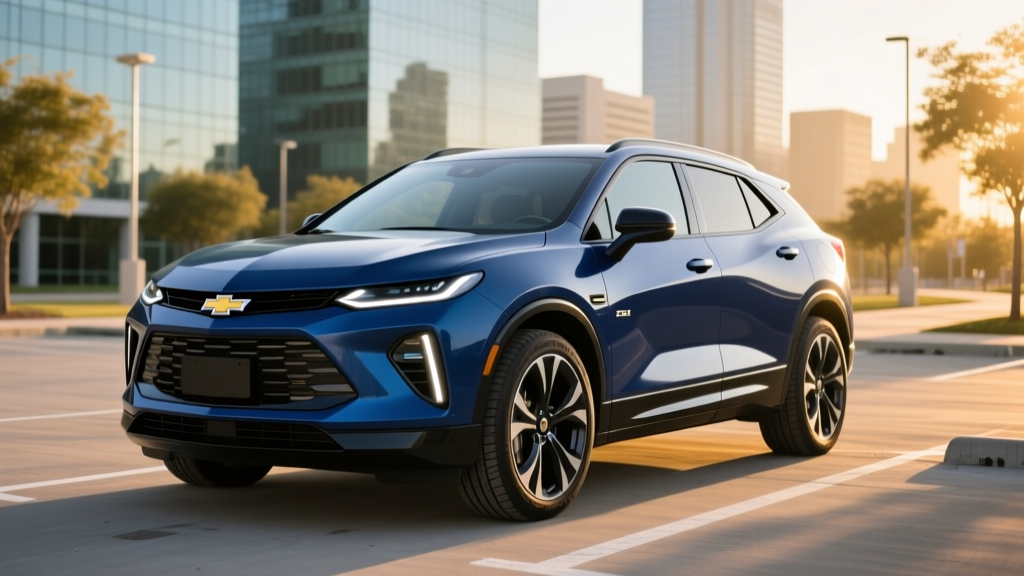
The 2026 Chevrolet Blazer EV occupies a specific niche: a roomy, comfortable two-row electric crossover that prioritizes interior volume and daily usability over sporty dynamics or class-leading efficiency. For buyers whose purchase decision hinges on rear-seat legroom and cargo capacity, the Blazer EV's dimensions make it one of the more accommodating options in the midsize EV SUV segment. But with a usable battery around 102 kWh and EPA range peaking at 324 miles, it trades some efficiency for that spaciousness. This review breaks down every dimension, charging figure, and ownership cost you need to evaluate before signing.
| Spec | 2LT (RWD) | RS (AWD) | SS (AWD) |
|---|---|---|---|
| EPA Range | 324 mi | 283 mi | 294 mi |
| Battery (usable) | ~102 kWh, NMC | ~102 kWh, NMC | ~102 kWh, NMC |
| Horsepower | 288 hp | 288 hp (dual-motor) | 557 hp (dual-motor) |
| 0–60 mph | ~7.6 sec | ~7.0 sec | ~4.0 sec |
| Max DC Fast Charge | 190 kW | 190 kW | 190 kW |
| 10–80% DCFC Time | ~34 min | ~34 min | ~34 min |
| Level 2 Home Rate | 11.5 kW (~32 mi/hr) | 11.5 kW (~32 mi/hr) | 11.5 kW (~32 mi/hr) |
| MPGe (combined) | 87 MPGe | 82 MPGe | 84 MPGe |
| Base MSRP | $50,195 | $52,995 | $60,695 |
Exterior and Interior Dimensions: Where the Blazer EV Excels
The keyword that brings most shoppers here is Chevy Blazer EV dimensions — and for good reason. This is a physically large two-row SUV, and its measurements translate directly into passenger comfort and cargo utility.
| Measurement | Specification |
|---|---|
| Wheelbase | 116.3 in |
| Overall Length | 190.5 in |
| Overall Width (without mirrors) | 77.8 in |
| Overall Height | 65.5 in |
| Ground Clearance | ~7.0 in |
| Curb Weight (approx.) | 5,500–5,850 lbs |
| Measurement | Front | Rear |
|---|---|---|
| Headroom | 40.3 in | 38.4 in |
| Legroom | 42.5 in | 38.7 in |
| Shoulder Room | 59.1 in | 57.2 in |
| Hip Room | 55.4 in | 53.1 in |
Rear-seat legroom of 38.7 inches is generous for the segment — comparable to a Hyundai Ioniq 5 (39.4 in) and notably more than a Tesla Model Y (35.6 in). Two adults on longer drives will find the back seat genuinely comfortable, and rear-facing child seats install without front-seat compromise.
Cargo Capacity
Behind the second row, the Blazer EV offers 27.7 cubic feet of cargo space. Fold the rear seats and that expands to approximately 56.4 cubic feet. There is no front trunk (frunk) — the space under the hood houses HVAC and power electronics. The cargo floor is flat and wide, but the 27.7 cu ft figure trails some rivals; the Hyundai Ioniq 5 provides 27.2 cu ft (similar), while the Ford Mustang Mach-E delivers 29.7 cu ft behind its rear seats.
Range, Battery, and Real-World Efficiency
The Blazer EV uses GM's Ultium platform with a large NMC (nickel manganese cobalt) lithium-ion battery pack. The usable capacity is approximately 102 kWh across all trims — a substantial pack that contributes to the vehicle's heavier curb weight but also provides competitive range.
EPA vs. Real-World Range
EPA sticker: Up to 324 miles (2LT RWD); 283–294 miles (AWD trims).
Real-world expectation: In mixed driving with moderate highway speeds (65–70 mph), expect roughly 270–295 miles from the RWD 2LT and 245–265 miles from AWD trims. At sustained 80 mph highway speeds, subtract another 10–15%. In cold weather (below 30°F), range can drop 20–30% due to battery resistance and cabin heating demands — bringing the RWD model down to roughly 225–260 miles and AWD trims to 200–230 miles on a full charge.
The Blazer EV's efficiency of 87 MPGe combined (2LT RWD) translates to about 38–40 kWh per 100 miles. That is less efficient than the Ioniq 5 (114 MPGe RWD) or Model Y (122 MPGe), a consequence of the Blazer's larger frontal area and heavier weight. For buyers focused on minimizing electricity cost per mile, this is a meaningful gap.
Charging Speed: DC Fast Charging and Home Level 2
Charging speed remains one of the Blazer EV's more debated characteristics. The peak DC fast-charge rate is 190 kW — adequate but not class-leading. Competitors like the Hyundai Ioniq 5 (peak ~240 kW on 800V architecture) and the Kia EV6 (~239 kW) charge noticeably faster at capable stations.
| Charging Level | Power / Voltage | Rate (miles added per hour) | Notes |
|---|---|---|---|
| Level 1 (120V household) | ~1.4 kW | ~3–4 mi/hr | Emergency/trickle only |
| Level 2 (240V home) | 11.5 kW (48A) | ~32 mi/hr | Full charge in ~10 hours |
| DC Fast Charge | Peak 190 kW (CCS/NACS) | ~600+ mi/hr at peak | 10–80% in ~34 min |
Charging curve reality: The 190 kW peak occurs at a low state of charge (roughly 10–25% SoC). As the battery fills, the rate tapers — expect sustained rates around 120–140 kW through the mid-range and a significant drop above 80% SoC. On a road trip, plan for roughly 34 minutes at a 200+ kW station to go from 10% to 80%. Charging from 80% to 100% can add another 25–30 minutes, so it is best to avoid topping off unless you need the full range for the next leg.
Home charging: At 11.5 kW on a 240V/48A Level 2 circuit, the Blazer EV gains about 32 miles of range per hour. A full recharge from near-empty takes roughly 10 hours — meaning overnight charging easily covers daily driving needs. A dedicated 60A circuit (to support the 48A continuous draw) is recommended; consult a licensed electrician for panel capacity evaluation. Installation costs typically range from $500 to $2,000 depending on panel proximity and local permit fees.
The 2026 Blazer EV comes equipped with the NACS (North American Charging Standard) connector natively, giving it direct access to Tesla Supercharger stations (now opened to non-Tesla EVs via NACS). This is a significant practical advantage for road-trip charging reliability, as the Supercharger network remains the most dependable DC fast-charging infrastructure in the U.S. The vehicle also supports CCS1 via adapter if needed for Electrify America or other networks.
Performance and Drivetrain
The 2026 Blazer EV offers three distinct powertrain configurations:
- 2LT (RWD): Single rear motor producing 288 hp and 325 lb-ft of torque. The 0–60 mph time is approximately 7.6 seconds. Adequate for highway merging and daily commuting but not sporty.
- RS (AWD): Dual-motor all-wheel drive, also 288 hp combined. The 0–60 drops to roughly 7.0 seconds. The added traction helps in inclement weather, though the power output is the same as RWD.
- SS (AWD): Dual-motor performance variant rated at 557 hp and 648 lb-ft. Chevrolet targets a 0–60 time under 4.0 seconds with the Wide Open Watts (WOW) mode enabled. This is genuinely quick — rivaling a Tesla Model Y Performance — but it comes at a $60,695 MSRP and reduced range (294 mi EPA).
Ride quality leans toward comfort over sportiness. The Blazer EV's suspension absorbs highway imperfections well, and cabin noise isolation is strong at speed. However, the steering is light and numb — this is not a driver's SUV. Regenerative braking offers multiple levels, including a one-pedal driving mode that is effective enough for most stop-and-go situations.
Pricing, Trims, and Federal Tax Credit Eligibility
The 2026 Blazer EV lineup starts at $50,195 for the 2LT RWD and climbs to $60,695 for the SS AWD. Here is a trim-by-trim pricing breakdown with federal tax credit context:
| Trim | Base MSRP | As-Tested (typical) | §30D Credit Eligibility |
|---|---|---|---|
| 2LT RWD | $50,195 | $52,500–$54,000 | Eligible (up to $7,500)* |
| RS AWD | $52,995 | $55,500–$58,000 | Eligible (up to $7,500)* |
| SS AWD | $60,695 | $63,000–$66,000 | Eligible (up to $7,500)* |
*Eligibility depends on buyer income, battery sourcing, and MSRP caps under IRS §30D. See checklist below.
Federal EV Tax Credit (§30D) — 2026 Requirements
- MSRP cap: SUVs must have a base MSRP at or below $80,000 — all Blazer EV trims qualify.
- Buyer income cap: Modified AGI must not exceed $150,000 (single), $225,000 (head of household), or $300,000 (joint filing).
- Battery sourcing: Critical minerals and battery components must meet phased-in percentage thresholds from U.S. or FTA-partner countries. The Blazer EV is assembled in Ramos Arizpe, Mexico, with Ultium battery cells from U.S. plants (Lansing, MI; Spring Hill, TN). Sourcing compliance varies by production batch — verify VIN eligibility at fueleconomy.gov or the IRS qualified vehicles list.
- Point-of-sale transfer: As of 2024, eligible buyers can transfer the credit to the dealer at purchase, reducing the purchase price upfront rather than waiting for a tax refund.
- Consult a tax professional — individual eligibility varies based on tax liability, prior credit usage, and filing status.
Tech, Driver Assists, and Notable Drawbacks
Infotainment and Connectivity
The Blazer EV features a 17.7-inch diagonal infotainment touchscreen angled toward the driver, paired with an 11-inch digital instrument cluster. The system runs GM's latest Ultifi-based software with wireless Apple CarPlay and Android Auto, Google Built-in (Maps, Assistant, Play Store), and over-the-air update capability. The screen is large and responsive, though some users find the reliance on touchscreen controls (climate, seat heating) less intuitive than physical buttons.
Driver Assistance — SAE Level 2
Chevrolet's Super Cruise hands-free driving system is available on select trims and mapped highways (over 750,000 miles of compatible roads in North America as of 2026). Super Cruise is an SAE Level 2 system — the driver must remain attentive, and a camera monitors eye gaze. It is not self-driving; it is a highly capable lane-centering and adaptive cruise system that reduces fatigue on long highway stretches.
SAE Level 2 — Driver Assistance, Not Autonomy: Super Cruise requires the driver to remain engaged and ready to take over at any time. Hands may be off the wheel on compatible roads, but eyes must stay on the road. This is fundamentally different from Level 4 robotaxi services (Waymo, Zoox) that operate without a human driver.
Standard Chevy Safety Assist features include automatic emergency braking, forward collision alert, lane keep assist, following distance indicator, and automatic high beams. Enhanced Automatic Parking Assist and a surround-view camera are available on higher trims.
Notable Drawbacks
- No frunk: The absence of a front trunk is a missed opportunity for an EV platform and reduces total enclosed storage.
- Efficiency gap: At 87 MPGe (RWD), the Blazer EV consumes more electricity per mile than key competitors, increasing home charging costs over time.
- Charging speed: 190 kW peak is slower than the Ioniq 5's ~240 kW or the Model Y's ~250 kW, adding minutes to road-trip stops.
- Software quirks: Early 2024–2025 model years saw software complaints; the 2026 model benefits from OTA improvements, but some owners still report occasional infotainment lag.
- Towing: Maximum towing capacity is rated at 1,500 lbs — adequate for a small utility trailer but not for boats or campers.
Warranty and Ownership Costs
Chevrolet covers the Blazer EV with the following warranty structure:
- Battery and propulsion components: 8 years / 100,000 miles (whichever comes first). GM warrants that the high-voltage battery will retain a minimum capacity threshold (typically 70% of original capacity) during the warranty period.
- Bumper-to-bumper: 3 years / 36,000 miles.
- Powertrain (non-battery): 5 years / 60,000 miles.
- Corrosion: 6 years / 100,000 miles.
The 8-year/100,000-mile battery warranty is industry-standard and matches competitors like Ford, Hyundai, and Tesla. NMC chemistry has demonstrated acceptable long-term degradation in GM's Ultium platform, though the pack is still relatively new — multi-year real-world data is limited compared to older platforms.
Insurance: Expect premiums 15–25% higher than a comparable gas-powered midsize SUV, reflecting repair cost patterns common to EVs. Get a quote before purchasing — rates vary significantly by carrier and ZIP code.
Who Should Buy the Blazer EV?
Buy the Blazer EV if:
- You need generous rear-seat legroom (38.7 in) for adult passengers or child seats.
- You value Super Cruise for frequent highway commuting or road trips.
- NACS compatibility and Supercharger access are priorities for your route network.
- You want a comfortable, quiet ride over sporty handling.
- Your daily driving is under 200 miles and you charge at home overnight.
Look elsewhere if:
- You prioritize maximum efficiency (kWh/100mi) — the Ioniq 5 or Model Y is thriftier.
- You need the fastest DC charging for frequent long-distance road trips.
- You want a frunk for additional enclosed storage.
- You need towing capacity beyond 1,500 lbs.
- Budget is a primary concern — the Hyundai Ioniq 5 starts significantly lower.
Pros
- Spacious rear seat with 38.7 in legroom
- Super Cruise hands-free highway driving (Level 2)
- NACS connector for Supercharger network access
- Large 102 kWh battery provides 283–324 mi EPA range
- SS trim delivers 557 hp and sub-4-sec 0–60
- Comfortable, quiet ride quality
- 8-yr/100,000-mi battery warranty
Cons
- Below-average efficiency (87 MPGe RWD)
- 190 kW peak DC charging is slower than rivals
- No front trunk (frunk)
- Base MSRP starts above $50,000 (before credit)
- Touchscreen-heavy climate controls
- 1,500-lb towing limit
- Heavier curb weight affects tire wear and handling
Frequently Asked Questions
What is the real-world range of the Chevy Blazer EV?
The EPA rates the 2LT RWD at 324 miles and AWD trims at 283–294 miles. In real-world mixed driving at highway speeds, expect roughly 270–295 miles (RWD) or 245–265 miles (AWD). Cold weather can reduce these figures by 20–30%.
How fast does the Blazer EV charge at home and on the road?
On a 240V Level 2 home charger at 11.5 kW, the Blazer EV adds about 32 miles of range per hour, fully charging in roughly 10 hours. On a DC fast charger, it peaks at 190 kW and can go from 10% to 80% in approximately 34 minutes at a capable station.
Does the Chevy Blazer EV qualify for the $7,500 federal tax credit?
All 2026 Blazer EV trims fall under the $80,000 SUV MSRP cap. However, buyer eligibility depends on income limits ($150K single / $300K joint), battery critical-mineral sourcing compliance, and your individual tax situation. Verify your specific VIN at fueleconomy.gov and consult a tax professional.
How does the Blazer EV compare to the Hyundai Ioniq 5 and Tesla Model Y?
The Blazer EV offers more rear legroom than the Model Y (38.7 in vs. 35.6 in) and similar space to the Ioniq 5 (39.4 in). However, the Ioniq 5 charges faster (~240 kW peak, 10–80% in ~18 min), is more efficient (114 MPGe), and starts at a lower price. The Model Y offers the best efficiency (122 MPGe) and a frunk. The Blazer EV's advantage is Super Cruise and its traditional SUV proportions and comfort tuning.
What are the Chevy Blazer EV's cargo dimensions?
Behind the second row: 27.7 cubic feet. With rear seats folded: approximately 56.4 cubic feet. There is no frunk.
Is the Blazer EV good for towing?
The maximum towing capacity is 1,500 lbs, which covers a small utility trailer or bike rack but not a boat or camper. If towing is a priority, look at the Ford F-150 Lightning, Rivian R1S, or the Chevrolet Silverado EV.
What battery chemistry does the Blazer EV use?
The Blazer EV uses an NMC (nickel manganese cobalt) lithium-ion battery built on GM's Ultium platform, with a usable capacity of approximately 102 kWh. NMC offers higher energy density than LFP but is more sensitive to sustained high SoC storage — for daily driving, charging to 80–90% is recommended, with 100% reserved for long trips.
Sources: EPA range and efficiency data via fueleconomy.gov; federal tax credit rules via irs.gov; manufacturer specifications via chevrolet.com.