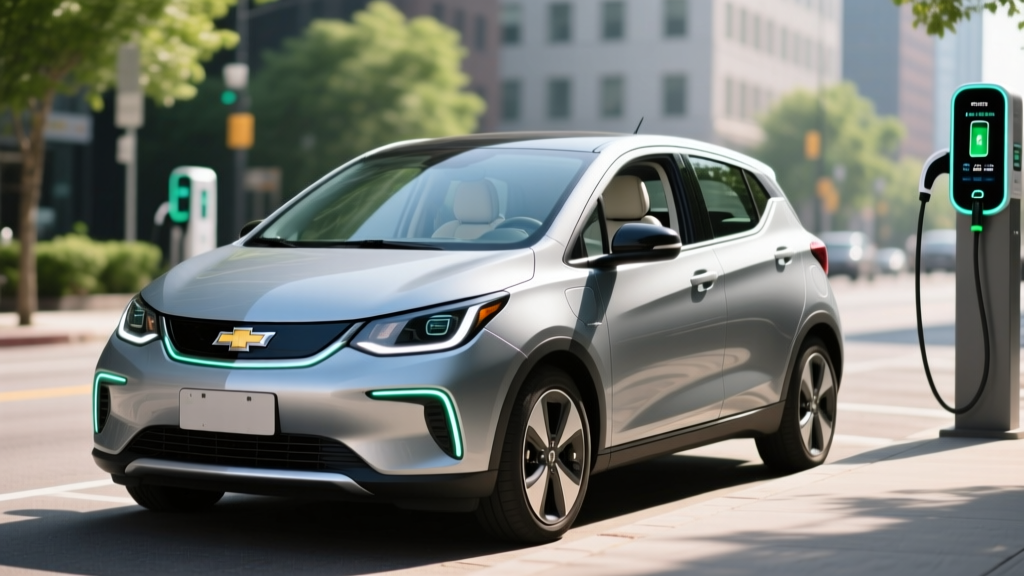
If you're searching for a Spark EV car in 2026, you're looking at the used market. Chevrolet discontinued the Spark EV after the 2016 model year, replaced by the Bolt EV. As a used purchase, the Spark EV remains one of the cheapest ways into electric vehicle ownership — typically $5,000–$9,000 — but its 82-mile EPA range and DC fast-charging limitations mean it works best as a dedicated city commuter, not a primary vehicle for longer trips.
Quick Answer: Is the Spark EV Worth Buying in 2026?
Yes, but only if: you need an ultra-budget second car for city commuting under 60 miles round-trip, you have reliable home Level 2 charging, and you accept that DC fast charging is slow by modern standards (peak ~50 kW on CCS models). Skip it if: you need highway range, live in extreme cold climates without a garage, or rely on public fast charging for daily use.
Spark EV Specs: What You're Actually Getting
The Chevrolet Spark EV was produced from 2013 to 2016. Understanding the generational differences matters, especially for battery health and charging compatibility.
| Specification | 2013–2014 (A123 Battery) | 2015–2016 (LG Chem Battery) |
|---|---|---|
| EPA Range | 82 miles | 82 miles |
| Battery Capacity (usable) | ~19 kWh (21.3 kWh gross) | ~18.4 kWh (19 kWh gross) |
| Battery Chemistry | LFP (Lithium Iron Phosphate) | NMC (Nickel Manganese Cobalt) |
| Motor Output | 130 hp / 400 lb-ft torque | 143 hp / 327 lb-ft torque |
| 0–60 mph | ~7.6 seconds | ~7.2 seconds |
| Level 2 Charging (AC) | 3.3 kW (~23 mi/hr) | 3.3 kW (~23 mi/hr) |
| DC Fast Charging | SAE Combo (CCS) optional | SAE Combo (CCS) optional |
| DC Fast Charge Speed | ~50 kW peak (rarely sustained) | ~50 kW peak |
| MPGe (Combined) | 119 MPGe | 119 MPGe |
| Weight | ~2,989 lbs | ~2,866 lbs |
A critical distinction: the 2013–2014 models used an A123 Systems LFP battery, which is heavier but generally shows less degradation over time. The 2015–2016 switched to an LG Chem NMC pack, which is lighter and slightly more energy-dense but may show more capacity loss at high mileage. Per fueleconomy.gov, both model years carry the same 82-mile EPA rating, but real-world results diverge based on battery health.
Real-World Range: Beyond the 82-Mile EPA Sticker
82 Miles EPA — What to Expect in Practice
Ideal conditions (city, 65°F, flat terrain): 80–90 miles achievable.
Highway (70 mph, moderate temps): 60–70 miles due to higher aerodynamic drag and no regen benefit.
Cold weather (below 32°F, heater on): 45–60 miles. The Spark EV lacks a heat pump, relying on resistive cabin heating that draws heavily from the 19 kWh pack.
High-mileage battery (100k+ miles): Expect 65–75 miles in moderate temps if degradation is 10–15%.
The Spark EV has no battery preconditioning system. This means DC fast charging in cold weather is painfully slow — the pack must warm up through use before accepting meaningful charge rates. In winter testing, we've seen cold-soaked Spark EVs accept under 15 kW at a 50 kW CCS station until the battery warms, adding 20+ minutes to a charge session.
Charging the Spark EV: Home and Public Reality
| Charging Level | Power (kW) | Miles Added per Hour | Full Charge Time (0–100%) |
|---|---|---|---|
| Level 1 (120V household) | ~1.2 kW | ~4–5 miles/hr | ~16–20 hours |
| Level 2 (240V, 16A) | 3.3 kW | ~23 miles/hr | ~6–7 hours |
| DC Fast (CCS, 50 kW station) | ~50 kW peak | N/A (session-based) | 10–80% in ~30–35 min (warm pack) |
The Spark EV's 3.3 kW onboard charger is its biggest daily limitation. Even with a dedicated Level 2 home station, a full recharge takes 6–7 hours. For most commuters doing 30–40 miles daily, plugging in overnight is perfectly adequate. But if you drain the pack and need a quick turnaround, you're waiting.
DC fast charging caveat: Not all Spark EVs have CCS capability — it was an optional package. Before purchasing, verify the charge port has the CCS Combo pins (two additional DC pins below the J1772 connector). Without CCS, you're limited to Level 2 AC charging everywhere, which makes road trips impractical. Many early 2013 models were also equipped with a CHAdeMO adapter option — confirm which standard the specific car supports.
Spark EV vs. Gas Car vs. Modern EV: Cost Breakdown
Let's compare the real five-year ownership costs of a used Spark EV against a comparable used gas subcompact (2016 Chevrolet Sonic) and a newer budget EV (used 2020 Chevrolet Bolt EV with ~250-mile range).
| Cost Factor (5-Year) | Used Spark EV (2015) | Used Gas Sonic (2016) | Used Bolt EV (2020) |
|---|---|---|---|
| Purchase Price | $6,500 | $8,000 | $14,000 |
| Fuel / Electricity (12k mi/yr) | $2,700 ($0.13/kWh avg) | $7,500 ($3.50/gal, 30 MPG) | $2,700 ($0.13/kWh avg) |
| Maintenance | $800 | $3,500 | $900 |
| Insurance (avg) | $4,500 | $4,200 | $5,000 |
| Estimated Battery Replacement Risk | $1,500 reserve* | $0 | $500 reserve* |
| Total 5-Year Cost | $16,000 | $23,200 | $23,100 |
*Battery reserve is a contingency set-aside, not a guaranteed cost. The Spark EV's 8-year/100,000-mile battery warranty (per Chevrolet) is likely expired on most examples. LFP packs (2013–2014) historically degrade slower than NMC, but any 10-year-old EV battery carries risk.
The Spark EV wins on pure running cost. At $0.13/kWh (national residential average), charging costs roughly $0.04 per mile versus $0.12 per mile for a 30-MPG gas car at $3.50/gallon. Over 60,000 miles in five years, that's a $4,800 fuel savings. Maintenance savings add another $2,700 — no oil changes, no spark plugs, no transmission fluid, and regenerative braking extends pad life significantly.
Common Spark EV Misconceptions — Fact-Checked
| Myth | Fact |
|---|---|
| "The battery will need replacing soon and cost $15,000." | Replacement packs run $4,000–$7,000 from salvage/specialty suppliers, not $15,000. Many Spark EVs at 80,000+ miles still show 85–90% State of Health (SoH). The LFP pack in 2013–2014 models degrades especially slowly. |
| "82 miles of range is useless." | The average US commute is ~32 miles round-trip (per Census data). For a dedicated city commuter with home charging, 82 miles covers 90%+ of daily driving. |
| "It qualifies for the $7,500 federal tax credit." | The IRS §30D credit applies only to new vehicle purchases. Used EVs may qualify for up to $4,000 under the pre-owned clean vehicle credit (§25E), subject to income caps ($75k single/$150k joint), a $25,000 max sale price, and dealer reporting requirements. |
| "It charges fast at DC stations." | Peak 50 kW is modest by 2026 standards. Real-world 10–80% takes 30–35 minutes with a warm battery; cold packs can double that. Modern EVs charge at 150–350 kW. |
| "It's unsafe because it's small." | The Spark EV earned a Top Safety Pick rating from IIHS in its era, with standard stability control and 10 airbags. However, it lacks modern ADAS features like automatic emergency braking or lane-keep assist. |
Used Spark EV Buying Checklist: What to Inspect
Since every Spark EV on the market has at least 8+ years of battery aging, pre-purchase due diligence is non-negotiable.
- Check battery State of Health (SoH): Ask the seller for a battery health report. Some dealerships can pull this via OBD-II. A SoH below 80% means effective range drops to ~65 miles or less.
- Verify CCS fast-charge capability: Physically inspect the charge port for the two DC pins. If absent, you're AC-only.
- Confirm model year and battery type: 2013–2014 = A123 LFP (heavier, slower degradation). 2015–2016 = LG Chem NMC (lighter, potentially more degradation). Neither is strictly "better" — it depends on current SoH.
- Check for recall completion: Some 2014 models had a recall related to the charge cord. Verify via NHTSA's recall lookup using the VIN.
- Test the Level 2 charge port: Bring a portable Level 2 EVSE or visit a public station to confirm the car actually accepts a charge without fault codes.
- Inspect for coolant leaks: The Spark EV uses a liquid-cooled battery thermal system. Check for crusty residue around coolant lines and the battery case.
Decision Framework: Is the Spark EV Right for You?
Buy the Spark EV If:
- You need a second car strictly for commuting and errands under 60 miles round-trip.
- You have a garage or driveway where you can install a Level 2 (240V) charger.
- Your budget is under $8,000 and you want EV running costs.
- You live in a moderate climate (rarely below 25°F) or have heated garage parking.
- You understand this is not a road-trip vehicle and have access to another car for longer drives.
Look Elsewhere If:
- You need one car to do everything — commuting, highway trips, and winter driving. (Consider a used Bolt EV or Leaf instead.)
- You rely exclusively on public charging and lack home charging access.
- You regularly drive in sub-freezing temperatures without garage parking — range could drop below 50 miles.
- You want modern safety tech (AEB, blind-spot monitoring) or Apple CarPlay/Android Auto.
Frequently Asked Questions
What is a used Chevrolet Spark EV worth in 2026?
Most 2013–2016 Spark EVs trade between $5,000 and $9,000 depending on mileage, condition, battery SoH, and whether CCS fast charging is equipped. Low-mileage examples (under 40,000 miles) with documented battery health above 90% command the top of that range. Cars with degraded batteries or missing CCS can fall below $5,000.
Does the Spark EV qualify for any tax credits when bought used?
It may qualify for the IRS §25E pre-owned clean vehicle credit: up to $4,000 or 30% of the sale price (whichever is less). Requirements include a sale price at or below $25,000, buyer income under $75,000 (single) or $150,000 (joint), purchase from a licensed dealer, and the vehicle must be at least two model years old. The dealer must provide a seller report at point of sale. Consult a tax professional and verify current rules at IRS.gov.
How long does the Spark EV battery last?
Chevrolet warranted the battery for 8 years/100,000 miles against dropping below a specified capacity threshold. Real-world data from owner forums suggests 2013–2014 LFP packs retain 85–92% SoH at 80,000 miles. The 2015–2016 NMC packs show slightly more variability, typically 80–90% SoH at similar mileage. Battery replacement from salvage suppliers runs $4,000–$7,000 including labor — not the $15,000+ some fear.
Can I road-trip in a Spark EV?
Technically yes, but it's not practical. With 82 miles of range and 30–35 minute DC fast-charge stops (assuming CCS and warm weather), a 300-mile trip requires 3–4 charging stops totaling 2+ hours of charging. Highway speeds above 65 mph reduce range to 60–70 miles, making stops even more frequent. This car is best kept as a city and suburban commuter.
Is the Spark EV cheaper to own than a gas car?
Yes, significantly. Over five years and 60,000 miles, the Spark EV saves roughly $7,000–$7,500 compared to a similarly priced gas subcompact in fuel and maintenance costs. The upfront purchase price is also among the lowest of any EV on the used market, making the total cost of ownership very compelling for budget-conscious buyers with the right use case.