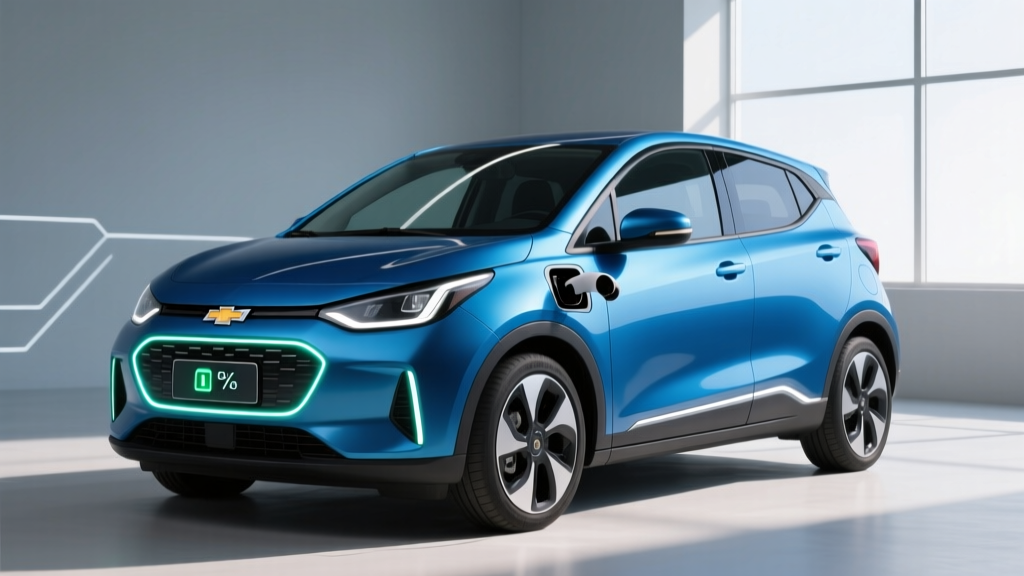
Short answer: No, the Chevrolet Spark is not an electric car. Every model year of the Spark sold in the United States (2013–2022) was powered exclusively by a gasoline engine. GM discontinued the Spark after the 2022 model year, and it was never offered as a battery-electric vehicle (BEV) or hybrid in the U.S. market. A battery-electric variant called the Spark EV existed only in South Korea from 2013–2015 and was never sold through U.S. dealerships.
If you're searching for "is the Chevrolet Spark an electric car" because you want an ultra-affordable, compact electrified vehicle, you're asking the right question but looking at the wrong car. The Spark filled a niche — sub-$15,000 city transportation — that several modern EVs and hybrids now occupy with far lower running costs. This guide walks through what the Spark actually was, what replaced it, and how to find a genuine electric or hybrid alternative at a similar price point in 2026.
The Chevrolet Spark: Gas-Only History and Why It Ended
The Chevrolet Spark was GM's entry-level subcompact hatchback, competing with the Mitsubishi Mirage and Fiat 500. Its final U.S. model year was 2022, and it shipped with a 1.4-liter four-cylinder engine producing 98 horsepower. According to EPA data on fueleconomy.gov, the 2022 Spark achieved 29 mpg city / 38 mpg highway / 33 mpg combined — respectable for its class, but entirely gasoline-dependent.
The Spark EV — a battery-electric version with a 21.3 kWh battery and approximately 82 miles of range — was produced for the South Korean market only between 2013 and 2015. It used an SAE Combo (CCS) connector and could DC fast-charge at roughly 50 kW. GM never imported it to the U.S., where the Bolt EV (launched for 2017) served as Chevrolet's affordable electric offering instead.
GM retired the Spark nameplate in North America as part of its broader shift toward electrification and crossover utility vehicles. If you see a "Spark EV" listed online, it is almost certainly a South Korean-market import or a mislabeled listing.
2026 Budget EV Alternatives: What Replaced the Spark's Role
The Spark's appeal was simple: rock-bottom pricing and easy city parking. Several 2026 models deliver that same footprint with electric or plug-in hybrid powertrains. Here's how the realistic alternatives compare.
| Vehicle (2026 Model Year) | Powertrain | EPA Range / MPG | Base MSRP | Est. Federal Credit |
|---|---|---|---|---|
| Chevrolet Bolt EV (discontinued 2023, successor expected 2026–2027) | BEV | 259 mi (2023 final EPA) | ~$28,000 (est. successor) | Up to $7,500 (§30D) |
| Nissan LEAF S | BEV | 149 mi (40 kWh) | $29,135 | Up to $7,500 (§30D) |
| Hyundai Kona Electric SE | BEV | 261 mi (65 kWh) | $34,185 | Up to $7,500 (§30D) |
| Toyota Corolla Hybrid LE | HEV | 53 / 46 / 50 mpg (city/hwy/combined) | $24,495 | Not eligible (§30D BEV/PHEV only) |
| Chevrolet Spark (2022, used gas) | Gas | 29 / 38 / 33 mpg | ~$11,000–$14,000 (used market) | N/A |
Source: fueleconomy.gov, manufacturer press sites. Federal credit eligibility depends on MSRP caps, buyer income limits, and battery-sourcing requirements under IRS §30D. Consult irs.gov or a tax professional for your specific situation.
Real Costs: Used Spark vs. Budget EV Over 5 Years
One reason buyers search for an electric Spark is cost sensitivity. Let's compare what a used 2022 Spark actually costs to own versus stepping into a 2026 Nissan LEAF or Toyota Corolla Hybrid over a 5-year, 75,000-mile ownership period. These figures assume 15,000 miles/year, $3.50/gallon gasoline, and $0.14/kWh home electricity.
| Cost Category (5 Years / 75k Miles) | 2022 Spark (Used, Gas) | 2026 Nissan LEAF S (BEV) | 2026 Corolla Hybrid LE (HEV) |
|---|---|---|---|
| Purchase Price (after credit) | $12,500 (used avg.) | $21,635 (after est. $7,500 credit) | $24,495 |
| Fuel / Electricity | $7,955 (gas) | $3,150 (home charging) | $5,250 (gas) |
| Maintenance (est.) | $3,200 | $1,500 | $2,800 |
| Insurance (est. avg.) | $6,500 | $8,200 | $7,000 |
| Total 5-Year Cost | $30,155 | $34,485 | $39,545 |
| Cost Per Mile | $0.40 | $0.46 | $0.53 |
Key takeaway: The used Spark still wins on absolute 5-year cost because its purchase price is so low. However, the LEAF narrows the gap significantly once you factor in the federal tax credit, dramatically lower fuel and maintenance costs, and new-car warranty coverage. Over a 10-year horizon, the LEAF would likely pull ahead as the Spark's age-related repair costs climb. The Corolla Hybrid offers the longest driving range with zero charging dependency, but at a higher upfront and fueling cost than the LEAF.
Common Misconceptions About the Spark and Budget EVs
| Myth | Fact |
|---|---|
| "There's a Chevrolet Spark EV I can buy in the U.S." | The Spark EV was sold only in South Korea (2013–2015). No U.S.-spec electric Spark exists. The closest Chevrolet BEV was the Bolt EV (discontinued 2023, successor anticipated). |
| "Budget EVs don't have enough range for daily driving." | The average American drives ~37 miles per day (FHWA data). Even the 149-mile LEAF covers 4x that on a single charge. Highway and cold-weather driving reduce range 15–30%, but most commutes remain well within capacity. |
| "You need a $50,000+ car to get a real EV." | The Nissan LEAF starts under $30,000 before incentives. Used EVs (Bolt, LEAF, early Model 3) routinely sell for $12,000–$18,000, and the used EV tax credit (§25E) offers up to $4,000 on vehicles priced at $25,000 or less. |
| "EV batteries will need expensive replacement within a few years." | Federally mandated battery warranties cover at least 8 years / 100,000 miles. NMC and LFP chemistries routinely retain 85–90% capacity at 100,000 miles based on fleet data. Full replacement costs $5,000–$15,000 depending on the model, but most batteries outlast the vehicle. |
| "I can't own an EV without a home charger." | Home Level 2 charging is ideal, but apartment dwellers successfully use workplace charging, public Level 2 stations, and DC fast chargers. The trade-off is higher per-kWh cost ($0.30–$0.50/kWh at public DC stations vs. ~$0.14 at home) and less convenience. |
First-Time EV Buyer Essentials: What the Spark Search Gets Wrong
If you landed here wondering about an electric Spark, you likely value low cost, small size, and simple ownership. Here's what actually matters when transitioning from a budget gas car to your first EV:
Charging Access Is the Real Gatekeeper
Before choosing any EV, honestly assess your charging situation. If you have a garage or driveway with a 240V outlet (or the ability to install one for $500–$2,000 including equipment and electrician labor), an EV like the LEAF or Kona Electric makes strong financial sense. A Level 2 home charger adds roughly 25 miles of range per hour of charging — more than enough to replenish overnight.
If you rely on street parking or an apartment without charging infrastructure, a hybrid (like the Corolla Hybrid) or PHEV removes the dependency on charging access while still cutting fuel costs 30–50%.
Cold Climate Cuts Range — Plan for It
EV batteries lose efficiency in cold temperatures. Expect a 20–35% range reduction at 20°F compared to the EPA sticker. A LEAF rated at 149 miles may deliver only 100–115 miles in a Minnesota winter. If you live in a cold climate, prioritize models with a heat pump (standard on the Kona Electric, available on many 2026 EVs) and add a 25% range buffer to your daily needs.
Tax Credits Change the Math — But Aren't Guaranteed
The federal §30D clean vehicle credit offers up to $7,500 for qualifying new EVs, but eligibility hinges on:
- MSRP caps: $55,000 for sedans/hatchbacks, $80,000 for SUVs/trucks/vans
- Buyer income limits: $150,000 single / $225,000 head of household / $300,000 joint (modified AGI)
- Battery sourcing: Critical minerals and battery components must meet escalating domestic-content thresholds each year
- Point-of-sale transfer: As of 2024+, you can transfer the credit to the dealer for an upfront price reduction rather than waiting to claim it on your tax return
Always verify current-year rules on irs.gov before committing to a purchase. A vehicle that qualifies in January may lose eligibility if a manufacturer's sourcing changes mid-year.
Decision Framework: What Should You Actually Buy?
Use this if/then guide to narrow your choice:
If your budget is under $15,000 total → A used 2019–2022 Chevrolet Spark or Mitsubishi Mirage is still the cheapest way into reliable transportation. Accept the gas costs and plan for age-related maintenance. Consider a used Nissan LEAF (2018–2021) if you can find one in this range and have home charging — but verify battery State of Health (SoH) via a dealer diagnostic before buying.
If your budget is $20,000–$30,000 and you have home charging → The Nissan LEAF S or a used Chevrolet Bolt EV offers the lowest cost-per-mile of any option here. Apply the §30D or §25E credit to bring effective prices down further. This is the sweet spot for budget-conscious first-time EV buyers.
If your budget is $25,000–$35,000 and you need more range → The Hyundai Kona Electric (261 mi EPA) or the upcoming Chevrolet Bolt successor give you genuine road-trip capability with DC fast charging at 100+ kW. These vehicles handle cross-state drives with one or two 20–30 minute charging stops.
If you can't charge at home or drive 50+ miles daily → A hybrid like the Toyota Corolla Hybrid (50 mpg combined) or a PHEV like the Toyota Prius Prime (44 miles electric-only, then 52 mpg on gas) eliminates range anxiety and charging dependency while still cutting fuel bills substantially.
If you live in a cold climate and drive long rural routes → Prioritize a PHEV or HEV. Battery-only EVs can work, but you'll need 250+ miles of EPA range to account for winter losses and sparse charging infrastructure in rural areas.
Frequently Asked Questions
Was there ever an electric Chevrolet Spark?
Yes, but only in South Korea. The Spark EV was produced from 2013 to 2015 with a 21.3 kWh battery and roughly 82 miles of range. It was never imported to or sold in the United States. Any "Spark EV" you see in a U.S. listing is likely a mislabeled Bolt EV or a grey-market import.
What's the cheapest electric car I can buy new in 2026?
The Nissan LEAF S starts at approximately $29,135 MSRP before incentives. After the maximum $7,500 federal tax credit (if you qualify), the effective price drops to around $21,635 — making it the most affordable new EV available. The used-EV market offers even cheaper options: 2019–2022 LEAFs and Bolts routinely sell for $12,000–$18,000, and the §25E used-EV credit can knock up to $4,000 off the purchase price.
How much does it cost to charge an EV at home vs. buying gas?
At the U.S. average residential electricity rate of ~$0.14/kWh and an efficiency of 3.5 miles/kWh (typical for a compact EV), you're paying roughly $0.04 per mile on electricity. Compare that to the 2022 Spark at 33 mpg combined with gas at $3.50/gallon: $0.106 per mile. That's a 62% per-mile fuel savings with an EV, adding up to about $990 per year at 15,000 miles driven.
Do I need to install a special charger at home?
Every EV comes with a Level 1 charging cord that plugs into a standard 120V household outlet, adding about 3–5 miles of range per hour. For daily driving under 40 miles, Level 1 may suffice. For faster replenishment, a Level 2 home charger (240V, like a dryer outlet) adds 20–30 miles per hour. Professional installation typically costs $500–$2,000 depending on your electrical panel capacity and the distance from the panel to your parking spot. Always get a quote from a licensed electrician before purchasing equipment.
Is a hybrid better than an EV for a first-time buyer?
It depends entirely on your charging access and driving pattern. If you can charge at home and drive under 150 miles daily, a BEV offers the lowest operating costs and least maintenance. If you lack home charging, frequently drive 200+ miles in a day, or live in an area with sparse public charging infrastructure, a hybrid (HEV) or plug-in hybrid (PHEV) is the lower-risk choice that still reduces fuel consumption significantly.