Quick Answer: Is the Chevrolet Spark Electric?
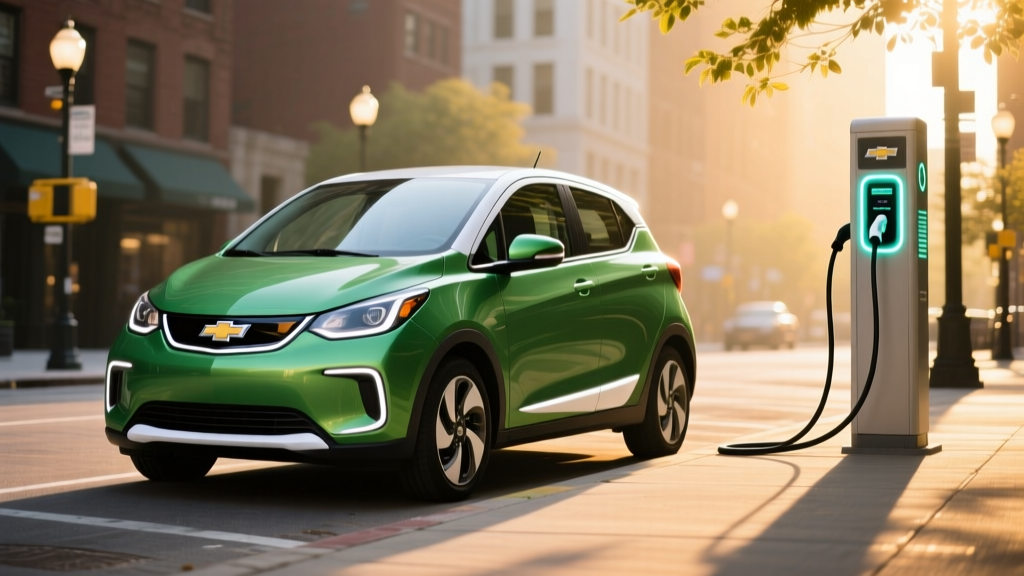
No — the current-generation Chevrolet Spark is not electric. The gasoline-only Spark (a subcompact hatchback) was discontinued after the 2022 model year. However, Chevrolet did produce a fully electric version called the Spark EV from 2013 to 2016. The Spark EV was a limited-market, compliance-style electric car sold primarily in California and Oregon. It featured a 19 kWh (later 18.4 kWh) lithium-ion battery and an EPA-estimated range of roughly 82 miles. You cannot buy a new Spark EV today, and the gas Spark is also no longer in production. If you're searching for a budget-friendly electric Chevy in 2026, you'll need to look at alternatives like the used Bolt EV or the newer, larger Chevy Equinox EV.
The Spark EV Story: What Chevy Actually Built
Chevrolet launched the Spark EV for the 2013 model year as one of its earliest modern battery-electric vehicles. It was built on the same subcompact platform as the gasoline Spark but swapped the internal-combustion powertrain for an electric motor and a lithium-ion battery pack. Here's what the Spark EV delivered across its production run:
| Spec | 2013–2014 | 2015–2016 |
|---|---|---|
| Battery Capacity | 21.3 kWh (usable ~19 kWh) | 18.4 kWh (LG Chem cells) |
| EPA Range | 82 miles | 82 miles |
| Motor Output | 114 kW (~154 hp) / 400 lb-ft torque | 105 kW (~141 hp) / 327 lb-ft torque |
| 0–60 mph | ~7.6 seconds | ~7.2 seconds |
| EPA Efficiency | 119 MPGe combined | 119 MPGe combined |
| DC Fast Charging | Optional SAE Combo (CCS), up to ~50 kW | Optional CCS, up to ~50 kW |
| Level 2 Charging | 3.3 kW onboard charger | 3.3 kW onboard charger |
| Original MSRP | ~$26,685 (before incentives) | ~$25,995 (before incentives) |
The Spark EV was only available in select markets — primarily California and Oregon — because it served as a compliance vehicle to help GM meet zero-emission vehicle (ZEV) mandates in those states. Total production was relatively low, making used examples scarce on the national market today.
Why the Spark EV Was Discontinued
Chevrolet ended Spark EV production after the 2016 model year for several converging reasons:
- The Bolt EV arrived. For the 2017 model year, Chevrolet introduced the Bolt EV with a 60 kWh battery and 238 miles of EPA range — dramatically outclassing the Spark EV's 82-mile ceiling at a comparable price point.
- Compliance purpose fulfilled. The Spark EV's primary role was ZEV credit generation in California. Once the Bolt EV entered production with greater range and broader market appeal, the Spark EV became redundant.
- Limited platform economics. The Spark EV's small chassis couldn't accommodate a meaningfully larger battery without a full redesign. Scaling it up wasn't cost-effective.
- Gas Spark followed in 2022. The gasoline Spark was discontinued after 2022 as Chevrolet consolidated its small-car lineup in the U.S. market.
Buying a Used Spark EV in 2026: What to Expect
If you're considering a used Spark EV, here's the reality of ownership a decade or more after these cars were built:
Battery Degradation and Range
The Spark EV's original ~19 kWh usable battery has aged. Lithium-ion packs in early 2010s EVs typically lose 15–30% of their original capacity over 10+ years, depending on climate exposure and charging habits. A 2014 Spark EV that originally delivered 82 miles of EPA range may realistically offer 55–70 miles in 2026 — and potentially less in cold weather, where lithium-ion chemistry suffers 20–30% range reduction at freezing temperatures.
Charging Limitations
The 3.3 kW onboard Level 2 charger means a full recharge from empty takes roughly 6–7 hours on a 240V home circuit. DC fast charging (50 kW CCS) was optional, not standard — and even when equipped, 50 kW by modern standards is slow. A 10–80% charge would take approximately 30–40 minutes, and the CCS connector (not NACS) means you'll need an adapter at Tesla Superchargers that now support NACS-equipped vehicles but may not all have legacy CCS cables.
Used Pricing and Availability
Used 2014–2016 Spark EVs typically list between $5,000 and $9,000 depending on mileage, condition, and battery state of health (SoH). Availability is heavily concentrated in California. Outside of the West Coast, finding one requires shipping or a multi-state search.
Federal Tax Credit Eligibility
Under current IRS §25E rules for used clean vehicles, you may qualify for up to $4,000 (30% of the sale price, capped at $4,000) if:
- The vehicle is purchased from a licensed dealer (not private party)
- The sale price is $25,000 or less
- Your modified adjusted gross income falls within IRS thresholds ($75,000 single / $150,000 married filing jointly)
- The vehicle is at least two model years old (easily satisfied)
- You haven't claimed this specific credit from the same dealer within the prior three years
On a $7,000 Spark EV, the 30% calculation yields $2,100 — well under the $4,000 cap. This credit can be transferred to the dealer at the point of sale, effectively reducing your purchase price.
Spark EV vs. Gas Spark vs. Modern Budget EVs: The Numbers
| Metric | Used Spark EV (2014–2016) | Used Gas Spark (2016–2022) | Used Bolt EV (2017–2023) | New Equinox EV (2026) |
|---|---|---|---|---|
| Typical Price | $5,000–$9,000 | $8,000–$14,000 | $12,000–$20,000 | $33,600+ (MSRP) |
| EPA Range | 82 mi (new); ~55–70 mi now | ~275 mi (7.5 gal tank, 33 mpg combined) | 238–259 mi (new) | 315–319 mi |
| Fuel/Energy Cost per Mile | ~$0.04–$0.06 (home charging) | ~$0.10–$0.13 (gas at $3.20/gal) | ~$0.04–$0.06 | ~$0.04–$0.06 |
| Annual Fuel/Energy (12k mi) | ~$480–$720 | ~$1,200–$1,560 | ~$480–$720 | ~$480–$720 |
| Maintenance (Annual) | ~$200–$400 | ~$500–$800 | ~$200–$400 | ~$200–$400 |
| Home Charging Needed? | Strongly recommended | No | Strongly recommended | Strongly recommended |
| Fast Charge Capability | 50 kW (optional) | N/A | 55 kW (CCS) | 150+ kW (NACS) |
The Spark EV's per-mile energy cost is genuinely low, but its degraded range and slow charging make it a secondary-vehicle candidate at best. If your daily commute is under 30 miles round-trip and you can charge at home overnight, the economics work. For anything beyond that, a used Bolt EV delivers three times the range for a modestly higher purchase price.
Common Misconceptions About the Spark and EVs
| Myth | Fact |
|---|---|
| "The Chevy Spark is an electric car." | The standard Spark was gasoline-only. Only the separate Spark EV variant (2013–2016) was electric. |
| "I can buy a new electric Spark." | Both the gas Spark and Spark EV are discontinued. No new units are available. |
| "82 miles of range is enough for anyone." | 82 miles was marginal in 2014. With battery degradation, a used Spark EV may deliver 55–70 miles — insufficient for most single-vehicle households. |
| "EVs always save money." | EVs save on fuel and maintenance, but upfront cost, insurance premiums (often 10–25% higher than gas equivalents), and potential battery replacement can offset savings for low-mileage drivers. |
| "Used EV batteries are shot." | Not necessarily. Many 10-year-old packs retain 70–85% SoH. Always request a battery health diagnostic before purchasing. |
Decision Framework: Should You Buy a Spark EV?
Choose the Used Spark EV If:
- You need an ultra-low-cost second car for short commutes (under 25 miles round-trip)
- You have reliable Level 2 home charging and won't rely on public infrastructure
- You live in a mild climate (battery degradation accelerates in extreme heat or cold)
- You can verify battery SoH above 75% before purchase
- You qualify for the $4,000 used-EV tax credit, bringing effective cost to $3,000–$5,000
Choose a Used Bolt EV Instead If:
- You need a primary vehicle with 200+ miles of real range
- You take occasional road trips or highway drives exceeding 60 miles
- You live in a cold climate where range loss matters more with a small battery
- Your budget allows $12,000–$18,000
Choose a New EV (Equinox EV or Similar) If:
- You want a full warranty (8-year/100,000-mile battery coverage)
- You need modern DC fast charging (150+ kW) for road trips
- You want current safety tech (automatic emergency braking, lane-keeping, blind-spot monitoring)
- You qualify for the §30D new clean vehicle credit (up to $7,500, subject to MSRP caps, income limits, and battery-sourcing requirements)
Real-World Ownership Considerations for Any Budget EV
Home Charging Access Is Non-Negotiable
Without home or workplace Level 2 charging, owning a short-range EV like the Spark EV becomes a daily logistics challenge. Public DC fast charging costs $0.30–$0.50/kWh in most markets — roughly double to triple the cost of home charging at $0.12–$0.18/kWh (national average). For a Spark EV with a ~19 kWh battery, a full home charge costs approximately $2.30–$3.40; at a public charger, that jumps to $5.70–$9.50.
Insurance Costs
Even used EVs often carry higher insurance premiums than comparable gas cars. For a used Spark EV, expect annual premiums in the $900–$1,400 range depending on your state, driving record, and coverage level. Get quotes before purchasing — the insurance differential can erase fuel savings for low-mileage drivers.
Cold-Weather Range Loss
The Spark EV's small battery has no active thermal management system comparable to modern EV heat pumps. In sub-freezing conditions, expect 25–35% range reduction. A Spark EV with 60 miles of degraded range in mild weather could drop to 40–45 miles on a 20°F January morning. This is a hard physics limitation of lithium-ion chemistry, not a defect.
Frequently Asked Questions
Can I still get parts and service for a Spark EV?
GM still supports the Spark EV through its dealer network, but parts availability — especially for the battery pack and electric-specific components — is more limited than for current-production vehicles. Body panels and suspension parts shared with the gas Spark are more readily available. Before buying, confirm that a local Chevy dealer has EV-certified technicians.
Does the Spark EV qualify for any tax credits today?
Not the original $7,500 new-vehicle credit — that expired for the Spark EV years ago. However, under the current §25E used clean vehicle credit, you may receive up to $4,000 (30% of sale price) when purchasing from a dealer, subject to income caps and the $25,000 maximum sale price rule. Verify current eligibility on IRS.gov.
What's the best budget EV alternative to the Spark EV in 2026?
The used Chevrolet Bolt EV (2017–2023) is the strongest value proposition. With 238–259 miles of EPA range (when new), CCS fast charging, and used prices ranging from $12,000–$20,000, it delivers dramatically more capability. The used Nissan Leaf (2018+, 40 or 62 kWh) is another option, though its CHAdeMO connector and passive battery cooling are drawbacks.
Is the Spark EV safe?
The Spark EV received a 4-star overall rating from NHTSA during its production years. However, it lacks modern ADAS features like automatic emergency braking, lane-keeping assist, and blind-spot monitoring that are standard on most 2026 vehicles. If safety technology is a priority, a newer vehicle is the better choice.
Will Chevy make another small, affordable EV like the Spark?
Chevrolet has not announced a direct Spark EV successor. The brand's current affordable EV strategy centers on the Equinox EV (starting around $33,600 MSRP) and the upcoming next-generation Bolt EV, expected to use Ultium-based architecture. A sub-$25,000 new Chevy EV has been hinted at in GM's broader roadmap but remains unannounced as of early 2026.