The Short Answer on the Chevrolet Spark Electric
There is no Chevrolet Spark Electric. The Chevy Spark was a gas-only subcompact hatchback discontinued after the 2022 model year. Chevrolet never produced an electric version. If you're searching for a budget-friendly Chevy EV, the 2026 Chevrolet Equinox EV is the closest equivalent — starting around $33,600 MSRP with up to 319 miles of EPA range, DC fast charging up to 150 kW, and potential eligibility for the federal §30D tax credit (up to $7,500, subject to income and sourcing rules).
Searches for a "Chevrolet Spark Electric" spike regularly because buyers assume that Chevy's most affordable car must have an EV variant. It doesn't — and that gap in the market tells you a lot about where budget EVs actually stand today. This guide clears up the confusion, shows you what Chevy actually offers at the entry level, and breaks down the real costs of owning a budget EV versus the gas car the Spark used to be.
Why the Chevrolet Spark Electric Doesn't Exist
The Spark served as Chevrolet's entry-level city car from 2013 through 2022, powered by a 1.4L four-cylinder engine producing 98 horsepower. It was one of the cheapest new cars sold in the US, with MSRPs hovering around $14,000–$17,000. When GM restructured its small-car portfolio to fund EV development (ultimately retiring the Spark, Sonic, and Bolt's original platform), the Spark was axed entirely — no electric successor was announced.
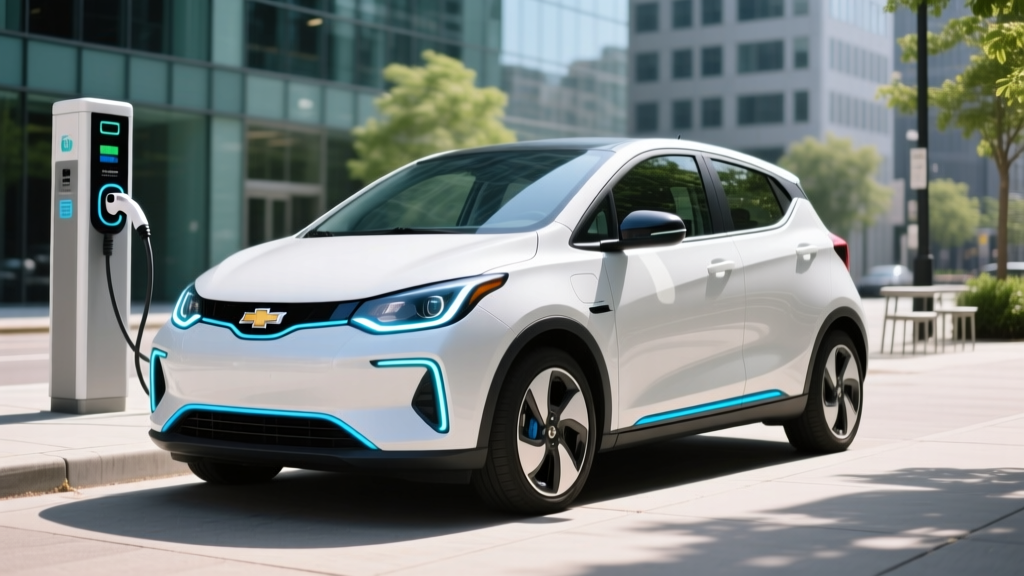
GM's strategy shifted toward crossovers and SUVs on the Ultium platform. The spiritual successor to the Spark's "affordable Chevy" role is now the Equinox EV and the returning 2026 Chevrolet Bolt EV (rebuilt on Ultium). Neither matches the Spark's sub-$18,000 price, but both deliver far more range, technology, and safety.
What Chevy Actually Offers: 2026 Budget EV Lineup
| Spec | 2026 Equinox EV 2LT | 2026 Bolt EV 2LT |
|---|---|---|
| Base MSRP | $33,600 | $28,400 (est.) |
| EPA Range | 319 mi (FWD) | 259 mi (est.) |
| Battery (usable) | 85 kWh, NMC | 65 kWh, NMC (est.) |
| Peak DC Fast Charge | 150 kW | 115 kW (est.) |
| 10–80% DC Charge Time | ~30 min | ~35 min (est.) |
| Level 2 Charge Rate | 11.5 kW | 11.5 kW |
| Horsepower | 213 hp | 200 hp (est.) |
| 0–60 mph | ~7.4 sec | ~7.0 sec |
| EPA Efficiency | 115 MPGe combined | 120 MPGe (est.) |
| Battery/Powertrain Warranty | 8 yr / 100,000 mi | 8 yr / 100,000 mi |
Sources: fueleconomy.gov, Chevrolet EV lineup. Bolt EV 2026 specs are preliminary estimates based on GM announcements; final EPA certification pending.
Real-World Range Reality: The Equinox EV's 319-mile EPA estimate assumes moderate temperatures and mixed driving. Expect ~260–280 miles on sustained highway driving at 70+ mph, and ~220–240 miles in sub-freezing winter conditions without preconditioning. The Bolt EV's 259-mile estimate drops to roughly 200–220 miles in cold weather. Always plan charging stops using 80% of the EPA figure as your safe buffer.
EV vs. the Old Spark: A Real Cost Comparison
The closest apples-to-apples comparison is the last-generation 2022 Chevy Spark (gas) versus the 2026 Bolt EV. Here's what ownership actually costs over five years and 75,000 miles:
| Cost Category | 2022 Spark 1LT (Gas) | 2026 Bolt EV 2LT (Electric) |
|---|---|---|
| Purchase Price (MSRP) | $16,200 | $28,400 |
| Federal Tax Credit (§30D) | $0 | Up to $7,500* |
| Effective Purchase Price | $16,200 | $20,900 |
| Fuel / Electricity (75k mi) | $7,875 (29 MPG, $3.65/gal) | $2,250 (3.3 mi/kWh, $0.13/kWh home) |
| Maintenance (5 yr) | $2,800 | $900 |
| Insurance (avg. 5 yr) | $5,500 | $7,200 |
| Total 5-Year Cost | $32,375 | $31,250 |
*§30D credit eligibility requires meeting buyer income caps ($150k single / $300k joint), MSRP limits ($55k for cars), and battery critical-mineral/sourcing requirements. Verify current rules at IRS.gov. Credit may be applied at point of sale as of 2024+.
The Bolt EV costs roughly $4,700 more upfront (after the tax credit), but saves about $5,625 in fuel and $1,900 in maintenance over five years. Insurance runs about $1,700 higher for the EV. Net result: the Bolt EV edges out the Spark by roughly $1,100 over five years — and that gap widens if gas prices rise or if you can charge on cheaper off-peak electricity rates.
Real-World Ownership: What First-Time EV Buyers Must Know
Home Charging Is Non-Negotiable for Most Owners
Over 80% of EV charging happens at home. If you have access to a garage or driveway where a Level 2 charger (240V, 7–11.5 kW) can be installed, an EV like the Bolt or Equinox is seamless — you wake up every morning with a full "tank." A basic Level 2 home charger installation typically costs $800–$2,000 (equipment + electrician + permit), assuming your electrical panel has capacity. If you need a panel upgrade (200A service), add $1,500–$3,000.
If you live in an apartment without charging access or rely exclusively on public DC fast chargers, EV ownership becomes significantly less convenient and more expensive. Public DC fast charging costs roughly $0.35–$0.50/kWh, which pushes your per-mile cost closer to (or sometimes above) a gas car. Be honest about your living situation before committing.
Cold Weather Cuts Range — Plan For It
Lithium-ion batteries lose efficiency in cold temperatures. In sustained sub-30°F conditions, expect 20–35% range reduction depending on whether you use cabin heat. The Equinox EV and Bolt EV both offer heat pump or resistance heating — preconditioning the battery while plugged in (using the Chevy app) recovers some of that lost range and improves DC fast-charge speeds in winter.
DC Fast Charging Isn't a Linear Speed
When Chevy says the Equinox EV charges at 150 kW, that's the peak rate — achievable only between roughly 10–40% State of Charge. Above 60%, the charge curve tapers significantly. By 80%, you're often charging at 40–50 kW. This is why manufacturers quote 10–80% times rather than 0–100%. For road trips, plan to charge from 10–80% and then drive on — don't sit at a charger waiting for 100%.
Tax Credit Eligibility: The Fine Print
The federal §30D clean vehicle credit can offset up to $7,500 of a new EV purchase, but qualifying isn't automatic. Here's the 2026 eligibility checklist:
- Buyer income cap: Adjusted gross income must not exceed $150,000 (single), $225,000 (head of household), or $300,000 (married filing jointly)
- MSRP cap: Vehicle base MSRP must be ≤ $55,000 for cars (SUVs/trucks ≤ $80,000) — both the Bolt and Equinox EV qualify
- Battery sourcing: A percentage of critical minerals and battery components must be sourced from the US or free-trade-agreement countries. These thresholds increase annually — verify current-year requirements at IRS.gov
- Assembly: Vehicle must undergo final assembly in North America (both the Bolt and Equinox EV are assembled in the US)
- Point-of-sale transfer: As of 2024, you can transfer the credit to the dealer at purchase, reducing your out-of-pocket cost immediately — you don't need to wait until tax filing
Important: Battery sourcing rules are the most common disqualifier and change yearly. Always confirm eligibility with your dealer and a tax professional before assuming the full $7,500 applies.
Common Misconceptions About Budget EVs
| Myth | Fact |
|---|---|
| "Budget EVs have terrible range" | The 2026 Bolt EV targets ~259 mi EPA; the Equinox EV hits 319 mi — both exceed most daily commutes by 10x. |
| "EV batteries need replacing every few years" | GM warranties the battery for 8 years/100,000 miles against dropping below 60–70% capacity. Real-world data shows most NMC packs lose only 8–12% capacity over 100k miles. |
| "Charging takes too long" | Home Level 2 adds ~30–40 miles per hour of charging — overnight is more than enough. DC fast chargers add 150+ miles in 20–30 minutes on road trips. |
| "EVs are more expensive to own" | Higher purchase price is offset by lower fuel and maintenance costs. Break-even typically occurs in 3–5 years depending on driving volume and electricity rates. |
| "There's no affordable Chevy EV" | The Bolt EV (est. $28,400) and Equinox EV ($33,600) are among the most affordable EVs in their segments, and both may qualify for the $7,500 federal credit. |
Decision Framework: Should You Buy a Budget Chevy EV?
Choose the 2026 Bolt EV if:
- You want the lowest possible new-EV purchase price from Chevy
- Your daily driving is under 80 miles round-trip
- You have home Level 2 charging access
- You primarily drive in urban or suburban environments
- You qualify for the §30D tax credit (bringing effective price to ~$20,900)
Choose the 2026 Equinox EV if:
- You need 300+ miles of range for longer commutes or road trips
- You want a crossover with more cargo space and passenger room
- You frequently drive highway miles where the Bolt's smaller battery means more charging stops
- You want faster DC fast charging (150 kW vs. ~115 kW)
Stick with a gas or hybrid vehicle if:
- You have no access to home or workplace charging
- You regularly tow or drive in extreme cold (below 0°F) for long distances
- Your budget is strictly under $20,000 and you can't wait for the used-EV credit market to develop
- You live in a charging desert with no reliable DC fast chargers within 50+ miles
Frequently Asked Questions
Did Chevy ever make an electric Spark?
No. The Chevrolet Spark was only ever sold with a gasoline 1.4L engine. It was discontinued after the 2022 model year with no electric variant. GM's Spark EV concept existed only as an internal compliance test vehicle in very limited numbers (2013–2016) and was never sold at retail in meaningful quantities.
What is the cheapest electric Chevrolet you can buy in 2026?
The 2026 Chevrolet Bolt EV, with an estimated starting MSRP around $28,400. After the potential $7,500 federal tax credit (if you qualify), the effective price drops to approximately $20,900 — making it one of the most affordable new EVs on the US market.
How much does it cost to charge a Chevy Bolt EV at home?
At the US average residential electricity rate of ~$0.16/kWh (2025 data), fully charging the Bolt EV's estimated 65 kWh battery from 10% to 100% costs roughly $9.36. That buys you about 230+ real-world miles — equivalent to about $26 in gasoline for a 29 MPG car like the old Spark.
Is the Equinox EV eligible for the $7,500 federal tax credit?
The Equinox EV is assembled in the US and priced under the $55,000 MSRP cap for cars, so it meets two key requirements. However, full eligibility depends on the current-year battery critical-mineral and component sourcing thresholds, which change annually. Confirm with your dealer and check fueleconomy.gov for the latest credit status before purchasing.
How long will a Chevy EV battery last?
GM covers the Ultium battery pack with an 8-year/100,000-mile warranty against capacity loss below a specified threshold (typically 60–70% of original capacity). Independent fleet data on similar NMC chemistries suggests most packs retain 85–92% capacity at 100,000 miles with normal use. Replacement costs, if needed out of warranty, currently range from $8,000–$15,000 depending on pack size — but full-pack replacements remain rare.