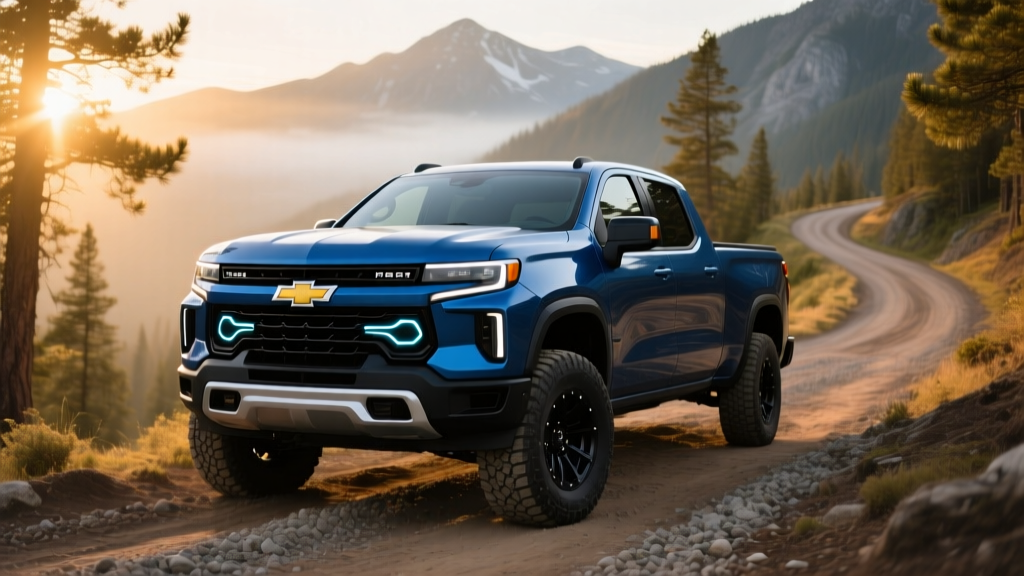
The electric truck segment has matured past novelty, and the 2026 Chevrolet Silverado EV Trail Boss lands as Chevy's answer to buyers who want off-road credibility, serious payload capability, and daily-driver comfort — all without a drop of gasoline. Built on GM's Ultium platform (shared with the GMC Sierra EV and Hummer EV pickup), the Trail Boss trim sits above the Work Truck and LT trims, adding adaptive air suspension, underbody protection, and a more aggressive stance. But with a base MSRP pushing $78,000 and a massive battery pack, does the Silverado EV Trail Boss justify its premium, or should you cross-shop the Rivian R1T, Ford F-150 Lightning, or Tesla Cybertruck?
We've broken down every spec that matters to an EV truck buyer — real-world range, DC fast-charging curves, towing impact on efficiency, and the fine print on the federal tax credit — so you can make a data-driven decision.
Range, Battery, and Efficiency: What the EPA Says vs. Reality
The Silverado EV Trail Boss uses a 200+ kWh usable Ultium battery pack (estimated 205 kWh net, NMC lithium-ion chemistry with nickel-cobalt-manganese cathode). This is one of the largest battery packs in any production light-duty vehicle, and it's the primary reason the Trail Boss achieves its class-leading range despite weighing over 9,000 lbs curb.
Real-World Expectation: Expect 310–340 miles in mixed driving; 270–300 miles at sustained 75 mph highway speeds; and 220–260 miles in freezing temperatures (below 30°F) due to battery heating demands and cabin climate load. Towing a 5,000-lb trailer can cut range to 170–200 miles.
Efficiency for a truck this size is predictably modest. The Silverado EV with the larger pack returns approximately 55 MPGe combined (roughly 56–60 kWh/100 miles). That's less efficient than the F-150 Lightning Extended Range (~66 MPGe) but in line with the Rivian R1T Max Pack. The physics of a 9,000-lb aerodynamic profile simply demand more energy per mile.
For context, if your daily commute is under 60 miles round-trip and you have home charging, you'll rarely dip below 70% state of charge (SoC) on a weekday. The range anxiety conversation shifts from "will I make it?" to "how often do I want to stop on road trips?"
Charging Speed: DC Fast Charge and Home Level 2
Charging a 200+ kWh battery is where physics meets patience. The Silverado EV Trail Boss supports a peak DC fast-charge rate of 200 kW on compatible CCS or NACS (Tesla Supercharger with adapter) stations. GM has been transitioning to the NACS connector standard, and 2026 models ship with native NACS ports, granting direct access to Tesla's Supercharger network — a significant reliability advantage over CCS-only competitors.
| Charging Level | Power / Rate | Time / Miles Added |
|---|---|---|
| Level 1 (120V standard outlet) | ~1.4 kW | ~3–4 miles per hour (full charge: 60+ hours) |
| Level 2 (240V home charger, 48A) | 11.5 kW | ~27–30 miles per hour (10–80% in ~14 hours) |
| Level 2 (240V, 80A / 19.2 kW capable) | 19.2 kW (max onboard) | ~45 miles per hour (10–80% in ~8.5 hours) |
| DC Fast Charge (peak) | 200 kW | 10–80% in approximately 45 minutes |
Charging curve reality check: The 200 kW peak is not sustained across the full session. Expect peak rates between 10–40% SoC, tapering to ~130 kW by 60% and dropping below 50 kW above 85%. This is normal for large NMC packs managing thermal load. On a road trip, plan stops around the 20–80% sweet spot for the fastest turnaround — roughly 35–45 minutes at a 350 kW-capable station (the truck will only pull what it can accept).
At home, most Trail Boss owners will install a Level 2 wall connector on a 60-amp circuit (delivering 48 amps continuous). This adds roughly 27–30 miles of range per hour, easily replenishing a day's driving overnight. If your electrical panel supports a 100-amp circuit, the Silverado EV's 19.2 kW onboard charger can nearly double that speed — worth considering if you tow frequently and need quick turnaround.
Performance and Drivetrain
The Trail Boss is no stripped-down work truck. It features a dual-motor AWD powertrain producing 664 horsepower and an estimated 690 lb-ft of torque. That translates to a 0–60 mph time of approximately 4.5 seconds — quick for any truck, and genuinely rapid for one weighing over four tons.
What separates the Trail Boss from the LT trim is off-road hardware: GM's Adaptive Air Ride suspension with 2 inches of additional lift, underbody skid plates (front, transfer case, and fuel tank/battery area), a locking rear differential, and 35-inch all-terrain tires on 18-inch wheels. The air suspension can also lower the truck for highway efficiency or raise it for approach/departure angles when tackling trails.
Towing capacity peaks at 10,000 lbs (properly equipped with the max tow package), and payload is rated around 1,400–1,600 lbs depending on configuration. The Silverado EV also features GM's Multi-Flex Midgate, which allows the rear cabin wall to fold down, extending the bed floor into the cab for hauling items up to roughly 9 feet long with the tailgate closed (or over 10 feet with the tailgate down).
Pricing, Trims, and Federal Tax Credit Eligibility
| Trim | Base MSRP (2026) | Est. Federal Credit (§30D) | Effective Price* |
|---|---|---|---|
| Silverado EV 4WT (Work Truck) | $55,900 | Up to $7,500 | ~$48,400 |
| Silverado EV LT | $67,400 | Up to $7,500 | ~$59,900 |
| Silverado EV Trail Boss | $77,900 | Up to $7,500 | ~$70,400 |
| Silverado EV RST | $87,300 | Up to $7,500 | ~$79,800 |
*Effective price assumes full §30D credit eligibility. Actual credit depends on buyer income, battery sourcing, and MSRP cap compliance. Point-of-sale transfer available at participating dealers.
Federal tax credit rules (IRS §30D, 2026): The Silverado EV qualifies as a light-duty truck, so the MSRP cap is $80,000 (higher than the $55,000 sedan cap). The Trail Boss at $77,900 base fits under this threshold, but optioning it heavily (RST package, premium paint, bed accessories) can push the sticker above $80,000, disqualifying it from the credit. Always confirm the final negotiated MSRP before assuming credit eligibility.
Buyer income caps also apply: $150,000 single / $300,000 married filing jointly (modified adjusted gross income). Additionally, the battery must meet critical mineral and component sourcing requirements that have tightened annually since 2023. As of 2026, GM's Ultium cells (produced in joint venture with LG Energy Solution in Ohio and Tennessee) have generally met these thresholds, but specific build-date and supply-chain variations matter. Check the fueleconomy.gov tax credit database for the exact VIN/build you're considering, and consult a tax professional for your personal situation.
Interior, Cargo, and Technology
Inside, the Trail Boss uses a 17.7-inch diagonal infotainment touchscreen running GM's latest Ultifi-based software, with wireless Apple CarPlay and Android Auto, Google Built-In (Maps, Assistant, Play Store), and over-the-air update capability. A 11-inch digital instrument cluster replaces traditional gauges, and a head-up display projects speed, range, and navigation onto the windshield.
The Trail Boss includes GM's Super Cruise hands-free driving system on compatible mapped roads (over 750,000 miles of divided highways in the US and Canada as of 2026). Super Cruise is an SAE Level 2 driver-assist system — you must remain attentive, and the cabin camera monitors eye gaze. It does not make the truck autonomous. If you want hands-free trail crawling or unmapped-road autonomy, that technology does not exist at any price point in a consumer vehicle today.
Cargo flexibility is a standout. The 5-foot-3-inch bed (with Midgate closed) expands to over 9 feet with the Midgate open and rear seats folded. The lockable "eTrunk" (front trunk) offers 10.7 cubic feet of weather-sealed storage — enough for tools, charging cables, or a weekend's groceries. Rear-seat legroom is generous at 43.1 inches, competitive with crew-cab gas Silverados.
Warranty and Long-Term Ownership
GM backs the Silverado EV with a competitive warranty package:
- Battery: 8 years / 100,000 miles (whichever comes first), covering defects and capacity loss below 60% of original capacity — though GM has stated it expects less than 10% degradation over that period based on Ultium thermal management data.
- Powertrain (motors, power electronics): 8 years / 100,000 miles
- Bumper-to-bumper: 3 years / 36,000 miles
- Corrosion: 6 years / 100,000 miles
The 60% capacity retention threshold is less generous than some competitors (Hyundai/Kia use 70%), but real-world Ultium degradation data from fleet Silverado EVs has shown strong retention — typically 93–96% after the first year of moderate use. The liquid-cooled, actively managed thermal system is a key factor in longevity.
How It Stacks Up: Silverado EV Trail Boss vs. Key Competitors
| Spec | Chevy Silverado EV Trail Boss | Ford F-150 Lightning (Platinum) | Rivian R1T (Max Pack Tri-Motor) | Tesla Cybertruck (AWD) |
|---|---|---|---|---|
| EPA Range | ~370 mi | ~320 mi | ~410 mi | ~340 mi |
| Battery (usable) | ~205 kWh (NMC) | ~131 kWh (NMC) | ~149 kWh (NMC) | ~123 kWh (structural NMC) |
| Peak DC Charge | 200 kW | 150 kW | 220 kW | 250 kW |
| 0–60 mph | ~4.5 sec | ~3.8 sec | ~3.0 sec | ~3.9 sec |
| Horsepower | 664 hp | 580 hp | 850 hp | 600 hp |
| Max Tow | 10,000 lbs | 10,000 lbs | 11,000 lbs | 11,000 lbs |
| Base MSRP | $77,900 | $79,995 | $99,900 | $79,990 |
The Trail Boss trades outright acceleration for range and a more traditional truck layout. The R1T is quicker and more tech-forward but costs $20K+ more. The Lightning is a proven platform with broader dealer support. The Cybertruck offers polarizing styling and stainless-steel exoskeleton durability but a smaller bed and no Midgate.
Pros
- Class-leading EPA range for a full-size electric pickup (~370 mi)
- Multi-Flex Midgate extends bed into cab — best-in-class cargo flexibility
- Native NACS connector with direct Supercharger access (2026 models)
- Air suspension and genuine off-road hardware (skid plates, locking rear diff)
- Super Cruise hands-free highway driving on 750K+ mapped miles
- 10,000-lb towing and eTrunk front storage
Cons
- High base price ($77,900) before options; easily crosses $80K MSRP cap
- 45-minute 10–80% DC charge is slower than Cybertruck or R1T
- Heavy curb weight (~9,100 lbs) hurts efficiency and tire wear
- Towing cuts range dramatically — plan for 50%+ reduction
- Limited off-road articulation vs. purpose-built trucks (Raptor, TRX)
- Large footprint makes urban parking and tight trails challenging
Who Should Buy the Silverado EV Trail Boss?
The Trail Boss is best suited for:
- Truck owners going electric who need real payload and towing but want to eliminate fuel costs for daily commuting.
- Outdoor enthusiasts who value the Midgate for hauling kayaks, lumber, or camping gear and want eTrunk storage for muddy boots and tools.
- Highway commuters who can leverage Super Cruise on mapped routes and benefit from the 370-mile range for infrequent charging stops.
- Fleet and business owners who can leverage commercial EV incentives, depot charging, and lower per-mile energy cost vs. diesel.
It's a weaker fit for:
- Buyers who tow heavy trailers over long distances regularly (range drops severely; consider diesel or a PHEV alternative).
- Urban-only drivers who will never use the bed or off-road hardware (a smaller EV SUV saves money and parking headaches).
- Performance-first buyers who prioritize 0–60 times over utility (the R1T Tri-Motor or Cybertruck Beast is quicker).
Frequently Asked Questions
What is the real-world range of the Silverado EV Trail Boss?
The EPA estimates approximately 370 miles for the max-battery configuration. In real-world mixed driving, expect 310–340 miles. Sustained highway speeds above 70 mph reduce this to 270–300 miles. In sub-freezing weather, plan for 220–260 miles due to battery thermal management and cabin heating loads. Towing a moderate trailer (5,000 lbs) can cut range to 170–200 miles.
How fast does the Silverado EV Trail Boss charge?
On a DC fast charger, it peaks at 200 kW, reaching 10–80% in roughly 45 minutes (with taper above 80% SoC). At home on a 240V Level 2 charger at 48 amps (11.5 kW), it adds about 27–30 miles per hour, fully replenishing overnight. With an 80-amp home circuit (19.2 kW), it can add ~45 miles per hour.
Does the Silverado EV Trail Boss qualify for the $7,500 federal tax credit?
It can, but eligibility depends on three factors under IRS §30D rules: (1) the truck's MSRP must not exceed $80,000 (the truck cap); (2) the buyer's modified AGI must be under $150K single / $300K joint; and (3) the battery must meet critical mineral and North American component sourcing thresholds. As of 2026, GM's Ultium batteries have generally qualified, but always verify the specific vehicle on fueleconomy.gov before purchase. The credit can be transferred at point of sale to reduce your purchase price directly.
Is the Silverado EV Trail Boss worth buying vs. the Ford F-150 Lightning or Rivian R1T?
If range and traditional truck utility (bed length, Midgate, towing) are your priorities, the Silverado EV Trail Boss offers the best combination. The F-150 Lightning is a strong alternative with more dealer support and a slightly lower price but less range. The Rivian R1T is more capable off-road and faster, but costs significantly more. The Cybertruck is polarizing in design and offers less cargo versatility.
Can I use Tesla Superchargers with the Silverado EV Trail Boss?
Yes. 2026 Silverado EV models are equipped with the native NACS (North American Charging Standard) connector, providing direct access to Tesla's Supercharger network without an adapter. This is a major reliability and coverage advantage, as Tesla's network consistently outperforms CCS networks in uptime and availability per J.D. Power charging studies.
How does towing affect the Silverado EV's range?
Towing a 5,000-lb enclosed trailer typically reduces range by 45–55%. A 370-mile EPA range becomes roughly 170–200 real-world miles while towing. Heavier loads or box trailers with high wind resistance push reduction closer to 60%. Plan charging stops every 150 miles when towing, and use the truck's built-in trailering app to monitor energy consumption in real time.
What is the battery warranty?
GM covers the Ultium battery for 8 years or 100,000 miles against defects and capacity loss below 60% of original capacity. Real-world data from early Ultium fleet vehicles suggests degradation of 4–7% over the first 100K miles, well within the warranty threshold.