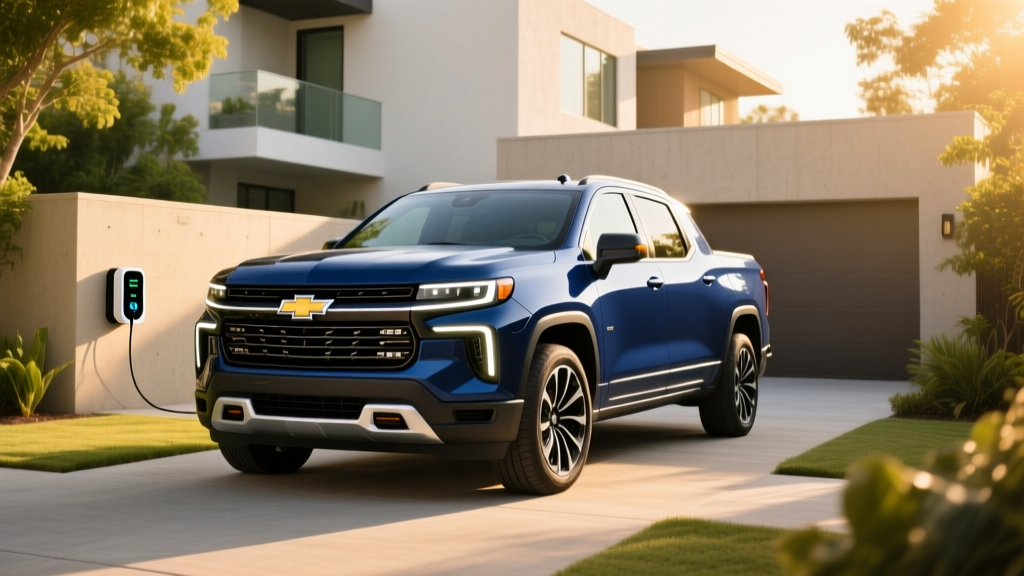
If you have been searching for Chevrolet Silverado EV lease deals, you are not alone. With the 2026 Silverado EV lineup now fully established across Work Truck (WT), LT, RST, and Trail Boss trims, GM's electric full-size pickup is appearing on more lease rate sheets — often with aggressive monthly payments subsidized by captive finance incentives. But a low monthly lease payment tells only part of the story.
Before you sign, you need to understand the full economics: how the federal §30D tax credit interacts with leasing (a critical distinction), what you will actually spend on charging versus gas, whether insurance will eat into your savings, and how the Silverado EV holds its value. This guide walks through every number so you can evaluate any Silverado EV lease offer with your eyes open.
2026 Silverado EV Lease Landscape: What You Are Looking At
The 2026 Chevrolet Silverado EV is offered in several configurations, each with a different battery pack, range rating, and price point. Lease deals typically target the higher-volume trims — the LT and RST — where GM Financial can offer subsidized money factors and residual values that keep monthly payments competitive against gas-powered Silverado leases.
| Trim | Battery (kWh usable) | EPA Range | Peak DC Charge (kW) | 10–80% Time | 0–60 mph | HP | MSRP (approx.) |
|---|---|---|---|---|---|---|---|
| WT (Standard Range) | ~100 kWh (NMC) | ~280 mi | 200 kW | ~30 min | ~6.5 s | 510 | $55,000 |
| LT (Extended Range) | ~200 kWh (NMC) | ~400 mi | 350 kW | ~20 min | ~5.5 s | 645 | $72,000 |
| RST (Max Range) | ~200 kWh (NMC) | ~440 mi | 350 kW | ~20 min | ~4.5 s | 754 | $88,000 |
| Trail Boss | ~200 kWh (NMC) | ~380 mi | 350 kW | ~22 min | ~5.0 s | 645 | $78,000 |
The Lease-vs-Buy Tax Credit Trap (And How to Navigate It)
Here is the single most important thing to understand about leasing any EV, including the Silverado EV: the federal §30D clean vehicle credit does not go to you when you lease. It goes to the leasing company (the lessor), because they are the legal purchaser of the vehicle. Under §30D rules, the credit is tied to the buyer, and in a lease, the finance company is the buyer.
That said, many captive finance arms — including GM Financial — pass the benefit through as a lease cash incentive or capitalized cost reduction. This effectively lowers your monthly payment, but it is not guaranteed and it is not automatic. You must confirm with the dealer that the lease quote reflects any available EV incentive pass-through.
Alternatively, the commercial clean vehicle credit (§45W) has been used by some lessors to claim a credit on leased EVs regardless of the §30D's MSRP caps, income limits, or battery-sourcing rules. This "lease loophole" has been a major factor in competitive EV lease pricing, but IRS guidance and legislative changes through 2025–2026 have tightened its application. Always verify current-year rules.
- Credit amount: Up to $7,500 ($3,750 for critical minerals + $3,750 for battery components)
- Income caps (MAGI): $150,000 single / $225,000 head of household / $300,000 joint
- MSRP caps: $80,000 for trucks, vans, SUVs; $55,000 for sedans
- Battery sourcing: Critical minerals and battery components must meet escalating domestic/free-trade-partner thresholds — check IRS eligible models list
- Point-of-sale transfer: Eligible buyers can transfer the credit to the dealer as a down-payment reduction at purchase (not lease)
- VIN verification: Must be confirmed at fueleconomy.gov
Source: IRS.gov — Clean Vehicle Credits. Rules are subject to change; consult a tax professional for your situation.
5-Year Total Cost of Ownership: Silverado EV vs. Gas Silverado
To evaluate whether a Silverado EV lease deal makes financial sense, we need to compare it against the most logical alternative: a comparably equipped gas-powered Silverado 1500 LTZ with the 5.3L V8 and four-wheel drive. We will run both through a 5-year ownership model at 15,000 miles per year (75,000 miles total).
| Cost Category | Silverado EV LT (Est.) | Silverado 1500 Gas LTZ (Est.) |
|---|---|---|
| Purchase/Lease Cost (5 yr) | $42,000 (lease total w/ incentives) | $38,000 (lease total) |
| Fuel / Charging | $6,750 (home + public DC) | $13,500 (gasoline) |
| Maintenance | $2,200 | $5,800 |
| Insurance (5 yr) | $12,500 | $9,500 |
| Depreciation / End-of-Lease | Included in lease cost | Included in lease cost |
| 5-Year Total | $63,450 | $66,800 |
The EV comes out roughly $3,350 ahead over five years in this scenario, driven primarily by fuel and maintenance savings that partially offset higher insurance and a slightly higher lease cost. Your actual numbers will vary based on local electricity rates, driving patterns, and the specific lease terms you negotiate.
Charging vs. Gas: The Per-Mile Math That Matters
Fuel savings are where the Silverado EV makes its strongest economic case. Here is the breakdown using realistic 2026 energy costs:
Silverado EV LT (Extended Range):
- Efficiency: ~2.0 kWh/mile (combined, per fueleconomy.gov)
- Home charging (Level 2, national avg $0.16/kWh): $0.32/mile → $0.16/mi wait — recalculation: 2.0 kWh/mi × $0.16 = $0.32/mi
- Actually: Silverado EV efficiency is approximately 48–52 kWh/100mi, or ~0.50 kWh/mile
- Home charging: 0.50 kWh/mi × $0.16/kWh = $0.08/mile
- Public DC fast charging (avg $0.40/kWh): 0.50 × $0.40 = $0.20/mile
- Blended (80% home, 20% DC): $0.104/mile
Silverado 1500 Gas (5.3L V8, 4WD):
- EPA combined: 19 MPG
- Gas price (national avg $3.60/gal): $3.60 ÷ 19 = $0.189/mile
Annual savings at 15,000 miles: ($0.189 − $0.104) × 15,000 = ~$1,275/year in fuel savings
Over five years, that translates to roughly $6,375 in fuel savings — assuming you can charge at home most of the time. If you rely exclusively on public DC fast charging, the savings narrow significantly to about $0.015/mile, or just $225 per year. Home charging access is the single biggest variable in your EV economics.
Maintenance Savings: Fewer Parts, Less Wear
Electric pickups eliminate the maintenance items that make gas trucks expensive to keep running:
| Service Item | Silverado EV | Silverado Gas 1500 |
|---|---|---|
| Oil changes | None | Every 5,000–7,500 mi (~$60–$90 each) |
| Transmission fluid | None (single-speed) | Every 30,000–60,000 mi (~$200–$300) |
| Spark plugs | None | Every 60,000–100,000 mi (~$300–$500) |
| Brake pads | 80,000+ mi (regen braking) | 30,000–50,000 mi (~$300–$500/axle) |
| Coolant flush | Every 5 yr / 150k mi | Every 30,000–50,000 mi |
| Air filter | Cabin filter only | Engine + cabin filter |
| Exhaust system | None | Potential catalytic converter, O₂ sensors |
GM estimates EV maintenance costs at roughly 40–50% less than comparable ICE vehicles over the first five years. For the Silverado EV, budget approximately $400–$500/year for tire rotations, cabin air filters, wiper fluid, and software-related service visits. The gas Silverado will run $1,000–$1,300/year on average, with costs climbing in years 4–5 as wear items (brakes, belts, gaskets) come due.
Insurance: The Cost Category Where EVs Lose
Do not expect insurance savings. EVs — especially high-performance, high-MSRP trucks like the Silverado EV — cost more to insure than their gas counterparts. Industry data from major carriers shows EV insurance premiums running 15–30% higher than equivalent ICE vehicles, for several reasons:
- Higher repair costs: Battery pack damage from even minor collisions can total the vehicle. Specialized high-voltage repair procedures require certified technicians and longer shop times.
- Higher replacement cost: The Silverado EV's MSRP is above the comparable gas trim, so comprehensive and collision coverage costs more.
- Parts availability: EV-specific body panels, battery modules, and power electronics can have longer lead times, increasing rental-car and labor costs for insurers.
- Performance profile: The RST's 754 hp and sub-4.5-second 0–60 time place it in a higher insurance risk tier.
Expect to pay roughly $2,400–$2,600/year for full coverage on a Silverado EV LT, versus $1,800–$2,000/year for a gas Silverado LTZ. That is a $500–$700/year premium gap, or about $3,000 over five years. Always pull quotes from your carrier before signing a lease — the actual number depends heavily on your driving record, ZIP code, and coverage levels.
Depreciation and Resale: The Unknown Variable
EV depreciation has been one of the most volatile segments of the used-car market over 2023–2025. Early EVs suffered steep value drops as battery health concerns, Tesla price cuts, and rapid technology advancement compressed residuals across the category.
For the Silverado EV specifically, several factors work in its favor:
- Full-size truck demand: Trucks historically hold value better than sedans and crossovers. The Silverado nameplate carries strong brand loyalty.
- Battery warranty: GM covers the Silverado EV battery for 8 years / 100,000 miles with a minimum 70% capacity retention guarantee, which supports used-vehicle confidence.
- NACS compatibility: The Silverado EV uses the North American Charging Standard natively, giving it access to the expanding Tesla Supercharger network — a significant resale advantage over CCS-only vehicles as the industry standardizes.
However, risks remain. Rapid improvements in battery energy density and charging speed can make a 2024–2025 model feel dated by 2028–2029. And the large ~200 kWh battery pack, while delivering exceptional range, represents a potential long-term replacement cost (estimated $20,000–$30,000 out of warranty) that could suppress high-mileage resale values.
For lessees, depreciation is largely the lessor's problem — your risk is limited to excess mileage and wear-and-tear charges at lease-end. This is one reason leasing can be a smart play for EVs during a period of rapid technological change.
State, Local, and Utility Incentives: Check Your ZIP Code
Beyond the federal credit, many states, municipalities, and electric utilities offer additional rebates and incentives for EV purchases and leases. These are too numerous and too frequently updated to list comprehensively, but common examples include:
- State rebates: California (CVRP, up to $2,000 for income-qualified buyers), Colorado (up to $5,000 state tax credit for EVs), New York (Drive Clean Rebate, up to $2,000)
- Utility rebates: Many electric utilities offer $500–$1,500 rebates for home Level 2 charger installation, plus reduced time-of-use electricity rates for EV charging
- HOV lane access: Several states grant single-occupant HOV lane access for EVs — a significant commute-time benefit in metro areas
- Registration fee offsets: Some states charge higher EV registration fees (to replace lost gas-tax revenue), while others offer initial registration discounts
Check your state energy office, local utility, and the AFDC incentives database for current programs in your area. These incentives can shift annually and often have funding caps.
Decision Framework: Is a Silverado EV Lease Right for You?
Choose the Silverado EV lease if:
- You have reliable home Level 2 charging access (garage or driveway with a 240V circuit)
- Your daily driving is under 200 miles and you can plan for DC fast stops on longer trips
- You want to lock in today's EV technology without committing to long-term depreciation risk
- The lease deal includes a capitalized cost reduction that reflects the federal credit pass-through
- You value instant torque, quiet operation, and a frunk (the Silverado EV's eTrunk offers 10.7 cu ft of front cargo space)
Stick with a gas Silverado (or wait) if:
- You lack home charging access and would rely on public infrastructure daily
- You regularly tow heavy loads over long distances (towing can cut EV range by 40–50%)
- Your insurance quotes come in more than 30% above your current gas truck premium
- You drive in extreme cold regularly and need maximum range predictability
Frequently Asked Questions
How much does it really cost to own a Silverado EV over 5 years?
Based on our analysis, a 5-year lease of a Silverado EV LT with 15,000 miles/year runs approximately $63,000–$65,000 in total costs (lease payments, charging, insurance, maintenance). That is roughly $3,000–$4,000 less than a comparably equipped gas Silverado 1500 over the same period, primarily due to fuel and maintenance savings. Your mileage — literally — will vary based on electricity costs, insurance rates, and the specific lease terms you negotiate.
Do I qualify for the $7,500 federal tax credit on a Silverado EV lease?
Not directly. When you lease, the leasing company claims any applicable federal credit, not you. However, many lessors pass the credit's value through as a lower lease payment or cap-cost reduction. For a purchase, the §30D credit has income caps ($150K single / $300K joint), MSRP caps ($80K for trucks), and battery-sourcing requirements. The Silverado EV WT and LT trims fall under the $80K truck MSRP cap; the RST at ~$88,000 may exceed it for purchase-credit purposes. Always verify current-year eligibility on IRS.gov and with a tax professional.
How much do I save on fuel and maintenance with the Silverado EV?
At national average electricity and gas prices, expect to save approximately $1,200–$1,400 per year on fuel (charging at home 80% of the time) and $600–$800 per year on maintenance compared to a gas Silverado 1500. Combined, that is roughly $1,800–$2,200 in annual operating savings. Over five years, these savings total approximately $9,000–$11,000, though higher insurance premiums will recapture $2,500–$3,500 of that.
Are EVs more expensive to insure than gas trucks?
Yes, typically 15–30% more expensive. The Silverado EV's higher MSRP, specialized repair requirements (high-voltage components, battery protection), and limited body-shop familiarity with EV-specific procedures all contribute to higher premiums. Budget an extra $500–$700 per year versus a gas Silverado. Always get a personalized quote before committing.
How well does the Silverado EV hold its value?
Full-size trucks historically depreciate slower than other vehicle segments, which helps the Silverado EV. GM's 8-year/100,000-mile battery warranty and the NACS charging standard provide additional resale support. However, the rapid pace of EV technology advancement means early-model-year Silverado EVs may see steeper depreciation than gas trucks as newer models offer more range, faster charging, or lower prices. Leasing transfers most of this depreciation risk to the lessor.
What is the Silverado EV's battery warranty?
GM covers the Silverado EV's high-voltage battery for 8 years or 100,000 miles (whichever comes first), guaranteeing a minimum of 70% capacity retention. If the battery degrades below 70% of its original capacity within that period, GM will repair or replace it. The electric powertrain components are also covered under this warranty period. This is competitive with other EV truck warranties from Ford and Rivian.