Quick Verdict: The Luxury Electric Workhorse
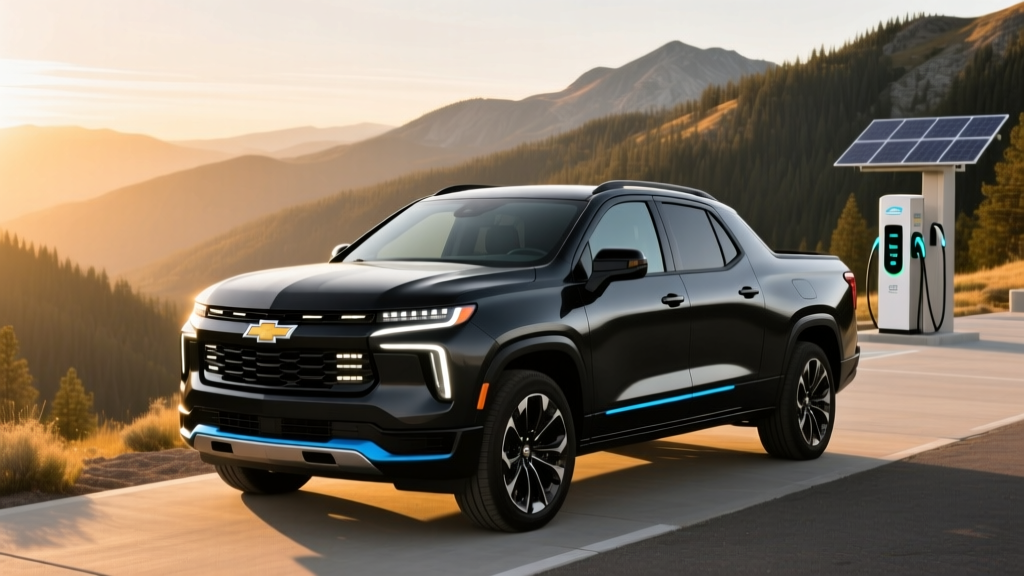
The 2026 Chevrolet Silverado EV High Country sits at the apex of GM's electric truck lineup, pairing a massive 200+ kWh Ultium battery with a 754-horsepower dual-motor AWD powertrain and the kind of premium interior that rivals luxury sedans. It's aimed squarely at buyers who need genuine truck capability — a 10,000-lb tow rating, a Multi-Flex Midgate, and a powered frunk — but want to leave the gas station behind. The trade-off? A starting MSRP near $98,000, a heavy curb weight that hurts efficiency, and a footprint that makes urban parking a chore. For the right buyer — someone towing a boat to a lake house, hauling gear on weekend trips, and charging at home nightly — it's the most complete electric truck on the market. For everyone else, the lower trims or a Rivian R1T may make more financial sense.
Range, Battery, and Real-World Efficiency
The Silverado EV High Country carries GM's largest Ultium battery pack, a dual-layer NMC (nickel manganese cobalt) lithium-ion module with approximately 200 kWh of usable capacity — one of the biggest battery packs in any production vehicle. That enormous energy store delivers an EPA-estimated range that Chevrolet targets at up to 460 miles on the 4WT (Work Truck) trim with the Max Range battery. The High Country, with its larger 24-inch wheels, heavier luxury equipment, and standard AWD dual-motor setup, sees a modest range reduction to an estimated 440 miles EPA.
EPA Estimate: ~440 miles (High Country)
Highway (70 mph sustained): Expect ~350–380 miles. Large trucks suffer disproportionate aerodynamic drag at speed.
Cold Weather (below 32°F): Plan for ~300–330 miles. NMC chemistry loses 20–30% range in freezing temps without consistent preconditioning.
Towing (5,000+ lb trailer): Range roughly halves to ~200–220 miles depending on trailer profile and terrain.
Mixed daily driving: 380–410 miles is achievable with regen braking and moderate speeds.
Efficiency is rated at approximately 61 MPGe combined (roughly 55 kWh/100 miles), which is typical for a full-size electric truck. For comparison, the Ford F-150 Lightning Extended Range lands around 66 MPGe, while the Rivian R1T Dual-Motor Max achieves about 65 MPGe. The Silverado EV's size and weight (over 9,000 lbs curb weight) work against it on the efficiency front, but the sheer battery capacity compensates with raw mileage.
| Spec | Value |
|---|---|
| EPA Range (est.) | ~440 miles |
| Battery Usable Capacity | ~200 kWh (NMC, Ultium) |
| Drivetrain | Dual-motor AWD |
| Horsepower | 754 hp |
| Torque | 785 lb-ft |
| 0–60 mph | ~4.5 seconds |
| Max Tow Rating | 10,000 lbs (12,000 lbs w/ Max Trailering pkg) |
| Max Payload | ~1,600 lbs |
| Efficiency (est.) | 61 MPGe / 55 kWh/100mi |
| Base MSRP | $97,800 |
Charging Speed: DC Fast, Level 2, and the 800-Volt Advantage
The Silverado EV rides on GM's Ultium platform with an 800-volt architecture, enabling DC fast-charge speeds up to 350 kW at compatible stations. In practice, you'll see peak rates near 300–350 kW in the 10–30% state-of-charge window, with the curve tapering progressively above 50% and more sharply past 80%.
Chevrolet estimates a 10–80% DC fast charge in approximately 40 minutes at a 350 kW charger. That's slower than the Hyundai Ioniq 5's 18-minute sprint, but the Silverado's battery is roughly three times larger — you're adding ~260 miles of range in that 40-minute window, which is genuinely road-trip viable. At a more common 150 kW DC station, expect 10–80% in roughly 70–80 minutes.
| Charge Level | Power | Rate | 10–80% Time |
|---|---|---|---|
| Level 1 (120V) | ~1.4 kW | ~3 mi/hr | Days (not practical) |
| Level 2 (240V, 48A) | 11.5 kW | ~22 mi/hr | ~17 hours |
| Level 2 (240V, 80A) | 19.2 kW | ~37 mi/hr | ~10 hours |
| DC Fast (150 kW) | 150 kW peak | ~280 mi/hr (peak) | ~75 minutes |
| DC Fast (350 kW) | 350 kW peak | ~500 mi/hr (peak) | ~40 minutes |
For home charging, the Silverado EV accepts up to 19.2 kW on Level 2 when paired with an 80-amp hardwired charger (like the ChargePoint Home Flex or Emporia Level 2). Most residential panels support a 48-amp circuit (11.5 kW), which adds about 22 miles per hour of charging — enough to fully replenish overnight if your daily drive is under 200 miles. A 200 kWh battery is a big ask for home charging; budget 10–17 hours from near-empty depending on your amperage. Most owners will top up nightly and rarely charge from below 20%.
The truck uses the NACS (North American Charging Standard) connector natively, giving it seamless access to the Tesla Supercharger network (now open to non-Tesla EVs via NACS) as well as GM's own growing fast-charging network built with EVgo and Pilot/Flying J. No adapter needed.
Performance, Towing, and the Midgate Advantage
With 754 horsepower and 785 lb-ft of instant electric torque, the Silverado EV High Country hits 0–60 mph in approximately 4.5 seconds — astonishing for a truck that weighs over four and a half tons. The dual-motor AWD system provides torque vectoring to individual wheels, and the low center of gravity (batteries mounted under the floor) keeps body roll surprisingly controlled for a full-size pickup.
Towing is where this truck earns its badge. The standard tow rating is 10,000 lbs, and with the available Max Trailering package, it climbs to 12,000 lbs. GM's Super Cruise hands-free driving system works while towing on compatible divided highways — a genuine differentiator for long hauls with a trailer. The integrated trailer brake controller, trailer camera integration, and transparent-trailer camera view (using stitched camera feeds to "see through" your trailer) are among the best in the segment.
The Multi-Flex Midgate is the Silverado EV's party trick. The partition between the cab and bed folds down, extending the load floor from the 5'11" bed into the cabin. With the midgate open and tailgate closed, you can carry items up to about 9 feet long. Open the tailgate too, and you're pushing past 10 feet. It's a clever solution that compensates for the shorter bed (forced by the battery pack's footprint).
Cargo space includes the eTrunk (front trunk) — a powered, lockable compartment with roughly 10.7 cubic feet of volume, large enough for several carry-on bags or a full set of power tools. The bed offers ~55 cubic feet with the midgate closed.
Interior, Tech, and the High Country Treatment
The High Country trim is Chevrolet's luxury flagship, and the Silverado EV High Country delivers accordingly. The cabin features perforated leather seats with heating, ventilation, and massage for the front row, genuine open-pore wood trim, and a suede headliner. Rear-seat legroom is generous at approximately 43.5 inches, making it viable for adult passengers on long trips.
Tech highlights include:
- 17.7-inch diagonal infotainment touchscreen running Google Built-In (Google Maps navigation, Google Assistant, Play Store apps)
- 11-inch digital driver display with configurable gauges and range/energy-flow graphics
- Head-up display with Super Cruise and navigation overlay
- Super Cruise — GM's Level 2 hands-free driver-assistance system covering 750,000+ miles of compatible roads in the US and Canada (driver must remain attentive; this is not autonomous driving)
- 22-speaker AKG premium audio system
- ProPower Onboard — up to 10.2 kW of exportable power via bed-mounted 120V and 240V outlets (enough to run power tools at a job site or appliances during an outage)
- Trailering tech suite: transparent trailer view, hitch guidance, trailer side blind-zone alert
Super Cruise is an SAE Level 2 driver-assist system. It handles steering, acceleration, and braking on mapped highways, but the driver must remain engaged and is monitored by a driver-attention camera. It does not navigate unmapped roads, handle construction zones autonomously, or drive itself in city traffic. You are the driver at all times.
Notable drawbacks: The sheer size of the Silverado EV makes it cumbersome in tight parking garages and drive-throughs. The 17.7-inch screen, while impressive, requires reaching across a wide dashboard. And while the ride quality is excellent on highways thanks to the adaptive air suspension, the truck's weight is felt on broken pavement — you'll notice the mass over sharp bumps. The infotainment system, while feature-rich, can be slow to respond compared to Tesla's snappy interface.
Pricing, Trims, and Federal Tax Credit Eligibility
The 2026 Silverado EV lineup spans multiple trims. Here's how the High Country fits:
| Trim | Battery | HP | MSRP |
|---|---|---|---|
| 4WT (Work Truck) | Standard Range | 510 hp | $55,000 |
| 4WT Max Range | Max Range | 510 hp | $68,000 |
| LT | Standard Range | 645 hp | $72,000 |
| RST | Max Range | 645 hp | $82,000 |
| High Country | Max Range | 754 hp | $97,800 |
Federal tax credit reality check: Under IRS §30D Clean Vehicle Credit rules, the Silverado EV High Country faces a critical obstacle — the $80,000 MSRP cap for trucks. At $97,800 base (and easily over $100,000 with options), the High Country does not qualify for the up-to-$7,500 federal tax credit. The lower trims — specifically the 4WT ($55,000), 4WT Max Range ($68,000), and LT ($72,000) — fall under the cap and may qualify, provided the buyer meets income thresholds (AGI ≤ $300,000 joint / $150,000 single) and the vehicle satisfies critical-mineral and battery-component sourcing requirements, which shift annually.
The credit can now be transferred to the dealer as a point-of-sale discount, effectively reducing your out-of-pocket cost at purchase. Always verify current-year eligibility on IRS.gov or with a tax professional before committing, as sourcing rules tighten each year.
Warranty and Long-Term Ownership
Chevrolet backs the Silverado EV with a competitive warranty package:
- Battery & Drive Unit: 8 years / 100,000 miles (whichever comes first), with a capacity retention guarantee of at least 70% over the warranty period
- Bumper-to-Bumper: 3 years / 36,000 miles
- Powertrain (non-battery): 5 years / 60,000 miles
- Corrosion: 6 years / 100,000 miles
GM's Ultium NMC batteries have shown promising early degradation data from the broader fleet (Cadillac Lyriq, GMC Hummer EV), with most owners reporting less than 5% capacity loss in the first two years of typical use. The 200 kWh pack in the Silverado EV benefits from active liquid thermal management and preconditioning routines that protect long-term health. That said, if you're routinely DC fast-charging at 350 kW and cycling the battery from 10% to 100% daily, expect accelerated degradation. Best practice: charge to 80–90% for daily use, use DC fast charging sparingly, and precondition before fast charging in cold weather.
Insurance costs run higher than the gas Silverado — expect premiums 15–25% above a comparably equipped Silverado 1500 High Country gas model, driven by the higher repair costs of EV-specific components and the vehicle's value.
Silverado EV High Country vs. the Competition
The High Country competes in a narrow but growing segment of premium electric trucks:
| Spec | Silverado EV HC | F-150 Lightning Platinum | Rivian R1T Tri-Motor Max |
|---|---|---|---|
| EPA Range (est.) | ~440 mi | ~320 mi | ~420 mi |
| Battery (usable) | ~200 kWh NMC | 131 kWh NMC | ~149 kWh NMC |
| Horsepower | 754 hp | 580 hp | 850 hp |
| 0–60 mph | ~4.5 sec | ~4.0 sec | ~3.0 sec |
| Max Tow | 12,000 lbs | 10,000 lbs | 11,000 lbs |
| Max DC Charge | 350 kW | 150 kW | 220 kW |
| Base MSRP | $97,800 | $96,874 | $99,900 |
| Bed Length | 5'11" (+ Midgate) | 5'6" | 4'6" (+ Gear Tunnel) |
Choose the Silverado EV High Country if: You need maximum range (440 miles is class-leading), the longest effective cargo floor via the Midgate, hands-free Super Cruise towing, and 10.2 kW of onboard power export. It's the best electric truck for long-distance towing and job-site versatility.
Choose the F-150 Lightning Platinum if: You want a proven platform with broader dealer support, a lower price point, and don't need 400+ miles of range. The Lightning's 150 kW charging ceiling is a real limitation for road trips, however.
Choose the Rivian R1T Tri-Motor Max if: Performance is the priority (3.0-second 0–60), you value Rivian's adventure-oriented ecosystem and software updates, and you're willing to sacrifice bed length for the Gear Tunnel's unique storage.
Pros, Cons, and Who Should Buy
- Class-leading ~440-mile EPA range
- 350 kW DC fast charging (800V architecture)
- Multi-Flex Midgate extends cargo floor to 10+ ft
- 10.2 kW ProPower onboard for job-site/home backup
- Super Cruise hands-free driving, including while towing
- 12,000-lb max tow rating (w/ Max Trailering pkg)
- Spacious rear seat with 43.5" legroom
- Massive eTrunk (10.7 cu ft) for secure front storage
- $97,800+ MSRP — no federal tax credit (exceeds $80K cap)
- Heavy: 9,000+ lb curb weight hurts efficiency
- Short 5'11" bed without Midgate deployed
- Towing cuts range roughly in half
- 17+ hour full charge on Level 2 (48A) — slow for the battery size
- Large footprint makes urban driving/parking difficult
- Infotainment can lag behind Tesla/Rivian responsiveness
- Insurance premiums 15–25% above gas equivalent
Who this EV suits best: The Silverado EV High Country is built for the truck buyer who regularly tows (boats, horse trailers, campers) on highway routes covered by Super Cruise, needs genuine job-site power export, and has reliable home Level 2 charging. It's an excellent fit for rural or suburban owners with long commutes who value the 440-mile range buffer. It is not ideal for city dwellers without dedicated parking/charging, budget-conscious buyers (the $80K MSRP cap disqualifies it from the federal credit), or anyone who primarily needs a short-bed truck for tight urban use.
Frequently Asked Questions
What is the real-world range of the Silverado EV High Country?
The EPA estimates approximately 440 miles for the High Country trim. In real-world highway driving at 70 mph, expect 350–380 miles. In freezing weather without preconditioning, plan for 300–330 miles. When towing a 5,000+ lb trailer, range drops to roughly 200–220 miles. For mixed daily driving with regenerative braking, 380–410 miles is realistic.
How fast does the Silverado EV charge at home and on the road?
On a 350 kW DC fast charger, the Silverado EV charges from 10–80% in approximately 40 minutes, adding roughly 260 miles of range. On a home Level 2 charger at 48 amps (11.5 kW), it gains about 22 miles per hour, requiring roughly 17 hours for a full charge from near-empty. An 80-amp Level 2 setup (19.2 kW) cuts that to about 10 hours and adds ~37 miles per hour.
Does the Silverado EV High Country qualify for the federal EV tax credit?
No. Under current IRS §30D rules, new clean trucks must have an MSRP at or below $80,000 to qualify for the up-to-$7,500 credit. The High Country starts at $97,800 and exceeds this cap. Lower trims like the 4WT ($55,000) and LT ($72,000) may qualify, subject to buyer income limits (AGI ≤ $300,000 joint), critical-mineral sourcing requirements, and battery-component rules that tighten each year. Always verify at IRS.gov.
Is the Silverado EV High Country worth buying over the F-150 Lightning or Rivian R1T?
It depends on your priorities. The Silverado EV High Country offers the longest range (~440 miles), fastest DC charging (350 kW), and the most versatile cargo system (Midgate) in the segment. The F-150 Lightning Platinum costs slightly less and has broader dealer support but charges at half the speed and offers ~120 fewer miles of range. The Rivian R1T Tri-Motor Max is quicker (3.0-sec 0–60) with excellent adventure tech, but its bed is significantly shorter. For long-distance towing and highway commuting, the Silverado EV High Country has the edge.
How long will the Silverado EV battery last?
Chevrolet warrants the Ultium battery for 8 years or 100,000 miles, guaranteeing at least 70% capacity retention over that period. Based on early Ultium fleet data, most owners see less than 5% degradation in the first two years. With proper care — avoiding daily 100% charges, limiting DC fast charging to road trips, and using preconditioning — the battery should deliver 85–90% capacity at 150,000 miles. Full battery replacement, if ever needed, is estimated at $20,000–$30,000 out of warranty based on current Ultium pack pricing.
Can I use the Silverado EV to power my home during an outage?
The Silverado EV offers up to 10.2 kW of exportable power through ProPower Onboard via 120V and 240V outlets in the bed. This is enough to run major appliances (refrigerator, sump pump, furnace fan, lights) during an outage. However, true vehicle-to-home (V2H) bidirectional charging — where the truck feeds power back through your home's electrical panel — requires compatible hardware and installation. GM has announced V2H capability for Ultium vehicles, but confirm availability and required equipment (like the GM Energy PowerShift Charger) with your dealer for the 2026 model year.