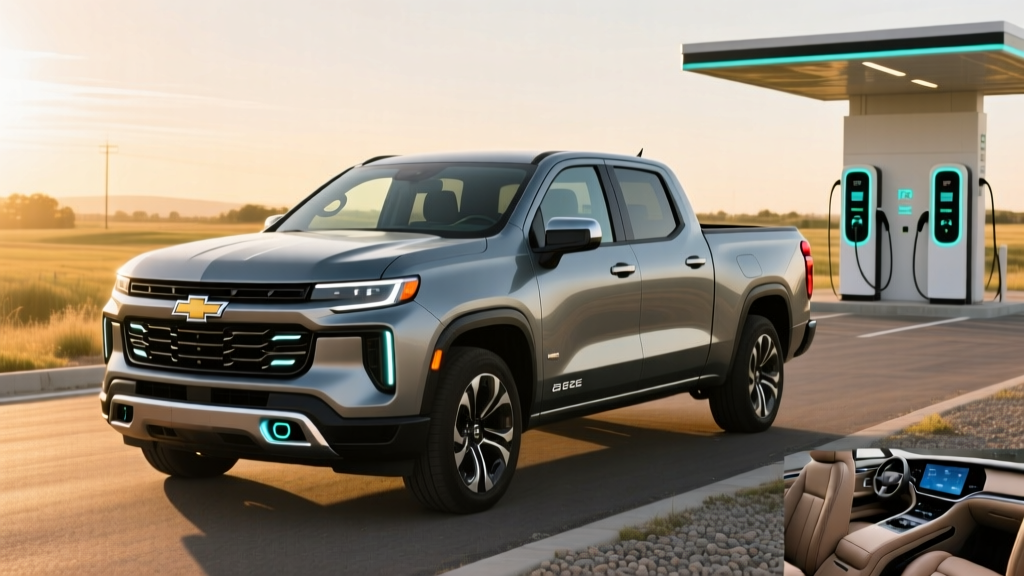
Quick Answer: There is no vehicle officially sold in the U.S. called the "electric S10." Chevrolet retired the S10 nameplate in 2004 and replaced it with the Colorado. For 2026, the closest electric equivalent to what an "electric S10" would represent — a compact/midsize electric pickup from Chevrolet — is the Chevrolet Silverado EV, built on GM's Ultium platform. The 2026 Silverado EV starts at approximately $57,900 (WT4 Work Truck), offers up to 460 miles of EPA-estimated range (RST First Edition with the 200 kWh battery), and supports DC fast charging at up to 350 kW. A more affordable midsize electric Chevy pickup (a true spiritual S10 successor) has been announced for later in the decade but is not yet available for purchase.
What Is the Electric S10 — And What Can You Actually Buy?
If you've been searching for an "electric S10," you're likely looking for a compact or midsize electric pickup truck from Chevrolet that echoes the S10's legacy: affordable, practical, right-sized for daily driving, and capable enough for light hauling. The S10 was America's go-to small truck from 1982 through 2004, and the desire for an electrified successor is understandable.
Here's the reality for 2026: Chevrolet does not currently sell an electric S10 or an electric Colorado. GM's electric truck lineup consists of the full-size Silverado EV, which is substantially larger and more expensive than the old S10. The Silverado EV rides on GM's BT1 electric truck platform (shared with the GMC Sierra EV and Hummer EV) and competes with the Ford F-150 Lightning and Rivian R1T.
GM executives have hinted at smaller, more affordable electric trucks built on the next-generation Ultium architecture, potentially filling the "electric S10" gap by 2027-2028. Until then, buyers wanting an electric Chevy truck are looking at the Silverado EV — or cross-shopping competitors in the midsize electric truck segment.
2026 Silverado EV Specs: Range, Battery, and Charging
Since the Silverado EV is the closest current product to an electric S10 from Chevrolet, here's a detailed breakdown of what the 2026 model delivers. The Silverado EV comes in multiple trims with two battery-pack options.
| Specification | WT4 (Work Truck) | LT | RST |
|---|---|---|---|
| Battery (usable) | ~200 kWh (Max Range) | ~200 kWh / ~120 kWh options | ~200 kWh |
| Battery Chemistry | NMC (Nickel Manganese Cobalt) | NMC | NMC |
| EPA Range (est.) | Up to 460 mi | Up to 460 mi / ~280 mi | Up to 440 mi |
| Real-World Highway Range | ~340-380 mi | ~340-380 mi / ~210-240 mi | ~320-360 mi |
| Horsepower | 510 hp | 510-645 hp | 645 hp |
| 0-60 mph | ~5.5 sec | ~4.5-5.5 sec | ~4.5 sec |
| Max DC Fast Charge | 350 kW (peak) | 350 kW (peak) | 350 kW (peak) |
| 10-80% DC Charge Time | ~20 min (200 kWh pack) | ~20 min / ~12 min | ~20 min |
| Level 2 Charging (AC) | 19.2 kW (onboard) | 19.2 kW | 19.2 kW |
| Towing Capacity | 10,000 lbs | 10,000 lbs | 10,000 lbs |
| Payload | ~1,800 lbs | ~1,800 lbs | ~1,600 lbs |
| Starting MSRP | ~$57,900 | ~$68,000 | ~$87,300 |
Real-World Range Reality: The EPA's 460-mile figure for the 200 kWh pack is impressive on paper, but expect real-world highway driving at 70-80 mph to yield roughly 340-380 miles in moderate temperatures. In cold weather (below 30°F), range can drop an additional 15-25%, bringing effective range to 260-320 miles. Towing a trailer can cut range by 40-50%. The 19.2 kW onboard AC charger is class-leading — it can add roughly 55 miles of range per hour on a compatible Level 2 circuit.
Silverado EV vs. Gas Silverado vs. Hybrid Trucks: Cost Comparison
How does the Silverado EV stack up against the gas-powered Silverado 1500 and hybrid competitors like the Ford Maverick Hybrid (the closest thing to a modern compact truck)? Let's break down the numbers.
| Metric | 2026 Silverado EV (LT) | 2026 Silverado 1500 Gas (LT) | 2026 Ford Maverick Hybrid |
|---|---|---|---|
| Starting MSRP | ~$68,000 | ~$44,500 | ~$29,500 |
| Federal Tax Credit (§30D) | Up to $7,500* | $0 | $0 (HEV, not PHEV/BEV) |
| Effective Price After Credit | ~$60,500 | $44,500 | $29,500 |
| EPA Efficiency | ~61 MPGe combined | ~20 MPG combined | ~42 MPG combined |
| Fuel/Charge Cost per Mile | ~$0.05-$0.08 (home) | ~$0.17-$0.22 | ~$0.08-$0.11 |
| Annual Fuel/Charge (15k mi) | ~$750-$1,200 | ~$2,550-$3,300 | ~$1,200-$1,650 |
| Maintenance (annual avg.) | ~$300-$500 | ~$800-$1,200 | ~$600-$900 |
| 5-Year Fuel + Maintenance | ~$5,250-$8,500 | ~$16,750-$22,500 | ~$9,000-$13,500 |
*Federal tax credit eligibility under IRS §30D depends on buyer income caps ($150k single / $300k joint AGI), vehicle MSRP caps ($80,000 for trucks), and battery critical-mineral and component sourcing requirements that tighten annually. The Silverado EV's domestic assembly and Ultium battery sourcing are designed to qualify, but always verify current-year eligibility on IRS.gov or with a tax professional. The credit can now be transferred to the dealer at point of sale as an instant discount.
Real Ownership Costs: 5-Year Breakdown
Beyond the sticker price, here's what owning a Silverado EV actually costs compared to its gas counterpart over five years and 75,000 miles.
| Cost Category | Silverado EV (LT, 200 kWh) | Silverado 1500 Gas (LT, V8) |
|---|---|---|
| Purchase Price (after credit) | ~$60,500 | ~$44,500 |
| Home Level 2 Charger Install | $1,200-$2,800 | $0 |
| Insurance (5-year total) | ~$12,000-$15,000 | ~$8,500-$11,000 |
| Charging / Fuel (5 years) | ~$3,750-$6,000 | ~$12,750-$16,500 |
| Maintenance (5 years) | ~$1,500-$2,500 | ~$4,000-$6,000 |
| Estimated Depreciation | ~$24,000-$30,000 | ~$18,000-$22,000 |
| 5-Year Total Cost of Ownership | ~$103,000-$116,800 | ~$87,750-$100,000 |
The Silverado EV costs more upfront and carries higher insurance premiums (typical for EVs due to repair-cost data), but saves significantly on fuel and maintenance. The breakeven point versus the gas Silverado typically arrives around year 6-8 depending on your local electricity rates, annual mileage, and whether you charge primarily at home (cheap) or rely on public DC fast chargers (more expensive, often $0.35-$0.50/kWh).
According to fueleconomy.gov, the Silverado EV's efficiency translates to roughly 55-65 MPGe combined depending on trim, making it far cheaper to "fuel" per mile than any gas truck — provided you have access to affordable home charging.
Home Charging: What an Electric Truck Buyer Must Know
Owning an electric truck like the Silverado EV is fundamentally different from a gas truck when it comes to "refueling." Here's what you need to plan for:
Level 2 home charging is nearly essential. The Silverado EV's 200 kWh battery pack is enormous. On a standard 120V household outlet (Level 1, ~1.4 kW), it would take over 140 hours to fully charge — essentially impractical. A Level 2 home charger at 48 amps (11.5 kW) adds roughly 30-35 miles of range per hour, meaning an overnight charge (10 hours) restores about 300-350 miles. The Silverado EV's 19.2 kW onboard charger can accept more power than most home installations provide — to max it out, you'd need a hardwired 80-amp circuit, which requires a 100-amp dedicated breaker.
| Item | Typical Cost Range | Notes |
|---|---|---|
| Level 2 EVSE (charger unit) | $400-$800 | ChargePoint Home Flex, Emporia, Wallbox |
| Electrical panel upgrade (if needed) | $1,500-$4,000 | Required if panel is at capacity or below 200A |
| Wiring & conduit (50-amp circuit) | $600-$2,000 | Depends on run distance from panel to garage |
| Electrician labor | $500-$1,500 | Varies by region and complexity |
| Permit & inspection | $50-$300 | Required in most jurisdictions |
| Total (no panel upgrade) | $1,550-$4,600 | Most homes with 200A service |
| Total (with panel upgrade) | $3,050-$8,600 | Older homes or high-load panels |
Always get a load calculation from a licensed electrician before installing a Level 2 charger. The Silverado EV's large battery makes a robust home charging setup non-negotiable for daily usability. Public DC fast charging is available via networks like Electrify America, EVgo, and Tesla Superchargers (via the NACS adapter GM now includes), but relying solely on public charging is both expensive and time-consuming for a truck with a 200 kWh pack.
Common Misconceptions About Electric Trucks
| Myth | Fact |
|---|---|
| "Electric trucks can't tow." | The Silverado EV tows up to 10,000 lbs. However, towing at max capacity cuts range by 40-50%. Plan routes and charging stops accordingly. |
| "The battery will need replacing in a few years." | GM's Ultium battery warranty covers 8 years/100,000 miles with a capacity retention threshold (typically 70%). Real-world degradation data from GM's fleet shows most packs retain 85-90% capacity at 100k miles. |
| "You'll be stranded without charging stations." | The U.S. now has over 70,000 public charging ports. The Silverado EV uses the NACS connector, granting access to Tesla's Supercharger network (20,000+ stalls) via adapter. Plan road trips with apps like A Better Routeplanner. |
| "Electric trucks are worse in cold weather." | Range drops 15-25% in sub-freezing temps — real and worth planning for. But the Silverado EV includes a heat pump and battery preconditioning to mitigate losses and maintain charging speeds. |
| "There's an electric S10 you can buy now." | No electric S10 exists as of 2026. The Silverado EV is Chevy's only electric truck. A smaller, more affordable electric pickup may arrive by 2027-2028. |
Decision Framework: Should You Buy the Silverado EV or Wait?
Buy the 2026 Silverado EV if:
- You need a full-size electric truck now for work or personal use
- You have (or can install) Level 2 home charging
- Your daily driving is under 200 miles and you want a large range buffer
- You qualify for the §30D federal tax credit (income under $150k single / $300k joint)
- You value the 19.2 kW onboard charger and 10,000-lb towing for your workflow
Wait for a smaller "electric S10" or midsize electric truck if:
- Your budget is under $45,000 — the Silverado EV is significantly more expensive
- You want a compact/midsize truck that's easier to park and maneuver in cities
- You don't need 460 miles of range or 10,000 lbs of towing
- You can wait 1-3 years for GM or competitors (Ford, Stellantis, Rivian) to release more affordable electric pickups
- You rent or live in an apartment without charging access and can't install a home charger
Consider a hybrid truck (like the Ford Maverick Hybrid) instead if:
- You want truck utility at a sub-$35,000 price point
- You lack reliable home or workplace charging access
- You frequently tow or drive in extreme cold where EV range loss is a concern
- You want 40+ MPG without any charging infrastructure dependency
First-Time EV Truck Buyer Checklist
If you're transitioning from a gas truck to an electric truck for the first time, here's what you need to get right:
- Verify your electrical service. Get a licensed electrician to assess your panel capacity. A 200 kWh battery demands a reliable Level 2 charger — don't skip this step.
- Confirm tax credit eligibility. Check IRS.gov for current §30D rules. Income caps, MSRP limits ($80k for trucks), and battery sourcing requirements all apply. The credit can be applied at the point of sale as an instant price reduction.
- Understand the charging curve. The Silverado EV peaks at 350 kW but only sustains that rate at low states of charge. Expect the charge rate to taper significantly above 60-70% SoC. A 10-80% charge takes roughly 20 minutes; 80-100% can take nearly as long.
- Plan for cold weather. If you live in a northern climate, budget for 20-25% range loss in winter. Preconditioning the battery while plugged in mitigates this and preserves fast-charging speed.
- Get an insurance quote before buying. EV insurance premiums run 15-30% higher than equivalent gas trucks due to higher repair costs and battery replacement exposure. Shop multiple insurers.
- Download charging apps. PlugShare, ChargePoint, EVgo, and the Tesla app (for Supercharger access via NACS adapter) are essential for road trips.
Frequently Asked Questions
Will Chevy ever make an electric S10 or electric Colorado?
GM has not officially announced an electric Colorado or a revived electric S10 nameplate. However, GM's next-generation Ultium platform is designed to scale down to midsize and compact vehicles. Industry analysts expect a smaller, more affordable electric Chevy pickup to be possible by 2027-2028, potentially in the $35,000-$45,000 range. Until then, the Silverado EV is Chevrolet's only electric truck offering.
How much does it cost to charge a Silverado EV at home?
At the U.S. average residential electricity rate of ~$0.16/kWh (per EIA data), fully charging the 200 kWh battery from empty costs roughly $32. In practice, most owners charge partially — adding 200 miles (roughly 90 kWh) costs about $14. Compare that to filling a gas Silverado's 24-gallon tank at $3.50/gallon: $84 per fill-up.
Can the Silverado EV use Tesla Superchargers?
Yes. GM transitioned to the NACS (North American Charging Standard) connector for the Silverado EV. GM vehicles can access Tesla's Supercharger network using the included adapter. This adds over 20,000 additional fast-charging stalls to your route-planning options.
What is the Silverado EV's battery warranty?
GM covers the Ultium battery pack for 8 years or 100,000 miles (whichever comes first) against defects and excessive capacity degradation. The warranty guarantees the battery will retain a minimum percentage of its original capacity (typically around 70%) during the warranty period. According to Chevrolet's warranty documentation, this covers both the battery cells and the associated power electronics.
Is the Silverado EV too big to be an "S10 replacement"?
Yes, honestly. The Silverado EV is a full-size truck measuring over 233 inches long with a curb weight approaching 8,800 lbs. The original S10 was a compact truck under 190 inches and around 3,000 lbs. If you're specifically seeking a small, affordable, nimble electric truck in the S10's spirit, you'll need to wait for future models or look at the Rivian R1T (midsize, ~$70k) or the Ford Maverick (compact, hybrid only — no BEV version as of 2026).