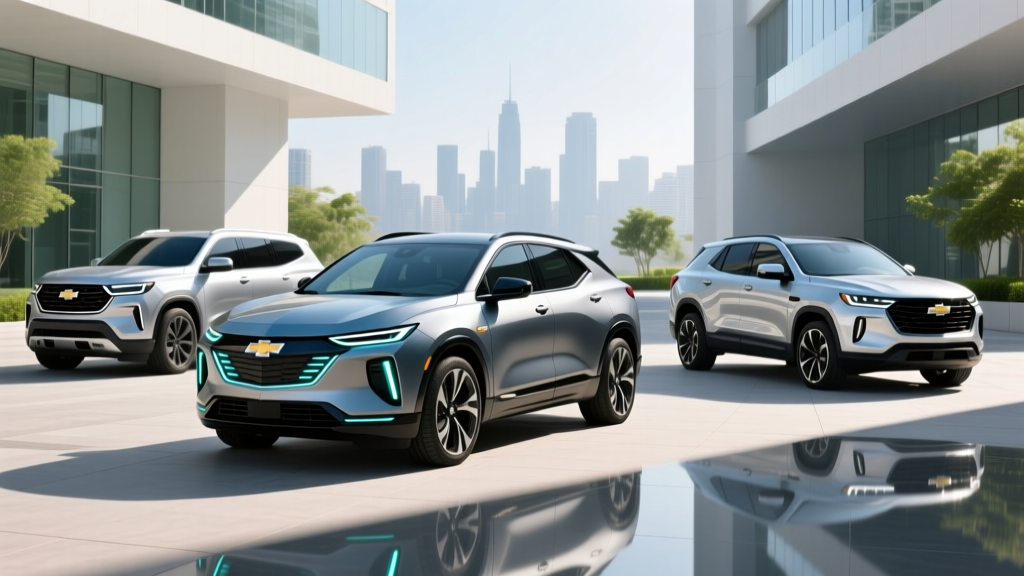
If you're shopping for Chevrolet EVs in 2026, the lineup boils down to three production models with very different use cases: the Equinox EV (affordable crossover, up to 319 miles EPA), the Blazer EV (midsize performance-oriented SUV, up to 324 miles EPA), and the Silverado EV (full-size truck, up to 440 miles EPA). All three ride on GM's Ultium platform with NMC battery chemistry, support DC fast charging up to 190–350 kW depending on model, and may qualify for the federal §30D tax credit — though eligibility hinges on your income, the vehicle's MSRP, and battery-sourcing rules that shift year to year. The right Chevy EV for you depends on whether you prioritize price (Equinox, starting around $33,000), space and speed (Blazer), or towing and range (Silverado).
Quick Answer: Which Chevrolet EV Fits You?
- Budget-conscious daily driver: Equinox EV 2LT — ~$33,600 base, 319 mi range, best value.
- Family SUV with performance: Blazer EV RS AWD — ~$50,000, 324 mi range, 0-60 in ~4.5s.
- Truck buyer needing range + towing: Silverado EV 4WT / RST — up to 440 mi range, 10,000-lb max towing.
2026 Chevrolet EV Lineup at a Glance
| Spec | Equinox EV (2LT FWD) | Blazer EV (RS AWD) | Silverado EV (RST) |
|---|---|---|---|
| EPA Range | 319 mi | 324 mi | 440 mi |
| Battery (usable) | ~85 kWh, NMC | ~102 kWh, NMC | ~200 kWh, NMC |
| Peak DC Fast Charge | 150 kW | 190 kW | 350 kW |
| 10–80% Charge Time | ~35 min | ~30 min | ~20 min |
| Level 2 Rate | 11.5 kW | 19.2 kW | 19.2 kW |
| Horsepower | 213 hp | 557 hp (SS: 615 hp) | 664 hp |
| 0–60 mph | ~8.0s | ~4.5s (RS AWD) | ~4.5s |
| Base MSRP | ~$33,600 | ~$50,000 | ~$87,000 (RST) |
| Battery Warranty | 8 yr / 100,000 mi | 8 yr / 100,000 mi | 8 yr / 100,000 mi |
Sources: EPA fueleconomy.gov, Chevrolet EV specs.
Real-World Range vs. EPA Sticker
EPA estimates assume a mix of city and highway driving at moderate temperatures. In practice:
- Equinox EV 319 mi EPA: Expect ~260–280 mi on a highway-heavy trip at 75 mph. In freezing weather (below 32°F), plan for ~220–240 mi.
- Blazer EV 324 mi EPA: Real highway range is ~270–290 mi; cold weather drops it to ~230–250 mi.
- Silverado EV 440 mi EPA: Highway driving yields ~360–390 mi; towing a 7,000-lb trailer can cut range to 200–250 mi depending on terrain and speed.
These numbers reflect typical lithium-ion NMC pack behavior and GM's thermal management system, which includes a heat pump on higher trims to reduce cold-weather losses.
Cost Breakdown: Buying, Charging, and Owning a Chevrolet EV
The sticker price is just the start. Here's what a 5-year ownership cycle actually costs for an Equinox EV 2LT compared to a similarly equipped gas-powered Equinox AWD (25 MPG combined, $3.40/gal national average as of early 2026).
| Cost Category (5 Years) | Equinox EV 2LT | Gas Equinox AWD |
|---|---|---|
| Purchase Price (MSRP) | $33,600 | $31,500 |
| Est. Federal Tax Credit (§30D) | Up to $7,500* | $0 |
| Effective Purchase Price | ~$26,100 | $31,500 |
| Fuel / Charging (60,000 mi) | ~$3,300 (home L2, $0.14/kWh) | ~$8,160 (gas) |
| Maintenance | ~$1,200 | ~$3,500 |
| Insurance (est. avg) | ~$9,500 | ~$7,800 |
| 5-Year Total (est.) | ~$40,100 | ~$50,960 |
*Federal §30D credit eligibility depends on buyer AGI (single: ≤$150K, joint: ≤$300K), vehicle MSRP cap ($80K for SUVs/trucks, $55K for sedans), and battery critical-mineral sourcing. Verify current rules at IRS.gov before purchase. Credit can now be transferred to the dealer as a point-of-sale discount.
Charging Cost Reality
Home Level 2 charging at $0.14/kWh national average costs roughly $0.055 per mile for the Equinox EV (~3.0 mi/kWh efficiency). Public DC fast charging at $0.35–$0.48/kWh pushes that to $0.12–$0.16 per mile — still cheaper than gas at ~$0.14/mile for the 25 MPG Equinox, but the gap narrows significantly. If you rely exclusively on public fast charging, the savings advantage shrinks.
Home Charging: What First-Time Buyers Must Know
Every Chevrolet EV ships with a dual-level portable charge cord, but for practical daily use, you'll want a dedicated Level 2 home charger (240V). Here's the reality of installation:
| Item | Typical Cost Range |
|---|---|
| Level 2 Charger (40–48A, hardwired) | $400–$700 |
| Electrician labor (240V/50A circuit) | $500–$2,000 |
| Permit & inspection | $50–$300 |
| Panel upgrade (if needed, 200A) | $1,500–$3,500 |
| Total (no panel upgrade) | $950–$3,000 |
Key considerations:
- The Equinox EV charges at 11.5 kW on Level 2, adding ~34 miles per hour. A full 0–100% charge takes roughly 8.5 hours — fine for overnight.
- The Blazer and Silverado EVs accept up to 19.2 kW on Level 2 (with a 80A circuit), adding ~52–56 miles per hour. Most homes have a 48A circuit, capping you at 11.5 kW anyway.
- If your home has a 100A electrical panel, you'll likely need an upgrade to support a 50A EV circuit alongside existing loads. Budget accordingly.
- Apartment dwellers and street parkers: public charging infrastructure is expanding but remains inconsistent outside major metros. Factor in the time cost and higher per-kWh rates before committing.
Chevrolet EV vs. Gas and Hybrid: Which Saves More?
| Factor | Equinox EV | Gas Equinox | Toyota RAV4 Hybrid (comparison) |
|---|---|---|---|
| EPA Efficiency | 109 MPGe (3.0 mi/kWh) | 28 MPG combined | 39 MPG combined |
| Cost per mile (fuel/energy) | $0.055 (home) / $0.14 (public DC) | $0.14 | $0.09 |
| Annual fuel cost (12,000 mi) | $660 / $1,680 | $1,632 | $1,046 |
| Upfront price advantage | Higher, but credit offsets | Lowest | Mid-range |
| Maintenance (5-yr) | Lowest (no oil, fewer brakes) | Highest | Moderate |
The EV wins on running costs if you charge at home. The hybrid is the pragmatic middle ground if you lack reliable home charging or frequently drive in extreme cold or towing scenarios where EV range drops sharply.
Common Misconceptions About Chevrolet EVs
| Myth | Fact |
|---|---|
| "The battery will need replacing in 5 years." | GM warranties the Ultium battery for 8 years/100,000 miles against degradation below 60% capacity. Real-world data from Bolt EV owners shows ~8–12% degradation at 100K miles. Replacement costs $10,000–$18,000 out of warranty, but most packs outlast the vehicle. |
| "Chevy EVs can't road-trip because charging is too slow." | The Silverado EV peaks at 350 kW on DC fast charging, adding ~100 miles in under 10 minutes. The Equinox and Blazer peak at 150–190 kW — expect 10–80% in 30–35 minutes. GM has also opened access to the Tesla Supercharger network (NACS port included on 2025+ models), vastly expanding fast-charging coverage. |
| "The $7,500 tax credit is automatic." | It's not. You must meet income caps, the vehicle must be under the MSRP cap, and battery minerals must meet sourcing thresholds that tighten annually. Always verify at IRS.gov and confirm with your tax professional. |
| "I need a special electrical setup to own an EV." | A standard 120V outlet (Level 1) adds ~3–4 miles per hour — enough for low-mileage drivers. Most EV owners add a 240V Level 2 outlet for ~$1,000–$3,000, similar to installing a dryer circuit. |
Decision Framework: Which Chevrolet EV Should You Buy?
Choose the Equinox EV if:
- Your budget is under $40,000 (before credits).
- You commute under 60 miles daily and want overnight home charging to cover it easily.
- You don't need AWD performance or heavy towing.
- You want the lowest total cost of ownership in the Chevy EV lineup.
Choose the Blazer EV if:
- You need a midsize SUV with room for a family and cargo.
- You value acceleration (557 hp RS AWD) and a sportier drive.
- You want faster Level 2 charging (19.2 kW capable) and more battery buffer for road trips.
- Budget stretches to $50,000–$60,000.
Choose the Silverado EV if:
- You need truck utility — towing (up to 10,000 lbs), bed space, or fleet use.
- You want maximum range (440 mi EPA) and the fastest DC charging in the lineup (350 kW).
- Budget allows $80,000+ and you accept that towing will halve your range.
Skip the EV and consider a hybrid if:
- You lack home charging access and public infrastructure in your area is sparse.
- You regularly tow heavy loads in cold weather.
- Your daily driving exceeds 250 miles with no time for charging stops.
FAQ: Chevrolet EV Ownership Questions
Do 2026 Chevrolet EVs qualify for the $7,500 federal tax credit?
Potentially, but eligibility is not guaranteed. Under current IRS §30D rules, you must meet adjusted gross income limits ($150K single / $300K joint), the vehicle must fall under MSRP caps ($80K for SUVs and trucks), and the battery must meet critical-mineral and component-sourcing thresholds that tighten each year. The credit can be applied as a point-of-sale discount through the dealer. Always confirm your specific eligibility at IRS.gov and with a tax professional before purchasing.
What connector do Chevrolet EVs use for charging?
Starting with 2025 model-year production, Chevrolet EVs use the NACS (Tesla-style) charge port, granting native access to the Tesla Supercharger network. For older CCS-equipped Chevys (2024 and earlier Blazer EV), GM provides a CCS-to-NACS adapter. Level 2 home charging uses the standard J1772 connector (or NACS for newer models with appropriate chargers).
How long does the Ultium battery last?
GM warrants the battery for 8 years or 100,000 miles against capacity loss below 60%. Industry-wide data on NMC packs suggests 10–15% degradation over 150,000 miles under normal use. The Ultium platform uses active liquid thermal management, which helps mitigate degradation. To maximize longevity, avoid routinely charging to 100% or letting the pack sit at 0% for extended periods — the 20–80% daily window is ideal.
Can I charge a Chevrolet EV on a regular household outlet?
Yes — Level 1 charging on a standard 120V/15A outlet adds roughly 3–4 miles of range per hour. For the Equinox EV, a full charge from empty would take about 80+ hours, making this practical only as a backup or for very low daily mileage (under 30 miles). For anything beyond that, a 240V Level 2 installation is strongly recommended.
How does cold weather affect range on Chevy EVs?
NMC batteries lose efficiency in freezing temperatures. Expect a 20–35% range reduction in sustained sub-32°F driving, depending on cabin heating use. The Equinox and Blazer EV offer a heat pump on higher trims, which recovers some efficiency by scavenging ambient and drivetrain heat rather than relying solely on resistive cabin heating. Preconditioning the battery while plugged in (via the myChevrolet app) before driving or fast charging reduces cold-weather losses and improves charge speeds.
Is the Chevy EV lineup good for road trips?
Yes, with planning. The Silverado EV's 440-mile range and 350 kW peak charging make it one of the most road-trip-capable EVs on the market. The Equinox and Blazer require more frequent stops — roughly every 250–280 highway miles — but the 30–35 minute 10–80% charge time aligns with a meal or rest break. With NACS port access to Tesla Superchargers (20,000+ stalls nationwide), route planning is more viable than it was under CCS-only networks.