Chevrolet's 2026 EV Lineup at a Glance
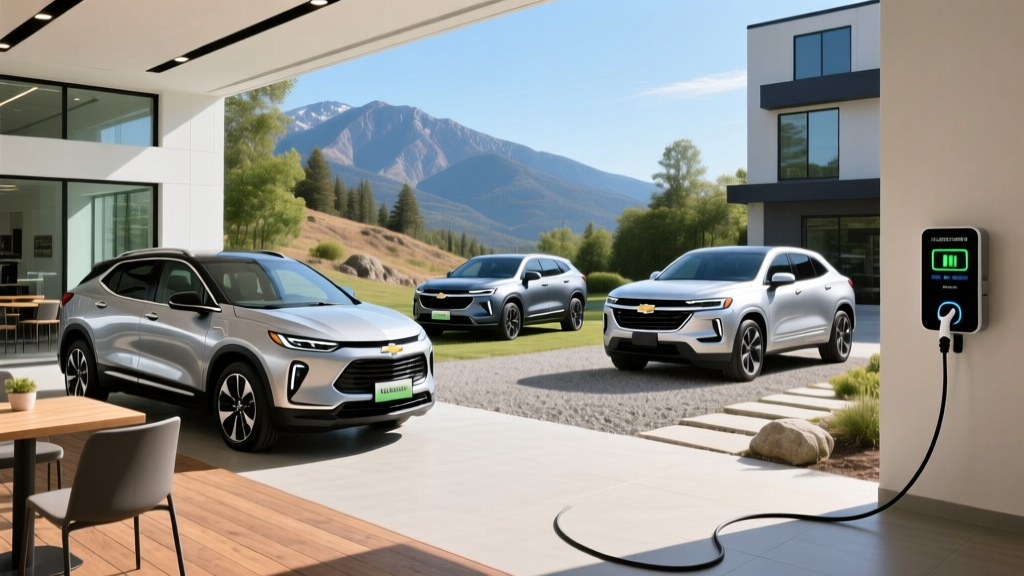
Chevrolet currently sells three battery-electric vehicles in the U.S.: the Equinox EV (compact crossover, 319 mi EPA, starting ~$33,600), the Blazer EV (midsize crossover, up to 324 mi EPA, starting ~$44,600), and the Silverado EV (full-size pickup, up to 492 mi EPA, starting ~$57,900). All three use GM's Ultium platform with NMC (nickel manganese cobalt) battery chemistry and support DC fast charging up to 190–350 kW depending on the model. The Bolt EV and Bolt EUV were discontinued after the 2023 model year; a next-generation Bolt on the Ultium platform is announced but not yet on sale. Federal tax credit eligibility under IRS §30D varies by model, trim, battery sourcing, and buyer income — always verify current status at irs.gov before purchasing.
The 2026 Chevrolet EV Lineup: Specs You Need
Before we get into ownership economics, here are the hard numbers that matter for cross-shopping. Every figure below comes from EPA data or Chevrolet's published specifications for the current model year.
| Spec | Equinox EV | Blazer EV | Silverado EV |
|---|---|---|---|
| EPA Range (max config) | 319 mi | 324 mi | 492 mi |
| Battery (usable, est.) | ~85 kWh (NMC) | ~102 kWh (NMC) | ~200 kWh (NMC) |
| Peak DC Fast Charge | 150 kW | 190 kW | 350 kW |
| 10–80% DC Charge Time | ~35 min | ~30 min | ~20 min |
| Level 2 Charge Rate | 11.5 kW | 11.5 kW | 19.2 kW (opt.) |
| 0–60 mph | ~7.5 s (FWD) | ~4.0 s (SS AWD) | ~4.5 s (4WT) |
| Horsepower | 213–288 hp | 288–557 hp | 510–754 hp |
| Starting MSRP | ~$33,600 | ~$44,600 | ~$57,900 |
| Battery Warranty | 8 yr / 100,000 mi | 8 yr / 100,000 mi | 8 yr / 100,000 mi |
| MPGe (combined) | ~95 MPGe | ~87 MPGe | ~73 MPGe |
Real-world range caveat: EPA estimates assume a mix of city and highway driving at moderate temperatures. Expect highway-only range to drop 10–15% below the EPA sticker, and cold-weather range (below 30°F) to drop 20–30% depending on cabin heating use. The Equinox EV's 319-mile EPA rating, for example, realistically delivers around 250–270 miles on a 70-mph highway trip in winter conditions. The Silverado EV's massive 200 kWh battery helps offset its poor aerodynamics, but towing a trailer can cut range by 40–50%.
Charging at Home and on the Road
Chevrolet equips all three EVs with the CCS1 connector for DC fast charging, though GM has committed to transitioning to the NACS (Tesla Supercharger) connector on future models. As of 2026, Chevrolet EV owners can access Tesla Superchargers using a GM-approved CCS-to-NACS adapter.
| Level | Power (kW) | Speed (mi/hr added) | Where You'll Find It |
|---|---|---|---|
| Level 1 (120V) | ~1.2 kW | 3–5 mi/hr | Standard household outlet |
| Level 2 (240V) | 11.5 kW | 30–40 mi/hr | Home wallbox, workplace, public L2 |
| DC Fast (150 kW) | 150 kW peak | ~200+ mi in 30 min | Electrify America, EVgo, ChargePoint |
| DC Fast (350 kW) | 350 kW peak | ~250+ mi in 20 min | Silverado EV on capable stations |
Charging curve reality: Peak kW is not sustained kW. The Equinox EV may hit 150 kW at 10% state of charge (SoC), but it tapers significantly above 60% SoC to protect the NMC battery. A "10–80% in 35 minutes" spec is the realistic planning number for road trips — don't plan around peak rates that last only a few minutes.
Home charging setup: A Level 2 home charger is essential for daily convenience. Expect to pay $500–$800 for a quality 48-amp wallbox (like the ChargePoint Home Flex or Emporia Vue) and $800–$2,500 for professional installation by a licensed electrician, depending on whether your electrical panel needs an upgrade to support a 60-amp circuit. If you live in an apartment or lack dedicated parking, you'll need to rely on workplace or public Level 2 charging — a significant lifestyle factor that makes EV ownership harder for some buyers.
EV vs. Gas vs. Hybrid: Cost Comparison
Let's compare the Equinox EV against its gas-powered sibling, the 2026 Equinox (26 MPG combined), and a popular hybrid competitor, the Toyota RAV4 Hybrid (39 MPG combined). We'll use 15,000 miles/year, $3.50/gallon gas, and $0.14/kWh home electricity (national averages).
| Annual Cost | Equinox EV (3LT) | Equinox Gas (26 MPG) | RAV4 Hybrid (39 MPG) |
|---|---|---|---|
| Fuel / Energy | ~$595/yr | ~$2,019/yr | ~$1,346/yr |
| Maintenance (oil, filters) | ~$100/yr | ~$400/yr | ~$350/yr |
| Insurance (est. avg) | ~$1,800/yr | ~$1,500/yr | ~$1,550/yr |
| Annual Total | ~$2,495 | ~$3,919 | ~$3,246 |
| 5-Year Fuel Savings vs. Gas | Equinox EV saves ~$7,120 in fuel over 5 years | ||
The EV wins on operating cost, but the upfront price gap matters. The Equinox EV starts ~$5,000–$8,000 higher than the gas Equinox before incentives. If you qualify for the full $7,500 federal tax credit (more on eligibility below), the purchase price effectively drops to near parity, and the fuel savings become pure gain from year one.
When a hybrid makes more sense: If you can't install a home charger, regularly drive more than 400 miles in a day, or live in an area with sparse DC fast-charging infrastructure, a hybrid like the RAV4 Hybrid eliminates range and charging concerns entirely while still cutting fuel costs by ~35% versus the gas Equinox.
Federal Tax Credit: What Actually Applies to Chevrolet EVs
The IRS §30D Clean Vehicle Credit offers up to $7,500 for qualifying new EVs, but eligibility is layered and subject to change. Here's the checklist as of 2026:
- MSRP caps: SUVs and pickups must be under $80,000; sedans under $55,000. All current Chevrolet EVs fall under these caps in most trims.
- Buyer income limits: Modified AGI must not exceed $300,000 (joint), $225,000 (head of household), or $150,000 (single).
- Battery sourcing requirements: The credit is split into two halves — $3,750 for critical minerals and $3,750 for battery components. Sourcing rules tighten annually; a vehicle that qualified last year may not qualify this year. Chevrolet's Ultium batteries are assembled in the U.S., but critical-mineral sourcing depends on supply-chain agreements that shift regularly.
- Point-of-sale transfer: Since 2024, you can transfer the credit to the dealer at purchase, reducing your out-of-pocket cost immediately rather than waiting to claim it on your tax return.
- FEOC restriction: Vehicles with battery components from a "foreign entity of concern" (e.g., certain Chinese suppliers) may lose partial or full credit eligibility.
Always verify current eligibility on fueleconomy.gov and the IRS clean vehicle credit page. State incentives (California, Colorado, New York, etc.) may stack on top — check your local energy office or AFDC state incentive database.
Common Misconceptions About Chevrolet EVs
| Myth | Fact |
|---|---|
| "The Bolt is still available." | The Bolt EV/EUV was discontinued after 2023. A next-gen Bolt on Ultium has been announced but has no firm on-sale date as of early 2026. |
| "Chevy EVs can't use Tesla Superchargers." | GM provides a CCS-to-NACS adapter, enabling access to Tesla's Supercharger network. Native NACS ports are expected on future GM models. |
| "EV batteries need replacing every 5 years." | GM's Ultium batteries carry an 8-year/100,000-mile warranty against degradation below ~60–70% capacity. Industry data shows NMC packs typically retain 85–90% capacity after 100,000 miles under normal use. |
| "The Silverado EV can tow its max rating without range loss." | Towing near the Silverado EV's ~10,000-lb max rating can cut range by 40–50%. A 492-mile EPA range drops to roughly 250–300 miles when towing heavy. Plan charging stops accordingly. |
| "Home charging is too expensive to install." | A typical Level 2 home install runs $1,300–$3,300 total (equipment + electrician + permit). Many utilities offer rebates of $300–$1,000 that offset this cost. |
Real-World Ownership: What First-Time Buyers Should Know
Cold-Weather Performance
Chevrolet's Ultium platform includes active thermal management (liquid heating and cooling), which helps precondition the battery for efficient charging and reduces cold-weather degradation. However, NMC chemistry still loses efficiency in freezing temperatures. In sustained sub-20°F conditions, expect 20–30% range reduction on all three models. Using seat heaters and steering wheel heaters instead of cranking cabin heat can recover 5–10% of that loss. Preconditioning the battery while still plugged in at home is the single most effective cold-weather habit — it warms the pack using grid power instead of battery power.
Insurance Costs
EVs generally carry higher insurance premiums than comparable gas cars due to higher repair costs (especially battery pack replacement after collision). Expect to pay 15–25% more for insurance on a Chevrolet EV versus its gas equivalent. Get quotes from your insurer before purchasing — the annual premium difference ($300–$600) partially offsets fuel savings.
Depreciation
EV resale values have been volatile. The Equinox EV and Blazer EV are newer entries, so long-term depreciation data is limited. The Silverado EV, given its premium pricing and niche market, may depreciate faster than a gas Silverado in the first 3–5 years. If you plan to keep the vehicle 7+ years, depreciation matters less; if you trade in every 3 years, factor in potentially steeper value loss.
Driving Patterns That Favor an EV
Chevrolet EVs shine when your daily driving is under 200 miles round-trip and you can charge at home overnight. The Equinox EV's 319-mile EPA range handles virtually any commute with a massive buffer. Road trips require planning around DC fast chargers, but with 150–350 kW peak charging, stops are 20–35 minutes — a reasonable rest break cadence.
Decision Framework: Which Chevrolet EV Is Right for You?
Choose the Equinox EV if:
- Your budget is $30,000–$42,000 and you want the most affordable entry point.
- You commute under 150 miles daily and rarely tow.
- You prioritize efficiency (95 MPGe) over performance.
- You want the best chance at full $7,500 tax credit eligibility (lower MSRP makes sourcing compliance easier to absorb).
Choose the Blazer EV if:
- You need a midsize crossover with more cargo room and available AWD.
- You want performance options (the SS trim does 0–60 in ~4.0 seconds with 557 hp).
- Your budget is $44,000–$60,000.
- You value a more premium interior and larger infotainment screen (17.7-inch standard).
Choose the Silverado EV if:
- You need a full-size truck bed with available 4WT steering and 10,000-lb towing.
- You want maximum range (492 mi EPA on the 4WT extended-range trim).
- Your budget is $57,000–$90,000+ and you can absorb higher insurance and depreciation.
- You have access to 350 kW DC fast chargers on your regular routes (otherwise the 350 kW capability is wasted).
Choose a hybrid (like the Equinox gas or a competitor PHEV) if:
- You cannot install a home Level 2 charger.
- You regularly drive 400+ miles in a single day through charging-sparse regions.
- Your budget is under $30,000 and you can't wait for incentive eligibility to align.
- You tow frequently and can't accept 40–50% range loss under load.
Frequently Asked Questions
Is the Chevrolet Bolt EV still available in 2026?
No. The Bolt EV and Bolt EUV were discontinued after the 2023 model year. GM has announced a next-generation Bolt built on the Ultium platform, but as of early 2026, it has not gone on sale and no firm release date has been confirmed. If you see a Bolt at a dealer, it is a leftover 2023 model or used inventory.
Can I charge a Chevrolet EV at a Tesla Supercharger?
Yes, using a GM-approved CCS-to-NACS adapter. GM began providing adapters to EV owners, and future Chevrolet models are expected to ship with a native NACS port. Always confirm adapter compatibility with your specific model year before relying on Supercharger access for a road trip.
How long does the Ultium battery last before replacement?
GM warrants the Ultium battery for 8 years or 100,000 miles against degradation below a specified capacity threshold (typically 60–70% of original capacity). Real-world data from early Ultium vehicles and broader NMC industry data suggest most packs retain 85–90% of their original capacity at 100,000 miles. A full battery replacement, if ever needed out of warranty, is estimated at $8,000–$15,000 depending on the pack size — a significant cost, but one that very few owners will face during normal ownership.
Do Chevrolet EVs qualify for the $7,500 federal tax credit?
It depends on the specific model, trim, your income, and current battery-sourcing rules. The Equinox EV, Blazer EV, and Silverado EV are all assembled in the U.S. and fall under the MSRP caps. However, the critical-mineral and battery-component sourcing requirements under §30D tighten annually, and credit eligibility can change mid-year. Verify the current status on fueleconomy.gov and consult a tax professional before relying on the credit for your purchase budget.
What happens if I can't charge at home?
Public Level 2 and DC fast charging is viable but more expensive and less convenient than home charging. Public DC fast charging typically costs $0.30–$0.50/kWh (versus ~$0.14/kWh at home), raising your annual fuel cost from ~$595 to ~$1,300–$1,800 for 15,000 miles of driving. You'll also spend 30–60 minutes per week at chargers instead of plugging in at home overnight. If home charging is impossible, weigh whether a hybrid better fits your lifestyle.
Are Chevrolet EVs good in snow and ice?
The AWD versions of the Equinox EV and Blazer EV provide strong traction via dual-motor torque distribution, and EVs benefit from a low center of gravity (the battery pack sits under the floor). Weight is higher than gas equivalents, which helps traction but increases stopping distance. Fit winter tires for serious snow — the all-season tires from the factory are adequate for light snow but not deep winter conditions.