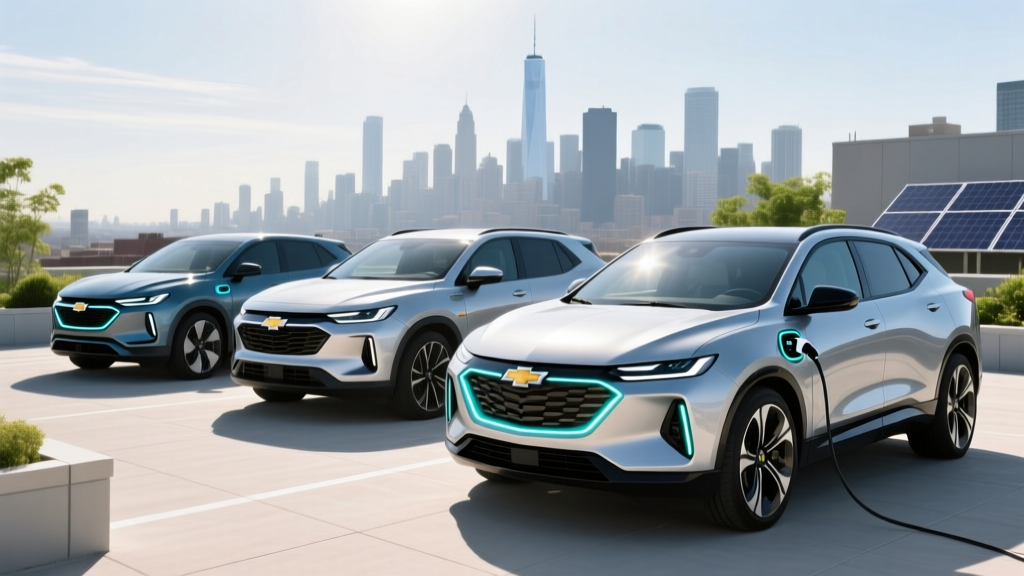
Quick Answer: Which Chevrolet EV Fits You?
Chevrolet's 2026 EV lineup centers on three Ultium-platform models: the Equinox EV (compact crossover, ~319 miles EPA, from ~$33,600), the Blazer EV (midsize crossover, ~324 miles EPA, from ~$44,600), and the Silverado EV (full-size pickup, ~440 miles EPA, from ~$55,900). All use GM's NMC-based Ultium batteries ranging from 85 to 200+ kWh. If you can charge at home and drive under 60 miles daily, the Equinox EV offers the strongest value proposition — especially when eligible for the federal §30D tax credit (up to $7,500, subject to income, MSRP, and battery-sourcing rules). For towing or truck-bed utility, the Silverado EV is the only electric option in the segment. Buyers without home charging access should weigh public DC fast-charging infrastructure carefully before committing.
The 2026 Chevrolet EV Lineup at a Glance
Chevrolet has consolidated its electric strategy around the Ultium platform after discontinuing the Bolt EV and Bolt EUV following the 2023 model year. The current lineup targets three distinct buyer profiles: budget-conscious commuters, performance-oriented families, and truck buyers needing payload capability.
| Spec | Equinox EV | Blazer EV | Silverado EV |
|---|---|---|---|
| Base MSRP | ~$33,600 | ~$44,600 | ~$55,900 |
| EPA Range (max) | 319 mi | 324 mi | 440 mi |
| Battery (usable, est.) | 85 kWh (NMC) | 102 kWh (NMC) | 200+ kWh (NMC) |
| Peak DC Fast Charge | 150 kW | 190 kW | 350 kW |
| 10–80% DC Charge Time | ~32 min | ~28 min | ~20 min |
| Level 2 Rate | 11.5 kW | 11.5 kW | 11.5 kW |
| 0–60 mph | ~8.3 sec | ~4.0 sec (SS) | ~4.5 sec (4WT) |
| Horsepower | 213–288 hp | 288–557 hp | 510–754 hp |
| Max Towing | 1,500 lb | 1,500 lb | 12,500 lb |
| Battery/Powertrain Warranty | 8 yr / 100k mi | 8 yr / 100k mi | 8 yr / 100k mi |
Real-World Range Reality: EPA estimates assume mixed driving at moderate temperatures. Expect ~15–25% range reduction in sustained highway driving at 75+ mph, and ~20–35% loss in freezing temperatures (below 32°F) due to cabin heating and battery chemistry constraints. The Equinox EV's 319-mile EPA figure typically delivers 240–270 miles on a road trip; the Silverado EV's 440-mile rating drops to roughly 330–370 miles highway in cold weather. Always plan DC fast-charging stops using 70% of your EPA range as a safe buffer.
Chevrolet EV vs. Gas Equivalents: The Real Cost Comparison
The purchase price of a Chevrolet EV is higher than its gas counterpart, but total cost of ownership over five years tells a different story — particularly when you factor in fuel savings, reduced maintenance, and potential tax incentives.
| Cost Factor | Equinox EV 3RS (~$41,900) | Equinox Gas AWD (~$30,000) |
|---|---|---|
| Purchase Price | $41,900 | $30,000 |
| Federal Tax Credit (§30D) | –$7,500 (if eligible) | $0 |
| Effective Net Price | $34,400 | $30,000 |
| Annual Fuel/Energy (12,000 mi) | ~$540 (home charging, $0.15/kWh) | ~$1,560 ($3.25/gal, 25 MPG) |
| 5-Year Fuel/Energy Total | ~$2,700 | ~$7,800 |
| 5-Year Maintenance (est.) | ~$1,200 | ~$3,500 |
| 5-Year Total Cost of Ownership | ~$38,300 | ~$41,300 |
The Equinox EV breaks even within 2–3 years if you qualify for the full federal credit and charge primarily at home. Without the tax credit, the break-even extends to roughly 5–6 years. Public DC fast-charging at $0.35–$0.50/kWh erodes savings significantly — at those rates, energy costs approach gas-car levels.
Federal Tax Credit & Incentive Rules for 2026
The IRS §30D clean vehicle credit remains the most impactful financial incentive, but eligibility is far from automatic. Here's what you must verify before counting on that $7,500:
- MSRP Cap: SUVs and pickups (Blazer EV, Silverado EV) must have an MSRP ≤ $80,000; cars and crossovers (Equinox EV) ≤ $55,000.
- Buyer Income Cap: Modified AGI ≤ $150,000 (single), $225,000 (head of household), or $300,000 (married filing jointly).
- Battery Sourcing: Battery components must be manufactured or assembled in North America; critical minerals must be sourced from the US or free-trade-agreement partners. These thresholds tighten annually — check the latest DOE/Fuel Economy guide for VIN-specific eligibility.
- Point-of-Sale Transfer: Since 2024, you can transfer the credit to the dealer at purchase, reducing your out-of-pocket cost immediately rather than waiting for tax filing.
- One Credit Per Taxpayer Per Year: You cannot claim credits for multiple new EV purchases in the same tax year.
State and utility incentives vary widely — check your local utility for Level 2 charger rebates ($300–$1,500 common) and time-of-use rate programs that make overnight charging significantly cheaper.
Charging at Home vs. Public: What Chevrolet EV Owners Actually Experience
Home Level 2 charging is the backbone of practical EV ownership. All three Chevrolet EVs accept 11.5 kW on Level 2, which translates to roughly 30–40 miles of range added per hour of charging. An overnight session (8–10 hours) fully replenishes any of these batteries from 20% to 100%.
| Charging Level | Power | Miles Added/Hour | Typical Use Case |
|---|---|---|---|
| Level 1 (120V) | 1.4 kW | ~4 mi/hr | Emergency / overnight trickle |
| Level 2 (240V) | 11.5 kW | ~30–40 mi/hr | Home daily charging |
| DC Fast (Equinox) | 150 kW peak | ~150 mi in 15 min | Road trips |
| DC Fast (Silverado) | 350 kW peak | ~100 mi in 10 min | Road trips |
Home Installation Costs: Expect $800–$2,500 for a professional Level 2 installation if your electrical panel has spare capacity (a 240V/50A circuit). If your home needs a panel upgrade (100A → 200A), add $1,500–$3,500. Always consult a licensed electrician for a site-specific quote before purchasing a charger.
Charging Curve Reality: Peak DC fast-charge rates (e.g., 150 kW on the Equinox EV) are sustained only between roughly 10–50% state of charge. Above 80%, charging slows dramatically to protect battery health — from 80–100% can take as long as the 10–80% session. For road trips, plan to charge from 10–80% and move on rather than waiting for a full battery.
NACS Connector: All 2026 Chevrolet EVs use the NACS (Tesla-style) charge port natively, granting access to Tesla Supercharger stations without an adapter. This is a significant advantage over legacy CCS-equipped vehicles, as the Supercharger network remains the most reliable DC fast-charging infrastructure in the US.
Common Misconceptions About Chevrolet EVs — Corrected
| Myth | Fact |
|---|---|
| "The battery will need replacing in 5 years and cost $20,000." | GM's Ultium batteries carry an 8-year/100,000-mile warranty guaranteeing ≥70% capacity retention. Real-world degradation data from similar NMC packs shows ~10–12% loss over 100,000 miles. Full replacement (if ever needed) runs $12,000–$18,000 but is rarely required. |
| "EVs don't work in cold climates." | Range drops 20–35% in sub-freezing temperatures — real, but manageable. The Ultium platform includes a heat pump (standard on most trims), which recovers waste heat for cabin warming and reduces cold-weather energy draw. Preconditioning the battery while plugged in further mitigates losses. |
| "You can't take an EV on a road trip." | With NACS access to 20,000+ Supercharger stalls and growing Electrify America/EVgo networks, highway charging stops add 15–25 minutes every 200–250 miles. That's a coffee break, not a barrier — though rural routes in the Mountain West and Great Plains still require planning. |
| "The Silverado EV can't actually tow." | The Silverado EV is rated for up to 12,500 lb towing. However, towing at max capacity reduces range by roughly 40–50%. A 440-mile EPA range becomes ~220–260 miles when towing 10,000+ lb — plan accordingly. |
| "Super Cruise means I don't need to pay attention." | GM's Super Cruise is a Level 2 driver-assist system (per SAE classification). It handles steering, acceleration, and braking on mapped divided highways, but you must remain attentive. The driver-monitoring camera will alert you and disengage the system if you look away for too long. |
Decision Framework: Which Chevrolet EV (or Alternative) Is Right for You?
Choose the Equinox EV if:
- Your daily commute is under 60 miles round-trip
- You have home charging access (garage or driveway with 240V capability)
- You want the lowest entry price and best tax-credit odds (MSRP under the $55,000 cap)
- You don't need towing or significant cargo hauling
- Budget target: ~$33,000–$43,000 before incentives
Choose the Blazer EV if:
- You want midsize crossover space with performance (the SS trim does 0–60 in ~4.0 seconds)
- You frequently carry 4–5 passengers and need 30+ cubic feet of cargo space
- You're willing to pay a premium for a larger battery and faster DC charging
- Super Cruise availability is important to you (offered on higher trims)
- Budget target: ~$44,000–$60,000 before incentives
Choose the Silverado EV if:
- You need a truck bed, payload capacity, or towing up to 12,500 lb
- You drive high annual miles and want 440 miles of EPA range for minimal charging stops
- You have access to a Level 2 charger at home (a 200+ kWh battery is impractical on Level 1 alone)
- Budget target: ~$55,000–$90,000+ before incentives
Consider a PHEV or Hybrid Instead if:
- You cannot install a home charger and rely entirely on street parking or apartment living
- You regularly drive 300+ miles through areas with sparse DC fast-charging infrastructure
- Your budget is firmly under $30,000 — the used Bolt EV or a new Chevy hybrid may be more practical
- You frequently tow heavy loads in extreme cold, where EV range loss compounds significantly
First-Time EV Buyer Checklist
Before you sign the paperwork on any Chevrolet EV, verify these five items:
- Home Charging Feasibility: Can you install a 240V/50A circuit? Get an electrician's quote before purchase. If you rent or live in a condo, check whether your building has EV charging provisions or plans for installation.
- Tax Credit Eligibility: Confirm your specific VIN qualifies under current §30D sourcing rules on fueleconomy.gov. Don't rely on dealer assurances alone — rules change and not every trim/battery combination qualifies.
- Insurance Quotes: EV insurance premiums run 10–25% higher than equivalent gas vehicles due to repair complexity and battery replacement costs. Get quotes from 2–3 insurers before finalizing your purchase.
- Utility Rate Plan: Contact your electric utility about time-of-use (TOU) plans. Charging overnight at off-peak rates ($0.08–$0.12/kWh) dramatically reduces your per-mile energy cost compared to peak-hour rates ($0.20–$0.35/kWh).
- Realistic Range Planning: Map your three longest recurring drives (commute, grocery run, family visit). If any exceeds 70% of the EPA range, you'll want to charge to 90%+ on those days — or consider a longer-range trim.
Frequently Asked Questions
Are Chevrolet EVs reliable compared to gas cars?
EVs have far fewer moving parts — no transmission, no exhaust system, no oil changes, no spark plugs. The Ultium platform is still relatively new (launched 2022–2023), so long-term 10-year reliability data is still accumulating. However, GM's 8-year/100,000-mile battery and powertrain warranty provides substantial coverage. Early Equinox EV and Blazer EV models have shown typical first-year software bugs addressed via OTA updates, with no systemic battery or drivetrain failures reported as of early 2026.
How much does it cost to charge a Chevrolet EV at home?
At the US average residential rate of ~$0.16/kWh, fully charging an Equinox EV (85 kWh battery) costs roughly $13.60 for ~319 miles of range — about $0.04 per mile. Compare that to a 25 MPG gas car at $3.25/gallon: $0.13 per mile. Home charging saves approximately $0.09 per mile, or ~$1,080 annually at 12,000 miles/year. Public DC fast-charging at $0.40/kWh narrows that gap to ~$0.07/mile — still cheaper than gas, but less dramatically so.
Can I charge a Chevrolet EV at Tesla Superchargers?
Yes. All 2026 Chevrolet EVs come with a native NACS charge port, meaning you can plug directly into any Tesla Supercharger V2 or V3 station without an adapter. GM owners access Superchargers through the myChevrolet app or the Tesla app (depending on current integration agreements). This gives Chevrolet EV owners access to over 20,000 Supercharger stalls across North America — the most reliable and widely available DC fast-charging network.
What happens if the battery degrades significantly?
GM's battery warranty guarantees at least 70% capacity retention for 8 years or 100,000 miles. If your battery falls below that threshold during the warranty period, GM will repair or replace it at no cost. Real-world data from comparable NMC packs (including the Bolt EV's earlier chemistry) suggests most batteries retain 85–90% capacity at 100,000 miles with normal use. Avoiding habitual DC fast-charging to 100% and minimizing prolonged storage above 80% SoC will maximize longevity.
Is the Chevy Bolt EV still available in 2026?
No. The Bolt EV and Bolt EUV were discontinued after the 2023 model year. While GM has announced a next-generation Bolt on the Ultium platform, it has not yet entered production as of early 2026. If you're seeking a sub-$30,000 Chevrolet EV, the used Bolt market offers strong value — many 2022–2023 models with 259 miles of EPA range are available for $18,000–$24,000, and they qualify for the up-to-$4,000 used EV tax credit (§25E) if priced at or below $25,000.
How does Super Cruise compare to Tesla Autopilot?
Both are Level 2 driver-assist systems requiring continuous driver supervision. Super Cruise operates only on pre-mapped divided highways (~750,000 miles of compatible roads in North America) and uses a driver-attention camera to monitor your eyes. Tesla Autopilot works on any road but relies on steering-wheel torque for attention monitoring, which is easier to circumvent (and misuse). In IIHS evaluations and real-world testing, Super Cruise's geofenced approach and camera-based monitoring have demonstrated fewer driver-disengagement incidents. Neither system is self-driving — you are always the responsible operator.