If you have been browsing Chevrolet EV lease deals, the headline monthly payments on the Equinox EV, Blazer EV, and Silverado EV look compelling. But a low lease payment only tells part of the story. To figure out whether a Chevy EV actually saves you money over five years, you need to stack the lease cost against federal tax credits, home and public charging rates, insurance premiums, and the reality of EV depreciation.
This guide breaks down the total cost of ownership for the three main Chevrolet EVs available in the 2026 model year, explains exactly which buyers qualify for the IRS §30D credit, and shows the per-mile math that separates real savings from marketing claims.
Current Chevrolet EV Lineup: Lease Starting Points
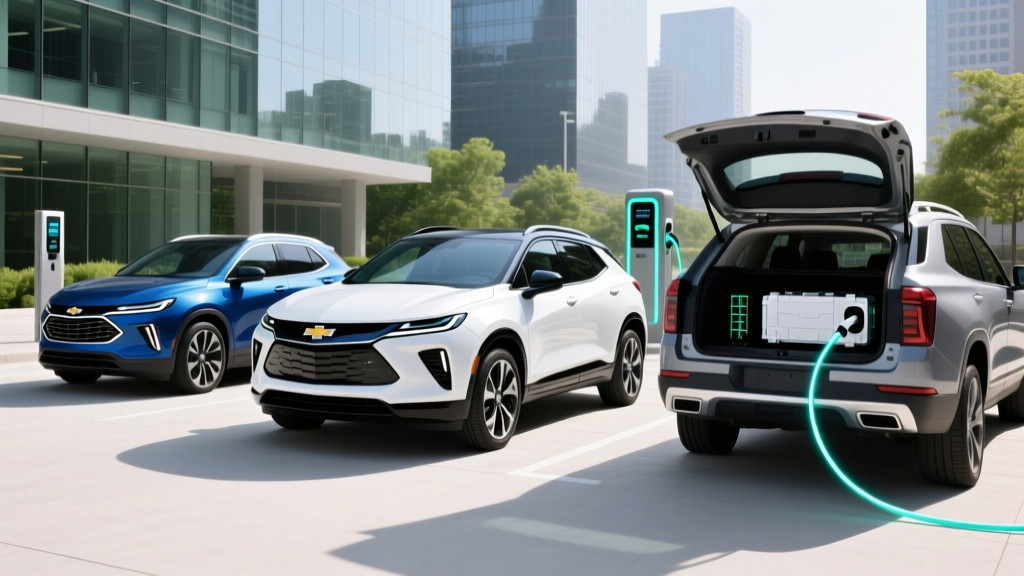
Chevrolet's 2026 EV lineup centers on three Ultium-platform vehicles, each targeting a different buyer. Lease pricing fluctuates by dealer, region, and credit tier, but here are the baseline MSRP figures and typical lease structures as of early 2026:
| Model | Trim | MSRP (before dest.) | Typical 36-mo lease | EPA Range | Battery (kWh) |
|---|---|---|---|---|---|
| Equinox EV | LT2 FWD | $34,900 | $279–$329/mo | 319 mi | 85 kWh (NMC) |
| Blazer EV | 2LT AWD | $47,800 | $389–$459/mo | 283 mi | 102 kWh (NMC) |
| Silverado EV | LT RST | $74,700 | $699–$849/mo | 390 mi | 200 kWh (NMC) |
Destination charges add roughly $1,395–$1,995 depending on the model. Lease money factors and residuals vary, so pull quotes from at least three dealers and confirm whether the advertised price includes the §30D federal tax credit applied as a capitalized-cost reduction.
5-Year Total Cost of Ownership Breakdown
The table below models a realistic 5-year ownership scenario for the Equinox EV LT2 FWD (the most popular lease target) versus a comparably equipped gas-powered Equinox AWD. Assumptions: 12,000 miles/year, home Level 2 charging at $0.16/kWh, gas at $3.40/gallon, and insurance from a national average quote.
| Cost Category | Equinox EV (LT2 FWD) | Gas Equinox (AWD) | Difference |
|---|---|---|---|
| Purchase/Lease (5 yr equivalent) | $19,740 | $17,400 | EV +$2,340 |
| Fuel / Electricity | $3,072 | $6,800 | EV −$3,728 |
| Maintenance | $1,200 | $3,800 | EV −$2,600 |
| Insurance (5 yr total) | $9,500 | $7,250 | EV +$2,250 |
| Depreciation (est.) | $14,200 | $10,800 | EV +$3,400 |
| Federal Tax Credit | −$7,500 | $0 | EV −$7,500 |
| Net 5-Year Cost | $40,212 | $46,050 | EV saves ~$5,838 |
The EV wins on fuel and maintenance, loses on insurance and depreciation, and the §30D credit tips the balance — but only if you qualify. Buyers who exceed the income cap or who lease through a structure that does not pass the credit along will see the math shift by $7,500.
Federal Tax Credit: Do You Actually Qualify?
The IRS §30D New Clean Vehicle Credit offers up to $7,500, but it is not universal. For 2026, the credit splits into two halves — $3,750 for battery-component sourcing and $3,750 for critical-mineral sourcing — and each has separate requirements. When you lease (rather than buy), the credit technically goes to the lessor, but most Chevrolet dealers apply it as a capitalized-cost reduction, effectively passing the savings to you in a lower monthly payment. Confirm this explicitly before signing.
- Income cap (MAGI): $150,000 single / $225,000 head of household / $300,000 joint filers
- MSRP cap: $80,000 for SUVs and trucks (Blazer EV, Silverado EV qualify); $55,000 for sedans and cars
- Battery sourcing: Battery components must be manufactured or assembled in North America (percentage thresholds increase annually through 2029)
- Critical minerals: A percentage of critical minerals must be sourced from the U.S. or a free-trade-agreement country
- Point-of-sale transfer: Since Jan 1, 2024, you can transfer the credit to the dealer at purchase, reducing your out-of-pocket cost immediately
- VIN verification: The dealer must provide a time-of-sale report confirming the vehicle's battery compliance via the IRS Energy Credits Online portal
As of early 2026, the Equinox EV (assembled in Ramos Arizpe, Mexico, with Ultium cells from the Lansing, MI plant) qualifies for the full $7,500 for eligible buyers. The Blazer EV (also Ramos Arizpe) qualifies for the full amount. The Silverado EV (Factory Zero, Detroit) qualifies as well. Always verify at fueleconomy.gov before committing, as battery-sourcing compliance can shift with supply-chain changes.
Charging Cost vs. Gasoline: The Per-Mile Math
The most common question from EV-curious buyers: how much do I actually spend per mile? The answer depends on where you charge. Here is the real math for the Equinox EV, which achieves roughly 3.0 miles per kWh (about 111 MPGe combined per EPA data):
| Charging Scenario | Rate | Cost per Mile | Annual (12k mi) |
|---|---|---|---|
| Home Level 2 (avg utility) | $0.16/kWh | $0.053 | $640 |
| Home (time-of-use off-peak) | $0.09/kWh | $0.030 | $360 |
| Public DC fast (Electrify America) | $0.48/kWh | $0.160 | $1,920 |
| Tesla Supercharger (NACS adapter) | $0.34/kWh | $0.113 | $1,360 |
| Gas Equinox (28 MPG combined) | $3.40/gal | $0.121 | $1,457 |
If you charge primarily at home on a standard rate, the Equinox EV costs about 4–5 cents per mile — less than half the gas equivalent. But if you rely entirely on public DC fast charging at $0.48/kWh, you will actually spend more per mile than the gas Equinox. This is why home charging access is the single biggest variable in EV ownership economics.
Chevrolet's 2026 EVs use the NACS connector natively (the brand transitioned from CCS for the 2025 model year), giving you direct access to Tesla Superchargers without an adapter. The Equinox EV peaks at 150 kW on DC fast charging (10–80% in roughly 32 minutes), while the Blazer EV reaches 190 kW (~28 min) and the Silverado EV can accept up to 350 kW on compatible chargers (~20 min). Expect sustained rates to taper significantly above 80% SoC — that final 20% can add another 20–30 minutes.
Maintenance Savings: What You Skip and What You Keep
EVs eliminate the most routine and expensive maintenance items from internal-combustion ownership, but they are not maintenance-free. Here is the realistic 5-year maintenance comparison:
| Service Item | Equinox EV (5 yr cost) | Gas Equinox (5 yr cost) |
|---|---|---|
| Oil changes | $0 | $750 |
| Brake pads/rotors | $200 (regen extends life) | $1,200 |
| Coolant flush | $150 (battery thermal loop) | $300 |
| Cabin air filter | $250 | $250 |
| Tire rotation/replacement | $1,800 (heavier vehicle, more wear) | $1,200 |
| Transmission fluid | $0 | $100 |
| Total | $2,400 | $3,800 |
The EV saves roughly $1,400 over five years on maintenance. The biggest offset is tire wear — the Equinox EV is approximately 800 pounds heavier than its gas counterpart, and the instant torque accelerates tread wear. Budget for a tire rotation every 7,500 miles and expect to replace tires at 30,000–40,000 miles rather than 50,000+. Chevrolet's battery and powertrain warranty covers 8 years / 100,000 miles with a minimum 60% capacity retention threshold, which provides meaningful protection against premature degradation.
Insurance Reality: The Cost Most Buyers Overlook
EV insurance premiums run 15–25% higher than equivalent gas vehicles, and this is where many ownership-cost calculators quietly lose credibility. For the Equinox EV, expect annual premiums of $1,700–$2,100 depending on your state, driving record, and coverage level, versus $1,300–$1,600 for the gas Equinox.
The reasons are structural, not arbitrary:
- Higher repair costs: Battery pack damage from even minor collisions can total a vehicle. Body shops need EV-specific training and equipment.
- Parts pricing: Ultium battery modules, power electronics, and specialized structural components cost more than equivalent ICE parts.
- Total-loss frequency: Insurers are more likely to declare an EV a total loss after battery-adjacent damage, driving up claim payouts.
- Driver demographics: Early EV adopters statistically drive more miles and live in urban areas with higher claim rates.
Before signing a lease, get a quote from your current insurer and at least one competitor. Some carriers (Geico, Progressive, State Farm) now offer EV-specific discounts of 5–10% that narrow the gap. In states with competitive insurance markets, the premium difference may be as little as $200/year; in others, it can exceed $500/year.
Depreciation and Resale Value Trends
EV depreciation has been the most volatile ownership cost over the past three years. After a sharp correction in 2023–2024 (driven by Tesla's price cuts, rapid battery improvements, and oversupply), the used EV market stabilized through 2025 and into 2026. Current data from industry analysts suggests mainstream EVs like the Equinox EV and Blazer EV retain roughly 45–50% of their value after three years and 36,000 miles — below the 52–58% retention of top gas-powered crossovers, but no longer the 30–35% cliff that some early EVs experienced.
Key factors affecting Chevy EV resale values:
- Battery health transparency: Chevrolet's Ultium platform supports over-the-air battery diagnostics. Buyers of used Chevys can request a State of Health (SoH) report, which supports resale confidence.
- NACS adoption: With the industry converging on NACS, 2025+ Chevy EVs will not face the "wrong connector" discount that older CCS-only models now carry on the used market.
- Lease returns: A wave of 2024–2025 Equinox and Blazer EV lease returns will hit the used market in 2027–2028, potentially softening prices. If you plan to sell or trade in around year 3, factor in this supply increase.
- Technology pace: Solid-state batteries and faster-charging architectures are expected to reach production vehicles by 2028–2029, which could accelerate depreciation of current-generation liquid-lithium-ion EVs.
If you are leasing rather than buying, depreciation is the lessor's problem — your risk is capped at the residual value set in the lease contract. This is one reason leasing can be the smarter play during a period of rapid EV technology evolution.
State, Local, and Utility Incentives
Important: State and local incentives vary significantly by jurisdiction and change frequently. The examples below are illustrative — always check your state's energy office, your utility's website, and the AFDC incentive database for current programs in your area.
Beyond the federal §30D credit, many buyers can stack additional savings:
- State rebates: California's CVRP offers up to $7,000 for income-eligible buyers; Colorado offers a $5,000 state tax credit for EVs under $80,000 MSRP; New York's Drive Clean Rebate provides up to $2,000 at point of sale.
- Utility rebates: Many utilities offer $500–$1,500 rebates for Level 2 home charger installation, plus time-of-use rate plans that cut charging costs by 30–50%.
- HOV lane access: States including California, Colorado, Virginia, and Maryland grant single-occupant HOV lane access to EVs — a time savings worth hundreds per year in congested metros.
- Registration fees: Note the offset — many states charge EVs higher annual registration fees ($50–$225) to replace lost gas-tax revenue. Factor this into your annual cost.
When combined, federal, state, and utility incentives can reduce the effective purchase price of an Equinox EV by $10,000–$14,000 for buyers in the most generous jurisdictions, bringing a $34,900 MSRP down to the low $20,000s.
Lease vs. Buy: Which Structure Fits Chevy EVs?
Leasing a Chevrolet EV has distinct advantages and trade-offs in the current market:
Lease if: You want the lowest monthly payment, plan to upgrade every 3 years to capture new technology, want depreciation protection during a volatile resale market, or your income exceeds the §30D cap (the commercial clean vehicle credit under §45W can still apply to the lessor, who may pass savings through).
Buy if: You drive more than 12,000–15,000 miles per year (lease overage penalties of $0.20–$0.30/mile add up fast), you want to build equity, you qualify for the full §30D credit at point of sale, or you plan to keep the vehicle 7+ years to amortize the higher upfront cost.
One nuance: when you lease, the lessor claims the §30D credit (technically as a §45W commercial credit). Most Chevrolet dealers pass this through as a cap-cost reduction, but they are not legally required to. Always ask for the lease worksheet showing exactly how the credit is applied before signing.
Frequently Asked Questions
How much does it really cost to own a Chevrolet EV over 5 years?
For the Equinox EV LT2 with full §30D credit eligibility and home charging, expect roughly $40,000 in total 5-year costs including lease payments, electricity, insurance, maintenance, and depreciation. Without the tax credit, that rises to ~$47,500. The gas Equinox costs roughly $46,000 over the same period, so the credit is the swing factor.
Do I qualify for the $7,500 federal EV tax credit on a Chevrolet?
You qualify for the full $7,500 if your modified adjusted gross income is below $150,000 (single) / $300,000 (joint), the vehicle MSRP is under the applicable cap ($80,000 for SUVs/trucks), and the vehicle's battery meets North American sourcing requirements. All three current Chevy EVs (Equinox, Blazer, Silverado) meet MSRP and sourcing requirements as of early 2026. Verify your specific VIN at fueleconomy.gov before purchasing or leasing.
How much do I save on fuel and maintenance with a Chevy EV?
With home charging at $0.16/kWh, the Equinox EV costs about $0.05/mile to fuel versus $0.12/mile for the gas Equinox — saving roughly $750–$900 per year at 12,000 miles. Maintenance savings add another $280/year from eliminated oil changes and reduced brake wear. Combined annual savings: ~$1,000–$1,200.
Are Chevrolet EVs more expensive to insure?
Yes, typically 15–25% more expensive than gas equivalents. For the Equinox EV, budget $400–$500 more per year in insurance compared to the gas Equinox. Get quotes before committing — some insurers offer EV discounts that narrow the gap to under $200/year.
How well do Chevrolet EVs hold their value?
Current projections estimate 45–50% value retention after 3 years / 36,000 miles for the Equinox and Blazer EV, which is below top gas crossovers but improved significantly from the 2023–2024 EV depreciation spike. Leasing transfers depreciation risk to the lessor, which is a strategic advantage during this period of rapid EV technology change.
Can I charge a 2026 Chevrolet EV at Tesla Superchargers?
Yes. Starting with the 2025 model year, Chevrolet EVs ship with the NACS connector natively, providing direct access to Tesla's Supercharger network without an adapter. The Equinox EV charges at up to 150 kW on DC fast chargers, the Blazer EV at 190 kW, and the Silverado EV at up to 350 kW.