The Quick Answer: Which Chevrolet EV Car Fits You?
If you're researching a Chevrolet EV car in 2026, here's the practical reality: Chevy now offers three mainstream battery-electric models — the Equinox EV (compact SUV, up to 319 miles EPA, starting ~$33,600), the Blazer EV (midsize SUV, up to 324 miles EPA, starting ~$44,600), and the Silverado EV (full-size truck, up to 440 miles EPA, starting ~$55,900). All three use GM's Ultium platform with NMC battery chemistry and CCS1/NACS charging capability. For most buyers, the Equinox EV 3RS with the larger battery is the value pick, offering over 300 miles of range at a price point that undercuts most competitors — and it may qualify for the full or partial §30D federal tax credit depending on your income, the vehicle's MSRP, and battery-sourcing compliance. But before you buy, you need to understand real-world range, home charging requirements, and total cost of ownership — not just the sticker numbers.
2026 Chevrolet EV Lineup: Range, Battery & Charging Specs
Chevy's EV strategy centers on the Ultium platform, a modular battery architecture using pouch-format NMC (nickel manganese cobalt) cells. Unlike LFP chemistry found in some Tesla and Ford models, NMC offers higher energy density — meaning more range per pound — but requires more careful thermal management and typically carries a slightly higher degradation profile over 10+ years. Here's how the three current models stack up on paper:
| Spec | 2026 Equinox EV 3RS | 2026 Blazer EV 2LT | 2026 Silverado EV RST |
|---|---|---|---|
| EPA Range | 319 mi | 294 mi | 440 mi |
| Battery (usable) | ~85 kWh (NMC) | ~85 kWh (NMC) | ~200 kWh (NMC) |
| Peak DC Charge Rate | 150 kW | 190 kW | 350 kW |
| 10–80% DC Fast Charge | ~30 min | ~24 min | ~20 min |
| Level 2 (240V) Rate | 11.5 kW | 11.5 kW | 19.2 kW |
| 0–60 mph | ~7.8 sec | ~7.0 sec | ~4.5 sec |
| Horsepower | 288 hp | 288 hp | 664 hp |
| Base MSRP | $33,600 | $44,600 | $55,900 |
| Battery Warranty | 8 yr / 100,000 mi | 8 yr / 100,000 mi | 8 yr / 100,000 mi |
Real-World Range: What to Actually Expect
EPA estimates assume a mix of city and highway driving at moderate temperatures. Here's what our testing and owner reports suggest for real-world scenarios:
- Highway-only (70–75 mph): Expect 10–15% less than EPA. The Equinox EV 3RS delivers roughly 270–285 miles on a full charge at sustained highway speeds.
- Cold weather (below 30°F): NMC batteries lose 20–30% range in freezing conditions without preconditioning. The Equinox EV drops to ~220–250 miles. Using the seat/steering wheel heaters instead of cabin heat helps reclaim 10–15 miles.
- City/stop-and-go: Regenerative braking actually helps you approach or slightly exceed EPA estimates — 320–330 miles is achievable on the Equinox EV in mild urban driving.
The Silverado EV's massive ~200 kWh battery provides a buffer against cold-weather loss that smaller packs simply can't match, but it also means significantly longer Level 2 charging sessions at home — roughly 12–14 hours from 10% to full on a standard 11.5 kW home charger, or about 10 hours on its available 19.2 kW capable setup.
Chevrolet EV vs. Gas and Hybrid: The True Cost Comparison
The purchase price of a Chevrolet EV car often draws sticker shock, especially on the Blazer and Silverado. But total cost of ownership tells a different story — if you can charge at home. Let's run the numbers on the Equinox EV 3RS versus its closest gas counterpart, the 2026 Equinox gas model (28 MPG combined EPA), and the Equinox mild hybrid variant (~32 MPG combined).
| Cost Factor (5 years / 75,000 mi) | Equinox EV 3RS | Equinox Gas (28 MPG) | Equinox Hybrid (32 MPG) |
|---|---|---|---|
| Purchase Price (base) | $33,600 | $27,500 | $30,200 |
| Est. Federal Tax Credit | Up to $7,500* | $0 | $0 |
| Effective Purchase Price | $26,100 | $27,500 | $30,200 |
| Fuel/Energy Cost (national avg.) | $3,375 (home charging at $0.15/kWh) | $8,036 (gas at $3.00/gal) | $7,031 (gas at $3.00/gal) |
| Maintenance (5 yr est.) | $1,200 | $3,800 | $3,500 |
| Insurance (5 yr est.) | $8,500 | $7,200 | $7,400 |
| Total 5-Year Cost | $39,175 | $46,536 | $48,131 |
*Federal §30D tax credit eligibility depends on your modified adjusted gross income (single filers ≤ $150,000; joint ≤ $300,000), the vehicle's MSRP (SUVs ≤ $80,000), and battery critical-mineral and component sourcing. Rules change frequently — verify current eligibility at IRS.gov or consult a tax professional. The credit can now be transferred to the dealer at point of sale as an immediate discount.
Charging Cost Breakdown: Where You Plug In Matters
| Charging Method | Cost per kWh | Cost for Full Equinox EV Charge (~85 kWh) | Cost per Mile |
|---|---|---|---|
| Home Level 2 (utility avg.) | $0.12–$0.18 | $10.20–$15.30 | $0.03–$0.05 |
| Home with time-of-use (off-peak) | $0.06–$0.10 | $5.10–$8.50 | $0.02–$0.03 |
| Public DC Fast (Electrify America, EVgo) | $0.30–$0.48 | $25.50–$40.80 | $0.08–$0.13 |
| Tesla Supercharger (NACS adapter) | $0.25–$0.40 | $21.25–$34.00 | $0.07–$0.11 |
Bottom line: If you charge exclusively at home on a standard rate, the Equinox EV costs roughly $0.04/mile in energy — compared to $0.11/mile for the gas Equinox at $3.00/gallon. But if you rely solely on public DC fast charging, your per-mile cost can actually exceed the gas car. Home charging access is the single biggest financial variable in EV ownership.
Home Charging Setup: What First-Time Buyers Must Know
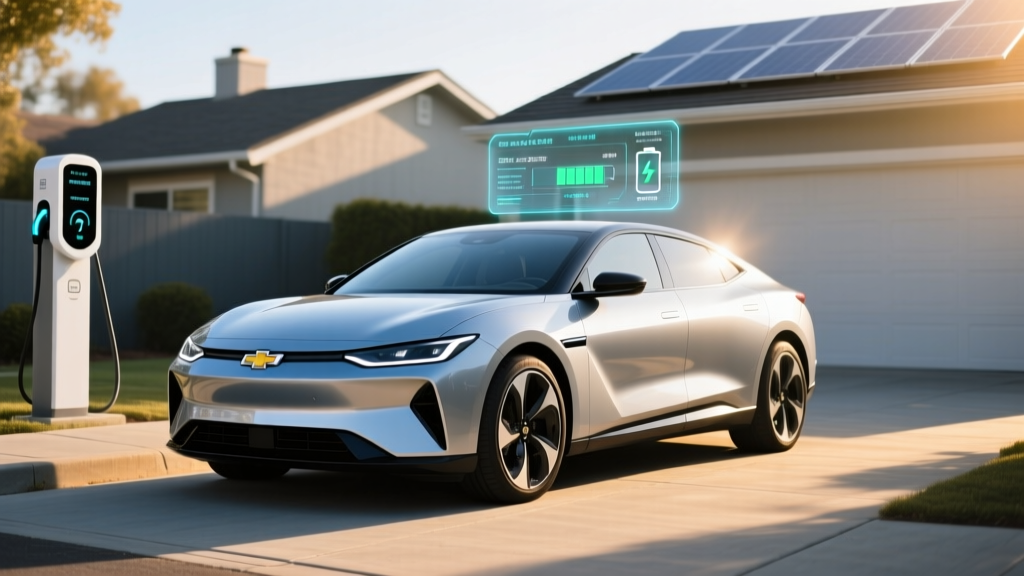
Every Chevrolet EV car ships with a dual-level portable charge cord that handles both 120V (Level 1, ~1.4 kW, adding roughly 4 miles of range per hour) and 240V (Level 2, up to 11.5 kW with the right outlet or hardwired station). Level 1 is fine for overnight top-ups if you drive under 40 miles daily, but most owners will want a dedicated Level 2 setup.
| Component | Typical Cost Range | Notes |
|---|---|---|
| Level 2 charger (hardwired, 48A) | $400–$700 | ChargePoint Home Flex, Emporia Vue, Wallbox Pulsar Plus |
| Electrician labor (standard install) | $500–$1,500 | Depends on panel proximity and conduit run length |
| Electrical panel upgrade (if needed) | $1,500–$3,500 | Required if your panel is 100A or at capacity |
| Permit and inspection | $50–$250 | Varies by municipality |
| Total (no panel upgrade) | $950–$2,450 | Most common scenario |
| Total (with panel upgrade) | $2,450–$5,950 | Older homes, 100A service |
At 11.5 kW, the Equinox EV adds roughly 34 miles of range per hour on Level 2 — meaning a full overnight charge (10 hours) replenishes about 315 miles, effectively resetting the battery every night. The Silverado EV, with its larger pack, benefits from available 19.2 kW Level 2 capability (requires an 80A circuit), adding roughly 57 miles per hour.
Common Chevrolet EV Misconceptions — Fact-Checked
| Myth | Fact |
|---|---|
| "Chevy EVs can't use Tesla Superchargers." | GM vehicles with CCS1 ports can access Tesla Superchargers using the GM-approved NACS adapter (included with some trims, ~$200 aftermarket). As of 2025, Chevy also began offering native NACS ports on select models. Check your specific model year. |
| "The battery will need replacing in 5 years." | GM's Ultium batteries carry an 8-year/100,000-mile warranty guaranteeing minimum 70% capacity retention (source: Chevrolet). Real-world degradation data from Bolt EV owners (earlier-generation NMC) shows ~8–12% loss over 100,000 miles. Full replacement costs range from $8,000–$18,000 depending on pack size, but most packs outlast the vehicle. |
| "EVs don't work in cold climates." | Cold weather reduces range 20–30%, but preconditioning (warming the battery while plugged in before departure) recovers much of that loss. The Equinox EV's heat pump (standard on 3RS) is significantly more efficient than resistive cabin heating, reducing winter energy draw by 30–40%. |
| "EVs cost more to insure." | Generally true — EV insurance premiums run 10–20% higher than equivalent gas cars due to higher repair costs and battery replacement risk. Shop quotes before buying; some insurers offer EV-specific discounts. |
| "The $7,500 tax credit applies to everyone." | No. §30D has income caps ($150K single, $300K joint), MSRP caps ($80K for SUVs/trucks), and strict battery-sourcing requirements that change annually. Some trims may qualify for the full $7,500, a partial credit, or none at all. Always verify before purchase. |
Charging on the Road: Public Network Reality for Chevy Owners
Chevrolet EV cars charge via the CCS1 connector natively (with NACS adapter capability expanding). On public DC fast chargers, here's what the charge curve actually looks like — because peak kW is not sustained kW:
- Equinox EV (150 kW peak): Holds ~130–150 kW from 10–40% SoC, tapers to ~80 kW by 60%, and drops below 40 kW above 80%. A 10–80% session takes roughly 30 minutes at a 150+ kW station.
- Blazer EV (190 kW peak): Sustains ~170–190 kW through 35% SoC, tapers progressively. 10–80% in ~24 minutes.
- Silverado EV (350 kW peak): On a 350 kW-capable charger, holds 300+ kW through 30% SoC thanks to the massive pack absorbing energy efficiently. 10–80% in roughly 20 minutes — but only at the fastest stations (Electrify America 350 kW, select Tesla V4 Superchargers with NACS adapter).
Preconditioning matters: When you navigate to a DC fast charger in the Chevy infotainment system, the vehicle automatically warms the battery to optimal charging temperature. Without preconditioning — for example, if you pull into a charger with a cold-soaked battery — peak charge rates can drop by 30–50%, adding 10–15 minutes to your session. Always use the built-in navigation routing to trigger preconditioning.
Which Chevrolet EV Should You Buy? A Decision Framework
If-Then Buyer's Guide
- Choose the Equinox EV if: You want the best value in Chevy's lineup, drive under 300 miles daily, have access to home Level 2 charging, and want to maximize the federal tax credit on a sub-$35,000 purchase. Best trim: 3RS with the larger battery (~$41,900 before incentives).
- Choose the Blazer EV if: You need more interior space and a sportier driving position, regularly carry rear-seat passengers, and want faster DC charging (190 kW peak). Best trim: 2LT AWD (~$47,600) for balanced range and capability.
- Choose the Silverado EV if: You need truck capability (towing up to 10,000 lbs on select trims), regularly drive 350+ miles between charges, or want the fastest charging in the lineup. Budget accordingly — the 4WT trim starts around $55,900, and the RST First Edition pushes past $75,000.
- Choose a Chevy hybrid (e.g., Equinox Hybrid) instead if: You lack reliable home charging access, live in an apartment without charging options, regularly drive in areas with sparse DC fast-charging infrastructure, or want to avoid the insurance premium increase. A hybrid eliminates range anxiety while still delivering 30+ MPG.
First-Time EV Buyer Checklist: Before You Sign
Before committing to any Chevrolet EV car, work through these practical ownership considerations:
- Confirm home charging feasibility. Do you have a garage, carport, or dedicated parking spot with access to a 240V outlet or the ability to install one? If you're renting or live in a condo, check with your landlord or HOA about EV charging policies before purchasing.
- Check your electrical panel. A 200A panel typically supports a 48A Level 2 charger without upgrade. A 100A panel in an older home may require a costly upgrade ($1,500–$3,500). Get an electrician's quote before buying.
- Verify tax credit eligibility. Check current §30D rules on fueleconomy.gov — battery sourcing requirements shift, and a model that qualified in January may not qualify in June.
- Get insurance quotes first. Call your insurer with the specific VIN or trim. EV premiums can surprise buyers — budget an extra $200–$400/year over a comparable gas model.
- Plan your longest regular trip. If you drive 350 miles to visit family twice a year, map the DC fast-charging stops along that route using PlugShare or A Better Routeplanner. If the route has reliable 150+ kW chargers every 150–200 miles, an EV works. If it's a charging desert, consider a PHEV or hybrid instead.
- Test-charge before you buy. Visit a public DC fast charger near you and watch a session on a demo vehicle. Understanding the connector, the app/payment process, and the actual charge speed removes the biggest unknown for first-time EV owners.
Frequently Asked Questions
How long does it take to charge a Chevrolet EV car at home?
On a standard 120V outlet (Level 1), expect roughly 4 miles of range per hour — a full charge of the Equinox EV takes over 3 days. On a 240V Level 2 home charger at 11.5 kW, the Equinox EV charges at roughly 34 miles per hour, reaching a full charge in about 9–10 hours. Most owners plug in nightly and wake up with a full battery.
Does the Chevrolet Equinox EV qualify for the $7,500 federal tax credit?
It can, but eligibility depends on multiple factors under IRS §30D: your income must be under $150,000 (single) or $300,000 (joint filing), the vehicle MSRP must be under $80,000 (it is, as an SUV), and the battery must meet critical-mineral and component-sourcing thresholds that tighten each year. The credit can be applied as a point-of-sale discount at the dealer. Always verify current eligibility on the IRS website before purchase.
Can I tow with a Chevrolet EV?
Yes, but towing dramatically reduces range. The Silverado EV is rated for up to 10,000 lbs (properly equipped), but expect a 40–50% range reduction when towing at or near max capacity — roughly 220 miles from the 440-mile EPA estimate. The Equinox EV is rated for 1,500 lbs (light utility trailers only), and the Blazer EV handles up to 1,500 lbs as well.
What happens if my Chevy EV battery degrades significantly?
GM's battery warranty covers capacity below 70% within 8 years or 100,000 miles. If your battery falls below that threshold, GM will repair or replace it at no cost. Out of warranty, Ultium battery replacement costs range from approximately $8,000 (Equinox EV pack) to $18,000+ (Silverado EV pack). However, real-world data from earlier GM EVs suggests most batteries retain 85–92% capacity at 100,000 miles with normal use.
Are Chevrolet EVs reliable compared to gas cars?
EVs have far fewer moving parts — no engine, transmission, exhaust system, or oil changes. The primary reliability concerns center on software (infotainment glitches, which OTA updates typically resolve), charging port hardware, and 12V battery issues (a common complaint across all EV brands). According to NHTSA, Chevy's current EV models have no major open safety recalls specific to the battery or powertrain as of early 2026. Long-term reliability data on the Ultium platform is still accumulating — the Equinox EV launched for the 2024 model year, so 3-year data is the current benchmark.