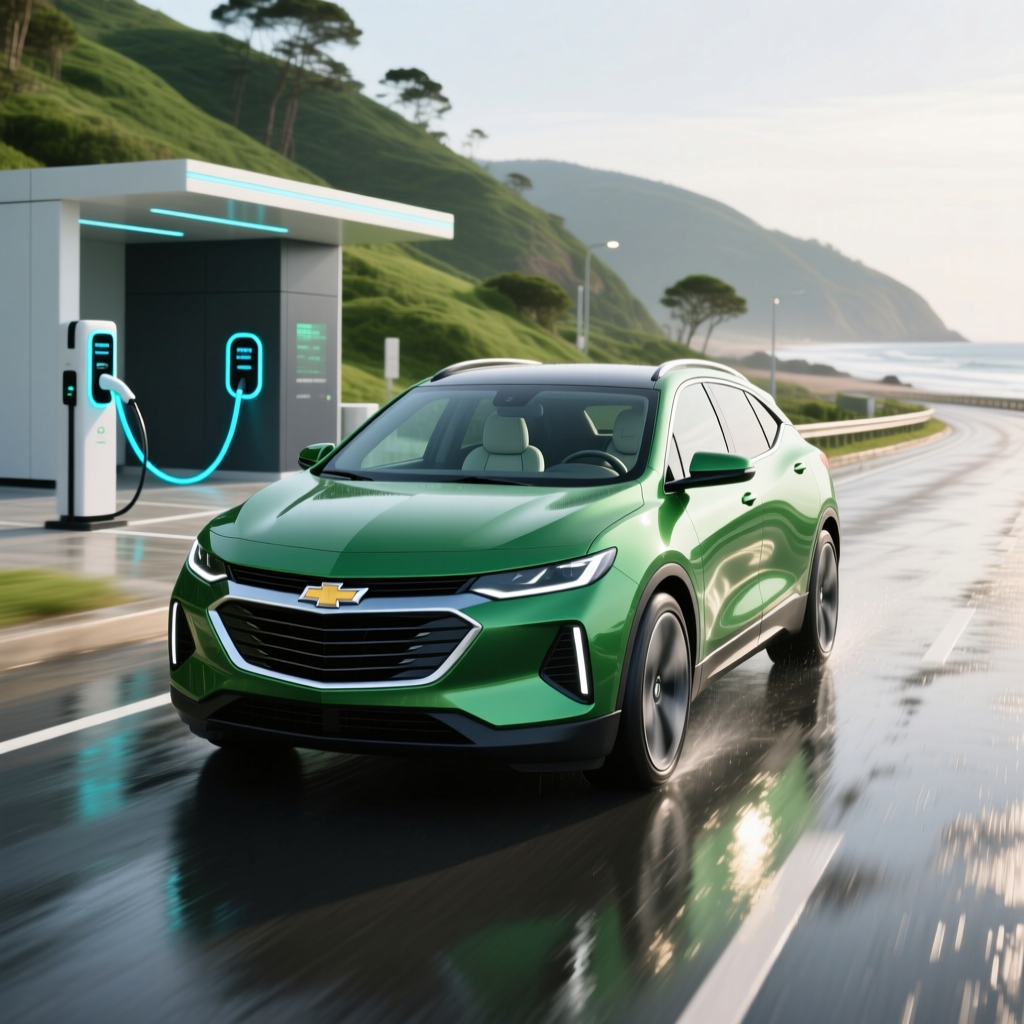
The Chevrolet Equinox EV arrives at a pivotal moment for the electric vehicle market. As automakers scramble to deliver affordable, practical electric SUVs that mainstream buyers actually want, Chevrolet has positioned the Equinox EV as a compelling answer. Built on General Motors' Ultium platform, this electric compact SUV promises over 300 miles of range, fast charging, and a tech-forward interior — all at a price point that undercuts many competitors. We spent significant time behind the wheel to find out whether the Equinox EV delivers on those promises in the real world.
For buyers cross-shopping the growing segment of affordable electric SUVs, the Equinox EV slots into a competitive space. If you're also considering alternatives, our best affordable electric SUVs roundup and EV comparison guides can help you weigh your options.
Vehicle Overview: What Is the Chevrolet Equinox EV?
The Chevrolet Equinox EV is a compact electric crossover built on GM's dedicated Ultium battery platform. It shares no mechanical components with the gasoline-powered Equinox, instead riding on a purpose-built EV architecture that also underpins the Chevrolet Blazer EV, GMC Sierra EV, and Cadillac Lyriq. This matters because dedicated EV platforms typically deliver better interior packaging, lower centers of gravity, and more efficient battery integration than converted gas-car platforms.
Chevrolet offers the Equinox EV in multiple trim levels, typically starting with the LT and stepping up to the RS and Launch Edition variants. Front-wheel drive is standard on most trims, with all-wheel drive available as an option. The battery pack is an 85 kWh usable capacity unit, which Chevrolet says is good for an EPA-estimated range of up to 319 miles on FWD models — a figure that places the Equinox EV near the top of its class for affordability-adjusted range.
Power output varies by configuration. The front-wheel-drive model produces approximately 213 horsepower and 236 lb-ft of torque, while the all-wheel-drive variant bumps output to around 288 horsepower and 325 lb-ft of torque. These aren't headline-grabbing performance numbers, but they're appropriate for a vehicle aimed squarely at practicality and daily usability rather than track times.
Real-World Range and Efficiency
EPA range estimates tell only part of the story, and our first drive experience confirmed that the Equinox EV's real-world range is genuinely impressive for its price class. On a mixed-driving loop that included highway cruising at 70 mph, suburban stop-and-go traffic, and some moderate hill climbing, we observed energy consumption in the range of 2.8 to 3.2 miles per kWh depending on conditions and driving style.
With the 85 kWh usable battery, that translates to roughly 238 to 272 miles of real-world range under mixed conditions — somewhat below the EPA's 319-mile estimate for the FWD model, which is typical. EPA tests are conducted under controlled conditions that don't always account for aggressive acceleration, cold weather, or sustained highway speeds above 70 mph. That said, even at the lower end of our observed range, the Equinox EV delivers more usable miles than most competitors in its price bracket.
Highway driving at sustained speeds of 75 mph or higher saw consumption climb to approximately 2.5 to 2.7 miles per kWh, yielding roughly 212 to 230 miles before needing a charge. Cold weather testing in temperatures below 40°F showed the expected range reduction of roughly 15 to 25 percent, which is consistent with industry averages for lithium-ion battery packs. The Equinox EV's standard heat pump helps mitigate cold-weather losses compared to EVs that rely solely on resistive heating.
Regenerative braking is well-implemented, with multiple levels of regen selectable through the steering wheel paddles or the infotainment system. The one-pedal driving mode is strong enough to bring the vehicle to a complete stop in most traffic situations, and it operates smoothly without the abrupt grabbiness that plagues some competitors' regen systems. Drivers who master one-pedal mode in city driving can recover meaningful energy and extend their effective range.
For a deeper look at how the Equinox EV stacks up against other long-range electric SUVs, check out our best long-range electric vehicles list.
Charging Speed and Infrastructure
The Equinox EV supports DC fast charging at rates up to 150 kW on compatible chargers. In our testing at Electrify America and EVgo stations equipped with 150 kW or higher dispensers, we observed peak charging rates of approximately 135 to 145 kW in the early portion of the charge session, tapering as the battery state of charge increased.
Chevrolet claims a 10 to 80 percent charge time of approximately 30 minutes under ideal conditions, and our real-world testing largely validated this claim. From a 15 percent state of charge, we reached 80 percent in roughly 33 minutes at a 150 kW charger. The charging curve is reasonably aggressive in the lower states of charge, though it tapers noticeably past 70 percent, which is standard behavior for battery management systems designed to protect long-term battery health.
For Level 2 AC charging, the Equinox EV comes equipped with an 11.5 kW onboard charger, which is competitive for the segment. On a 240-volt Level 2 home charger or public AC station, a full charge from empty takes approximately 9 to 10 hours. This means overnight home charging is entirely practical — plug in when you get home and wake up to a full battery every morning.
The Equinox EV uses the CCS (Combined Charging System) connector standard, and Chevrolet has announced adapters for Tesla's NACS (North American Charging Standard) connector, which will open access to Tesla's extensive Supercharger network. This is a significant advantage for long-distance travelers who want access to the most reliable charging infrastructure available. You can learn more about the evolving charging landscape in our EV charging networks comparison.
Chevrolet also includes a dual-level charging cord with the vehicle, which can plug into either a standard 120-volt outlet for slow trickle charging (roughly 1.5 to 2 miles of range per hour) or a 240-volt outlet for faster Level 2 charging. This flexibility is useful for new EV owners who may not have a dedicated Level 2 charger installed immediately.
Interior, Technology, and Comfort
Step inside the Equinox EV, and the first thing that commands attention is the massive 17.7-inch diagonal infotainment touchscreen that dominates the center stack. This portrait-oriented display is among the largest in the compact SUV segment, and it runs Chevrolet's latest infotainment software with Google built-in. That means Google Maps, Google Assistant, and the Google Play Store are natively integrated — no phone required for navigation or voice commands.
The screen is responsive, with quick tap reactions and smooth scrolling that avoids the laggy frustration found in some older GM infotainment systems. Wireless Apple CarPlay and wireless Android Auto are both standard, catering to drivers who prefer their phone's native interface. A 11-inch digital instrument cluster sits behind the steering wheel, providing customizable displays for speed, range, navigation, and driver assistance information.
Material quality inside the Equinox EV is appropriate for its price point, though it won't be mistaken for a luxury vehicle. Soft-touch materials cover the upper dashboard and door panels, while harder plastics appear on lower surfaces — a common compromise in this segment. The available Evotex synthetic leather seating surfaces are durable and easy to clean, though they lack the premium feel of genuine leather or the high-end synthetic alternatives found in more expensive vehicles.
Front seat comfort is a strong point. The seats are well-bolstered, supportive on longer drives, and offer a good range of adjustment including available power adjustment with lumbar support on higher trims. The rear seats offer adequate legroom for adult passengers, though the seat cushion is somewhat flat and may cause fatigue on longer journeys. Cargo space behind the rear seats is competitive for the class, and the 60/40 split-folding rear seatbacks expand utility significantly for larger items.
One notable omission is a front trunk (frunk). Despite riding on a dedicated EV platform, Chevrolet chose not to include a frunk, which is disappointing given that competitors like the Hyundai Ioniq 5 and Ford Mustang Mach-E offer front storage. The space is presumably occupied by HVAC and electronics components, but it's a missed opportunity for additional practicality.
Available features include a panoramic sunroof that floods the cabin with natural light, a Bose premium audio system, a heated steering wheel, ventilated front seats, and a hands-free power liftgate. The Super Cruise hands-free driving system is available on higher trims and represents one of the most capable Level 2 driver assistance systems on the market, allowing true hands-off driving on hundreds of thousands of miles of mapped highways. Read more about advanced driver assistance in our guide to EVs with the best autonomous features.
Driving Dynamics and Performance
The Equinox EV is not a performance vehicle, and Chevrolet doesn't pretend otherwise. What it is, however, is a competent, comfortable, and confidence-inspiring daily driver that handles the vast majority of driving situations with ease.
The front-wheel-drive model's 213 horsepower and 236 lb-ft of torque provide adequate acceleration for merging, passing, and city driving. The instant torque delivery characteristic of electric motors means the Equinox EV feels more responsive off the line than its horsepower figure might suggest. Zero to 60 mph times for the FWD model fall in the mid-seven-second range, which is perfectly acceptable for a family-oriented crossover.
The all-wheel-drive variant, with 288 horsepower and 325 lb-ft of torque, is noticeably quicker, dropping zero-to-60 times into the low-six-second range. The extra power is most appreciated during highway passing maneuvers and when climbing steep grades. AWD also provides better traction in rain and light snow, making it the recommended choice for buyers in four-season climates.
Ride quality is one of the Equinox EV's strongest dynamic attributes. The suspension tuning strikes an excellent balance between comfort and control, absorbing bumps and road imperfections with a composed, settled feel that belies the vehicle's affordable price point. The low center of gravity afforded by the under-floor battery pack contributes to minimal body roll in corners, and the steering is well-weighted and reasonably precise, if somewhat numb at the limit.
Braking performance is solid, with a firm pedal that blends regenerative and friction braking seamlessly — a challenge that many EVs still struggle with. The transition from regen to mechanical brakes is nearly imperceptible, which inspires confidence during emergency stops and makes everyday driving feel natural.
Noise, vibration, and harshness (NVH) levels are impressively low. Wind noise is well-managed at highway speeds, and road noise is subdued on most surfaces. The absence of engine noise allows the Equinox EV's sound insulation to shine, creating a cabin environment that feels more premium than the price tag suggests. Some road noise does become apparent on coarse-paved surfaces, but it's never intrusive.
For those interested in how the Equinox EV compares to sportier electric SUVs, our best electric SUVs for families guide covers a wide range of options.
Ownership Costs and Value
The Equinox EV's pricing is arguably its most compelling attribute. Starting prices place it among the most affordable electric SUVs offering over 300 miles of EPA-estimated range, and that value proposition only strengthens when you factor in the total cost of ownership.
Electric vehicles generally require less maintenance than their gasoline counterparts. There are no oil changes, no spark plugs, no transmission fluid to replace, and brake pads last significantly longer thanks to regenerative braking handling the majority of deceleration duties. Chevrolet's battery warranty covers the Ultium pack for 8 years or 100,000 miles, whichever comes first, providing long-term peace of mind against battery degradation or failure.
Charging costs vary widely depending on your electricity rates and charging habits. Home charging at the national average residential electricity rate of approximately $0.16 per kWh means a full charge costs roughly $13.60, yielding a cost per mile of around $0.04 to $0.05. Compare that to a gasoline vehicle averaging 28 mpg at $3.50 per gallon, which costs approximately $0.125 per mile — more than double the electric cost. Over 15,000 miles of annual driving, the fuel savings alone can amount to $1,000 to $1,500 per year.
Public DC fast charging is more expensive, typically ranging from $0.30 to $0.50 per kWh depending on the network and location. Even at the higher end of that range, the Equinox EV's efficiency means long-distance travel costs remain competitive with gasoline vehicles, especially when you factor in the convenience of charging while you eat, shop, or rest.
Insurance costs for the Equinox EV are generally in line with comparable gasoline-powered compact SUVs, though rates vary by provider and location. Some insurers offer discounts for electric vehicles, so it's worth shopping around for quotes.
Depreciation is a wildcard for all EVs, as the rapidly evolving technology landscape and fluctuating market demand create uncertainty. However, the Equinox EV's affordable entry price means there's less absolute value to lose compared to premium electric vehicles, and its strong range and feature set should support reasonable resale values.
Be sure to check our regularly updated EV deals and incentives page for the latest federal, state, and manufacturer incentives that could further reduce the Equinox EV's effective price.
Pros and Cons
| Specification | Details |
|---|---|
| Battery Capacity | 85 kWh (usable) |
| EPA Range (FWD) | Up to 319 miles |
| EPA Range (AWD) | Up to 285 miles |
| Power (FWD) | 213 hp / 236 lb-ft |
| Power (AWD) | 288 hp / 325 lb-ft |
| DC Fast Charging | Up to 150 kW |
| AC Charging | 11.5 kW onboard charger |
| 10–80% DC Charge Time | ~30 minutes |
| Drivetrain | FWD standard, AWD available |
| Infotainment Screen | 17.7-inch diagonal |
| Battery Warranty | 8 years / 100,000 miles |
Pros
- Class-leading range for the price: Over 300 miles of EPA-estimated range at an accessible price point is a rare combination in the current EV market.
- Massive infotainment screen with Google built-in: The 17.7-inch display is responsive, intuitive, and feature-rich.
- Comfortable, composed ride quality: The suspension tuning delivers a refined driving experience that punches above its price class.
- Competitive charging speed: 150 kW DC fast charging and an 11.5 kW AC onboard charger cover both road trips and daily charging needs.
- Super Cruise availability: One of the best hands-free driving systems available, on a vehicle accessible to mainstream buyers.
- Low running costs: Minimal maintenance requirements and low per-mile energy costs make the Equinox EV affordable to own long-term.
Cons
- No front trunk (frunk): A dedicated EV platform should offer front storage, but Chevrolet opted against it.
- FWD model feels underpowered: The 213-hp front-wheel-drive variant is adequate but not inspiring, especially when merging onto fast-moving highways.
- Rear seat comfort could be better: The rear seat cushion is somewhat flat and may not suit longer trips.
- Interior materials are budget-appropriate, not premium: Hard plastics on lower surfaces remind you of the vehicle's affordable positioning.
- Real-world range falls short of EPA estimates: As with most EVs, expect 15 to 25 percent less range than the sticker figure in mixed driving.
Frequently Asked Questions
How long does it take to charge the Chevrolet Equinox EV at home?
On a 240-volt Level 2 home charger, the Equinox EV's 11.5 kW onboard charger can replenish the battery from empty to full in approximately 9 to 10 hours. Most owners who plug in overnight will wake up to a fully charged vehicle every morning. On a standard 120-volt outlet using the included charging cord, expect roughly 1.5 to 2 miles of range per hour of charging, which is suitable for topping off but not practical for full recharges.
Is the Chevrolet Equinox EV good for road trips?
Yes, the Equinox EV is a capable road trip vehicle thanks to its long range and fast charging capability. With up to 319 miles of EPA-estimated range and 150 kW DC fast charging that can add roughly 70 percent of battery capacity in 30 minutes, highway travel requires only brief charging stops every 200 to 250 miles or so. The available Super Cruise hands-free driving system also reduces fatigue on long highway stretches. The upcoming NACS adapter will further expand charging options by granting access to Tesla's Supercharger network.
How does the Equinox EV compare to the Hyundai Ioniq 5 and Ford Mustang Mach-E?
The Equinox EV competes directly with vehicles like the Hyundai Ioniq 5 and Ford Mustang Mach-E. Compared to the Ioniq 5, the Equinox EV offers more EPA-estimated range but slower peak charging speeds (the Ioniq 5's 800-volt architecture enables up to 350 kW charging). Compared to the Mustang Mach-E, the Equinox EV is more affordable and offers competitive range, though the Mach-E delivers sportier driving dynamics and a more engaging driving experience. The right choice depends on whether you prioritize range and value (Equinox EV), charging speed (Ioniq 5), or performance (Mach-E).
Does the Equinox EV qualify for federal tax credits?
The Equinox EV is assembled in North America and uses a battery that meets domestic content requirements, making it eligible for federal EV tax credits for qualified buyers. The credit amount and eligibility requirements are subject to change based on current legislation and IRS guidance. We recommend consulting the fueleconomy.gov website and speaking with a tax professional to confirm your eligibility before purchasing. Many states also offer additional incentives that can stack with federal credits.
What is the warranty coverage on the Equinox EV's battery?
Chevrolet covers the Equinox EV's Ultium battery pack with an 8-year or 100,000-mile warranty, whichever comes first. This warranty covers defects in materials and workmanship as well as excessive battery capacity loss. The rest of the vehicle is covered by a 3-year/36,000-mile bumper-to-bumper warranty and a 5-year/60,000-mile powertrain warranty. This coverage is competitive with other mainstream EV manufacturers and provides solid long-term protection for one of the vehicle's most expensive components.
Final Verdict
The Chevrolet Equinox EV represents a significant milestone in the mainstream adoption of electric vehicles. It delivers the combination that most buyers have been waiting for: genuine long-range capability, practical SUV packaging, modern technology, and an accessible price. It isn't the fastest, flashiest, or most luxurious electric SUV on the market, but it may well be the most sensible — and for the vast majority of buyers, that matters far more.
If you've been considering an EV but have been deterred by high prices, limited range, or charging anxiety, the Equinox EV addresses all three concerns convincingly. It's a vehicle that doesn't ask you to compromise on your daily needs in exchange for an electric powertrain. Instead, it simply offers a better, cleaner, and cheaper-to-operate version of the compact SUV formula that millions of drivers already know and trust.
For more in-depth reviews and comparisons, browse our complete electric vehicle reviews section, and don't miss our best electric SUVs picks to see how the Equinox EV ranks against the full field.