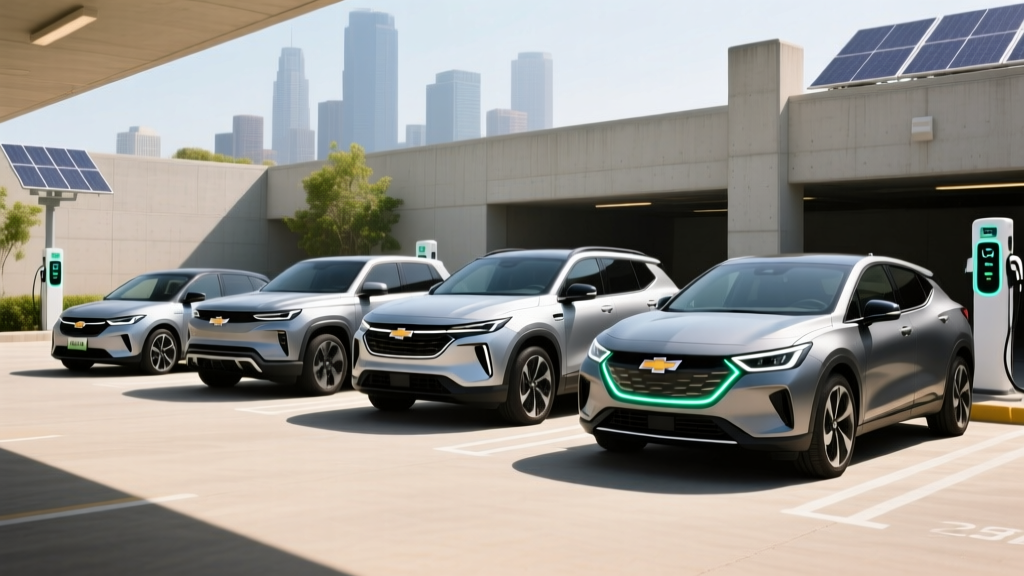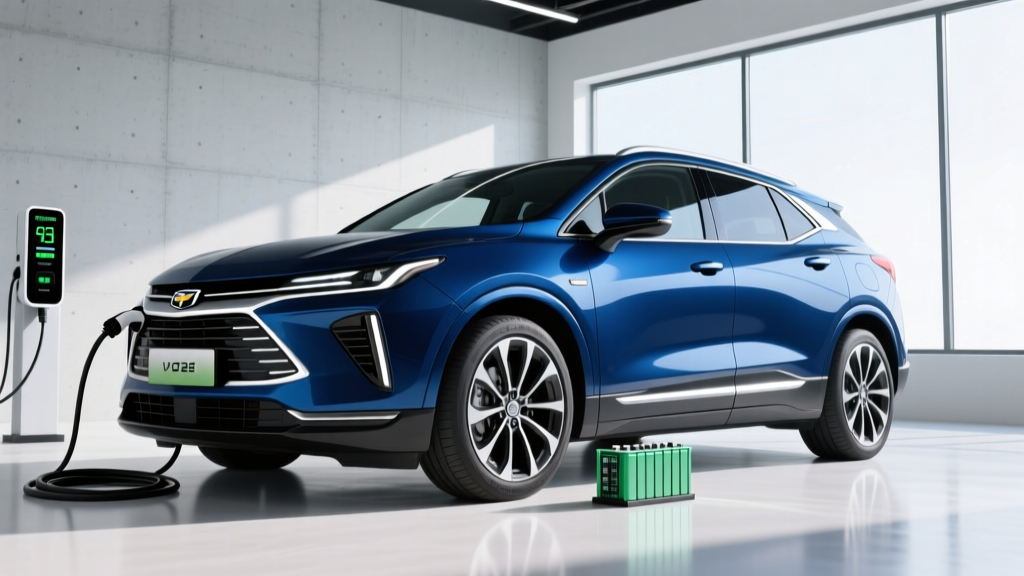
The Chevrolet Equinox EV occupies a rare spot in the electric-vehicle market: a compact crossover with genuinely usable range at a mainstream price point. For 2026, Chevy continues to refine the Ultium-based platform, and buyers searching for Equinox EV dimensions will find a cabin that punches above its class in passenger space while delivering up to 319 miles of EPA-estimated range. This review covers every measurement, charging spec, and ownership cost you need before signing on the dotted line.
Quick Verdict: Who the Equinox EV Is For
The 2026 Equinox EV is best suited for suburban commuters and small families who need a daily driver with enough range for weekend road trips but don't want to pay luxury-EV premiums. If you prioritize interior volume and straightforward infotainment over blistering acceleration, this crossover delivers. Its biggest limitation is DC fast-charging speed, which trails rivals like the Hyundai Ioniq 5 and Tesla Model Y.
| Spec | 3LT (FWD) | RS (AWD) |
|---|---|---|
| EPA Range | 319 mi | 285 mi |
| Battery (usable) | 85 kWh (NMC) | 85 kWh (NMC) |
| Horsepower | 213 hp | 288 hp |
| 0-60 mph | ~8.4 sec | ~6.5 sec |
| Peak DC Fast Charge | 150 kW | 150 kW |
| 10-80% DC Time | ~35 min | ~35 min |
| Level 2 Home Charge | 11.5 kW (~34 mi/hr) | 11.5 kW (~34 mi/hr) |
| MPGe (combined) | 115 MPGe | 101 MPGe |
| Base MSRP | $34,900 | $44,300 |
Equinox EV Dimensions: Exterior and Interior Measurements
Understanding the physical footprint matters whether you're measuring your garage, comparing parking-lot maneuverability, or checking whether the kids' hockey bags fit. Here are the official measurements for the 2026 model year.
Exterior Dimensions
| Measurement | Value |
|---|---|
| Wheelbase | 116.3 in |
| Overall Length | 189.4 in |
| Overall Width (no mirrors) | 74.3 in |
| Overall Height | 64.4 in |
| Ground Clearance | 6.7 in |
| Curb Weight (FWD 3LT) | ~4,630 lb |
| Curb Weight (AWD RS) | ~4,910 lb |
Interior and Cargo Space
The Equinox EV's Ultium platform allows a flat floor and a stretched wheelbase relative to its gas counterpart, translating directly into cabin room. Chevrolet reports the following interior volumes:
| Space | Measurement |
|---|---|
| Front Headroom | 40.0 in |
| Rear Headroom | 38.3 in |
| Front Legroom | 43.1 in |
| Rear Legroom | 38.5 in |
| Cargo (behind 2nd row) | 26.4 cu ft |
| Cargo (seats folded) | 57.2 cu ft |
Compared to the gas Equinox, the EV variant gains roughly 2 inches of rear legroom thanks to the skateboard architecture. The 26.4 cubic feet behind the second row accommodates a full set of rolling carry-on luggage plus a stroller. There is no front trunk (frunk); Chevy uses that space for power electronics.
Range and Efficiency: EPA Sticker vs. Real-World Driving
EPA Estimated Range: 319 miles (3LT FWD) / 285 miles (RS AWD)
Real-World Expectation: Expect 270-290 miles in mixed city/highway driving at moderate temperatures. Sustained 75 mph highway runs reduce range to approximately 240-260 miles. In freezing conditions (below 32°F), plan for a 20-30% reduction, yielding roughly 200-230 miles before needing a charge on the AWD RS trim.
The FWD 3LT achieves 115 MPGe combined (29 kWh/100 mi), while the AWD RS drops to 101 MPGe (33 kWh/100 mi) per fueleconomy.gov. The efficiency gap reflects the second motor's weight and friction losses, not a smaller battery.
Chevy's thermal management system includes a heat pump on all trims, which mitigates cold-weather range loss compared to resistive-heating setups. However, in our experience, the heat pump's benefit tapers below 15°F, where battery preconditioning draw and cabin demand both spike. Drivers in northern climates should budget for the lower end of the real-world range envelope.
Charging Speed: DC Fast, Level 2, and Level 1
Charging is where the Equinox EV reveals its most significant competitive gap. The 150 kW peak DC fast-charge rate is adequate but not class-leading. Here's the full breakdown:
| Charging Level | Power / Voltage | Rate (mi/hr added) | Notes |
|---|---|---|---|
| Level 1 (120V household) | ~1.4 kW | ~4 mi/hr | Emergency/trickle only; ~80 hr for full charge |
| Level 2 (240V home) | 11.5 kW (48A) | ~34 mi/hr | Full charge in ~9 hours; requires NEMA 14-50 or hardwired |
| DC Fast Charge | 150 kW peak (CCS/NACS) | ~250 mi/hr at peak | 10-80% in ~35 min; tapers significantly above 80% |
kW vs. kWh refresher: kW (kilowatts) measures charging power — how fast energy flows into the battery. kWh (kilowatt-hours) measures energy capacity — how much the battery holds. The Equinox EV's 85 kWh battery fills at up to 150 kW on a compatible DC fast charger.
The charging curve matters more than the peak number. The Equinox EV sustains roughly 130-150 kW between 10% and 40% state of charge, then tapers to around 90 kW through 60%, and drops further to 50-60 kW approaching 80%. This means the advertised 10-80% time of ~35 minutes is realistic on a 150+ kW station like an Electrify America or EVgo 350 kW unit, but expect closer to 45 minutes on a 50-100 kW charger.
For the 2026 model year, the Equinox EV ships with the NACS (Tesla-style) charge port, granting access to Tesla Supercharger V3 and V4 stations via native plug — no adapter required. This is a significant usability upgrade over the CCS-equipped 2024 models.
Performance and Drivetrain
The Equinox EV isn't positioned as a performance machine, but the AWD RS trim delivers respectable passing power. The FWD 3LT uses a single front-mounted motor producing 213 hp and 236 lb-ft of torque, adequate for highway merging but not thrilling. The dual-motor AWD RS bumps output to 288 hp and 355 lb-ft, dropping the 0-60 mph time from roughly 8.4 seconds to 6.5 seconds.
Regenerative braking offers two modes: one-pedal driving (strong regen that brings the car to a full stop) and a coasting mode that mimics a conventional automatic. Steering is light and geared toward comfort rather than feedback. Ride quality benefits from the low center of gravity inherent to the Ultium battery pack, though the 4,900-pound AWD curb weight is noticeable during quick direction changes.
Pricing, Trims, and Federal Tax Credit Eligibility
| Trim | Drivetrain | MSRP | Key Features |
|---|---|---|---|
| 3LT | FWD | $34,900 | 17.7" touchscreen, Super Cruise ready, heated seats |
| LT Launch | FWD | $36,500 | 3LT + panoramic roof, 360° camera |
| RS | AWD | $44,300 | Sport suspension, 288 hp, blacked-out trim |
| RS Launch | AWD | $45,900 | RS + premium audio, ventilated seats, HUD |
Federal §30D Tax Credit — Eligibility Requirements (2026):
- Credit Amount: Up to $7,500 ($3,750 for critical minerals + $3,750 for battery components)
- MSRP Cap: Vehicle base MSRP must not exceed $80,000 for SUVs — all Equinox EV trims qualify
- Buyer Income Cap (MAGI): $150,000 single / $225,000 head of household / $300,000 married filing jointly
- Battery Sourcing: Critical minerals and battery components must meet phased-in domestic/free-trade-partner thresholds per IRS guidelines
- Point-of-Sale Transfer: Eligible buyers can transfer the credit to the dealer at purchase, reducing the out-of-pocket price immediately
- Final Assembly: Must be assembled in North America (Equinox EV is built in Ramos Arizpe, Mexico — verify current-year eligibility as sourcing rules tighten annually)
Important caveat: The Equinox EV's Mexican assembly location has been a point of contention under §30D rules. As of the 2026 tax year, buyers should confirm eligibility with their tax professional and check the latest DOE/Fuel Economy qualified vehicle list before relying on the credit. Sourcing requirements for critical minerals tighten each year, and partial credit ($3,750) may apply if only one of the two battery-sourcing thresholds is met.
Technology, Safety, and Driver Assistance
The cabin centerpiece is a 17.7-inch diagonal infotainment touchscreen running Google Built-In, which integrates Google Maps navigation, Google Assistant, and Play Store apps natively. Wireless Apple CarPlay and Android Auto are standard. A 11-inch digital driver display sits behind the steering wheel.
Super Cruise: Chevy's hands-free highway driving system is available on properly equipped trims. Super Cruise operates on over 750,000 miles of pre-mapped divided highways in the US and Canada. It uses a driver-attention camera to monitor eye gaze — you can take your hands off the wheel but must remain alert.
SAE Automation Level: Super Cruise is a Level 2 driver-assistance system. It does not make the Equinox EV self-driving. The driver is responsible for steering decisions, monitoring traffic, and taking over at any time. Only Level 4 services like Waymo operate without a human driver engaged.
Standard safety tech includes Chevy Safety Assist: automatic emergency braking with pedestrian detection, lane-keeping assist, following-distance indicator, adaptive cruise control, and rear cross-traffic braking. The Equinox EV earned a 5-star overall rating from NHTSA and TOP SAFETY PICK status from IIHS (verify 2026 model-year results as testing updates).
Ownership Costs: Warranty, Maintenance, and 5-Year Outlook
Chevrolet provides competitive warranty coverage:
- Battery & Drive Unit: 8 years / 100,000 miles (covers defects and capacity loss below 70% state of health)
- Bumper-to-Bumper: 3 years / 36,000 miles
- Powertrain (non-EV components): 5 years / 60,000 miles
- Corrosion: 6 years / 100,000 miles
The 70% capacity retention threshold is standard for the industry but worth noting: if your 85 kWh pack degrades to 59.5 kWh within the warranty period, Chevy will repair or replace it. In practice, NMC chemistry with active thermal management typically retains 85-90% capacity after 100,000 miles based on fleet data from similar Ultium-based vehicles.
Maintenance costs are low. There's no oil, no transmission fluid, no spark plugs. Expect to replace cabin air filters (~$40 annually), wiper blades, and brake fluid every 2-3 years. Tire wear may be slightly accelerated due to the vehicle's weight and instant torque; budget for tire replacement at 30,000-40,000 miles.
| Category | Estimated Cost |
|---|---|
| Home Electricity (avg $0.16/kWh) | $3,825 |
| DC Fast Charging (road trips, ~20%) | $1,100 |
| Insurance (avg) | $9,500 |
| Maintenance & Tires | $2,200 |
| Depreciation (est. 45%) | $15,700 (3LT FWD) |
| Total (before credit) | ~$32,325 |
| Federal Credit Applied | -$7,500 (if eligible) |
| Net 5-Year Cost | ~$24,825 |
Pros and Cons
Pros
- 319-mile EPA range on the FWD 3LT is exceptional for the price
- Spacious rear seat with 38.5" legroom — more than the gas Equinox
- NACS charge port native on 2026 models — full Supercharger access
- Google Built-In infotainment is responsive and well-integrated
- Super Cruise hands-free driving available on mapped highways
- Competitive MSRP starting at $34,900 before incentives
Cons
- 150 kW peak DC charging is slow vs. Hyundai Ioniq 5 (240 kW) and Tesla Model Y (250 kW)
- No front trunk (frunk) — lost cargo utility
- Mexican assembly may affect §30D tax credit eligibility — verify annually
- AWD RS range drops to 285 miles, narrowing the advantage
- Ride quality is competent but not refined; road noise is noticeable above 70 mph
- 26.4 cu ft cargo area behind 2nd row is average for the segment
How It Compares: Equinox EV vs. Key Competitors
Choose the Equinox EV if: You want maximum range per dollar in a compact crossover, prefer Google-native infotainment, and value Super Cruise for highway commutes. The 3LT FWD at $34,900 with 319 miles is hard to beat on paper.
Choose the Hyundai Ioniq 5 if: DC fast-charging speed is a priority (240 kW peak, 10-80% in ~18 min) and you prefer a more distinctive design. Range tops out at 303 miles.
Choose the Tesla Model Y if: You want the most mature Supercharger network experience, the largest cargo area (30.2 cu ft rear), and don't mind a minimalist interior.
Choose the Ford Mustang Mach-E if: You want sportier handling and don't mind slightly lower range (290-320 mi depending on trim) at a higher price point.
Frequently Asked Questions
What is the real-world range of the Equinox EV?
The EPA rates the FWD 3LT at 319 miles and the AWD RS at 285 miles. In mixed real-world driving at moderate temperatures, expect 270-290 miles. Highway driving at 75 mph reduces this to roughly 240-260 miles, and freezing weather can drop range by 20-30%.
How fast does the Equinox EV charge at home and on the road?
On a Level 2 home charger (240V, 48A), the Equinox EV charges at 11.5 kW, adding about 34 miles of range per hour — a full charge takes roughly 9 hours. On a DC fast charger, it peaks at 150 kW, reaching 10-80% in approximately 35 minutes on a 150+ kW station.
How much does the Equinox EV cost after the federal tax credit?
If you qualify for the full $7,500 §30D credit (income within limits, vehicle meets sourcing requirements), the 3LT FWD drops from $34,900 to an effective $27,400. However, verify eligibility — the Mexican assembly location and annually tightening battery-sourcing rules mean the credit is not guaranteed for every buyer in every tax year.
Does the Equinox EV qualify for the federal EV tax credit?
It may qualify for up to $7,500, but eligibility depends on three factors: your modified adjusted gross income (MAGI), the vehicle's battery component and critical mineral sourcing compliance, and final North American assembly rules. The Equinox EV is assembled in Mexico, which has created eligibility questions under §30D. Check the IRS qualified vehicle list and consult a tax professional before purchase.
Is the Equinox EV worth buying over competitors?
If range-per-dollar and cabin space are your top priorities, the Equinox EV 3LT is one of the best values in the compact EV crossover segment. If fast DC charging is critical for your road-trip habits, the Hyundai Ioniq 5 or Tesla Model Y are stronger choices. The Equinox EV's 150 kW charging peak means longer stops on long-distance trips.
What are the Equinox EV's biggest drawbacks?
The three most common complaints are its relatively slow DC fast-charging speed (150 kW peak), the lack of a front trunk, and uncertainty around federal tax credit eligibility due to its Mexican assembly. Road noise at highway speeds and a firm ride over broken pavement are also noted by owners.
What battery chemistry does the Equinox EV use?
The Equinox EV uses an NMC (nickel manganese cobalt) lithium-ion battery on GM's Ultium platform. NMC offers higher energy density than LFP (lithium iron phosphate), which is how Chevy fits 85 kWh usable into a compact crossover footprint. The trade-off is that NMC batteries are more sensitive to sustained high state-of-charge storage — keeping daily charging at 80% is recommended for longevity.