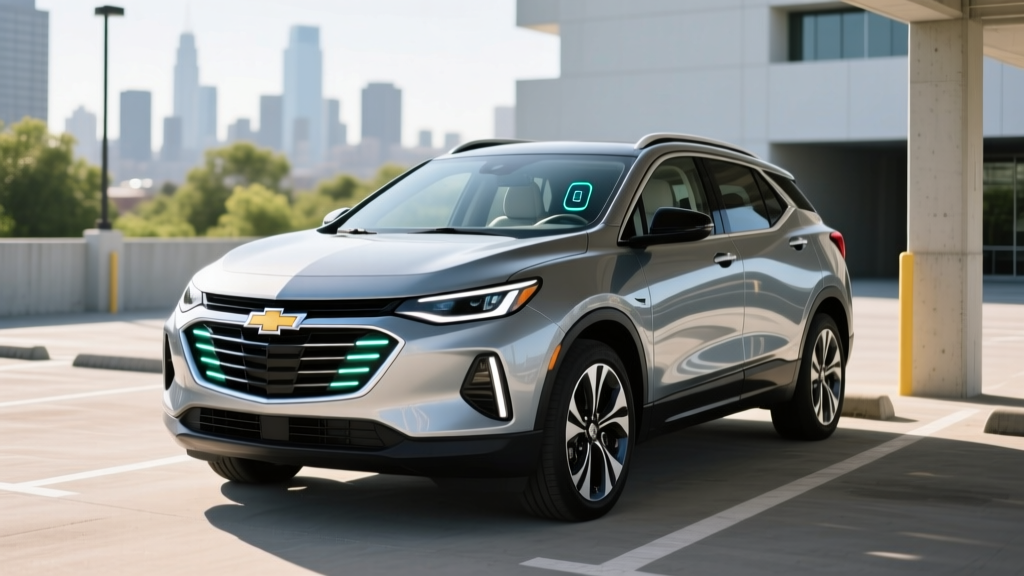
If you're shopping for an affordable long-range electric crossover, the 2026 Chevrolet Equinox EV is likely on your radar. With an EPA-estimated range of up to 319 miles and a starting MSRP that undercuts most competitors, Chevy has positioned this EV as a mainstream value play. But sticker price is only the beginning of the ownership equation.
The real question buyers need answered: What do Chevrolet Equinox EV deals actually cost you over five years? Between federal tax credits, state rebates, home charging economics, insurance premiums, and depreciation curves, the math is more nuanced than a simple "EVs save you money" headline. Let's run the numbers with real data.
2026 Equinox EV at a Glance: Specs That Matter for Your Wallet
Before we calculate ownership costs, here are the baseline figures that drive every downstream number — from efficiency to charging speed to tax credit eligibility.
| Spec | 2LT (FWD) | 3LT (FWD) | RS (AWD) |
|---|---|---|---|
| Base MSRP | $33,600 | $36,400 | $41,900 |
| EPA Range | 319 mi | 319 mi | 285 mi |
| Battery (usable) | 85 kWh (NMC) | 85 kWh (NMC) | 85 kWh (NMC) |
| Efficiency (combined) | 114 MPGe (29 kWh/100mi) | 114 MPGe | 97 MPGe (35 kWh/100mi) |
| Peak DC Fast Charge | 150 kW | 150 kW | 150 kW |
| 10–80% DC Charge Time | ~32 min | ~32 min | ~32 min |
| Level 2 (240V) Rate | 11.5 kW | 11.5 kW | 11.5 kW |
| Horsepower | 213 hp | 213 hp | 288 hp |
| 0–60 mph | ~8.2 sec | ~8.2 sec | ~6.3 sec |
| Battery/Powertrain Warranty | 8 yr / 100,000 mi | 8 yr / 100,000 mi | 8 yr / 100,000 mi |
Federal Tax Credit: Do You Qualify for the Full $7,500?
The IRS §30D Clean Vehicle Credit can knock up to $7,500 off your tax liability — or, critically, be applied as a point-of-sale rebate starting in 2024, effectively reducing your purchase price at the dealer. For the 2026 Equinox EV, this is where the best "deals" materialize. But eligibility is not automatic.
- MSRP Cap: Vehicle base price + options must not exceed $80,000 for SUVs/trucks/vans (the Equinox EV clears this easily at ~$33,600–$43,400 fully loaded).
- Buyer Income Cap: Modified AGI must not exceed $150,000 (single), $225,000 (head of household), or $300,000 (joint filing).
- Battery Sourcing: At least 80% of critical minerals and 100% of battery components must be sourced from the US or FTA-partner countries to receive the full $7,500. Partial credit ($3,750) applies if only one requirement is met.
- Final Assembly: Vehicle must undergo final assembly in North America (the Equinox EV is built in Ramos Arizpe, Mexico — verify current-year VIN eligibility at fueleconomy.gov).
- Point-of-Sale Transfer: You can elect to transfer the credit to the dealer at purchase, receiving it as an immediate price reduction rather than waiting to claim it on your tax return.
- One Credit Per Vehicle: The credit is non-refundable but can be transferred; it cannot be stacked with the used-EV (§25E) credit on the same vehicle.
Rules are subject to legislative changes. Consult a tax professional and verify your VIN at IRS.gov before purchasing.
For the 2026 Equinox EV, the FWD 2LT at $33,600 can effectively drop to roughly $26,100 after the full $7,500 point-of-sale credit — making it one of the most affordable 300+ mile EVs on the market. However, battery-sourcing compliance can shift model year to model year. Always confirm with your dealer that the specific VIN you're buying qualifies for the full credit, not the partial $3,750.
State, Local, and Utility Incentives: Stacking the Savings
Beyond the federal credit, many buyers can stack additional incentives:
- State Purchase Rebates: States like Colorado offer up to $5,000 in additional EV tax credits (income-dependent). California's CVRP program has transitioned to point-of-sale rebates for income-qualified buyers. Connecticut, Massachusetts, and New York also have active programs.
- Utility Rebates: Many electric utilities offer $250–$1,500 rebates for purchasing an EV, plus additional rebates ($300–$800) for installing a Level 2 home charger. Check with your local provider — programs like Xcel Energy's EV rebate or PG&E's Clean Fuel Rebate are common examples.
- HOV Lane Access: Several states grant single-occupant HOV lane access to EVs, which has real economic value for commuters in metro areas.
- Home Charging Equipment: The federal §30C Alternative Fuel Infrastructure Tax Credit covers up to $1,000 (30% of cost) for home charger installation through 2032, subject to census-tract eligibility requirements.
In a best-case stacking scenario — federal $7,500 + state $3,000 + utility $500 + charger rebate $400 — a buyer could see over $11,400 in total incentives, bringing the 2LT's effective price below $23,000. But this is the exception, not the rule. Most buyers will capture the federal credit plus one or two smaller local incentives.
Charging vs. Gasoline: The Per-Mile Cost Breakdown
This is where EV ownership economics shine — but the savings depend heavily on how and where you charge. Let's compare the Equinox EV (FWD, 29 kWh/100mi) against a comparable gas crossover getting 28 MPG combined (like a gas Equinox AWD).
| Scenario | Rate / Cost Basis | Cost per Mile | Annual Fuel Cost |
|---|---|---|---|
| Equinox EV — Home charging (national avg.) | $0.16/kWh | $0.046 | $696 |
| Equinox EV — Home (off-peak TOU rate) | $0.09/kWh | $0.026 | $392 |
| Equinox EV — Public DC fast charging | $0.42/kWh avg. | $0.122 | $1,827 |
| Gas crossover (28 MPG combined) | $3.40/gallon | $0.121 | $1,821 |
The takeaway: home charging is where the savings live. At the national residential average of ~$0.16/kWh, the Equinox EV costs roughly $0.046 per mile to "fuel" — about 62% less than a gas equivalent at $3.40/gallon. Over 15,000 miles annually, that's a savings of ~$1,125 per year on energy alone.
However, if you rely exclusively on public DC fast charging at $0.35–$0.50/kWh, your per-mile cost roughly equals or exceeds gasoline. The Equinox EV's economic advantage is almost entirely dependent on consistent access to home or workplace Level 2 charging at residential or commercial electricity rates.
Over five years and 75,000 miles, a home-charging Equinox EV owner saves approximately $5,600–$7,100 in fuel costs compared to the gas alternative, depending on local electricity rates and time-of-use plan optimization.
Maintenance Savings: Fewer Parts, Fewer Visits
EVs eliminate the most common recurring maintenance items found on internal combustion vehicles. The Equinox EV has no engine oil, no transmission fluid, no spark plugs, no timing belt, and no exhaust system. Regenerative braking significantly extends brake pad and rotor life.
| Maintenance Item | Gas Crossover | Equinox EV |
|---|---|---|
| Oil changes (synthetic, every 7,500 mi) | $750 (10 changes) | $0 |
| Transmission fluid service | $250 | $0 |
| Air filter replacement | $200 | $0 (no engine air filter) |
| Spark plugs | $400 | $0 |
| Brake pads/rotors | $800 | $200 (regen extends life 2–3x) |
| Cabin air filter | $150 | $150 |
| Tire rotation/replacement | $1,200 | $1,400 (EVs wear tires ~15% faster due to weight/torque) |
| Coolant/service misc. | $400 | $200 |
| Total (5-year estimate) | $4,150 | $1,950 |
Net maintenance savings over five years: approximately $2,200. This doesn't include the time savings of fewer dealer visits. The one area where EVs cost more is tires — the Equinox EV's heavier curb weight (~4,400 lbs) and instant torque delivery accelerate tire wear. Budget for a set of EV-rated touring tires around 40,000 miles.
Insurance: The Cost Category Where EVs Lose
Here's the honest number many EV cost analyses gloss over: insurance premiums for electric vehicles are typically 15–25% higher than for comparable gas vehicles. The Equinox EV is no exception.
Why EV insurance costs more:
- Higher repair costs: Battery pack damage, even minor, often triggers total replacement rather than repair. High-voltage system repairs require specialized technicians and equipment.
- Higher vehicle values: Insurers factor in the purchase price, and EVs have historically carried a premium.
- Parts availability: EV-specific collision parts (battery enclosures, power electronics) can have longer lead times, increasing rental-car costs for insurers.
- Specialized labor: Fewer body shops are certified for high-voltage EV repairs, raising labor rates.
Based on national averages, expect to pay roughly $1,800–$2,400 per year to insure a 2026 Equinox EV (varies significantly by state, driving record, age, and coverage level). A comparable gas Equinox might cost $1,500–$1,900 annually. That's an additional $300–$500 per year, or $1,500–$2,500 over five years, working against your fuel and maintenance savings.
Mitigation strategies: Shop multiple insurers — some (like Geico, Progressive, and Tesla Insurance in eligible states) have become more competitive on EV premiums. Bundling home/auto and maintaining a clean record narrow the gap. As EV market share grows and repair networks mature, this premium is expected to decrease.
Depreciation and Resale Value: The Wild Card
EV depreciation has been volatile. The used EV market experienced significant price corrections in 2023–2024 driven by Tesla's aggressive new-vehicle price cuts, which cascaded through the entire segment. Early data suggests stabilization, but EVs generally depreciate faster than established gas counterparts in the first three years.
For the Equinox EV specifically, consider these factors:
- New model risk: As a relatively new nameplate in EV form (introduced for 2024), there's limited resale track record. First-generation EVs sometimes see steeper depreciation as buyers wait for second-generation improvements.
- Tax credit effect on used prices: When new buyers receive a $7,500 point-of-sale credit on a $33,600 vehicle, their effective purchase price is $26,100. Used-market pricing adjusts downward accordingly — the "deal" on a new EV compresses used values.
- Battery health confidence: Chevy's 8-year/100,000-mile battery warranty (covering capacity below 70% of original) provides some floor for resale value. NMC chemistry in the Equinox EV shows typical degradation of 5–8% over the first 100,000 miles based on industry data from similar GM Ultium-platform vehicles.
- Used EV tax credit (§25E): Used buyers can claim up to $4,000 (30% of sale price, capped) on qualifying pre-owned EVs under $25,000. This creates a demand floor for used Equinox EVs as they age into that price bracket.
Current projections estimate the Equinox EV will retain approximately 45–55% of its MSRP after five years, compared to 50–60% for a gas Equinox. On a $33,600 2LT, that translates to a 5-year depreciation cost of roughly $15,100–$18,500 (before incentives) or $7,600–$11,000 after the federal credit is factored in.
5-Year Total Cost of Ownership: The Complete Picture
| Cost Category | Equinox EV 2LT | Gas Crossover (28 MPG) |
|---|---|---|
| Purchase price (MSRP) | $33,600 | $31,000 |
| Federal tax credit | −$7,500 | $0 |
| State/utility incentives (est.) | −$1,500 | $0 |
| Effective purchase price | $24,600 | $31,000 |
| Energy/fuel (home charging avg.) | $3,480 | $9,107 |
| Maintenance | $1,950 | $4,150 |
| Insurance (5-year total) | $10,500 | $8,500 |
| Home Level 2 charger install | $1,200 | $0 |
| Depreciation (incentive-adjusted) | $10,200 | $17,050 |
| Total 5-Year Cost | $51,930 | $69,807 |
| Cost per mile (all-in) | $0.69 | $0.93 |
Assumptions: National avg. electricity $0.16/kWh; gas $3.40/gal; 15,000 mi/year; insurance based on national averages for a 35-year-old driver with clean record; depreciation calculated from incentive-adjusted purchase price to estimated 5-year resale value. Actual costs vary significantly by region, driving habits, and charging access.
Even after accounting for higher insurance and the one-time charger installation cost, the Equinox EV with full incentives delivers a 5-year savings of approximately $14,000–$18,000 compared to a gas crossover in the same class. The majority of that advantage comes from the federal tax credit and fuel savings — two variables that are highly dependent on your eligibility and charging setup.
Frequently Asked Questions
How much does it really cost to own a Chevrolet Equinox EV over 5 years?
With the full $7,500 federal tax credit, home charging, and typical insurance, expect a 5-year total cost of ownership around $48,000–$55,000 for a 2LT FWD model driven 15,000 miles annually. Without incentives or relying solely on public fast charging, that figure climbs to $60,000–$68,000. Your specific electricity rates, insurance profile, and state incentives shift these numbers significantly.
Do I qualify for the full $7,500 federal tax credit on the Equinox EV?
You likely qualify if your modified AGI is under $150K (single) / $300K (joint), the vehicle MSRP is under $80,000 (it is), and the battery meets critical-mineral and component-sourcing thresholds for the current model year. The Equinox EV has qualified for the full $7,500 in prior model years, but sourcing requirements tighten annually. Verify your specific VIN's eligibility at fueleconomy.gov or with your dealer before signing.
How much do I actually save on fuel and maintenance?
Home-charging Equinox EV owners typically save $1,000–$1,300 per year on fuel compared to a 28 MPG gas crossover, totaling $5,000–$6,500 over five years. Maintenance savings add another ~$2,200 over the same period. Combined operational savings: roughly $7,200–$8,700 over five years, assuming consistent home charging access.
Are EVs more expensive to insure than gas cars?
Yes, typically 15–25% more for the same driver profile. For the Equinox EV, budget an extra $300–$500 per year ($1,500–$2,500 over five years) compared to a gas equivalent. This is driven by higher repair costs for battery/high-voltage components and specialized labor requirements. Shopping multiple insurers and bundling policies can narrow the gap.
How well does the Equinox EV hold its resale value?
Early projections suggest 45–55% value retention after five years, slightly below the gas Equinox's 50–60%. However, when you factor in the $7,500 federal credit that reduced your effective purchase price, the dollar-amount depreciation is competitive. The 8-year/100,000-mile battery warranty and the used-EV tax credit (§25E) for future buyers provide some resale value support.
Is the Equinox EV worth it if I can't charge at home?
The economics weaken considerably. Public DC fast charging at $0.35–$0.50/kWh brings your per-mile energy cost to roughly $0.12–$0.17, comparable to or exceeding gasoline. You still save on maintenance, but lose the primary financial advantage. If you have reliable workplace Level 2 charging, the math improves. Without home or workplace charging, a PHEV or efficient hybrid may be the more practical and economical choice.