Quick Verdict: The Affordable Long-Range Crossover
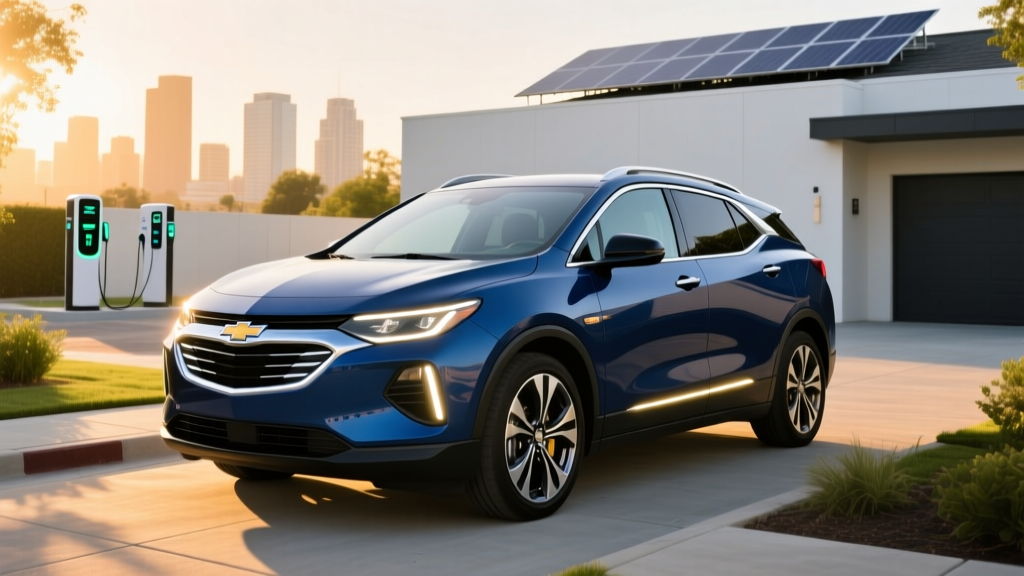
The 2026 Chevrolet Equinox EV occupies a rare spot in the electric-vehicle market: a mainstream compact crossover with over 300 miles of EPA-estimated range starting under $34,000 before incentives. Built on GM's Ultium platform, it delivers practicality that undercuts rivals like the Hyundai Ioniq 5 and Volkswagen ID.4 on price while matching or exceeding them on range. For buyers who prioritize daily commuting distance, cabin space, and access to the Tesla Supercharger network via NACS, the Equinox EV makes a compelling case — provided you accept its middling DC fast-charging speed and a driver-assist system that trails Ford and Hyundai in refinement.
| Spec | 2LT (FWD) | 3RS Launch Edition (AWD) |
|---|---|---|
| EPA Range | 319 mi | 285 mi |
| Battery (Usable) | ~85 kWh, NMC (Ultium) | ~85 kWh, NMC (Ultium) |
| Horsepower | 213 hp | 288 hp |
| 0–60 mph | ~8.4 sec | ~5.9 sec |
| Drivetrain | FWD (single motor) | AWD (dual motor) |
| Max DC Fast Charge | 150 kW | 150 kW |
| 10–80% DC Time | ~41 min | ~41 min |
| Level 2 Home Charging | 11.5 kW (~34 mi/hr) | 11.5 kW (~34 mi/hr) |
| MPGe (Combined) | 111 MPGe | 97 MPGe |
| Efficiency | 30 kWh/100 mi | 35 kWh/100 mi |
| Base MSRP | $33,600 | $43,900 |
| Battery Warranty | 8 yr / 100,000 mi | 8 yr / 100,000 mi |
Range and Efficiency: 319 Miles on Paper, Less on the Interstate
The headline number is 319 miles of EPA-estimated range for the front-wheel-drive 2LT trim — one of the highest figures in the compact electric-crossover segment. The sportier 3RS with dual-motor AWD drops to 285 miles, a meaningful 34-mile penalty for the extra traction and 75 additional horsepower.
- City / mixed driving (mild weather): 300–320 mi (FWD) — close to EPA sticker thanks to regen braking in stop-and-go traffic.
- Highway cruising at 70–75 mph: 250–275 mi (FWD), 225–250 mi (AWD) — aerodynamic drag cuts efficiency ~15–20%.
- Cold weather (below 32°F): Expect 20–30% range reduction, dropping the FWD to roughly 220–255 mi depending on cabin-heat usage. The Equinox EV uses a resistive heater on lower trims; a heat pump is not standard across the lineup, which matters in northern climates.
Efficiency lands at 30 kWh per 100 miles for the FWD model (111 MPGe combined) and 35 kWh/100 mi for AWD (97 MPGe). Those figures are competitive with the Ioniq 5 (32 kWh/100 mi for the Long Range RWD) but trail the segment-leading Tesla Model Y Long Range at 28 kWh/100 mi. In practical terms, the FWD Equinox EV costs roughly $0.045 per mile to fuel at the national residential average of $0.16/kWh — about a third of what a 28-MPG gas crossover spends at $3.50/gallon.
Battery and Charging: 150 kW Peak With a Long Tail
The Equinox EV uses GM's Ultium battery platform with an NMC (nickel-manganese-cobalt) chemistry pack holding approximately 85 kWh of usable energy. Unlike the Chevy Bolt EV's older architecture, Ultium supports a native NACS (North American Charging Standard) port, giving the Equinox EV direct access to Tesla Superchargers without an adapter — a significant infrastructure advantage as of 2026.
| Charging Level | Power / Voltage | Rate (mi/hr added) | Typical Use Case |
|---|---|---|---|
| Level 1 (120V) | ~1.4 kW | ~4 mi/hr | Overnight trickle, emergencies |
| Level 2 (240V, 48A) | 11.5 kW | ~34 mi/hr | Home wall charger, full charge in ~9 hr |
| DC Fast Charge | 150 kW peak | Up to ~170 mi/hr (at peak) | Road-trip stops; 10–80% in ~41 min |
The 150 kW peak DC fast-charging rate is where the Equinox EV shows its budget-oriented engineering. Competitors like the Ioniq 5 (peak 240 kW on 800V architecture) and the Kia EV6 (peak 235 kW) can complete a 10–80% session in roughly 18 minutes, while the Equinox EV needs approximately 41 minutes. The charge curve tapers noticeably above 60% state of charge (SoC), meaning the back half of a charging session stretches further. On a road trip, plan for 45-minute stops rather than quick 20-minute top-ups.
At home on a Level 2 charger (240V, 48-amp circuit), the 11.5 kW onboard charger replenishes the battery at roughly 34 miles of range per hour — a full 0–100% charge takes about 9 hours, easily accomplished overnight. Installation of a 48-amp hardwired Level 2 unit typically runs $800–$2,000 depending on your electrical panel capacity, with a 240V/50-amp circuit required. A licensed electrician should evaluate whether your panel supports the additional load or needs an upgrade (a 200-amp panel upgrade can add $1,500–$3,000).
Performance and Driving Dynamics
The base FWD powertrain produces 213 horsepower from a single front-mounted motor, delivering a 0–60 mph time of roughly 8.4 seconds. It's adequate for merging and passing but won't thrill anyone stepping out of a turbocharged gas crossover. The dual-motor AWD variant bumps output to 288 hp and drops the sprint to about 5.9 seconds — genuinely quick for the segment and a worthwhile upgrade if you face snow or steep grades regularly.
Ride quality is tuned for comfort over sportiness. The suspension absorbs potholes and expansion joints well, though body roll is noticeable in corners. Regenerative braking offers two modes: a coasting mode that mimics a gas car and a one-pedal driving mode that brings the vehicle to a full stop with aggressive regen. Steering is light and numb — fine for parking lots, less confidence-inspiring on winding roads. Towing capacity is rated at 1,500 pounds with the available trailering package, enough for a small utility trailer but not a camper.
Interior, Tech, and Cargo Space
The cabin centers around a 17.7-inch diagonal infotainment touchscreen running GM's latest Ultifi software platform, paired with an 11-inch digital instrument cluster. The portrait-oriented display is visually impressive but relies heavily on touch controls — physical buttons are limited to a few climate shortcuts and steering-wheel stalks. Wireless Apple CarPlay and Android Auto are standard. A Wi-Fi hotspot, over-the-air update capability, and the myChevrolet mobile app for remote preconditioning and charge monitoring round out the tech suite.
On the driver-assist front, Chevy Safety Assist comes standard and includes automatic emergency braking, forward collision alert, lane keep assist, following distance indicator, and a following-distance gap display. GM's Super Cruise hands-free driving system is available on higher trims (3RS and above) and works on over 750,000 miles of compatible highways in North America. Importantly, Super Cruise on the Equinox EV is an SAE Level 2 system — it requires the driver to remain attentive, with an infrared camera monitoring eye gaze. It does not drive itself in cities, construction zones, or unmapped roads.
| Measurement | Value |
|---|---|
| Cargo Volume (behind 2nd row) | 26.4 cu ft |
| Cargo Volume (rear seats folded) | 57.2 cu ft |
| Front Legroom | 43.1 in |
| Rear Legroom | 37.5 in |
| Front Headroom | 40.0 in |
| Rear Headroom | 38.5 in |
Notably, the Equinox EV does not have a front trunk (frunk). The cargo area behind the rear seats (26.4 cu ft) is competitive with the gas Equinox but trails the Hyundai Ioniq 5 (27.2 cu ft) and the Tesla Model Y (30.2 cu ft behind the second row). With rear seats folded, 57.2 cu ft is adequate for a weekend trip with gear but noticeably less than the Model Y's 72 cu ft.
Pricing, Trims, and Federal Tax Credit Eligibility
The 2026 Equinox EV lineup starts at $33,600 for the 2LT FWD (including destination), making it one of the most affordable 300+ mile EVs on the market. Here's the trim breakdown:
| Trim | Drivetrain | MSRP | Est. Price After §30D Credit* |
|---|---|---|---|
| 2LT | FWD | $33,600 | ~$26,100 |
| 3LT | FWD | $35,800 | ~$28,300 |
| 2RS | FWD | $37,300 | ~$29,800 |
| 3RS Launch Edition | AWD | $43,900 | ~$36,400 |
*Assumes full $7,500 federal tax credit under IRS §30D. Point-of-sale transfer is available at participating dealers, reducing the purchase price at checkout. Eligibility depends on buyer income, battery-component sourcing, and MSRP caps. Verify with a tax professional.
- MSRP cap: SUVs/crossovers must be ≤ $80,000 (all Equinox EV trims qualify).
- Buyer income cap: Modified AGI ≤ $150,000 (single), ≤ $225,000 (head of household), ≤ $300,000 (joint).
- Battery sourcing: Must meet critical-mineral and battery-component requirements that phase in annually. GM has worked to localize Ultium battery production at U.S. plants (Lansing, MI; Spring Hill, TN), and the Equinox EV has qualified for the full $7,500 credit for eligible buyers as of early 2026. Confirm current sourcing compliance at fueleconomy.gov before purchasing.
- Point-of-sale transfer: You can transfer the credit to the dealer at purchase, reducing your out-of-pocket cost immediately rather than waiting to claim it on your tax return.
Ownership Costs, Warranty, and Longevity
Chevrolet backs the Equinox EV's Ultium battery and electric drive components with an 8-year / 100,000-mile warranty, covering defects and capacity loss below a specified threshold (typically 60–70% of original capacity, per GM's published terms). The limited vehicle warranty covers 3 years / 36,000 miles, and the powertrain warranty extends to 5 years / 60,000 miles for non-battery components.
Real-world Ultium battery degradation data is still emerging given the platform's relative youth, but GM's engineering target is less than 10% degradation over 150,000 miles. NMC chemistry historically shows 10–15% capacity loss over 200,000 miles in temperate climates, based on data from earlier GM EVs and industry-wide studies. To maximize longevity, avoid routinely charging to 100% or letting the battery sit at very low SoC for extended periods — daily charging to 80% is the sweet spot.
Insurance premiums for the Equinox EV average 10–20% higher than the gas Equinox, reflecting higher repair costs for EV-specific components. However, maintenance savings are significant: no oil changes, no transmission fluid, no spark plugs, and reduced brake wear from regenerative braking. Over five years and 75,000 miles, total cost of ownership (purchase price after credit + electricity + insurance + maintenance – depreciation) is competitive with or lower than a comparably equipped gas Equinox, depending on local electricity rates and driving patterns.
How It Stacks Up Against the Competition
| Spec | Chevy Equinox EV 2LT FWD | Hyundai Ioniq 5 SE Std Range | VW ID.4 Pro | Tesla Model Y LR |
|---|---|---|---|---|
| EPA Range | 319 mi | 290 mi | 291 mi | 330 mi |
| Starting MSRP | $33,600 | $42,900 | $40,790 | $44,990 |
| Max DC Charge | 150 kW | 240 kW | 175 kW | 250 kW |
| 10–80% DC Time | ~41 min | ~18 min | ~28 min | ~25 min |
| Cargo (behind 2nd row) | 26.4 cu ft | 27.2 cu ft | 30.3 cu ft | 30.2 cu ft |
| §30D Credit Eligible | Yes (full $7,500) | Partial/No (varies) | No (assembled in Germany) | Yes (full $7,500) |
The Equinox EV's primary advantage is price after tax credit. At roughly $26,100 after the federal incentive, the 2LT FWD undercuts every competitor here by $10,000 or more. The trade-offs are clear: slower DC fast charging (41 vs. 18 minutes for the Ioniq 5), less cargo space, and no frunk. If you take frequent road trips and value quick charging stops, the Ioniq 5's 800V architecture is meaningfully better. If you need maximum cargo room, the Model Y or ID.4 win. But if your priority is an affordable daily commuter with 300+ miles of range, home charging convenience, and NACS access to Superchargers, the Equinox EV is the segment value leader.
- You want the lowest price-per-mile-of-range in the segment
- You charge primarily at home and road-trip infrequently (≤4 per year)
- You want native NACS / Supercharger access without an adapter
- You qualify for the full $7,500 §30D credit
- You road-trip frequently and need sub-20-minute DC charging (choose Ioniq 5 / EV6)
- You need maximum cargo space (choose Model Y or ID.4)
- You regularly drive in extreme cold and want a standard heat pump (check trim availability)
- You want the latest hands-free driving tech at a lower subscription cost (Ford BlueCruise on the Mustang Mach-E is competitive)
- 319-mile EPA range at a $33,600 starting price — best value-per-range-mile in segment
- Native NACS port for Tesla Supercharger access
- Spacious rear seat with 37.5 inches of legroom
- Large 17.7-inch infotainment screen with wireless CarPlay/Android Auto
- Full $7,500 §30D federal tax credit eligibility (for qualifying buyers)
- Super Cruise availability on higher trims for hands-free highway driving
- 150 kW peak DC charging is slow vs. 800V competitors (41 min 10–80%)
- No front trunk (frunk) — a missed opportunity for an EV-dedicated platform
- Cargo volume (26.4 cu ft) trails key rivals by 1–4 cu ft
- Heat pump not standard on all trims — cold-weather range suffers
- FWD base model's 213 hp feels lethargic for highway merging
- Interior materials feel budget-grade at the 2LT level
Frequently Asked Questions
What is the real-world range of the 2026 Chevrolet Equinox EV?
The EPA rates the FWD 2LT at 319 miles and the AWD 3RS at 285 miles. In real-world mixed driving at moderate temperatures, expect 290–310 miles from the FWD model. Sustained highway driving at 70+ mph drops that to roughly 250–275 miles. In cold weather (below freezing), plan for 220–255 miles from the FWD variant due to battery-resistance losses and cabin heating demands.
How fast does the Equinox EV charge at home and on the road?
At home on a 240V Level 2 charger (48 amps), the Equinox EV charges at 11.5 kW, adding roughly 34 miles of range per hour — a full charge takes about 9 hours. On a DC fast charger, it peaks at 150 kW and completes a 10–80% session in approximately 41 minutes. That's slower than 800V rivals like the Ioniq 5 (18 minutes) but sufficient for planned road-trip stops.
Does the 2026 Equinox EV qualify for the federal EV tax credit?
Yes — as of early 2026, the Equinox EV qualifies for the full $7,500 federal tax credit under IRS §30D for eligible buyers. Eligibility requires meeting income caps (≤ $150K single / ≤ $300K joint), and the vehicle must comply with battery-component and critical-mineral sourcing rules. GM manufactures Ultium batteries domestically, which has supported credit eligibility. Always verify current status at fueleconomy.gov and consult a tax professional before purchasing.
How much does the Equinox EV cost after tax credits?
The base 2LT FWD starts at $33,600 MSRP. With the full $7,500 §30D credit applied (via point-of-sale transfer at a participating dealer), the effective price drops to approximately $26,100 before state incentives, dealer fees, or optional equipment. The range-topping 3RS AWD at $43,900 falls to roughly $36,400 after the credit.
Is the Equinox EV worth buying over the Tesla Model Y or Hyundai Ioniq 5?
It depends on your priorities. The Equinox EV wins on entry price after tax credit (~$26K vs. ~$37K+ for the Model Y and Ioniq 5 after their respective credits). The Ioniq 5 wins on DC fast-charging speed (18 vs. 41 minutes 10–80%). The Model Y wins on cargo space, Supercharger network maturity, and software ecosystem. If budget is your top constraint and you charge at home, the Equinox EV is the strongest value. If you road-trip frequently, the Ioniq 5's charging speed is a meaningful daily quality-of-life improvement.
What connector does the Equinox EV use?
The 2026 Equinox EV comes with a native NACS (North American Charging Standard / Tesla-style) port, meaning it can plug directly into Tesla Superchargers and any other NACS-equipped public charger without an adapter. For legacy CCS stations, a NACS-to-CCS adapter may be required — check with your dealer for included adapter availability.
Does the Equinox EV have a heat pump?
A heat pump is not standard across all trims. Lower trims (2LT) use a resistive heating system, which draws more battery energy in cold weather and contributes to the 20–30% range loss typical in freezing temperatures. Higher trims may offer a heat pump as part of an option package — confirm with your dealer at the time of purchase, as this significantly impacts winter efficiency.