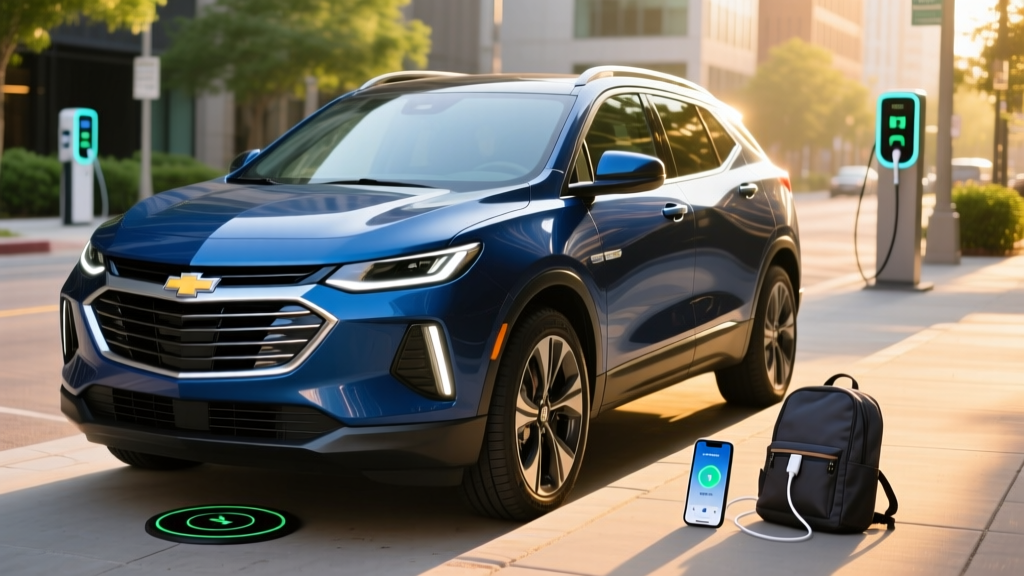
Bottom line: The 2025 Chevrolet Equinox EV is the most affordable long-range electric SUV on the market. With up to 319 miles of EPA-estimated range on the RS trim and a starting MSRP of $33,600 (before incentives), it undercuts competitors like the Hyundai Ioniq 5 and Ford Mustang Mach-E on price while matching or exceeding their range. Real-world highway driving yields approximately 260–280 miles in mild weather, dropping to 200–230 miles in sub-freezing temperatures. DC fast charging peaks at 150 kW, reaching 10–80% in roughly 30 minutes. Federal §30D tax credit eligibility varies by buyer income, battery sourcing, and point-of-sale transfer rules — check IRS guidelines before assuming you qualify for the full $7,500.
Range & Efficiency: EPA Sticker vs. Real-World Miles
The Equinox EV uses GM's Ultium platform with an 85 kWh usable battery pack (NMC chemistry). Chevrolet offers two range tiers depending on drivetrain:
- FWD (LT and RS trims): 319 miles EPA (RS), 315 miles (LT 2LT)
- AWD (RS and Launch Edition): 285 miles EPA
Efficiency ratings land at 97 MPGe combined for FWD and 91 MPGe for AWD, translating to roughly 34 kWh/100mi and 37 kWh/100mi respectively, per fueleconomy.gov.
Real-world range reality check: EPA estimates assume mixed driving at moderate temperatures. In our experience and consistent with third-party testing:
- Highway (70 mph, 75°F): Expect 260–280 miles (FWD), 235–255 miles (AWD)
- Cold weather (30°F, mixed): Expect 200–230 miles (FWD), 180–210 miles (AWD) — a 25–35% reduction
- City/regen-heavy (65°F): You may exceed EPA, hitting 320–340 miles
The Equinox EV lacks a heat pump on base trims (standard on 2LT and RS), which contributes to steeper cold-weather range loss compared to competitors like the Ioniq 5.
Charging Speed & Infrastructure
Charging is where the Equinox EV shows its budget positioning. The DC fast-charge peak is 150 kW — adequate but not class-leading.
| Level | Power | Speed (miles/hour) | Notes |
|---|---|---|---|
| Level 1 (120V) | 1.4 kW | ~4 mi/hr | Emergency/top-up only |
| Level 2 (240V, 48A) | 11.5 kW | ~34 mi/hr | Full charge in ~8.5 hours |
| DC Fast Charge | 150 kW peak | ~70 mi/10 min (peak) | 10–80% in ~30 min; tapers sharply above 80% |
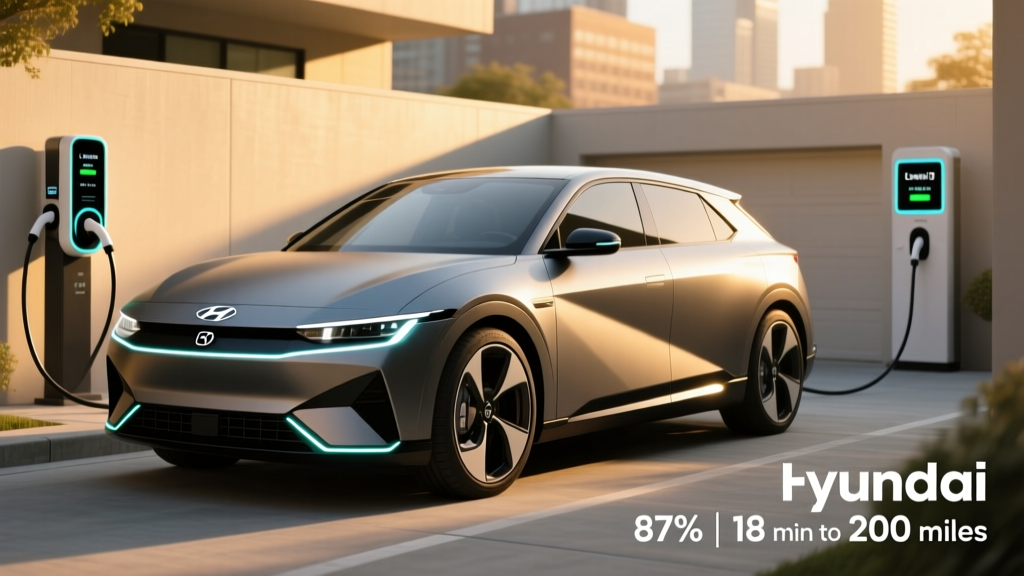
Charging curve reality: The 150 kW peak only sustains between roughly 10–40% State of Charge (SoC). From 40–80%, speeds taper to 80–100 kW. If you're road-tripping and charging from 20–80%, plan for 30–35 minutes at a capable station. This is slower than the Ioniq 5's 240 kW peak (10–80% in ~18 min) but comparable to the Volkswagen ID.4.
The Equinox EV ships with the CCS1 connector. GM has committed to NACS (Tesla-style) for future models, but 2025 Equinox EVs use CCS and require an adapter for Tesla Supercharger access.
Performance & Driving Dynamics
| Spec | FWD (LT/RS) | AWD (RS) |
|---|---|---|
| Horsepower | 213 hp | 288 hp |
| 0–60 mph | ~8.0 sec | ~6.4 sec |
| Battery (usable) | 85 kWh NMC | 85 kWh NMC |
| EPA Range | 315–319 mi | 285 mi |
| Towing Capacity | Not rated | Not rated |
The Equinox EV prioritizes comfort over sportiness. Ride quality is compliant, cabin noise is well-suppressed, and one-pedal driving with regen is smooth. The AWD model's 288 hp provides confident highway merging, but this isn't a performance SUV — the Mach-E GT and Ioniq 5 N occupy that space.
Pricing, Trims & Tax Credit Eligibility
Here's where the Equinox EV makes its strongest case:
| Trim | Drivetrain | MSRP | EPA Range |
|---|---|---|---|
| LT 2LT | FWD | $33,600 | 315 mi |
| RS | FWD | $41,900 | 319 mi |
| RS | AWD | $44,600 | 285 mi |
All trims qualify for the full MSRP cap under §30D (SUVs capped at $80,000). However, the $7,500 federal tax credit is not guaranteed for every buyer. Current IRS rules require:
- Income caps: AGI ≤ $150,000 (single), $225,000 (head of household), $300,000 (joint)
- Battery sourcing: Critical minerals and battery components must meet phased percentage thresholds from US/free-trade partners — this changes annually and varies by build date
- Point-of-sale transfer: You can apply the credit at purchase (dealer handles paperwork) or claim it on your tax return
- Final assembly: Must occur in North America (Equinox EV is built in Ramos Arizpe, Mexico — verify current eligibility on irs.gov)
Critical caveat: Because the Equinox EV is assembled in Mexico, some build dates may not qualify for the full $7,500 credit depending on the battery-sourcing and critical-mineral requirements in effect at time of purchase. Always verify the specific VIN on the IRS portal before committing.
Equinox EV vs. Gas Equinox: The Cost Breakdown
Let's compare a 2025 Equinox EV RS (FWD) against a comparably equipped 2025 Equinox gas model (2LT AWD, 1.5L turbo) over 5 years and 75,000 miles:
| Cost Factor | Equinox EV RS (FWD) | Gas Equinox 2LT (AWD) |
|---|---|---|
| MSRP | $41,900 | $35,400 |
| Federal tax credit (est.) | –$3,750 to –$7,500* | $0 |
| Fuel/energy (75k mi) | $2,700 (home L2) / $5,100 (public DC) | $8,400 (25 MPG, $2.80/gal) |
| Maintenance (5 yr) | ~$600 (tires, cabin filter, wipers) | ~$2,800 (oil, brakes, filters, trans fluid) |
| Insurance (5 yr avg) | ~$8,500 | ~$7,200 |
| Estimated depreciation | ~$18,000 | ~$15,500 |
| 5-Year Total Cost | $46,950 – $50,700 | $53,900 |
*Tax credit amount depends on VIN sourcing compliance and buyer income. EV fuel cost assumes $0.13/kWh at home, $0.35/kWh public DC. Gas assumes national average pricing.
The Equinox EV breaks even or saves money over 5 years if you can charge at home. Public-only charging erodes the advantage significantly due to higher per-kWh rates at DC fast stations.
Ownership Realities: What First-Time EV Buyers Should Know
| Myth | Fact |
|---|---|
| "I'll need to replace the battery for $20,000" | GM covers the Ultium battery for 8 years/100,000 miles (capacity retention ≥70%). NMC degradation averages 10–15% over 100k miles based on current Ultium data. |
| "Charging takes forever" | Home Level 2 adds ~34 miles per hour — plug in overnight and wake up full. DC fast charging adds ~70 miles in 10 minutes at peak rate. |
| "I can't drive in winter" | You can, but expect 25–35% range loss. Preconditioning the battery (via the app while plugged in) reduces this penalty and preserves fast-charge speed. |
| "EVs are worse for the environment" | Even on coal-heavy grids, lifecycle emissions are lower than gas equivalents per EPA analysis. On clean grids, the advantage is substantial. |
| "I need a $2,000 home charger" | A quality Level 2 charger (ChargePoint, Emporia) costs $300–$600. Installation runs $500–$2,000 depending on panel capacity and run length. Some utilities offer rebates. |
Home charging access is the single biggest ownership variable. If you have a garage or driveway with a 240V outlet (or can install one), the Equinox EV is a low-friction daily driver. If you rely entirely on public charging, the 150 kW peak speed and CCS connector mean longer stops and potentially less convenient station access than Tesla NACS vehicles.
Decision Framework: Is the Equinox EV Right for You?
Choose the Equinox EV if:
- You want the lowest-cost entry into a 300+ mile EV
- You can install Level 2 home charging
- Your daily commute is under 80 miles round-trip
- You prioritize range over fast-charging speed
- You don't need towing capability
Consider an alternative if:
- You road-trip frequently and want 200+ kW DC charging (look at Ioniq 5, EV6, or Tesla Model Y)
- You live in extreme cold without a garage (the missing heat pump on base trims hurts)
- You need NACS Supercharger access without an adapter
- You want AWD with maximum range (AWD drops to 285 mi; consider the Ioniq 5 AWD at 290 mi with faster charging)
Frequently Asked Questions
Does the 2025 Equinox EV qualify for the $7,500 tax credit?
It depends on your income, the battery sourcing of your specific VIN, and current IRS rules. The Equinox EV is assembled in Mexico, which has complicated credit eligibility under §30D critical-mineral and component requirements. Always check the official IRS clean vehicle credit page and verify your VIN before purchase.
How long does it take to charge the Equinox EV at home?
On a Level 2 (240V, 48A) home charger delivering 11.5 kW, a full 0–100% charge takes approximately 8.5 hours. Most owners plug in overnight and never visit a gas station or public charger for daily driving.
What's the real highway range at 75 mph?
Expect 260–280 miles for FWD trims and 235–255 miles for AWD in mild weather (65–80°F). At sustained 75+ mph speeds, aerodynamic drag reduces efficiency more than in city driving where regen braking recovers energy.
Does the Equinox EV have a heat pump?
The heat pump is standard on 2LT and RS trims but not on the base LT. This matters for cold-weather efficiency — a heat pump uses roughly half the energy of resistive cabin heating, preserving more range in winter.
Can I tow with the Equinox EV?
Chevrolet has not published a towing rating for the 2025 Equinox EV. If towing is a priority, consider the Ford Mustang Mach-E (rated up to 1,500 lbs with the handling package) or wait for GM to release official ratings.
How does insurance compare to the gas Equinox?
EV insurance premiums run 10–20% higher on average due to higher repair costs and battery replacement risk. Budget roughly $200–$300 more per year compared to the gas Equinox, though rates vary significantly by carrier and driver profile.