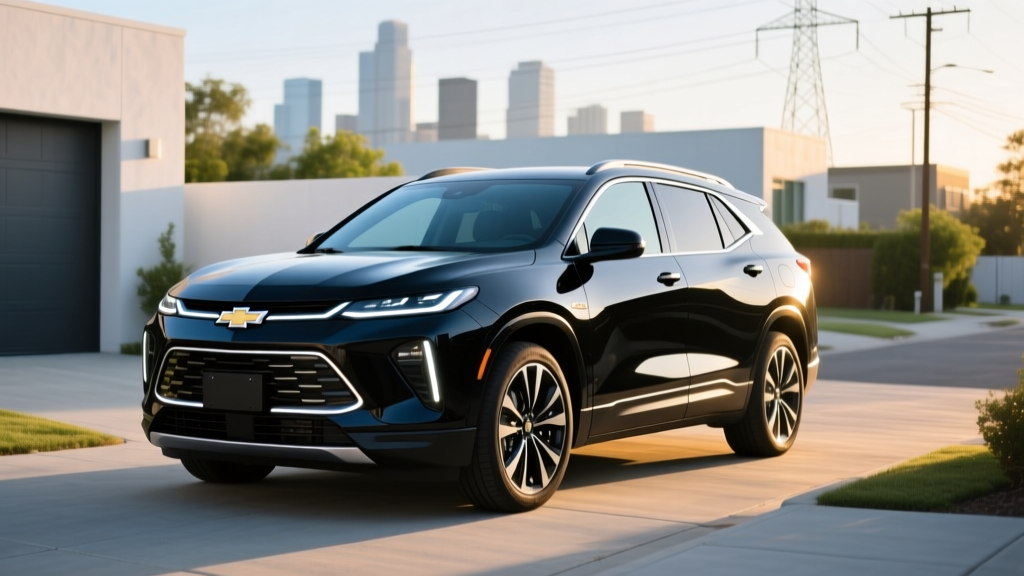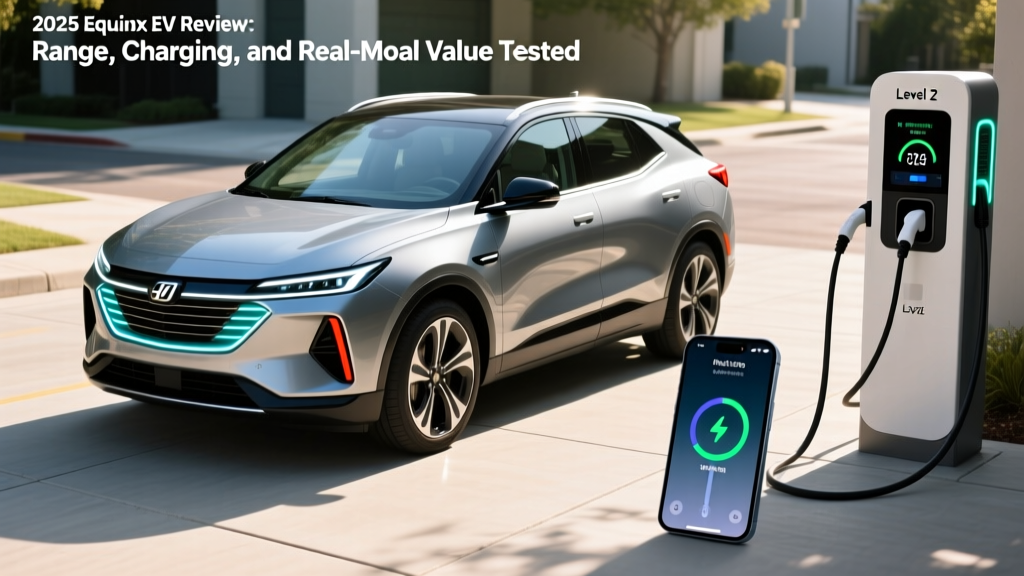
The 2025 Chevrolet Equinox EV lands in a segment starved for affordable long-range electric crossovers. With an EPA-estimated range of up to 319 miles and a starting MSRP near $33,000, Chevy is aiming squarely at buyers who want Tesla Model Y range without the Tesla price tag. After spending time with the specs, charging data, and ownership math, here's what the Equinox EV actually delivers — and where it falls short.
Quick Verdict: Who Should Buy the Equinox EV
Buy it if: You want a sub-$35,000 electric crossover with 300+ miles of EPA range, Level 2 home charging that's fast enough for daily use, and a straightforward infotainment system. Ideal for commuters and small families who don't need class-leading cargo space.
Pass if: You regularly tow heavy loads, need maximum cargo volume, or want the quickest DC fast-charging speeds in the segment. Road trippers who depend on ultra-fast 10-80% charges may find the ~20-minute charge time merely adequate, not exceptional.
Range and Efficiency: EPA Sticker vs. Real-World Driving
The Equinox EV is offered with two battery configurations depending on trim and drivetrain. The headline number belongs to the LT 2 and RS trims with front-wheel drive, which carry an 85 kWh usable lithium-ion battery (NMC chemistry) and achieve an EPA-estimated 319 miles of range. The all-wheel-drive variants drop to approximately 285 miles EPA, while the base 2LT with the smaller battery option starts around 247 miles EPA.
Real-World Range Expectations:
- City/suburban driving (mild weather): Expect 300-315 miles — regenerative braking and lower speeds let you approach the EPA sticker.
- Highway driving (70-80 mph): Plan for 250-275 miles. Aerodynamic drag at speed cuts range by roughly 15-20%.
- Cold weather (below 32°F): Budget 220-255 miles. The Equinox EV uses a heat pump for cabin heating, which mitigates winter range loss compared to resistive heaters, but NMC batteries still lose 15-25% capacity in deep cold.
For context, the EPA combined efficiency rating lands at approximately 97 MPGe (35 kWh/100 mi) for the FWD long-range configuration, per fueleconomy.gov.
| Trim / Drivetrain | Battery (usable kWh) | EPA Range (mi) | MPGe (combined) | kWh/100 mi |
|---|---|---|---|---|
| 2LT FWD (base battery) | ~72 kWh | 247 | ~100 | ~34 |
| LT 2 FWD (larger battery) | 85 kWh | 319 | 97 | 35 |
| RS FWD | 85 kWh | 315 | 96 | 35 |
| RS AWD (dual motor) | 85 kWh | 285 | 90 | 37 |
| Launch Edition AWD | 85 kWh | 280 | 89 | 38 |
Charging Speed: DC Fast Charge and Home Level 2
Charging is where the Equinox EV is competent but not class-leading. On a DC fast charger, the Equinox EV accepts a peak rate of 150 kW. In practice, that translates to a 10-80% charge in approximately 20 minutes under optimal conditions (battery preconditioned, ambient temps above 60°F, connected to a 150+ kW station).
The charge curve matters here: Chevy's Ultium platform sustains near-peak rates up to roughly 40-50% state of charge, then begins tapering. By 70% SoC, you're typically seeing 80-100 kW, and above 85% the rate drops sharply to protect the NMC cells. For road trips, plan your stops around the 10-80% window — pushing past 80% adds significant time for diminishing range gains.
At home on a Level 2 charger (240V), the Equinox EV's onboard charger accepts up to 11.5 kW, adding approximately 34 miles of range per hour. A full 0-100% charge on Level 2 takes roughly 9.5 hours for the 85 kWh battery — easily achievable overnight. Note that a Level 2 home charger requires a 48-amp dedicated circuit; installation costs typically range from $500-$2,000 depending on panel proximity and local permitting, so budget accordingly.
| Charge Level | Power (kW) | Miles Added per Hour | Time (10-80%) | Typical Use Case |
|---|---|---|---|---|
| Level 1 (120V) | 1.4 kW | ~4 mi/hr | N/A (full charge: ~60 hrs) | Emergency / trickle top-off |
| Level 2 (240V, 48A) | 11.5 kW | ~34 mi/hr | ~5 hrs (10-80%) | Daily home charging |
| DC Fast Charge | 150 kW (peak) | ~200+ mi/hr (at peak) | ~20 minutes | Road trips / public stations |
The Equinox EV uses the CCS1 connector for DC fast charging and J1772 for Level 2 AC. GM has announced that future models will transition to the NACS (Tesla-style) connector, but the 2025 Equinox EV ships with CCS. Adapters for Tesla Superchargers are available from GM and third parties, though they add a step and a slight efficiency penalty at the connection point.
Performance: 0-60, Horsepower, and Drivetrain
The Equinox EV is tuned for efficiency and daily comfort, not track performance. Here's the powertrain breakdown:
- FWD models: Single front-mounted electric motor producing 213 horsepower and 236 lb-ft of torque. The 0-60 mph time is approximately 8.0 seconds.
- AWD (dual-motor) models: Combined output of 288 horsepower and 325 lb-ft of torque. The 0-60 mph time drops to roughly 6.5 seconds.
Neither figure will embarrass you at a stoplight, but the AWD variant feels meaningfully more confident during highway merging and passing. Regenerative braking offers one-pedal driving capability via a steering-wheel paddle or a drive-mode selection, though the regen strength is moderate compared to competitors like the Hyundai Ioniq 5.
Interior Space, Cargo, and Technology
Inside, the Equinox EV uses GM's Ultium platform skateboard architecture, which pushes the wheels to the corners and frees up cabin volume. Key dimensions:
- Front legroom: 42.6 inches
- Rear legroom: 37.8 inches
- Cargo volume (behind rear seats): 26.4 cu ft
- Cargo volume (rear seats folded): 57.2 cu ft
- Front trunk (frunk): Not available — the Equinox EV does not include a front storage compartment, which is a notable omission compared to the Hyundai Ioniq 5 and Ford Mustang Mach-E.
The cargo area is adequate for a compact crossover but trails some rivals. A weekend trip for four with luggage will require careful packing; two adults with golf clubs or a stroller will have no complaints.
Tech highlights center on a large 17.7-inch diagonal infotainment touchscreen running GM's latest Google-based infotainment system with built-in Google Maps, Google Assistant, and access to the Google Play Store. A 11.0-inch digital driver display sits behind the steering wheel. Wireless Apple CarPlay and Android Auto are standard, along with a Wi-Fi hotspot. The system is responsive, though the heavy reliance on touch controls for climate functions can frustrate drivers who prefer physical knobs.
Driver assistance includes the Chevrolet Safety Assist suite as standard: automatic emergency braking, forward collision alert, lane keep assist, following distance indicator, and IntelliBeam automatic high beams. Available upgrades include Super Cruise — GM's Level 2 hands-free highway driving system — on equipped trims. Note that Super Cruise is SAE Level 2 automation, meaning the driver must remain attentive and eyes on the road at all times. It is not self-driving.
SAE Automation Level Reminder: Super Cruise on the Equinox EV is a Level 2 driver-assist system. It controls steering, acceleration, and braking on mapped divided highways, but you must remain engaged and ready to take over immediately. Only Level 4 services (like Waymo robotaxis in select cities) operate without a human driver.
Pricing, Trims, and Federal Tax Credit Eligibility
The 2025 Equinox EV is offered in several trim levels. Pricing at launch (before any incentives):
| Trim | MSRP (incl. destination) | Est. Federal Credit (§30D) | Effective Price (if eligible) |
|---|---|---|---|
| 2LT FWD (base battery) | ~$33,600 | Up to $7,500 | ~$26,100 |
| LT 2 FWD (larger battery) | ~$37,400 | Up to $7,500 | ~$29,900 |
| RS FWD | ~$41,900 | Up to $7,500 | ~$34,400 |
| RS AWD (dual motor) | ~$43,400 | Up to $7,500 | ~$35,900 |
| Launch Edition AWD | ~$43,900 | Up to $7,500 | ~$36,400 |
Federal tax credit eligibility (§30D): The Equinox EV is assembled in North America and GM has worked to qualify its Ultium battery cells under the critical-mineral and battery-component sourcing rules. However, eligibility for the full $7,500 credit depends on several buyer- and vehicle-specific factors that change regularly. Key requirements per IRS guidelines:
- MSRP cap: SUVs/crossovers must have an MSRP at or below $80,000 — all Equinox EV trims clear this.
- Buyer income cap: Modified adjusted gross income (MAGI) must not exceed $150,000 (single), $225,000 (head of household), or $300,000 (joint filing).
- Battery sourcing: A percentage of critical minerals and battery components must be sourced from the U.S. or free-trade-agreement partners. GM has stated that several Ultium-based models qualify for the full credit, but confirm the specific VIN's eligibility at purchase — sourcing rules tighten annually.
- Point-of-sale transfer: As of 2024, eligible buyers can transfer the credit to the dealer at purchase, reducing the upfront price rather than waiting to claim it on taxes.
Critical caveat: Battery-sourcing requirements tighten each year under §30D. A VIN that qualifies in early 2025 may face different rules by late 2025 or into 2026. Always verify eligibility with your dealer and consult a tax professional before relying on the credit in your purchase decision.
Warranty and Long-Term Ownership
Chevrolet backs the Equinox EV with competitive warranty coverage:
- Battery and propulsion system warranty: 8 years / 100,000 miles (whichever comes first). This covers the high-voltage battery pack, electric drive motors, and related powertrain components against defects and excessive capacity loss.
- Limited vehicle warranty: 3 years / 36,000 miles bumper-to-bumper.
- Corrosion warranty: 6 years / 100,000 miles.
- Roadside assistance: 5 years / 60,000 miles.
The 8-year/100,000-mile battery warranty is standard for the segment. GM warrants that the battery will retain a minimum percentage of its original capacity (typically around 60-70% threshold, though confirm the exact figure in your warranty booklet). NMC batteries in the Ultium platform use active liquid thermal management, which helps mitigate degradation. Real-world data on Ultium packs is still accumulating, but early indications and GM's testing suggest 10-15% capacity loss over 150,000 miles under normal use.
Pros, Cons, and How It Compares
Pros
- 319-mile EPA range at a sub-$38K price point (LT 2 FWD)
- Strong value with standard Google-based infotainment and large screens
- Heat pump included — better cold-weather efficiency
- Comfortable ride quality; well-tuned suspension for daily driving
- Available Super Cruise (Level 2) hands-free highway driving
- Competitive 8-yr/100,000-mi battery warranty
Cons
- No frunk — misses a practicality advantage many EVs offer
- Cargo volume trails key rivals (57.2 cu ft max vs. Model Y's ~76 cu ft)
- 150 kW peak DC charge rate is adequate but not segment-leading
- Base 2LT with smaller battery has only 247 miles EPA
- Heavy reliance on touchscreen for climate controls
- CCS connector (not NACS) — requires adapter for Tesla Superchargers
Equinox EV vs. Key Competitors: Which Should You Choose?
- Choose the Equinox EV if: You prioritize low purchase price and 300+ mile range above all else, and you don't need maximum cargo space or the fastest charging speeds.
- Choose the Hyundai Ioniq 5 if: You want 800V ultra-fast charging (10-80% in ~18 min at 350 kW), a frunk, and V2L capability. It costs more but charges significantly faster on road trips.
- Choose the Tesla Model Y if: You want native Supercharger network access, the most cargo volume in the segment, and the best charging infrastructure without adapters. Starting price is higher, and the interior is minimalist.
- Choose the Ford Mustang Mach-E if: You want sportier driving dynamics, a frunk, and BlueCruise hands-free driving. Range and pricing are competitive with the Equinox EV.
Frequently Asked Questions
What is the real-world range of the 2025 Equinox EV?
The EPA rates the FWD long-range Equinox EV at 319 miles. In real-world highway driving at 70-80 mph, expect 250-275 miles. In cold weather below freezing, budget 220-255 miles. City driving with regenerative braking can approach the EPA figure.
How fast does the Equinox EV charge at home and on the road?
On a DC fast charger, the Equinox EV peaks at 150 kW, achieving a 10-80% charge in approximately 20 minutes. At home on Level 2 (240V, 11.5 kW), it adds about 34 miles of range per hour, with a full charge taking roughly 9.5 hours.
How much does the Equinox EV cost after the federal tax credit?
If you qualify for the full $7,500 §30D federal tax credit, the effective price starts around $26,100 for the base 2LT FWD and reaches approximately $36,400 for the Launch Edition AWD. Eligibility depends on your income, the vehicle's battery sourcing compliance, and MSRP — all Equinox EV trims fall under the $80,000 SUV cap. Verify your specific VIN's eligibility at purchase.
Does the Equinox EV qualify for the federal EV tax credit?
GM has positioned the Equinox EV to qualify for the full $7,500 federal tax credit under §30D, thanks to North American assembly and Ultium battery sourcing. However, eligibility is not automatic — it depends on annual sourcing thresholds, your income level, and MSRP. Always confirm with the dealer and the IRS before purchase.
Is the Equinox EV worth buying over the Tesla Model Y or Hyundai Ioniq 5?
The Equinox EV wins on base price and EPA range per dollar. The Model Y wins on cargo space, charging infrastructure, and Supercharger access. The Ioniq 5 wins on DC fast-charging speed and 800V architecture. If budget and range are your top priorities, the Equinox EV is a strong value. If you road-trip frequently and want the fastest charging, the Ioniq 5 has the edge.
Does the Equinox EV have a front trunk (frunk)?
No. The 2025 Equinox EV does not include a front trunk. All cargo space is in the rear (26.4 cu ft behind the second row, 57.2 cu ft with seats folded). This is a notable gap compared to the Ioniq 5, Mach-E, and Model Y.
What connector does the Equinox EV use?
The 2025 Equinox EV uses the CCS1 connector for DC fast charging and J1772 for Level 2 AC charging. GM is transitioning to NACS in future models, and adapters are available for Tesla Supercharger access.
Sources: EPA fueleconomy.gov, IRS §30D Clean Vehicle Credit, Chevrolet official specifications. Pricing and credit eligibility are subject to change; verify with your dealer and tax professional.