Quick Answer: Is There a Chevrolet Camaro EV You Can Buy Today?
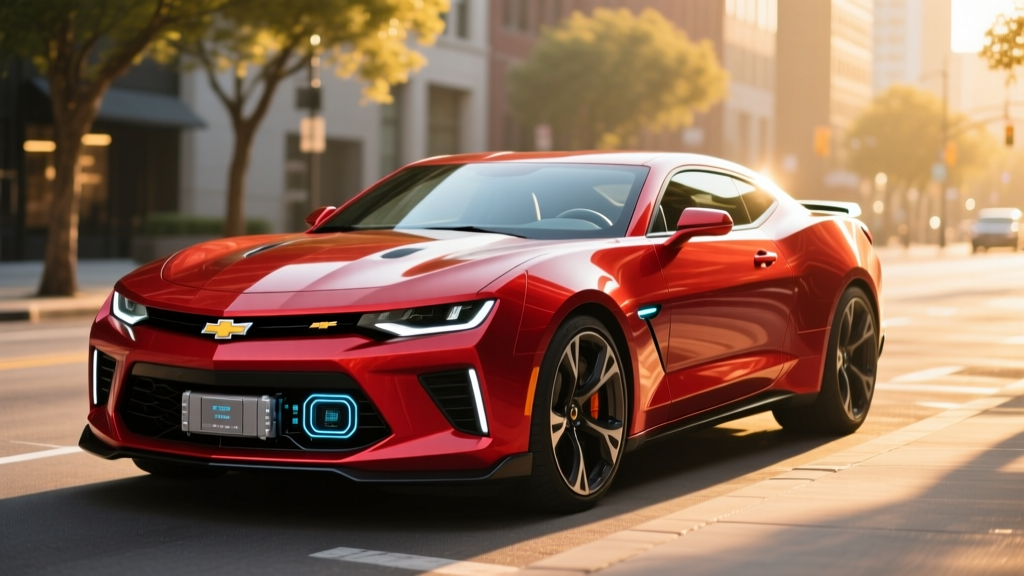
No. As of early 2026, there is no production Chevrolet Camaro EV available for purchase. GM discontinued the sixth-generation Camaro after the 2024 model year and has confirmed that an electric successor is planned on the Ultium platform, but no official launch date, pricing, or finalized specs have been published. Chevrolet has referenced an electric Camaro in investor presentations and trademark filings, but the vehicle remains in announced/preliminary status. If you're shopping for an electric muscle car or sporty EV coupe right now, you'll need to look at alternatives like the Ford Mustang Mach-E GT, Dodge Charger Daytona EV, or Hyundai Ioniq 5 N.
Why Chevy Killed the Gas Camaro — and What Comes Next
The sixth-generation Camaro ended production in January 2024 after years of declining sales. In its final year, Chevrolet moved roughly 32,000 units — a fraction of the 245,000-plus Mustangs Ford sold annually at its peak. The sports coupe segment has been contracting for a decade as buyers shifted to crossovers and SUVs.
GM's decision to end the ICE Camaro was also strategic. With the company committing to an all-electric passenger fleet by 2035, continuing to invest in a low-volume gas coupe didn't align with its Ultium battery platform strategy. Chevrolet has since confirmed that the Camaro nameplate will return as an EV, though executives have been deliberately vague about timing, body style, and positioning.
What we do know: the next Camaro EV will ride on a variant of GM's Ultium platform — likely the same architecture underpinning the Cadillac Lyriq and Chevrolet Blazer EV, which use a 102 kWh usable NMC battery pack. This gives Chevy flexibility on power output (single-motor RWD up to dual-motor AWD performance variants) and range (realistically 280–350 miles EPA depending on configuration).
Projected Chevrolet Camaro EV Specs (Preliminary)
Since official specs haven't been released, the table below reflects estimated figures based on GM's Ultium platform capabilities, competitor positioning, and statements from industry sources. Treat these as directional, not confirmed.
| Attribute | Estimated (Base/RWD) | Estimated (SS/AWD Performance) |
|---|---|---|
| Battery (usable) | ~85–102 kWh (NMC) | ~102 kWh (NMC) |
| EPA Range | ~310–340 mi | ~270–300 mi |
| Peak DC Fast Charge | ~190 kW | ~190–200 kW |
| 10–80% Charge Time | ~28–32 min | ~28–32 min |
| Level 2 Charge Rate | 11.5 kW (~34 mi/hr) | 11.5 kW (~34 mi/hr) |
| Horsepower | ~340 hp | ~550–600+ hp |
| 0–60 mph | ~5.5 sec | ~3.0–3.5 sec |
| Drivetrain | RWD (single motor) | AWD (dual motor) |
| Estimated Base MSRP | ~$45,000–$50,000 | ~$60,000–$70,000 |
| Battery/Powertrain Warranty | 8 years / 100,000 miles (GM standard) | |
Real-world range caveat: EPA estimates assume mixed driving at moderate temperatures. On a 75 mph highway run in 35°F weather, expect a performance AWD variant to deliver roughly 210–240 miles before needing a charge. Cold weather typically reduces EV range by 20–30%, and sporty driving with aggressive acceleration cuts efficiency further.
How a Camaro EV Would Compare to Gas and Current EV Rivals
The original Camaro SS delivered 455 hp from a 6.2L V8 with an EPA rating around 19 MPG combined. A future Camaro EV SS would likely match or exceed that power while delivering drastically lower per-mile energy costs — but with trade-offs in weight, sound, and refueling convenience on long road trips.
| Metric | 2024 Camaro SS (Gas, Final Year) | 2026 Mustang Mach-E GT (AWD) | 2026 Dodge Charger Daytona R/T (EV) |
|---|---|---|---|
| Horsepower | 455 hp | 480 hp | 496 hp |
| 0–60 mph | 4.0 sec | 3.8 sec | 4.7 sec |
| EPA Range / MPG | ~340 mi (16/24 MPG) | 280 mi (90 MPGe) | 317 mi (82 MPGe) |
| Fuel/Energy Cost per Mile | ~$0.19/mi (gas at $3.50/gal) | ~$0.05/mi (home L2, $0.14/kWh) | ~$0.06/mi (home L2) |
| Base MSRP | $44,495 (discontinued) | $59,995 | $59,595 |
| Federal Tax Credit (§30D) | N/A | Varies by sourcing | Varies by sourcing |
| Annual Maintenance (est.) | ~$600–$900 | ~$200–$350 | ~$200–$350 |
The Dodge Charger Daytona EV is the closest direct analog to what a Camaro EV would represent — a traditional muscle car nameplate transitioning to electric power. The Charger Daytona uses an NMC pack and offers a "Fratzonic" exhaust simulation to replicate V8 sound, a feature Chevy may or may not adopt. The Mustang Mach-E GT, while a crossover rather than a coupe, currently fills the electric performance niche Ford vacated when it didn't produce a direct electric Mustang coupe.
Real Costs and Savings: What EV Muscle Car Ownership Actually Looks Like
Beyond the sticker price, owning a performance EV involves different cost dynamics than a gas muscle car. Here's a realistic breakdown for a ~$60,000 electric performance vehicle over five years and 75,000 miles.
| Cost Category | Gas Muscle Car (e.g., Camaro SS equivalent) | Performance EV (e.g., Mach-E GT / Charger Daytona) |
|---|---|---|
| Purchase Price (MSRP) | $45,000 | $60,000 |
| Federal Tax Credit (§30D) | $0 | $0–$7,500 (depends on battery sourcing & income) |
| Home Level 2 Charger Install | $0 | $800–$2,500 |
| Fuel/Energy (75k miles) | $14,250 (gas at $3.50/gal, 19 MPG) | $3,750 (home charging at $0.14/kWh) |
| Maintenance (5 years) | $4,000 | $1,500 |
| Insurance (5 years, avg.) | $9,500 | $11,000 (EV performance premiums run 10–20% higher) |
| Estimated Depreciation | $18,000 | $22,000 |
| Total 5-Year Cost | $90,750 | $91,750–$99,250 (before credit) / $84,250–$91,750 (with $7,500 credit) |
Key takeaway: The per-mile energy savings are real — roughly $10,500 over 75,000 miles when charging primarily at home. But higher insurance premiums, potentially steeper depreciation on EVs (a market still in flux), and the upfront cost of a home Level 2 charger narrow the gap significantly. If you rely on public DC fast charging (averaging $0.35–$0.50/kWh), your energy cost advantage drops by half or more.
The IRS §30D tax credit can shift the math, but eligibility depends on your modified adjusted gross income (capped at $150,000 single / $300,000 joint), vehicle MSRP limits ($55,000 for sedans/coupes, $80,000 for SUVs/trucks), and battery critical-mineral and component sourcing requirements that change annually. A performance coupe variant priced above $55,000 would exceed the sedan/coupe MSRP cap and likely not qualify unless reclassified. Always verify current-year rules with a tax professional.
What First-Time EV Buyers Need to Know Before Waiting (or Pivoting)
If the Camaro EV is your dream car, you're facing a wait of potentially 12–24 months before any production vehicle reaches dealers — and that's optimistic. Here's what to consider while you decide whether to wait or shop now.
Home Charging Is Non-Negotiable for Most Owners
Over 80% of EV charging happens at home. Without access to a Level 2 (240V) home charger, daily EV ownership becomes a chore of public charging stops. A typical Level 2 installation costs $800–$2,500 including a quality charger (like a ChargePoint Home Flex or Emporia Level 2) and electrician labor. If your home electrical panel is maxed out at 100 amps, a panel upgrade to 200 amps can add $1,500–$4,000. Confirm your charging plan before committing to any EV.
Cold Climate Means Reduced Range
If you live where winters regularly drop below freezing, budget for 20–30% range loss. A Camaro EV rated at 300 miles EPA might deliver 210–240 miles in January in Minnesota. Battery preconditioning (warming the pack before fast charging) helps, but it doesn't fully eliminate cold-weather penalties. Garage parking mitigates some of this loss.
Public Charging Infrastructure Is Improving but Uneven
The Tesla Supercharger network (now open to non-Tesla EVs via NACS adapters or native NACS ports on newer models) remains the most reliable DC fast-charging option. Electrify America, EVgo, and ChargePoint cover major corridors but reliability varies. If your regular routes include rural stretches or "charging deserts," a performance EV with ~280–310 miles of real-world range requires more trip planning than a gas car with 400+ miles of range.
| Myth | Fact |
|---|---|
| "EV batteries need replacing every few years." | GM's Ultium batteries carry an 8-year/100,000-mile warranty against capacity loss below 70%. Real-world data from similar packs shows 8–12% degradation over 100,000 miles. Full replacement, if ever needed, currently costs $8,000–$15,000+ depending on pack size. |
| "Electric muscle cars can't match gas V8 performance." | Instant electric torque delivers faster 0–60 times than comparable gas engines. The trade-off is weight (EVs are typically 500–1,000 lbs heavier) and sustained high-speed track performance, where battery thermal management becomes the limiting factor. |
| "You'll save $10,000+ in five years going electric." | Fuel and maintenance savings are real, but higher purchase prices, insurance premiums, potential home electrical upgrades, and variable depreciation can offset much of the savings. Break-even depends heavily on your local electricity rates, driving volume, and tax-credit eligibility. |
| "A Camaro EV is available to order now." | As of 2026, no production Camaro EV exists. Reservations are not open. Any third-party site claiming to take orders is not authorized by Chevrolet. |
Decision Framework: Wait for the Camaro EV or Buy Now?
Wait for the Chevrolet Camaro EV if:
- The Camaro nameplate and coupe styling are essential to you — no crossover substitute will satisfy.
- You already own a reliable daily driver and can afford to wait 1–2+ years for a new model launch.
- You want to see finalized EPA range, pricing, and §30D tax-credit eligibility before committing.
- You have confirmed home Level 2 charging access and your typical routes are well-served by DC fast chargers.
Buy an alternative EV now if:
- You need a vehicle in the next 3–6 months and can't wait for an unconfirmed launch date.
- You're open to an electric performance crossover (Ford Mustang Mach-E GT), coupe (Dodge Charger Daytona EV), or sporty hatchback (Hyundai Ioniq 5 N at 3.4-sec 0–60, 245 mi EPA, ~$66,000).
- You want to lock in current-year tax-credit eligibility before sourcing rules potentially tighten further.
- You want real-world reviews, reliability data, and proven charging performance rather than projected specs.
Current Alternatives to the Chevrolet Camaro EV
If waiting isn't practical, these are the closest electric vehicles to the muscle-car/sport-coupe spirit as of the 2026 model year:
- Dodge Charger Daytona EV (R/T and Scat Pack): The most direct competitor. 317 mi EPA range (R/T), 496–670 hp, starts at ~$59,595. Available now with Fratzonic sound system and a traditional coupe silhouette.
- Ford Mustang Mach-E GT: 280 mi EPA, 480 hp, 3.8-sec 0–60, ~$59,995. A crossover rather than a coupe, but the closest Ford offers to electric Mustang performance.
- Hyundai Ioniq 5 N: 245 mi EPA, 641 hp (with N Grin Boost), 3.4-sec 0–60, ~$66,000. A hot hatch with simulated gear shifts and aggressive track capability — the enthusiast's pick.
- Tesla Model 3 Performance: 315 mi EPA, 510 hp, 2.9-sec 0–60, ~$54,990. A sedan, but unmatched in straight-line performance per dollar in the EV space.
Frequently Asked Questions
Has Chevrolet officially confirmed the Camaro EV?
GM executives have stated the Camaro nameplate will return as an electric vehicle on the Ultium platform. However, no official launch date, pricing, pre-order window, or finalized specifications have been published as of early 2026. All specs in this article are estimated based on platform capabilities.
Will the Camaro EV qualify for the $7,500 federal tax credit?
It's too early to confirm. The IRS §30D credit requires the vehicle MSRP to fall below $55,000 for sedans and coupes (or $80,000 for SUVs/trucks/vans). If a Camaro EV SS performance variant is priced above $55,000 and classified as a coupe, it would not qualify. Battery sourcing requirements also apply and change annually. Consult a tax professional before making purchase decisions based on credit eligibility.
Will the Camaro EV be a coupe or a crossover?
Chevrolet has not confirmed the body style. Industry speculation leans toward a coupe or "four-door coupe" design to differentiate from the Blazer EV and Equinox EV crossovers already in the lineup, but this is not confirmed. The Dodge Charger Daytona's return as a two-door coupe may pressure Chevy to follow suit.
How does EV performance compare to a V8 Camaro on a track?
EVs deliver instant torque and typically faster 0–60 times, but sustained track use generates significant battery heat. Without robust thermal management (active liquid cooling with track-mode preconditioning), EVs can derate power after several hard laps. The gas Camaro SS could run all day at a track day with minimal performance degradation, provided you managed brake and tire wear. For drag-strip sprints, the EV wins. For road-course endurance, gas still has advantages today.
Should I install a home charger before the Camaro EV launches?
If you own your home and plan to buy any EV within the next two years, installing a Level 2 (240V, 48-amp) charger now is smart. It adds daily convenience immediately if you have or acquire another EV, and the installation cost ($800–$2,500, potentially more with a panel upgrade) won't change much over 12–24 months. Have a licensed electrician evaluate your panel capacity before committing.
What battery chemistry will the Camaro EV use?
GM's Ultium platform currently uses NMC (nickel manganese cobalt) chemistry across its passenger vehicles. NMC offers higher energy density than LFP (lithium iron phosphate), which is important for a performance coupe where packaging space is limited. Expect a usable capacity around 85–102 kWh depending on trim. GM has not announced plans to use LFP in performance-oriented Ultium vehicles.
Editorial note: This article will be updated when Chevrolet releases official Camaro EV specifications, pricing, and availability. All projected figures are estimates based on the Ultium platform and competitive positioning. For confirmed data, refer to Chevrolet's official site and fueleconomy.gov once the vehicle is EPA-certified.