Why the Bolt EV's Weight Matters for Range and Efficiency
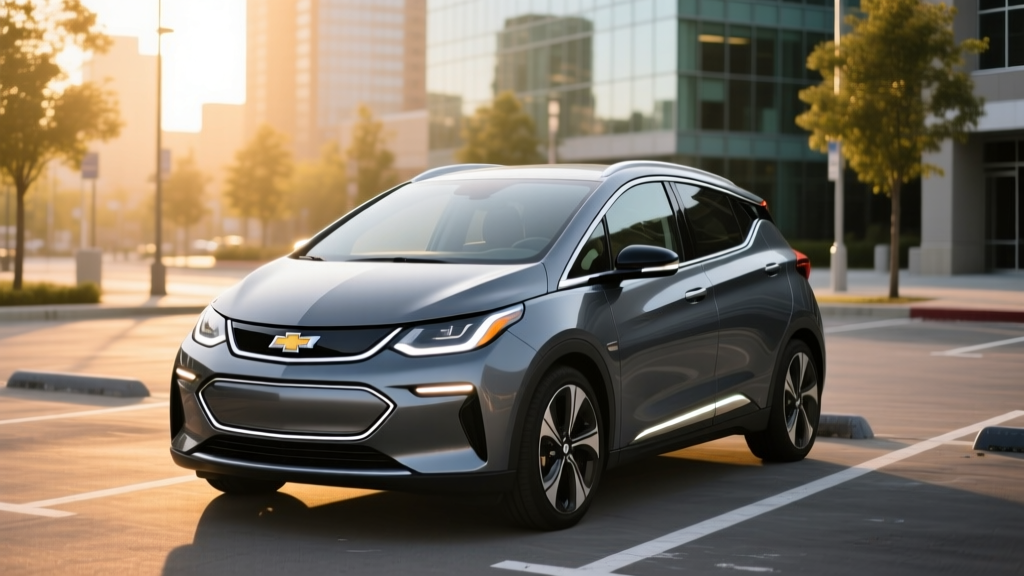
The 2026 Chevrolet Bolt EV remains one of the lightest long-range electric vehicles on the U.S. market, and that curb weight is a direct contributor to its efficiency. At approximately 3,563 lbs (1,616 kg) for the 1LT trim and 3,589 lbs (1,628 kg) for the 2LT, the Bolt EV undercuts competitors like the Hyundai Kona Electric (~3,700 lbs) and the Nissan Leaf Plus (~3,900 lbs) by a meaningful margin. Less mass means less energy required for acceleration and hill climbs, translating directly to the Bolt's strong MPGe figures and lower tire wear over time.
This weight advantage comes from the Bolt's compact platform and the use of GM's Ultium-derived battery architecture, which optimizes cell-to-pack integration. For buyers cross-shopping subcompact EVs, understanding the Bolt EV's weight-to-range ratio is essential — it's a vehicle that punches above its class in efficiency precisely because it isn't hauling excess mass.
Range, Battery, and Real-World Efficiency
The 2026 Bolt EV is powered by a 65 kWh usable lithium-ion (NMC chemistry) battery pack. GM quotes the EPA-estimated range at 259 miles for both the 1LT and 2LT trims, with a combined efficiency rating of 120 MPGe (approximately 28 kWh per 100 miles).
EPA Sticker: 259 miles
City/commute driving (mild weather): 260–280 miles — regenerative braking recovers energy in stop-and-go traffic, often exceeding the EPA estimate.
Highway (70–75 mph sustained): 220–240 miles — aerodynamic drag at speed reduces efficiency to roughly 31–33 kWh/100 mi.
Cold weather (below 32°F / 0°C): 185–215 miles — battery resistance increases and cabin heating draws significant power. Preconditioning while plugged in mitigates some of this loss.
| Spec | Value |
|---|---|
| EPA Range | 259 miles |
| Battery (usable) | 65 kWh, NMC lithium-ion |
| Efficiency (combined) | 120 MPGe / 28 kWh/100 mi |
| Motor Output | 200 hp / 266 lb-ft torque |
| Drivetrain | Front-wheel drive (FWD) |
| 0–60 mph | ~7.0 seconds |
| Curb Weight (1LT) | 3,563 lbs |
| Curb Weight (2LT) | 3,589 lbs |
| Max DC Fast Charge | 150 kW (peak) |
| 10–80% DC Charge Time | ~30 minutes |
| Level 2 Home Charging | 11.5 kW (~39 mi/hr) |
| Cargo Volume (rear seats up) | 16.3 cu ft |
| Cargo Volume (rear seats folded) | 57.0 cu ft |
| Rear Legroom | 36.0 inches |
| Battery Warranty | 8 years / 100,000 miles |
| Base MSRP (1LT) | $28,400 |
| As-Tested (2LT w/ options) | ~$33,500 |
Charging Speed: DC Fast and Home Level 2
Charging remains the Bolt EV's most-discussed topic. The 2026 model retains a CCS1 (Combo) connector for DC fast charging, with a peak rate of 150 kW. In practice, the Bolt sustains roughly 130–150 kW up to about 55% state of charge, after which the charge curve tapers progressively. A 10–80% session takes approximately 30 minutes at a capable 150 kW+ station. Above 80%, charging slows sharply to protect the NMC cells — expect 80–100% to add another 25–30 minutes, making the Bolt best suited for drivers who charge to 80% on road trips and move on.
| Charging Level | Power / Voltage | Rate (approx.) | Full Charge Time |
|---|---|---|---|
| Level 1 (120V household) | ~1.4 kW | ~4 miles per hour | ~55+ hours (0–100%) |
| Level 2 (240V home) | 11.5 kW | ~39 miles per hour | ~7 hours (0–100%) |
| DC Fast (CCS1) | Up to 150 kW | ~180 mi in 30 min (10–80%) | ~30 min (10–80%) |
At home on a Level 2 charger (requiring a 48-amp circuit and a 60-amp breaker — confirm with a licensed electrician), the Bolt replenishes its full 65 kWh battery in roughly 7 hours. This is ample for overnight charging and means a depleted battery is fully restored by morning. Level 1 trickle charging is viable only as a supplement or emergency option.
Important note for Tesla Supercharger users: The 2026 Bolt EV ships with a CCS1 port. GM has provided a complimentary NACS adapter for Bolt owners to access Tesla's V3/V4 Supercharger network (150–250 kW stalls). Confirm adapter availability with your dealer at purchase.
Performance, Ride, and Daily Drivability
The Bolt EV's single front-mounted permanent-magnet motor delivers 200 horsepower and 266 lb-ft of torque. That torque is available from 0 RPM, giving the Bolt a responsive, punchy feel around town. The 0–60 mph time of approximately 7.0 seconds is quick for the subcompact segment and makes highway merging effortless.
The low curb weight contributes to nimble handling — the Bolt feels tossable in urban environments and corners with less body roll than heavier crossovers. The trade-off is that the torsion-beam rear suspension transmits more road imperfections than independent setups found on pricier EVs. Ride quality is acceptable but firm, especially on 17-inch wheels.
Regenerative braking offers two modes: one-pedal driving (strong regen that brings the car to a full stop) and a steering-wheel paddle for on-demand regen. Most owners quickly adapt to one-pedal mode for daily commuting, reducing brake wear substantially.
Pricing, Trims, and Federal Tax Credit Eligibility
The 2026 Bolt EV is offered in two trims:
- 1LT: $28,400 MSRP — includes 11.3-inch infotainment touchscreen, wireless Apple CarPlay/Android Auto, heated front seats, heated steering wheel, Chevy Safety Assist suite.
- 2LT: $31,900 MSRP — adds leatherette seating, Bose premium audio, adaptive cruise control, 360-degree camera, and additional driver-assist features.
| Trim | MSRP | §30D Credit (if eligible) | Effective Price |
|---|---|---|---|
| 1LT | $28,400 | Up to $7,500 | ~$20,900 |
| 2LT | $31,900 | Up to $7,500 | ~$24,400 |
The Bolt EV's sub-$30,000 starting price places it well under the IRS §30D MSRP cap of $55,000 for SUVs/hatchbacks. However, eligibility for the full $7,500 credit is not guaranteed and depends on several factors per current IRS rules:
- Buyer income caps: Modified AGI ≤ $150,000 (single), ≤ $300,000 (joint), ≤ $225,000 (head of household)
- MSRP cap: Vehicle must be ≤ $55,000 (Bolt qualifies)
- Battery component sourcing: Percentage of battery components manufactured/assembled in North America must meet annual thresholds (consult IRS for current-year percentage)
- Critical minerals: Percentage of critical minerals sourced from U.S. or FTA partners must meet thresholds
- Point-of-sale transfer: Eligible buyers can transfer the credit to the dealer at purchase, reducing the purchase price directly rather than waiting for a tax refund
Always verify eligibility with a tax professional and the fueleconomy.gov tax credit tracker before purchase, as sourcing rules tighten annually.
Tech, Safety, and Interior
The Bolt EV's cabin is functional rather than luxurious. The 11.3-inch diagonal touchscreen runs GM's latest infotainment software with responsive touch input, wireless phone mirroring, and built-in Google Maps navigation (on 2LT). A 10.2-inch digital driver cluster provides speed, range, and power-flow data.
Chevy Safety Assist comes standard on all trims and includes:
- Automatic Emergency Braking with pedestrian detection
- Lane Keep Assist with Lane Departure Warning
- Forward Collision Alert
- Following Distance Indicator
- IntelliBeam automatic high beams
Adaptive cruise control (with stop-and-go) is available on the 2LT. Note: this is a SAE Level 1–2 driver-assistance system — the driver must remain fully engaged with hands on the wheel and eyes on the road at all times. This is not autonomous driving.
Interior materials are hard plastics on the lower dash and door panels, which is expected at this price point. Front seats are comfortable for long drives; rear seats accommodate adults but with limited thigh support due to the raised floor (battery placement). Cargo space at 16.3 cu ft behind the rear seats handles weekly groceries, and 57.0 cu ft with seats folded accommodates larger items — competitive with the segment.
Who the Bolt EV Suits Best
- You commute 30–80 miles daily and can charge at home overnight
- You want the lowest entry price for a 250+ mile EPA-range EV
- You prioritize efficiency and low operating costs over luxury materials
- You want a compact, easy-to-park urban EV with real highway capability
- You frequently road-trip 400+ miles and want the fastest DC charging available (the Bolt's 150 kW peak and CCS taper are slower than 800V competitors)
- You need all-wheel drive or substantial towing capacity (Bolt is FWD-only, not rated for towing)
- You want a premium interior or advanced Level 2 highway driving assist (e.g., GM's Super Cruise, which is not offered on the Bolt)
2026 Bolt EV vs. Key Competitors
The Bolt EV competes in the subcompact EV segment against the Hyundai Kona Electric, Nissan Leaf, and the slightly larger Chevy Equinox EV. Here's how the Bolt stacks up on weight and key specs:
| Spec | 2026 Chevy Bolt EV | 2026 Hyundai Kona Electric | 2026 Nissan Leaf SV Plus |
|---|---|---|---|
| EPA Range | 259 mi | 261 mi | 212 mi |
| Curb Weight | 3,563 lbs | ~3,748 lbs | ~3,907 lbs |
| Battery (usable) | 65 kWh | 64.8 kWh | 60 kWh |
| Peak DC Charge | 150 kW | 100 kW | 100 kW (CHAdeMO) |
| 0–60 mph | ~7.0 sec | ~7.4 sec | ~6.9 sec |
| Base MSRP | $28,400 | $33,500 | $31,500 |
| Connector | CCS1 (+ NACS adapter) | CCS1 (+ NACS adapter) | CHAdeMO (limited network) |
The Bolt's combination of lowest weight, lowest price, and strongest DC fast-charge rate in this comparison makes it the value leader. The Kona offers slightly more range and a more refined interior; the Leaf is hampered by its aging CHAdeMO connector, which is increasingly unsupported on newer public charging networks.
- Lowest MSRP for a 250+ mi EV in the U.S. market
- Lightest curb weight in class — strong efficiency (120 MPGe)
- 150 kW DC fast charging with CCS1 + NACS adapter access
- One-pedal driving with strong regen
- Generous standard safety suite
- Practical hatchback cargo space (57 cu ft max)
- DC charge curve tapers heavily above 80% SoC
- Interior uses hard plastics; rear seat comfort is average
- No AWD option; not rated for towing
- Super Cruise not available on Bolt platform
- Cold-weather range loss is significant (~25–30%)
- CCS1 port requires adapter for Tesla Superchargers
Warranty and Long-Term Ownership
GM backs the Bolt EV's battery and powertrain with an 8-year / 100,000-mile warranty, covering defects and capacity loss below a specified threshold (typically 60–70% retention, per GM's warranty documentation). The limited vehicle warranty is 3 years / 36,000 miles. For a vehicle at this price point, the battery warranty provides strong peace of mind.
NMC battery degradation data from first-generation Bolt owners (2017–2022) shows typical capacity loss of 8–12% over 100,000 miles with regular Level 2 home charging. Avoiding habitual DC fast charging to 100% and minimizing prolonged storage at very high or very low SoC will help preserve long-term battery health.
Frequently Asked Questions
What is the real-world range of the 2026 Chevrolet Bolt EV?
The EPA rates the Bolt EV at 259 miles. In real-world city commuting with regenerative braking, many owners see 260–280 miles. Sustained highway driving at 70+ mph reduces this to roughly 220–240 miles, and cold-weather operation (below freezing) can drop range to 185–215 miles depending on cabin heating use and whether the battery was preconditioned.
How fast does the Bolt EV charge at home and on DC fast chargers?
On a Level 2 home charger (240V, 11.5 kW), the Bolt adds approximately 39 miles of range per hour, fully recharging in about 7 hours. On a DC fast charger, it peaks at 150 kW and charges from 10–80% in roughly 30 minutes. Above 80%, the charge rate tapers significantly — plan to charge to 80% and resume driving for the best road-trip efficiency.
How much does the 2026 Bolt EV cost after the federal tax credit?
The 1LT starts at $28,400 and the 2LT at $31,900. If you qualify for the full $7,500 §30D federal tax credit (subject to income limits, battery-sourcing rules, and MSRP caps), the effective price drops to approximately $20,900 for the 1LT and $24,400 for the 2LT. The credit can now be transferred at the point of sale, reducing your purchase price directly. Verify your eligibility with a tax professional and the IRS before purchasing.
Does the 2026 Bolt EV qualify for the $7,500 federal EV tax credit?
The Bolt EV's MSRP is well under the $55,000 cap, so it passes the price test. However, the full credit depends on battery-component and critical-mineral sourcing requirements that tighten each year, as well as buyer income limits ($150K single / $300K joint). Check the current eligibility status on fueleconomy.gov and confirm with your tax advisor.
Is the Bolt EV worth buying vs. the Kona Electric or Equinox EV?
If your priority is the lowest cost for 250+ miles of range, the Bolt EV is the segment value leader — thousands less than the Kona Electric with comparable range and faster DC charging. If you need more rear-seat space, all-wheel drive, or a more premium interior, the Chevy Equinox EV (starting ~$33,000, 319-mile range) may be worth the premium. The Bolt is ideal for commuters and urban drivers who charge at home and take occasional road trips.
What is the Bolt EV's curb weight and why does it matter?
The 2026 Bolt EV weighs 3,563 lbs (1LT) to 3,589 lbs (2LT). This is roughly 150–350 lbs lighter than its closest competitors. Lower weight directly improves energy efficiency (fewer kWh consumed per mile), reduces tire and brake wear, and contributes to the Bolt's responsive acceleration feel despite its modest 200 hp output.