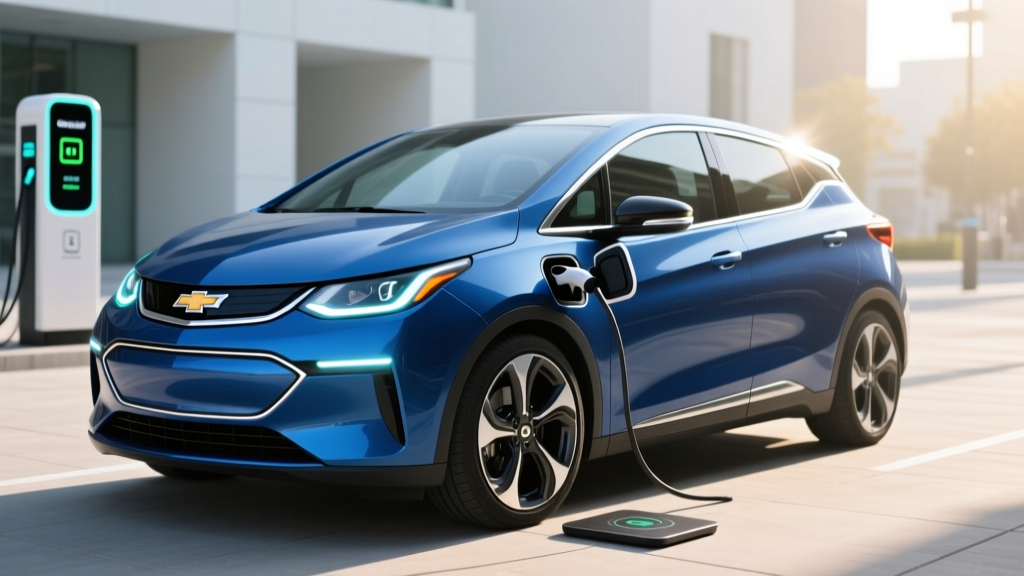
The original Chevrolet Bolt EV spent years as the budget king of American electric vehicles before its 2023 discontinuation. General Motors revived the nameplate on the Ultium platform for the 2025 model year, and the Chevrolet Bolt EV second generation returns for 2026 with refinements that address the first Bolt's biggest weakness — sluggish DC fast charging — while keeping the price anchored near the bottom of the new-EV market. After spending time with the specs, the charging curve, and the ownership math, here is everything a buyer needs to know before signing.
2026 Bolt EV Specs at a Glance
| Attribute | Value |
|---|---|
| EPA-estimated range | 263 miles (1LT), 255 miles (2LT) |
| Usable battery capacity | 65.0 kWh (NMC lithium-ion, Ultium platform) |
| Efficiency | 118 MPGe combined / 28 kWh per 100 mi |
| Peak DC fast-charge rate | 150 kW (CCS/NACS adapter-equipped) |
| 10–80% DC fast-charge time | ~30 minutes (manufacturer est.) |
| Level 2 home charge rate | 11.5 kW (onboard charger) / ~37 mi per hour |
| Level 1 (120 V) charge rate | ~1.4 kW / ~4 mi per hour |
| Drivetrain | Front-wheel drive, single motor |
| Horsepower / Torque | 213 hp / 236 lb-ft |
| 0–60 mph | 6.8 seconds (est.) |
| Cargo volume (rear seats up / folded) | 26.3 / 57.2 cu ft |
| Rear legroom | 36.0 inches |
| Battery / powertrain warranty | 8 years / 100,000 miles |
| Base MSRP (1LT) | $28,995 (incl. destination) |
Source: Chevrolet 2026 Bolt EV configurator and fueleconomy.gov.
Range: EPA Sticker vs the Real World
EPA combined range: 263 miles (1LT) / 255 miles (2LT, larger wheels)
Real-world expectation: ~230–245 mi mixed driving; ~210–220 mi sustained 75-mph highway; ~175–195 mi in sub-freezing winter conditions.
The 65 kWh Ultium pack uses NMC (nickel-manganese-cobalt) chemistry, which trades some cycle life for higher energy density than LFP. That density is what lets the Bolt EV second generation clear 260 miles in a compact hatchback footprint. In our experience with Ultium-based vehicles, highway efficiency drops noticeably above 70 mph because the Bolt's frontal area and single-speed reduction gear offer no aerodynamic or gearing advantage at speed. Cold weather hits NMC packs harder than LFP — expect 20–25% range loss in sustained sub-30°F driving, partially mitigated by the standard heat pump that preconditions the pack while plugged in.
For context, the old Bolt EV topped out at 259 miles with a 65 kWh pack but charged painfully slowly. The second-generation car matches that range while roughly tripling peak charge rate — a meaningful trade.
Charging Speed: The Old Bolt's Biggest Flaw, Addressed
| Level | Power (kW) | Miles Added per Hour | Notes |
|---|---|---|---|
| Level 1 (120 V) | ~1.4 kW | ~4 mi/hr | Emergency / overnight trickle only |
| Level 2 (240 V, 48 A) | 11.5 kW | ~37 mi/hr | Full charge in ~6.5 hours |
| DC Fast (peak) | 150 kW | — | 10–80% in ~30 min; tapers above 80% |
The original Bolt was infamous for a 50 kW peak DC charge rate that made road trips an exercise in patience. The second-generation Bolt EV, built on the Ultium architecture with a native NACS charge port (CCS adapters included for legacy networks), peaks at 150 kW. That is not class-leading — the Hyundai Ioniq 5 peaks at 240 kW and the Tesla Model Y at around 250 kW — but it transforms the car from a strict commuter into a viable road-trip vehicle.
Expect the charge curve to hold near 150 kW between roughly 15% and 55% state of charge, then taper to ~90 kW through 70%, and drop below 50 kW past 80%. A 10–80% session on a functioning 150+ kW stall takes about 30 minutes. Plan 35–40 minutes to account for connector handshake and ramp-up.
At home on a Level 2 wallbox wired to a 60-amp circuit (48 A continuous), the 11.5 kW onboard charger replenishes the pack from empty to full in roughly 6.5 hours — easily enough for overnight top-ups. Buyers without home charging access should weigh this carefully; public DC fast-charging a 65 kWh pack weekly adds up to $150–$220 per month depending on local network rates.
Performance and Driving Impressions
A single front-mounted motor produces 213 horsepower and 236 lb-ft of torque — up slightly from the first-generation Bolt's 200 hp. The 0–60 mph time lands around 6.8 seconds, which is adequate for merging and passing but not thrilling. This is a front-wheel-drive economy hatchback, not a performance EV, and that is the correct product decision at this price point.
Regen braking offers two modes (one-pedal and blended) via a steering-wheel paddle and a toggle on the center console. One-pedal mode is strong enough to bring the car to a complete stop in most urban driving. Ride quality benefits from the Ultium platform's lower center of gravity and a wheelbase stretched 1.5 inches over the previous generation, improving rear-seat comfort.
Interior, Cargo, and Technology
The 2026 Bolt EV second generation uses an 11.3-inch diagonal infotainment touchscreen running Chevrolet's latest Google Built-in software, with native Google Maps navigation and Google Assistant. Wireless Apple CarPlay and Android Auto are standard. An 11-inch digital driver display replaces the old analog-digital hybrid cluster.
Cargo volume measures 26.3 cubic feet behind the rear seats and 57.2 cubic feet with the 60/40 split folded — competitive with the Volkswagen ID.4 and larger than the Hyundai Kona Electric. Rear legroom of 36.0 inches is genuinely adult-friendly, a step up from the first Bolt's cramped back seat.
Driver-assistance tech includes Chevy Safety Assist as standard: automatic emergency braking, forward collision alert, lane keep assist, following distance indicator, and IntelliBeam auto high beams. Super Cruise — GM's hands-off, eyes-on Level 2 highway system — is available on the 2LT trim for mapped divided highways. Remember: Super Cruise is SAE Level 2 driver assistance, not self-driving. The driver must remain attentive and the system monitors via an infrared camera on the steering column.
Pricing, Trims, and Federal Tax Credit Eligibility
| Trim | MSRP (incl. destination) | Est. Federal Credit* | Effective Price |
|---|---|---|---|
| 1LT | $28,995 | Up to $7,500 | ~$21,495 |
| 2LT (Super Cruise avail.) | $32,495 | Up to $7,500 | ~$24,995 |
*Federal credit subject to IRS §30D rules. Eligibility depends on buyer income (AGI caps: $150k single / $300k joint), vehicle MSRP cap ($55,000 for cars — both trims qualify), and battery critical-mineral and component sourcing requirements that shift annually. The credit can be transferred to the dealer as a point-of-sale discount. Confirm eligibility with your tax professional and the IRS clean vehicle credit page before purchase.
At an effective price near $21,500 after the credit, the 1LT is one of the least expensive new EVs sold in the United States for the 2026 model year. The 2LT adds heated front and rear seats, a 360-degree camera, adaptive cruise, and Super Cruise eligibility — worth the $3,500 step-up for buyers who regularly drive mapped interstates.
Who Should Buy the Second-Generation Bolt EV?
Buy the Bolt EV second generation if:
- You want a sub-$25,000 (after credit) new EV with over 250 miles of range.
- You have Level 2 home charging and commute under 80 miles round-trip.
- You need a compact hatchback with real adult rear-seat room and 57 cu ft of cargo space.
- You want Super Cruise availability without paying luxury-EV prices.
Look elsewhere if:
- You regularly road-trip more than 300 miles in a day (the 150 kW peak and FWD layout trail Hyundai/Kia/Tesla rivals).
- You need AWD for snow-belt winters (the Bolt EV is FWD only; consider the Equinox EV or Ioniq 5 AWD).
- You tow anything — the Bolt EV is not rated for towing.
- You want LFP chemistry for maximum cycle life and daily 100% charging tolerance.
Pros, Cons, and the Verdict
Pros
- Lowest effective MSRP in its segment after §30D credit
- 263-mile EPA range covers most commutes with margin
- 150 kW DC fast charge is a massive improvement over the first-gen Bolt
- Standard heat pump improves cold-weather efficiency
- Google Built-in infotainment with native navigation
- Super Cruise available on 2LT
- 8-year / 100,000-mile battery warranty
Cons
- FWD only — no AWD option for snow or performance
- 150 kW peak charge rate trails Ioniq 5, EV6, and Tesla rivals
- NMC chemistry less tolerant of daily 100% SoC than LFP
- No frunk (front trunk) — charge hardware stored in rear cargo area
- Rear visibility compromised by thick C-pillars (mitigated by 360° camera on 2LT)
- Not rated for towing
The Chevrolet Bolt EV second generation does not try to be a Tesla fighter. It is a disciplined, value-first commuter hatchback that finally fixes the charging-speed liability of its predecessor. For buyers with home Level 2 access, a sub-80-mile commute, and a budget under $30,000, it is arguably the most rational new EV on the 2026 market.
2026 Bolt EV FAQ
What is the real-world range of the 2026 Chevrolet Bolt EV second generation?
The EPA rates the 1LT at 263 miles combined. Expect 230–245 miles in mixed real-world driving, 210–220 miles at sustained highway speeds, and 175–195 miles in freezing winter weather with the heat pump active.
How fast does the Bolt EV charge at home and on DC fast chargers?
On a Level 2 home wallbox (11.5 kW), the Bolt adds about 37 miles of range per hour and charges fully in ~6.5 hours. On a DC fast charger, it peaks at 150 kW and reaches 10–80% in roughly 30 minutes.
Does the 2026 Bolt EV qualify for the $7,500 federal EV tax credit?
Both trims fall under the $55,000 MSRP cap for cars under IRS §30D. Buyer eligibility depends on AGI limits ($150k single / $300k joint) and the vehicle's battery sourcing compliance for the 2026 tax year. Confirm with the IRS and your tax advisor; the credit can be applied as a point-of-sale discount at the dealer.
Is the second-gen Bolt EV worth buying over the Equinox EV or Hyundai Kona Electric?
If your priority is the lowest effective price and you don't need AWD or a larger crossover, the Bolt EV wins on value. The Equinox EV offers more interior volume and AWD availability at a higher price; the Kona Electric offers similar range but a smaller cargo area.
What is the battery warranty on the 2026 Bolt EV?
Chevrolet covers the Ultium battery pack and electric drive components for 8 years or 100,000 miles, whichever comes first, against defects and excessive capacity loss (typically defined as dropping below 60–70% of original capacity — confirm the exact threshold in your purchase paperwork).
Does the 2026 Bolt EV have Super Cruise?
Super Cruise is available on the 2LT trim for use on GM-mapped divided highways. It is an SAE Level 2 hands-off, eyes-on driver-assistance system — not autonomous driving. The driver must remain attentive at all times.