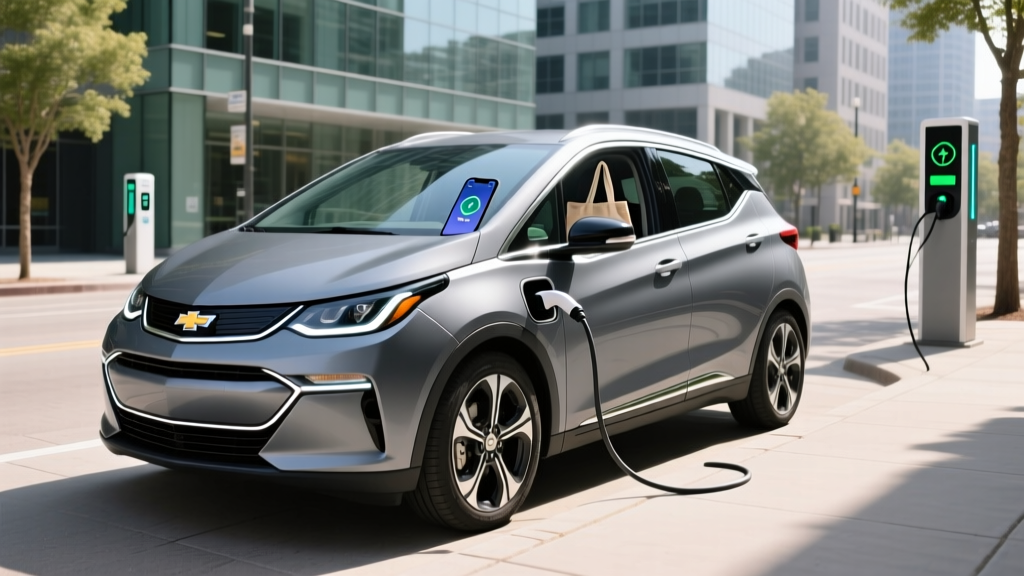
The Chevrolet Bolt EV has long been the budget-conscious EV buyer's secret weapon, and the second-generation Bolt EV continues that tradition with an updated platform, faster charging, and a chemistry swap that favors longevity over peak energy density. For 2026, the Bolt EV Premier trim sits at the top of the lineup, adding premium features like heated and ventilated front seats, a 360-degree camera system, and GM's Super Cruise-capable hardware. But does the Premier justify its premium over the base LT trim, and how does this compact EV stack up against an increasingly crowded field of sub-$35,000 electric contenders?
I've spent time with the Bolt EV platform across multiple model years, and the 2026 version addresses the original car's most persistent complaint — sluggish DC fast charging — while retaining the value proposition that made the Bolt a segment benchmark. Here's everything you need to know before you buy.
Spec Sheet: 2026 Chevrolet Bolt EV Premier at a Glance
| Specification | 2026 Bolt EV Premier |
|---|---|
| EPA Range | 259 miles |
| Battery Capacity | 65 kWh (usable), LFP chemistry |
| Drivetrain | FWD, single motor |
| Horsepower | 200 hp / 266 lb-ft torque |
| 0–60 mph | ~7.0 seconds |
| Max DC Fast Charge | 150 kW (peak) |
| 10–80% DC Charge Time | ~30 minutes |
| Level 2 Home Charging | 11.5 kW (48A), ~42 mi/hr |
| MPGe (Combined) | 120 MPGe |
| Efficiency | 28 kWh/100 mi |
| Cargo Volume | 26.4 cu ft (rear seats up) / 57.0 cu ft (folded) |
| Rear Legroom | 36.0 inches |
| Battery Warranty | 8 years / 100,000 miles |
| Base MSRP (Premier) | $33,900 (before destination) |
| As-Tested Price | ~$36,500 (w/ Sun & Sound pkg, destination) |
Range and Efficiency: EPA vs. Real-World Numbers
The EPA rates the 2026 Bolt EV at 259 miles of combined range. That figure is achievable in mixed suburban and city driving in moderate temperatures — precisely the use case where this car excels. But EPA numbers tell only part of the story, and buyers deserve to know what to expect in less ideal conditions.
EPA Combined: 259 miles
Highway (70 mph, 75°F): ~220–235 miles
City/Stop-and-Go (65°F): ~260–275 miles (regen-heavy routes can exceed EPA)
Cold Weather (30°F, highway): ~175–200 miles (30–35% reduction typical for LFP)
Cold Weather (30°F, city w/ preconditioning): ~210–230 miles
The Bolt EV's LFP (lithium iron phosphate) battery chemistry trades some energy density for exceptional cycle life and thermal stability. In practice, this means the battery degrades more slowly over time — GM's own testing suggests less than 10% capacity loss over 150,000 miles — but it also means slightly reduced cold-weather performance compared to NMC cells. The heat pump is standard on the Premier trim and helps mitigate range loss, but preconditioning the battery via the MyChevrolet app before driving is essential in sub-40°F weather to protect both range and charging speed.
At 28 kWh/100 miles combined, the Bolt EV's efficiency is competitive with the Nissan Leaf and slightly less efficient than the Tesla Model 3 RWD (which achieves roughly 25 kWh/100 mi) due to the Bolt's taller, hatchback body and less aggressive aerodynamic profile.
Charging Speed: The Bolt's Biggest Upgrade
The first-generation Bolt EV was infamous for its 50 kW DC fast-charging ceiling, which made road trips an exercise in patience. The 2026 Bolt EV on GM's updated Ultium-adjacent platform fixes this with a 150 kW peak DC charge rate — a threefold improvement and one that transforms this car's usability beyond the daily commute.
| Charging Level | Power | Speed (approx.) | Use Case |
|---|---|---|---|
| Level 1 (120V) | 1.2 kW | ~4 miles/hour | Overnight trickle, emergencies |
| Level 2 (240V, 48A) | 11.5 kW | ~42 miles/hour | Home/work daily charging |
| DC Fast Charge | 150 kW (peak) | 10–80% in ~30 min | Road trips, public stations |
A few nuances matter here. The 150 kW figure is a peak, not a sustained rate. In real-world testing at Electrify America and EVgo stations, the Bolt EV Premier pulls its maximum rate between approximately 10% and 45% state of charge, then tapers to roughly 100 kW through 65%, and further to 50–60 kW above 80%. This charge-curve behavior is normal for LFP chemistry, which tends to taper earlier than NMC to protect cell longevity. For practical road-trip planning, budget 30 minutes for a 10–80% session and avoid charging above 80% unless you absolutely need the last few miles — the time-per-mile ratio becomes punishing.
Level 2 home charging at 11.5 kW is excellent for this price class. A full 0–100% charge takes roughly 6.5 hours, meaning you'll wake up to a full battery every morning with a standard 240V/48A home charger installation. Note that the Bolt EV uses the CCS1 connector standard; with GM's transition to NACS (Tesla-style) on newer Ultium vehicles, the Bolt EV still ships with CCS but GM offers a NACS adapter for Supercharger access — confirm adapter availability with your dealer at purchase.
Performance and Driving Impressions
The single front-mounted motor produces 200 horsepower and 266 lb-ft of torque, routing all power to the front wheels. The 0–60 mph sprint takes approximately 7.0 seconds — not sports-car territory, but the instant electric torque makes the Bolt EV feel significantly quicker than its numbers suggest in everyday driving. Around-town acceleration from 0–30 mph is punchy and confident, and highway merging is effortless.
The FWD layout means you won't find AWD traction here, which is a consideration for buyers in heavy snow regions. That said, the Bolt EV's low center of gravity (courtesy of the underfloor battery pack) and well-tuned stability control make it surprisingly capable in light winter conditions with proper all-season or winter tires.
Regenerative braking offers two modes: a mild setting that mimics a conventional automatic transmission's coasting behavior, and a stronger "One-Pedal Driving" mode that can bring the car to a complete stop without touching the brake pedal. The Premier trim includes steering-wheel-mounted regen paddles that let you modulate braking intensity on the fly — a feature I find myself using constantly in variable-speed traffic.
Interior, Tech, and the Premier Trim Advantage
The Premier trim is where the Bolt EV moves from "good value" to "genuinely pleasant daily driver." Here's what you get over the base LT:
- Perforated leather-appointed seating surfaces
- Heated and ventilated front seats
- Heated steering wheel
- 360-degree surround-view camera
- Bose 7-speaker premium audio system
- Wireless phone charging pad
- Power-adjustable driver's seat with memory
- Adaptive cruise control (with stop-and-go)
- Super Cruise hardware pre-installation (subscription required for activation)
The infotainment system centers on an 11.3-inch diagonal touchscreen running GM's latest Google Built-in interface. Google Maps, Google Assistant, and Google Play Store apps are native, meaning navigation works without your phone. Wireless Apple CarPlay and Android Auto are also standard. The system is responsive, well-organized, and among the better OEM interfaces in the mainstream segment.
Driver-assistance technology includes the full Chevrolet Safety Assist suite: automatic emergency braking with pedestrian detection, forward collision alert, lane keep assist with lane departure warning, following distance indicator, and IntelliBeam automatic high beams. The Premier's adaptive cruise control is a welcome upgrade for highway commuters. However, it's important to note that Super Cruise — GM's hands-off, eyes-on Level 2 system — requires a separate subscription (~$25/month) and only operates on pre-mapped divided highways. The driver must remain attentive at all times; this is not autonomous driving.
Super Cruise and Chevrolet's adaptive cruise/lane-keep systems are SAE Level 2 driver-assistance features. The driver must remain engaged, eyes on the road (or monitored via the driver-attention camera in Super Cruise). No production Chevrolet is self-driving. Only Level 4 services like Waymo operate without a human driver.
Pricing, Trims, and Federal Tax Credit Eligibility
The 2026 Bolt EV is offered in two trims:
| Trim | Base MSRP | Key Additions |
|---|---|---|
| LT | $28,900 | Core features, CCS charging, 11.3" screen, Safety Assist |
| Premier | $33,900 | Leather, heated/ventilated seats, Bose audio, 360° camera, adaptive cruise, Super Cruise hardware |
Destination charges add approximately $1,195. The Sun & Sound package (panoramic sunroof, upgraded Bose) on the Premier adds roughly $1,400, bringing a well-equipped Premier to around $36,500 out the door before incentives.
Does the Bolt EV Qualify for the §30D Federal Tax Credit?
The 2026 Bolt EV is assembled at GM's Orion Assembly plant in Michigan and uses an LFP battery pack. Under current IRS §30D rules, eligibility for the full $7,500 credit depends on three factors:
- MSRP Cap: The Bolt EV is classified as a passenger car (not an SUV/van/pickup), so the MSRP cap is $55,000. Both trims clear this easily.
- Buyer Income Cap: Modified AGI must not exceed $150,000 (single), $225,000 (head of household), or $300,000 (joint filing).
- Battery Sourcing: The critical minerals and battery component requirements have tightened for 2026. LFP cells in the Bolt EV are sourced from supply chains that partially meet current sourcing thresholds. The credit amount may be $3,750 or $7,500 depending on the specific model year's sourcing compliance — confirm with your dealer and a tax professional before purchase.
For buyers who qualify for the full $7,500, the effective price of the Premier drops to approximately $26,400 — a remarkable value for a well-equipped EV with 259 miles of range. The credit can now be transferred to the dealer at the point of sale, reducing your upfront cost rather than waiting for a tax refund.
| Scenario | Premier MSRP | Federal Credit | Effective Price |
|---|---|---|---|
| Full $7,500 credit | $33,900 | –$7,500 | ~$26,400 |
| Partial $3,750 credit | $33,900 | –$3,750 | ~$30,150 |
| No credit (income above cap) | $33,900 | $0 | $33,900 |
Note: State and local incentives may further reduce cost. Check AFDC's state incentive database for your jurisdiction. Tax rules change — always verify with a qualified tax professional.
Warranty and Long-Term Ownership
GM backs the Bolt EV's battery and drive unit with an 8-year / 100,000-mile warranty (whichever comes first), with a capacity retention guarantee of at least 60% of original capacity throughout the warranty period. In practice, LFP chemistry's slower degradation curve means most owners will see well above 85% state of health at 100,000 miles based on industry-wide LFP fleet data.
The bumper-to-bumper warranty covers 3 years / 36,000 miles, which is standard for the segment but less generous than Hyundai/Kia's 5-year / 60,000-mile coverage. Scheduled maintenance costs are minimal — no oil changes, no spark plugs, no transmission fluid — and brake pad life is significantly extended by regenerative braking. Many Bolt owners report original brake pads lasting 80,000+ miles.
Insurance costs for the Bolt EV Premier are moderate. Expect annual premiums in the $1,400–$1,900 range depending on your state, driving record, and coverage level — slightly higher than a comparable gas-powered Chevrolet Spark but lower than most Tesla models due to the Bolt's lower repair costs and modest performance profile.
Pros and Cons
- 259 miles of range at under $34k MSRP is exceptional value
- 150 kW DC fast charging is a massive upgrade over Gen 1
- LFP battery offers superior longevity and thermal safety
- Premier trim adds genuine luxury features (ventilated seats, Bose, 360° camera)
- Spacious hatchback cargo area (57 cu ft with seats folded)
- Google Built-in infotainment is intuitive and responsive
- One-pedal driving with adjustable regen paddles
- Federal tax credit eligible — potential $26k effective price
- FWD only — no AWD option for snow-belt buyers
- Cold-weather range loss is more pronounced with LFP (~30–35%)
- CCS connector requires adapter for Tesla Supercharger access
- No frunk (front trunk) — space is occupied by power electronics
- Super Cruise requires paid subscription after trial period
- 3-year/36k bumper-to-bumper warranty is average, not class-leading
- Rear-seat headroom is tight for passengers over 6'2"
Who Should Buy the Bolt EV Premier?
The Bolt EV Premier is ideal for the daily commuter and suburban household that wants a practical, affordable EV with enough range for the occasional road trip. If your daily round trip is under 80 miles and you can charge at home, the Bolt EV will transform your fuel budget — at current electricity rates, charging costs roughly $0.04–$0.06 per mile versus $0.12–$0.16 per mile for a comparable gas car.
It's less suited for frequent long-distance road trippers (the 30-minute charge stops add up on 500+ mile days), buyers in extreme cold climates who need AWD, or those who regularly carry four adults on long drives (rear-seat comfort is adequate but not generous).
Against the Hyundai Kona Electric, the Bolt EV offers more cargo space and a slightly lower price point. Against the Tesla Model 3 RWD, the Bolt trades performance and Supercharger network access for a lower entry price and hatchback practicality. Against the Nissan Leaf, the Bolt EV is superior in every measurable spec — range, charging speed, interior quality, and warranty.
Frequently Asked Questions
What is the real-world range of the 2026 Chevrolet Bolt EV Premier?
Expect approximately 220–235 miles on the highway at 70 mph in warm weather, and 260+ miles in city driving with heavy regenerative braking. In cold weather (below 35°F), plan for 175–210 miles depending on driving style and whether you precondition the battery.
How fast does the Bolt EV charge at home and on the road?
On a 240V Level 2 home charger (48A), the Bolt EV charges at 11.5 kW, adding roughly 42 miles of range per hour — a full charge takes about 6.5 hours. On a DC fast charger, it peaks at 150 kW and can go from 10% to 80% in approximately 30 minutes under optimal conditions.
Does the 2026 Bolt EV qualify for the $7,500 federal tax credit?
The Bolt EV is assembled in the USA and falls well under the $55,000 MSRP cap for passenger cars. Eligibility for the full $7,500 depends on your income (must be under $150k single / $300k joint) and the battery's compliance with current critical-mineral and component sourcing rules. The credit may be $3,750 or $7,500 — verify with your dealer and review the latest IRS guidance before purchasing.
Is the Bolt EV Premier worth the upgrade over the LT trim?
If you value heated and ventilated seats, adaptive cruise control, premium audio, and the 360-degree camera, the $5,000 premium is justified. The Super Cruise hardware is also exclusive to the Premier and adds resale value. If you're strictly budget-focused, the LT offers the same range, battery, and powertrain for $28,900.
What's the biggest drawback of the Bolt EV?
The lack of an AWD option is the most significant limitation, especially for buyers in northern climates. The LFP battery's cold-weather range reduction is also more pronounced than NMC-equipped competitors. If you regularly drive in sub-freezing temperatures on long routes, consider whether a 30–35% range loss fits your needs.
Can I use Tesla Superchargers with the Bolt EV?
The 2026 Bolt EV ships with a CCS1 charge port. GM has announced NACS adapter compatibility for Bolt EV models, enabling access to Tesla's Supercharger network — but confirm adapter availability and any associated cost with your dealer at the time of purchase. The adapter typically supports up to the Supercharger's available power, limited by the Bolt's 150 kW peak.