Why the Chevrolet Bolt EV Remains a Lease Favorite in 2026
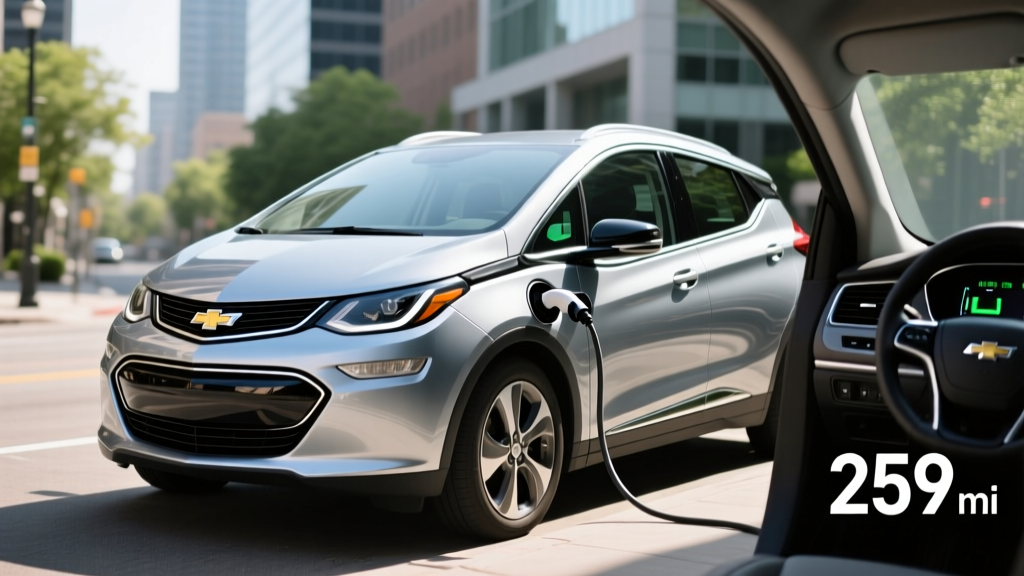
The Chevrolet Bolt EV has earned its reputation as one of the most accessible long-range electric vehicles on the market. With an EPA-estimated 259 miles of range, a 65 kWh lithium-ion (NMC) battery, and a starting MSRP hovering around $28,900 for the 2026 model year, it undercuts nearly every competitor in the sub-$35,000 EV segment. But the real question for cost-conscious buyers isn't just the sticker price — it's whether a Chevrolet Bolt EV lease makes financial sense over five years when you factor in charging, insurance, maintenance, depreciation, and the shifting landscape of federal tax incentives.
This guide walks through the real math of owning or leasing a 2026 Bolt EV, using concrete figures rather than marketing promises. We'll examine the IRS §30D tax credit rules that apply right now, compare per-mile fuel costs against a typical gas compact, and address the expenses that often catch first-time EV buyers off guard — particularly insurance premiums and resale value trends.
| EPA Range | 259 miles (expect ~220–235 mi highway; ~190–210 mi in freezing weather) |
| Battery | 65 kWh usable, NMC chemistry |
| DC Fast Charge | Peak ~115 kW (CCS1); 10–80% in ~30 min; tapers significantly above 80% |
| Level 2 Charge | 11.5 kW onboard charger; ~0–100% in ~7 hours |
| Efficiency | 120 MPGe combined / 28 kWh per 100 miles |
| Powertrain | 200 hp / 266 lb-ft torque; FWD; 0–60 mph in ~6.5 sec |
| Battery Warranty | 8 years / 100,000 miles (capacity retention ≥60%) |
| Base MSRP (2LT) | ~$28,900 (before incentives) |
The 5-Year Total Cost of Ownership Breakdown
Let's put actual numbers behind a five-year ownership scenario. The table below assumes 15,000 miles driven per year (75,000 total), home Level 2 charging at the national average electricity rate, and a comparison against a similarly priced gas compact (the Toyota Corolla LE, EPA 35 MPG combined).
| Category | Bolt EV (2LT) | Corolla LE |
|---|---|---|
| Purchase / Lease Cost | $28,900 (or ~$299/mo lease × 36 mo + $2,500 due at signing = ~$13,264) | $23,500 |
| Federal Tax Credit (§30D) | Up to –$7,500 (if eligible; see rules below) | $0 |
| Fuel / Charging (75k mi) | $3,750 (at $0.14/kWh, 28 kWh/100mi) | $7,500 (at $3.50/gal, 35 MPG) |
| Maintenance (5 years) | $1,200 | $3,200 |
| Insurance (5 years) | $9,500 | $7,200 |
| Depreciation (5 years) | ~$14,000 (48–52% of MSRP) | ~$9,400 (40% of MSRP) |
| Estimated 5-Year Net Cost | ~$28,650 (purchase) / ~$23,014 (lease + credit) | ~$32,000 |
Key takeaway: The Bolt EV's fuel and maintenance savings are substantial — roughly $5,750 over five years. However, higher insurance premiums (typically $400–$600 more annually for EVs) and steeper depreciation partially offset those gains. The federal tax credit, when available, is the single largest lever that tips the math in the Bolt's favor.
Federal Tax Credit Eligibility: What §30D Actually Requires in 2026
The IRS §30D Clean Vehicle Credit can deliver up to $7,500 off the cost of a new qualifying EV — but it is not automatic, and not every buyer qualifies. The rules have tightened considerably since the Inflation Reduction Act restructured the program. Here is the full eligibility checklist as of the 2026 tax year:
- Income Caps: Modified AGI must not exceed $150,000 (single), $225,000 (head of household), or $300,000 (married filing jointly). Source: IRS.gov §30D
- MSRP Caps: Vehicle base MSRP must be ≤$55,000 for sedans/hatchbacks (the Bolt EV qualifies at ~$28,900).
- Battery Sourcing: $3,750 of the credit requires ≥80% of critical minerals in the battery to be sourced from the US or FTA-partner countries. The Bolt EV's Ultium-platform battery has made progress on domestic sourcing, but confirm current-year compliance with your dealer.
- Component Manufacturing: The remaining $3,750 requires ≥100% of battery components to be manufactured or assembled in North America. GM's US-built battery packs generally satisfy this.
- FEOC Exclusion: Vehicles with battery components from a Foreign Entity of Concern (e.g., certain Chinese suppliers) may lose partial or full credit eligibility. This rule has phased in progressively since 2024.
- Point-of-Sale Transfer: As of 2024+, you can transfer the credit to the dealer at purchase, receiving it as an immediate price reduction rather than waiting to claim it on your tax return. This applies to leases as well — the leasing company claims the credit and typically passes savings through as a lower capitalized cost.
- One-Time Use: The credit is per-taxpayer, not per-vehicle. You can only claim it once per calendar year, and there is a VIN registration requirement via the IRS Energy Credits Online portal.
Lease-specific note: When you lease a Bolt EV, the lessor (the financing entity) technically claims the §30D credit. Reputable lessors pass this through as a "capitalized cost reduction," effectively lowering your monthly payment. Always verify this is reflected in your lease agreement — it should appear as a line-item credit reducing the vehicle's cap cost. If the dealer or lessor absorbs the credit without passing it through, you're paying more than necessary.
Charging Costs vs. Gas: The Per-Mile Math
The Bolt EV's efficiency rating of 28 kWh per 100 miles (EPA combined) makes it one of the more efficient EVs in its class. Here's what that translates to in actual dollars:
| Bolt EV (Home Charging) | $0.14/kWh × 28 kWh/100mi = $0.039/mile |
| Bolt EV (Public DCFC avg.) | $0.35/kWh × 28 kWh/100mi = $0.098/mile |
| Toyota Corolla LE (35 MPG) | $3.50/gal ÷ 35 MPG = $0.10/mile |
| Annual Savings (15k mi, home) | ~$915/year vs. gas at national averages |
Assumptions: national average residential electricity at $0.14/kWh (EIA data), gas at $3.50/gal. Your local utility rate and time-of-use plan will significantly affect actual costs. Many utilities offer off-peak EV rates as low as $0.06–$0.09/kWh, which drops the Bolt's per-mile cost below $0.025.
The charging advantage is most pronounced when you charge at home on a Level 2 (240V) circuit. Relying exclusively on public DC fast charging erodes most of the cost advantage — at $0.35–$0.48/kWh on networks like Electrify America or EVgo, you're paying close to gas-equivalent per-mile rates. For a Chevrolet Bolt EV lease to deliver maximum savings, home charging access is essentially non-negotiable.
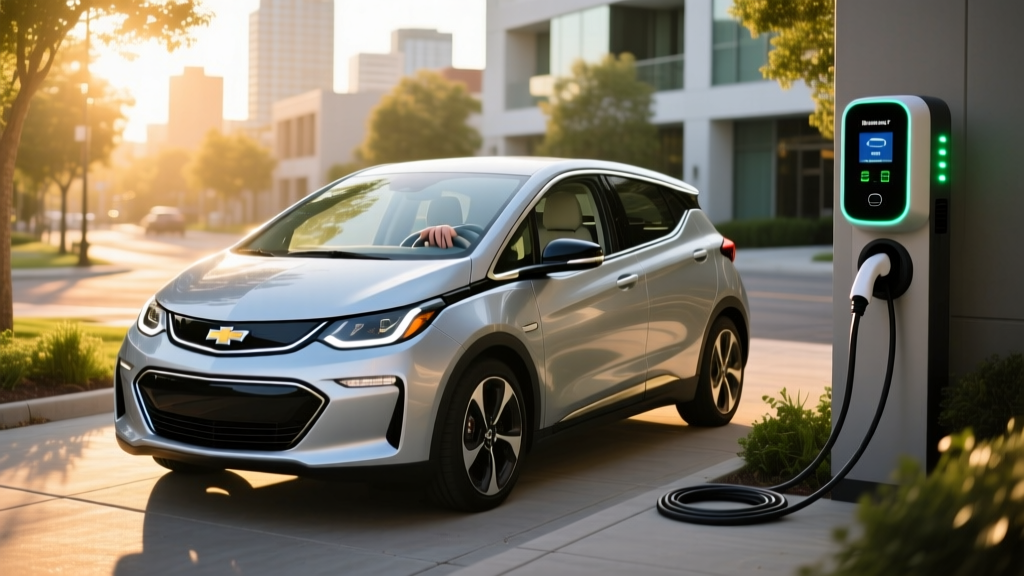
One practical note on the Bolt's charging speed: its peak DC rate of ~115 kW means a 10–80% session takes approximately 30 minutes. The charge curve tapers notably above 60% SoC, so if you're road-tripping, plan stops around 20–80% rather than topping off to 100%. Level 2 home charging at 11.5 kW (the Bolt's onboard charger capacity) replenishes the full 65 kWh battery in roughly 7 hours — easily overnight.
Maintenance Savings: Where EVs Genuinely Win
EVs eliminate several recurring maintenance items that gas vehicles require throughout their lifespan. The Bolt EV has no engine oil, no transmission fluid, no spark plugs, no timing belt, and no exhaust system. Here's how the maintenance ledger compares:
| Service Item | Bolt EV | Gas Compact |
|---|---|---|
| Oil Changes (5–8 over 5 yrs) | $0 | $350–$600 |
| Brake Pads (regen extends life 2–3×) | $0–$200 | $400–$800 |
| Coolant / Transmission Fluid | $150 | $400–$600 |
| Tire Rotation (every 7,500 mi) | $200 | $200 |
| Tire Replacement (EVs wear tires ~15–20% faster due to weight + instant torque) | $800–$1,000 | $600–$800 |
| Cabin Air Filter / Wipers / Misc. | $250 | $300 |
| Estimated 5-Year Total | ~$1,200–$1,500 | ~$2,800–$3,500 |
Net maintenance savings of $1,500–$2,000 over five years are realistic. The regenerative braking system in the Bolt EV (which recaptures kinetic energy to recharge the battery) significantly extends brake pad life — many EV owners report original brake pads lasting past 80,000 miles. However, EV tires do wear faster due to the vehicle's higher curb weight (~3,500 lbs for the Bolt) and instant electric torque. Budget for one tire replacement set during a 5-year ownership period.
The Insurance Reality: Higher Premiums, Explained
This is where many first-time EV buyers encounter an unpleasant surprise. Insurance for the Bolt EV typically runs 15–25% higher than for a comparable gas compact. Based on national rate averages, expect to pay roughly $1,700–$2,100 per year for full coverage on a Bolt EV, compared to $1,300–$1,600 for a Corolla.
The reasons are structural, not arbitrary:
- Higher repair costs: EV battery packs, power electronics, and specialized sensors are expensive to replace after a collision. Insurers price this risk into premiums.
- Specialized labor: High-voltage system repairs require certified technicians, and fewer body shops have that certification, driving up labor rates.
- Vehicle MSRP: Even though the Bolt is affordable for an EV, its ~$28,900 base price is still higher than many gas compacts, and insurers base comprehensive/collision premiums partly on replacement value.
- Total-loss thresholds: Battery damage in even a minor collision can push an EV to a total-loss declaration, which insurers factor into rate-setting.
How to mitigate this: Shop quotes from at least three insurers — EV-friendly carriers like State Farm, GEICO, and Progressive have improved their EV pricing models. Some offer specific EV discounts or low-mileage programs. Bundling home and auto, maintaining a clean driving record, and opting for a higher deductible ($1,000 instead of $500) can each reduce your premium by 5–15%.
Depreciation and Resale Value: An Honest Assessment
EV depreciation has been one of the most volatile variables in ownership economics. After significant price cuts by Tesla and others in 2023–2024 rippled through the used EV market, many models experienced steeper-than-expected value losses. The Bolt EV was not immune.
Based on current resale data, expect a Bolt EV to retain approximately 48–52% of its MSRP after five years / 75,000 miles. That translates to roughly $14,000–$15,000 in depreciation from a ~$28,900 purchase. For comparison, a Toyota Corolla retains about 58–62% over the same period.
Factors working against the Bolt's resale value:
- DC fast-charge speed: The Bolt's ~115 kW peak charge rate, while adequate, falls behind newer EVs offering 150–250+ kW. As public charging infrastructure matures, buyers increasingly prioritize fast-charge capability.
- Battery degradation perception: While GM's 8-year/100,000-mile battery warranty provides coverage, used buyers remain cautious about long-term battery health, even though real-world data shows most modern NMC packs retain 85–90% capacity at 100k miles.
- Market competition: Each new affordable EV launch (from brands like Hyundai, Kia, and Volvo) pressures used Bolt pricing downward.
Lease advantage: If depreciation is your primary concern, a Chevrolet Bolt EV lease transfers that risk to the lessor. You lock in a residual value at signing, and if the used EV market softens further, you simply return the car at lease end with no exposure to resale value fluctuations. This is arguably the strongest financial argument for leasing over buying.
State, Local, and Utility Incentives: The Layered Savings Stack
Federal §30D is just one layer. Depending on your location, additional incentives can stack:
- State rebates: California's CVRP (up to $2,000 for income-qualified buyers), Colorado's innovative vehicle credit ($5,000 refundable), Massachusetts MOR-EV ($1,500–$3,500), and New York's Drive Clean ($2,000 point-of-sale). Dozens of other states offer credits ranging from $500–$5,000.
- Utility rebates: Many electric utilities offer $250–$1,000 rebates for purchasing an EV, plus additional rebates ($200–$500) for installing a home Level 2 charger. Pacific Gas & Electric, ConEdison, Xcel Energy, and Austin Energy are notable examples.
- HOV lane access: Several states (CA, CO, FL, GA, MD, NJ, NY, UT, VA, WA) grant single-occupant HOV lane access to EVs — a significant time savings with an implicit dollar value for commuters.
- Reduced registration fees: A few states offer reduced EV registration, though many have moved in the opposite direction, imposing additional EV registration fees ($50–$225/year) to offset lost gas tax revenue.
Incentive availability and amounts vary by jurisdiction and change frequently. Check AFDC.energy.gov for a current, state-by-state database, and consult your utility's EV program page for charger rebates.
In a best-case scenario — federal credit ($7,500) + state rebate ($2,000) + utility rebate ($500) + HOV access — the effective price of a $28,900 Bolt EV can drop to approximately $18,900, making the lease or purchase economics compelling even against sub-$25,000 gas compacts.
Lease vs. Buy: A Decision Framework for the Bolt EV
- You want to avoid depreciation risk in a volatile used-EV market
- The lessor passes the §30D credit through as a cap-cost reduction
- You drive under 12,000–15,000 miles/year (most lease mileage caps)
- You prefer lower monthly payments and plan to upgrade in 3 years
- Your state taxes the full vehicle price on purchase but only taxes monthly lease payments
- You plan to keep the car 6+ years (amortizing the higher purchase price over a longer horizon)
- You drive more than 15,000 miles/year (lease overage penalties are $0.15–$0.25/mile)
- You want full ownership equity and the option to sell privately
- You qualify for the full $7,500 §30D credit and your state taxes purchases and leases equally
- You want the flexibility to modify the vehicle (aftermarket wheels, wraps, etc.)
For a typical 36-month / 36,000-mile Bolt EV lease in 2026, expect monthly payments in the $280–$360 range with $2,000–$3,000 due at signing, depending on your credit tier and whether the §30D credit is applied as a cap-cost reduction. Always negotiate the capitalized cost (the effective sale price the lease is based on) — it should be at or below MSRP, not inflated with add-ons.
Frequently Asked Questions
How much does it really cost to own a Chevrolet Bolt EV over 5 years?
With the federal tax credit applied, expect a net 5-year cost of roughly $23,000–$29,000 depending on whether you lease or buy, your electricity rate, insurance premiums in your area, and actual depreciation. Without the credit, the 5-year cost rises to $30,500–$36,500. The Bolt's low fuel and maintenance costs offset its higher insurance and depreciation relative to a gas compact, but the tax credit is the key variable that makes the EV cheaper overall.
Do I qualify for the $7,500 federal EV tax credit on a Bolt EV?
You likely qualify if your modified adjusted gross income is under $150,000 (single) or $300,000 (joint), the vehicle's MSRP is under $55,000 (it is), and the Bolt's battery meets the 2026 critical-mineral and component-manufacturing sourcing requirements. The credit can be transferred to the dealer at point of sale for an immediate price reduction. Verify current eligibility on the IRS §30D page and through the IRS Energy Credits Online portal before signing.
How much do I save on fuel and maintenance vs. a gas car?
Combined fuel and maintenance savings typically run $5,000–$6,500 over five years / 75,000 miles, assuming home charging at $0.14/kWh and national-average gas prices. Fuel savings alone are roughly $3,500–$4,000, with maintenance savings adding $1,500–$2,000. Savings are larger if your utility offers off-peak EV rates or if gas prices rise above $3.50/gallon.
Are EVs more expensive to insure than gas cars?
Yes, typically 15–25% more expensive. For the Bolt EV, expect $1,700–$2,100/year for full coverage vs. $1,300–$1,600 for a comparable gas compact. Higher repair costs, specialized labor requirements, and battery replacement risk drive the premium difference. Shopping multiple carriers and opting for a higher deductible can reduce the gap.
How well does the Chevrolet Bolt EV hold its value?
The Bolt EV retains approximately 48–52% of MSRP after five years / 75,000 miles, translating to $14,000–$15,000 in depreciation. This is below the 58–62% retention of top gas compacts but has stabilized since the 2023–2024 used-EV price correction. Leasing transfers depreciation risk to the lessor and may be the better financial choice if resale uncertainty concerns you.
Can I charge a Bolt EV at Tesla Superchargers?
The 2026 Bolt EV comes equipped with a CCS1 charge port. GM has been transitioning to the NACS (Tesla-style) connector across its lineup, and adapters are available for CCS-equipped GM vehicles to access Tesla Superchargers (now open to non-Tesla EVs on many stalls). Confirm adapter availability and Supercharger access with your dealer at purchase. At home, you'll use a standard J1772 Level 2 connector.