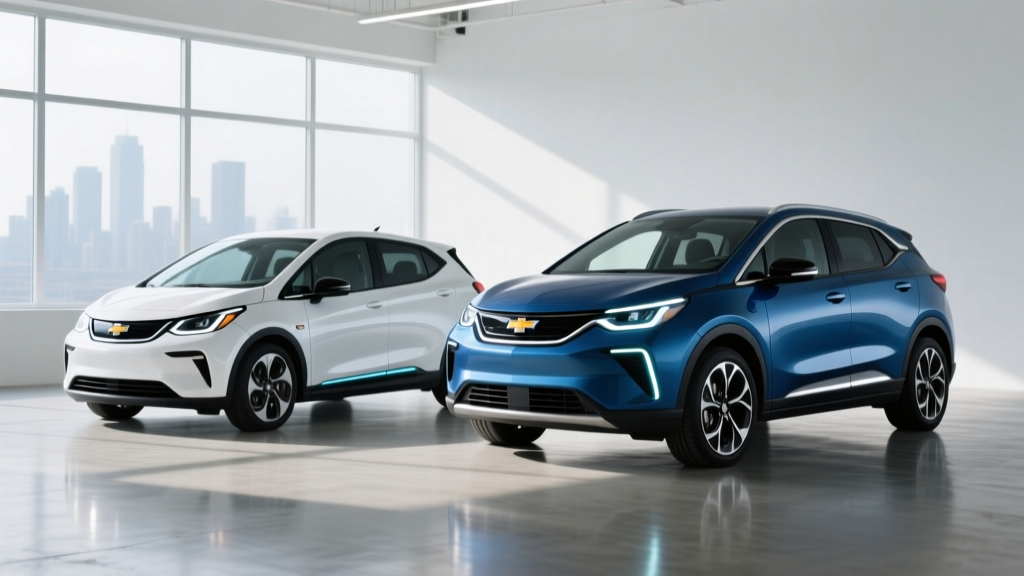
The Chevrolet Bolt EV and its longer-wheelbase sibling, the Bolt EUV, remain the value benchmark in the compact electric hatchback and crossover segment. For 2026, GM has refreshed the lineup with updated styling, a revised infotainment system, and continued use of the Ultium-adjacent battery architecture introduced with the second-generation Bolt. If you're shopping for an affordable, practical daily-driver EV with genuine range, the Bolt twins demand a close look — but their DC fast-charging limitations are a trade-off every buyer should understand before signing.
Range & Efficiency: EPA Numbers vs. the Real World
The 2026 Bolt EV carries an EPA-estimated range of 259 miles on a full charge, while the larger Bolt EUV is rated at 247 miles. Both figures come from a usable battery capacity of approximately 65 kWh using NMC (nickel manganese cobalt) lithium-ion chemistry — a high-energy-density pack that prioritizes range over the ultra-long cycle life you'd get from LFP.
EPA Sticker: Bolt EV 259 mi | Bolt EUV 247 mi
Mixed driving (city/suburban): Expect 245–265 mi in mild weather — the Bolt's regenerative braking and low-speed efficiency shine in stop-and-go traffic.
Sustained highway (70–75 mph): Plan for 210–230 mi. The Bolt's aerodynamics and single-speed reduction gear don't hide highway energy consumption as well as some rivals.
Cold weather (below 32°F): Range drops to roughly 175–200 mi without preconditioning. The Bolt uses a resistance heater rather than a heat pump, which draws significant energy in deep cold.
Efficiency ratings from fueleconomy.gov put the Bolt EV at 120 MPGe combined (28 kWh/100 mi), while the EUV lands at 115 MPGe combined (29 kWh/100 mi). These are strong numbers for the segment, though the Hyundai Kona Electric and Tesla Model Y edge slightly ahead in highway efficiency.
Charging Speed: The Bolt's Known Compromise
Charging is where the Bolt platform reveals its most discussed limitation. The 2026 models retain a peak DC fast-charge rate of approximately 55 kW — far below the 150–250 kW peaks offered by competitors on 800V or high-current 400V architectures.
| Charging Level | Power / Rate | Time / Range Added |
|---|---|---|
| Level 1 (120V household) | ~1.4 kW | ~4 miles per hour |
| Level 2 (240V, 48A) | 11.5 kW | ~39 miles per hour; full charge in ~7 hours |
| DC Fast Charge (CCS/NACS) | 55 kW peak | 10–80% in ~55–60 minutes |
On a road trip, that 10–80% DC session means roughly an hour at the charger — workable if you're planning meal breaks, but noticeably slower than the 18–25 minute stops you'd experience in a Hyundai Ioniq 5 or Tesla Model 3. The charge curve is relatively flat, meaning you won't see dramatic tapering until above 80% SoC, but the peak ceiling simply isn't competitive for frequent long-distance travelers.
At home, the Bolt's 11.5 kW Level 2 acceptance rate is excellent. A properly installed 48-amp Level 2 station (requiring a 60-amp circuit) will replenish the full battery overnight in about seven hours. For most owners who charge at home nightly, the DC fast-charge limitation matters far less than critics suggest.
Performance & Drivetrain
Both the Bolt EV and EUV are front-wheel drive, powered by a single permanent-magnet electric motor producing 200 horsepower and 266 lb-ft of torque. There is no AWD or dual-motor option.
The Bolt EV sprints from 0–60 mph in approximately 6.5 seconds, while the slightly heavier EUV clocks in at roughly 7.0 seconds. Neither will win drag races against a Tesla Model 3 Performance, but the instant torque delivery makes both feel brisk in city merging and passing situations. The single-pedal driving mode, enabled through aggressive regenerative braking, is intuitive and reduces brake wear substantially in daily commuting.
Interior, Cargo & Tech
The Bolt EV provides 94.4 cubic feet of passenger volume and 16.3 cu ft of cargo space behind the rear seats (expanding to 57.2 cu ft with seats folded). The EUV, with its stretched wheelbase, offers more rear-seat legroom — 39.1 inches vs. the EV's 36.0 inches — along with 16.3 cu ft of cargo volume (56.9 cu ft max). Neither offers a frunk.
For 2026, the infotainment system centers on an 11-inch diagonal touchscreen running GM's latest software with wireless Apple CarPlay and Android Auto, built-in Google apps, and over-the-air update capability. The digital driver display is an 8-inch configurable cluster.
Standard driver-assistance features under the Chevy Safety Assist suite include automatic emergency braking, forward collision alert, lane keep assist with lane departure warning, following distance indicator, and IntelliBeam automatic high beams. Adaptive cruise control is available on higher trims. Note: these are SAE Level 1–2 driver-assistance systems — the driver must remain fully engaged at all times. GM's Super Cruise hands-free system is not available on the Bolt platform.
Pricing, Trims & Federal Tax Credit
The 2026 Bolt EV starts at an MSRP of approximately $26,900 (1LT trim), with the 2LT adding premium features at around $30,300. The Bolt EUV begins at $28,200 (LT) and climbs to roughly $32,400 (Premier). Destination charges add approximately $1,195.
| Model / Trim | Base MSRP | Est. After §30D Credit* |
|---|---|---|
| Bolt EV 1LT | $26,900 | ~$19,400 |
| Bolt EV 2LT | $30,300 | ~$22,800 |
| Bolt EUV LT | $28,200 | ~$20,700 |
| Bolt EUV Premier | $32,400 | ~$24,900 |
*Federal tax credit figures assume full $7,500 eligibility under IRS §30D. Eligibility depends on multiple factors:
- MSRP cap: Vehicle must be under $55,000 (cars) — all Bolt trims qualify.
- Buyer income cap: Modified AGI must not exceed $150,000 (single) / $225,000 (head of household) / $300,000 (joint).
- Battery sourcing: Critical minerals and battery components must meet phased-in domestic/free-trade sourcing thresholds that tighten annually. Verify current-year compliance on the fueleconomy.gov tax credit lookup.
- Point-of-sale transfer: Eligible buyers can transfer the credit to the dealer at purchase for an immediate price reduction rather than waiting to claim it on their tax return.
Because battery-sourcing rules evolve yearly, always confirm the Bolt's current eligibility status before purchase. A qualified tax professional can verify your personal eligibility.
Warranty & Battery Longevity
Chevrolet backs the Bolt's battery pack and electric drive components with an 8-year / 100,000-mile warranty (whichever comes first), covering defects and capacity loss below a specified retention threshold — typically around 60–70% of original capacity depending on model year terms. The limited vehicle warranty is 3 years / 36,000 miles, with a 5-year / 60,000-mile powertrain warranty covering non-battery drivetrain components.
NMC batteries in the Bolt platform have demonstrated solid longevity in real-world fleet data, with most owners reporting less than 8–10% degradation over the first 100,000 miles when following best practices (avoiding repeated 100% charges, minimizing DC fast-charging exclusively, and using preconditioning in cold weather).
Pros, Cons & Verdict
- Among the lowest starting MSRPs of any EV with 250+ miles of range
- Strong city efficiency and regenerative braking
- Excellent Level 2 home charging rate (11.5 kW)
- Spacious rear seat in the EUV variant
- Federal tax credit eligible (verify current sourcing rules)
- Proven platform with real-world reliability data
- DC fast-charging capped at ~55 kW — slow for road trips
- No heat pump — cold-weather range loss is significant
- FWD only; no AWD option for snow-belt buyers
- No frunk; cargo space is adequate but not class-leading
- Super Cruise not available on this platform
- Road-trip charging stops take ~1 hour (10–80%)
Who Should Buy the Chevrolet Bolt EV or EUV?
Choose the Bolt EV if: You're a commuter or city driver who charges at home nightly, values the lowest possible purchase price, and rarely takes road trips exceeding 200 miles in a single day. The 1LT trim at under $20K after the tax credit is arguably the best value in electric transportation.
Choose the Bolt EUV if: You need the crossover ride height and extra rear-seat legroom for child seats or taller passengers, and your driving pattern is primarily suburban and local. The EUV Premier with available adaptive cruise is a solid small-family EV.
Look elsewhere if: You road-trip frequently (the 55 kW DC charge rate will frustrate you), need AWD for harsh winters, or want access to hands-free highway driving aids like Super Cruise or BlueCruise. Consider the Hyundai Kona Electric, Tesla Model Y, or Chevrolet Equinox EV instead.
Frequently Asked Questions
What is the real-world range of the 2026 Chevrolet Bolt EV and EUV?
In mixed city/suburban driving at moderate temperatures, expect 245–265 miles from the Bolt EV and 235–250 miles from the EUV. Sustained highway driving at 70+ mph reduces that to roughly 210–230 miles, and winter cold can drop range to 175–200 miles without preconditioning.
How fast does the Bolt charge at home and on the road?
At home on a 240V Level 2 charger, the Bolt accepts up to 11.5 kW, adding about 39 miles of range per hour and fully recharging in roughly 7 hours. On DC fast chargers, the peak rate is approximately 55 kW, making a 10–80% session take about 55–60 minutes.
Does the 2026 Bolt qualify for the $7,500 federal EV tax credit?
The Bolt's MSRP falls well under the $55,000 cap for cars, and it has historically qualified. However, eligibility depends on current-year battery-sourcing and critical-mineral requirements under IRS §30D, plus your personal income limits. Always verify on fueleconomy.gov and consult a tax professional before purchase.
Is the Bolt EV or EUV better for families?
The EUV is the stronger family choice thanks to its 3.1 extra inches of rear legroom, easier car-seat installation, and slightly more commanding ride height. Cargo volume is nearly identical between the two.
How does the Bolt compare to the Tesla Model 3 or Hyundai Kona Electric?
The Bolt wins on base price and tax-credit-adjusted value. The Model 3 offers far superior DC fast-charging (~170 kW), AWD options, and Supercharger network access. The Kona Electric provides similar range with slightly faster DC charging and a heat pump for better cold-weather performance. Your priority — price, charging speed, or cold-weather capability — determines the winner.