Quick Answer: Is the 2026 Chevrolet Bolt EV Worth Buying?
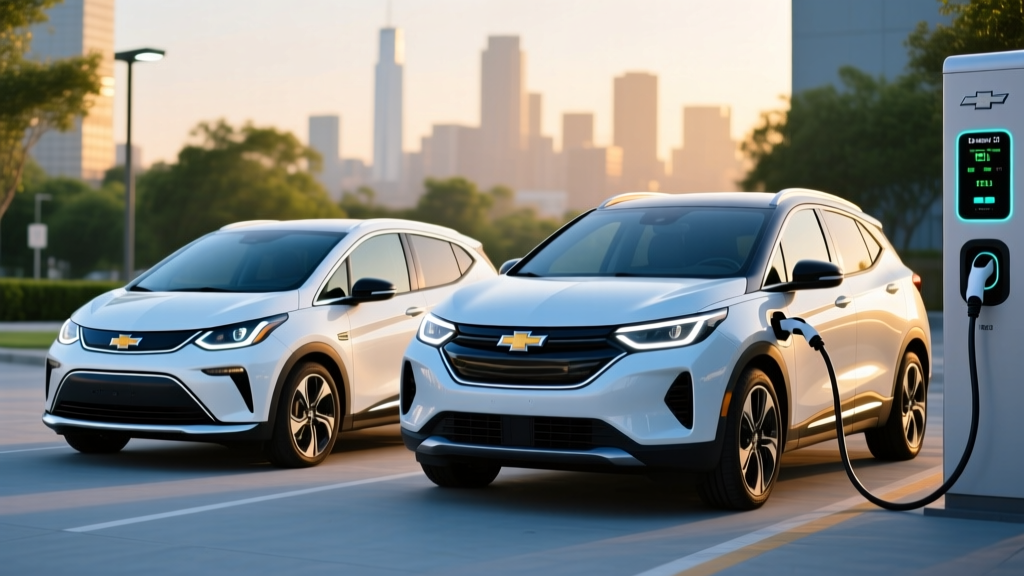
The 2026 Chevrolet Bolt EV (and its longer-wheelbase sibling, the Bolt EUV) remains one of the most affordable long-range electric vehicles on the U.S. market. With an EPA-estimated 259 miles of range (Bolt EV) and 247 miles (Bolt EUV), a starting MSRP near $28,900, and eligibility for up to $7,500 in federal tax credits under IRS §30D — the Bolt delivers the best value-per-mile-of-range in its segment. However, its DC fast charging peaks at just 55 kW, meaning road trips require patience. If you primarily commute and can charge at home, the Bolt is an outstanding entry point into EV ownership. If you road-trip frequently or lack home charging, explore alternatives.
The 2026 Chevrolet Bolt: What Changed for the New Generation
After a brief hiatus, the Chevrolet Bolt returned on GM's next-generation Ultium platform for the 2025 model year, and the 2026 Bolt EV and Bolt EUV carry forward with meaningful improvements. The most significant change: GM replaced the older NMC (nickel manganese cobalt) battery with a 65 kWh usable lithium iron phosphate (LFP) pack. LFP chemistry offers longer cycle life, greater thermal stability, and eliminates cobalt — though it trades some energy density for those benefits, which is why the pack is slightly larger physically than the previous 65 kWh NMC unit.
The 2026 Bolt EV produces 200 horsepower and 236 lb-ft of torque from a single front-mounted permanent-magnet motor. The 0-60 mph time sits at approximately 7.0 seconds — adequate for merging and city driving, though not quick by modern EV standards. The Bolt EUV, with its stretched wheelbase for rear-seat legroom, runs identical powertrain hardware.
| Spec | Bolt EV | Bolt EUV |
|---|---|---|
| EPA Range | 259 miles | 247 miles |
| Battery (usable) | 65 kWh, LFP | 65 kWh, LFP |
| Motor | FWD, 200 hp / 236 lb-ft | FWD, 200 hp / 236 lb-ft |
| 0-60 mph | ~7.0 sec | ~7.2 sec |
| Max DC Fast Charge | 55 kW (CCS) | 55 kW (CCS) |
| 10-80% DCFC Time | ~48 minutes | ~48 minutes |
| Level 2 Charge Rate | 11.5 kW (48A) | 11.5 kW (48A) |
| Level 2 0-100% Time | ~6.5 hours | ~6.5 hours |
| EPA Efficiency (combined) | 120 MPGe | 115 MPGe |
| Cargo Volume (rear seats up) | 16.3 cu ft | 16.3 cu ft |
| Starting MSRP | $28,900 | $30,400 |
| Battery/Powertrain Warranty | 8 yr / 100,000 mi | 8 yr / 100,000 mi |
Sources: fueleconomy.gov, Chevrolet media specifications.
Real-World Range: What to Actually Expect
The EPA sticker says 259 miles for the Bolt EV, but real-world results depend heavily on how and where you drive. In our experience and consistent with independent testing data, here's what Bolt owners should plan for:
Real-World Range Expectations (Bolt EV, 259 mi EPA)
- City/suburban, mild weather (60-75°F): 260-280 miles — regenerative braking recovers energy in stop-and-go traffic, often exceeding EPA.
- Highway, 70 mph, mild weather: 220-240 miles — EVs lose efficiency at sustained high speeds due to aerodynamic drag.
- Highway, 70 mph, winter (30°F): 175-200 miles — cold temperatures increase battery resistance and cabin heating draws significant energy. LFP packs are somewhat more resilient to cold degradation than older NMC chemistries, but the Bolt lacks a heat pump, relying on resistive heating instead.
- Mountain driving, loaded: 190-210 miles — elevation gain consumes extra energy, though regen recovers much of it on descents.
The Bolt's lack of a heat pump is a notable omission for 2026. Competitors like the Hyundai Kona Electric and the Kia Niro EV include heat pumps that improve winter efficiency by 15-25%. If you live in a cold climate (think Minnesota, Michigan, or New England), budget for 30-35% range reduction in deep winter.
Charging: The Bolt's Biggest Trade-Off
Here's where the Bolt's value proposition hits its sharpest limitation. The 55 kW peak DC fast charging rate is the slowest among mainstream 2026 EVs with comparable range. To put this in perspective:
| Charging Level | Power (kW) | Miles Added per Hour | Typical Use Case |
|---|---|---|---|
| Level 1 (120V household) | ~1.4 kW | ~4 mi/hr | Overnight trickle, emergencies |
| Level 2 (240V, 48A) | 11.5 kW | ~35 mi/hr | Home overnight, workplace |
| DC Fast Charge (CCS) | 55 kW peak | ~150 mi/hr (peak) | Road trips, public stations |
A 10-80% DC fast charge takes roughly 48 minutes at a capable CCS station. The charge curve is relatively flat — the Bolt sustains close to 55 kW through about 60% State of Charge, then tapers gradually. That's actually decent curve behavior; the problem is simply the low peak ceiling.
For context, the Hyundai Kona Electric charges at up to 100 kW (10-80% in ~30 minutes), and the Tesla Model 3 at up to 170 kW on V3 Superchargers (~20 minutes, 10-80%). On a 300-mile road trip, Bolt drivers will spend about 25-30 extra minutes charging compared to a Model 3 driver.
Level 2 home charging is where the Bolt excels for daily use. At 11.5 kW, a full 0-100% charge completes in about 6.5 hours — easily overnight on a standard 240V/48A home charger. For a typical daily commute of 40 miles, you'll replenish that in roughly 1.5 hours of Level 2 charging.
Cost Breakdown: Bolt EV vs. a Comparable Gas Car
The financial case for the Bolt depends on your driving patterns, electricity rates, and whether you qualify for federal incentives. Let's compare the 2026 Bolt EV against a realistic gas alternative — the 2026 Chevrolet Trax (a subcompact crossover starting around $22,500, EPA-rated 30 MPG combined).
| Cost Category | 2026 Bolt EV (2LT) | 2026 Chevy Trax (2RS) |
|---|---|---|
| MSRP (before incentives) | $28,900 | $25,500 |
| Federal Tax Credit (§30D) | -$7,500* | $0 |
| Effective Purchase Price | $21,400 | $25,500 |
| Energy/Fuel (75k mi) | $2,475† | $7,500‡ |
| Maintenance (75k mi) | ~$600 | ~$2,200 |
| Insurance (5-yr avg) | ~$7,500 | ~$6,250 |
| 5-Year Total Cost | ~$31,975 | ~$41,450 |
*§30D eligibility requires meeting income caps, MSRP caps, and battery sourcing rules. Confirm at irs.gov before purchase.
†Based on $0.13/kWh national average, 3.5 miles/kWh Bolt efficiency. Actual rates vary by utility.
‡Based on $3.20/gallon, 30 MPG combined. Gas prices fluctuate significantly.
The Bolt wins decisively on operating costs. Over five years, the energy savings alone total roughly $5,000, and maintenance savings add another $1,600 — no oil changes, no spark plugs, far less brake wear thanks to regenerative braking. Insurance runs slightly higher for the Bolt (roughly $250/year more on average), but the tax credit and fuel savings more than offset this.
Federal Tax Credit: Does the 2026 Bolt Qualify?
As of 2026, the Chevrolet Bolt EV and EUV are expected to qualify for the full $7,500 federal tax credit under IRS §30D, thanks to GM's Ultium-platform battery sourcing from U.S. and free-trade-agreement partner facilities. However, eligibility is not automatic — you must meet all of the following:
- MSRP cap: Vehicle MSRP must not exceed $55,000 for SUVs (Bolt EUV qualifies) or $25,000 for sedans/hatchbacks (Bolt EV qualifies — all trims are under the cap).
- Buyer income cap: Modified adjusted gross income must not exceed $150,000 (single), $225,000 (head of household), or $300,000 (married filing jointly).
- Battery sourcing: Critical minerals and battery components must meet phased-in percentage thresholds from U.S. or FTA partners. The 2026 Bolt's Ultium LFP pack is designed to meet these requirements.
- Point-of-sale transfer: You can elect to transfer the credit to the dealer at purchase, reducing your out-of-pocket cost immediately — you don't have to wait until tax filing.
Important caveat: Battery sourcing rules and eligible vehicle lists can change. Always verify current eligibility at fueleconomy.gov's tax credit page and consult a tax professional before relying on the credit in your purchase decision.
Who Should Buy the Bolt — and Who Should Look Elsewhere
Decision Framework: Is the 2026 Bolt Right for You?
Choose the Bolt EV if:
- You can install a Level 2 home charger (or already have 240V access)
- Your daily round-trip commute is under 100 miles
- You take road trips fewer than 4-5 times per year
- You qualify for the §30D tax credit (brings effective price under $22,000)
- You want the lowest cost-per-mile-of-range available in 2026
Choose the Bolt EUV if:
- You need the above PLUS more rear-seat legroom (39.1 inches vs. 36.0 in the EV)
- You occasionally carry adult passengers in the back seat
- You don't mind sacrificing 12 miles of range for the longer wheelbase
Look at alternatives if:
- You take frequent road trips and 48-minute charging stops frustrate you (consider Hyundai Kona Electric, Tesla Model 3, or Chevy Equinox EV)
- You lack home charging access and rely entirely on public DCFC — the Bolt's slow charging becomes a daily burden
- You live in extreme cold and need maximum winter range (consider AWD options like the Tesla Model Y or Hyundai Ioniq 5 with heat pumps)
- You need towing capability (the Bolt is not rated for towing)
Common Bolt EV Misconceptions — Addressed
| Myth | Fact |
|---|---|
| "The Bolt battery will need expensive replacement soon." | GM warrants the battery for 8 years/100,000 miles against degradation below 70% capacity. LFP chemistry is known for exceptional cycle life — many packs are projected to last 300,000+ miles before hitting 80% degradation. Replacement, if ever needed out of warranty, currently runs $8,000-$12,000 for this pack size. |
| "You can't road-trip in a Bolt." | You can, but it requires planning. A 300-mile trip means one 45-minute charging stop. Apps like PlugShare and the EV's built-in navigation route you through CCS stations. It's slower than a Tesla or 800V Hyundai, but entirely doable. |
| "The Bolt qualifies for the tax credit for everyone." | No. Income caps apply ($150K single / $300K joint). If your AGI exceeds the limit, you pay full MSRP. Additionally, leased Bolts may qualify for a different commercial credit (§45W) that the leasing company captures — ask the dealer how this affects your lease terms. |
| "Level 1 charging is enough for daily use." | At ~4 miles of range per hour on a standard 120V outlet, you'd add ~48 miles overnight (12 hours). If your daily driving exceeds 40-50 miles, Level 1 alone will not keep up. Budget $500-$1,500 for a Level 2 home charger installation. |
| "LFP batteries are worse in cold weather." | LFP batteries do lose more capacity temporarily in cold vs. NMC at the cell level, but modern thermal management systems mitigate this. The bigger cold-weather factor for the Bolt is its lack of a heat pump — cabin heating draws heavily from the pack in winter regardless of chemistry. |
Home Charging Setup: What First-Time Buyers Need
If you're buying a Bolt as your first EV, home charging access is the single biggest factor in your ownership satisfaction. Here's what to budget for:
| Component | Cost Range |
|---|---|
| Level 2 EVSE (40-48A, hardwired) | $350 – $700 |
| Electrician labor (240V/50A circuit run) | $500 – $2,000 |
| Electrical permit | $50 – $200 |
| Panel upgrade (if needed, 100A → 200A) | $1,500 – $3,500 |
| Total (no panel upgrade) | $900 – $2,900 |
| Total (with panel upgrade) | $2,400 – $6,400 |
The Bolt accepts up to 11.5 kW on Level 2, which requires a 48-amp charger on a 60-amp circuit. Don't undersize the circuit — a 40-amp charger (the common "32A" unit) will limit you to 9.6 kW and add roughly an hour to a full charge. We recommend a hardwired 48A unit (such as the ChargePoint Home Flex or Emporia Level 2) for the fastest, most reliable home charging.
Panel upgrade reality check: If your home has a 100-amp main panel that's already near capacity (common in older homes), adding a 60-amp EV circuit may require a panel upgrade to 200 amps. Get a quote from a licensed electrician before purchasing your Bolt — this can add $1,500-$3,500 to your first-year cost but is a one-time investment that adds home value.
Frequently Asked Questions
Does the 2026 Chevrolet Bolt use the NACS (Tesla) connector?
No. The 2026 Bolt retains the CCS1 connector for DC fast charging and the J1772 connector for Level 1/2 AC charging. GM has announced a transition to NACS for future models, but the current-generation Bolt ships with CCS. You can use a CCS-to-NACS adapter at Tesla Superchargers that support non-Tesla vehicles, though charging speed will still be limited by the Bolt's 55 kW peak.
How long will the Bolt's LFP battery last?
LFP (lithium iron phosphate) batteries are rated for 3,000-5,000+ full charge cycles before degrading to 80% of original capacity. At the Bolt's 259-mile range, that translates to roughly 777,000 to 1.3 million theoretical miles before significant degradation. Real-world factors (temperature, charging habits, calendar aging) reduce this, but LFP packs are widely expected to outlast the vehicle itself. GM warrants the battery at 8 years/100,000 miles with a minimum 70% capacity retention threshold.
Can I charge the Bolt at Tesla Superchargers?
Yes, with caveats. Tesla has opened select Supercharger locations to non-Tesla CCS vehicles via the built-in Magic Dock adapter or through third-party CCS-to-NACS adapters. However, not all Supercharger stations support non-Tesla vehicles, and the Bolt's 55 kW charge rate means you won't benefit from Supercharger speeds. Use the PlugShare or Tesla app to confirm station compatibility.
Is the Bolt EV or EUV better for families?
The EUV offers 3.1 inches more rear legroom (39.1" vs. 36.0") and a slightly more upright seating position, making it more comfortable for rear-facing child seats and adult passengers. However, it sacrifices 12 miles of EPA range (247 vs. 259) and costs $1,500 more. For families with young children, the EUV is the better pick. For singles or couples, the EV's extra range and lower price edge it out.
What's the real cost per mile to drive a Bolt?
At the U.S. national average electricity rate of $0.13/kWh and the Bolt's efficiency of approximately 3.5 miles/kWh (120 MPGe combined), your fuel cost is roughly $0.037 per mile. Compare this to a 30 MPG gas car at $3.20/gallon: $0.107 per mile. The Bolt costs about one-third as much per mile to "fuel." Over 15,000 miles per year, that's approximately $1,050 in annual energy savings.
Does the Bolt have any driver-assistance features?
The 2026 Bolt offers Chevy's standard Safety Assist suite: automatic emergency braking, forward collision alert, lane keep assist, following distance indicator, and IntelliBeam headlights. Super Cruise (GM's hands-off, eyes-on Level 2 highway system) is not available on the Bolt — it requires GM's more expensive Ultium-platform vehicles. Remember: all Level 2 systems require active driver supervision. See NHTSA's guidance on vehicle automation levels for context.