The Verdict: America's Budget EV Gets a Long-Overdue Charging Upgrade
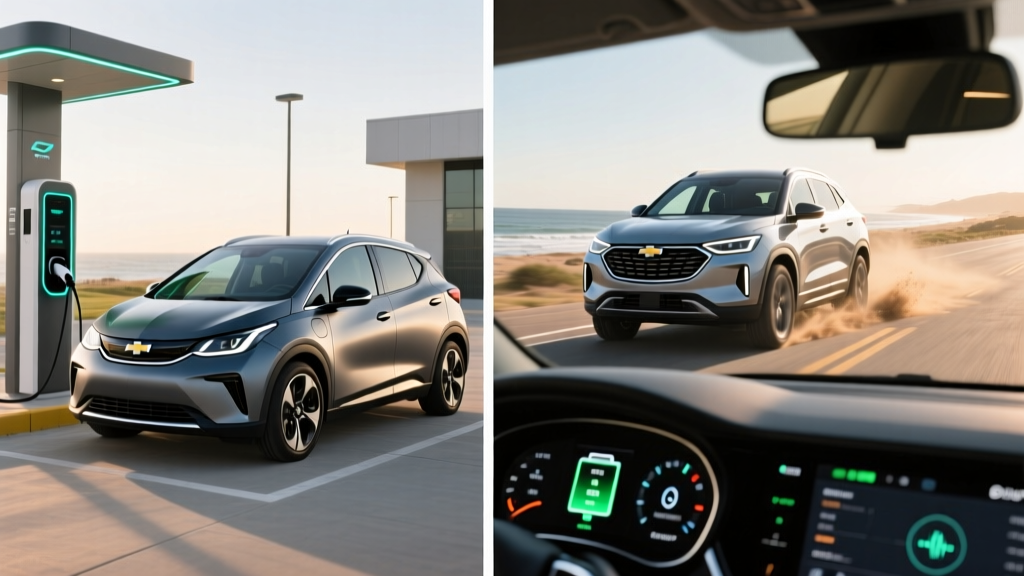
The Chevrolet Bolt EV and its stretched-wheelbase sibling, the Bolt EUV crossover, return for 2026 with the fix that owners have demanded since day one: faster DC fast charging. Built on GM's refreshed Ultium-derived platform, the 2026 Bolt lineup finally sheds the previous generation's painfully slow 55 kW peak charge rate. If you've been searching for a chevrolet bolt ev crossover euv that won't strand you at a rest stop for 90 minutes, the 2026 models deserve a serious look — especially once the federal tax credit enters the equation.
But does the new charging hardware make up for what's still a compact footprint and a front-wheel-drive-only layout? Here's every number you need to decide.
Range, Efficiency, and the Real-World Reality Check
Real-World Expectation: Plan for ~215–230 miles in mixed highway driving (70–75 mph). In winter conditions below freezing, expect a 20–30% reduction, dropping usable range to roughly 175–200 miles. City and suburban commuters will see numbers close to or even above the EPA sticker thanks to regenerative braking at lower speeds.
The 2026 Bolt EV packs a 65 kWh (usable) lithium-ion battery using GM's latest NMC (nickel manganese cobalt) chemistry, an upgrade from the previous generation's 65 kWh pack that prioritized energy density improvements for slightly better highway efficiency. The Bolt EUV uses the same pack but sacrifices roughly 12 miles of range due to its longer wheelbase, additional weight, and marginally larger frontal area.
Efficiency lands at 120 MPGe combined for the Bolt EV and 115 MPGe combined for the EUV, translating to roughly 28 kWh per 100 miles. That's competitive with the Hyundai Kona Electric and a touch behind the Tesla Model Y RWD, which benefits from a more aggressive heat pump strategy and lower curb weight relative to its battery size.
| Spec | Bolt EV | Bolt EUV |
|---|---|---|
| EPA Range | 259 mi | 247 mi |
| Battery (usable) | 65 kWh NMC | 65 kWh NMC |
| Efficiency | 120 MPGe / 28 kWh/100mi | 115 MPGe / 29 kWh/100mi |
| Motor Output | 200 hp / 236 lb-ft | 200 hp / 236 lb-ft |
| Drivetrain | FWD | FWD |
| 0–60 mph | ~6.5 sec | ~6.8 sec |
| Max DC Fast Charge | 150 kW peak | 150 kW peak |
| 10–80% DC Time | ~28 min | ~28 min |
| Level 2 Charge Rate | 11.5 kW (~39 mi/hr) | 11.5 kW (~39 mi/hr) |
| Cargo Volume (rear seats up) | 16.3 cu ft | 22.0 cu ft |
| Cargo Volume (rear seats folded) | 57.1 cu ft | 63.6 cu ft |
| Rear Legroom | 36.0 in | 39.1 in |
| Base MSRP | $28,200 (1LT) | $30,200 (LT) |
| Battery Warranty | 8 yr / 100,000 mi | 8 yr / 100,000 mi |
Charging Speed: The Fix That Changes Everything
The previous-generation Bolt's 55 kW DC fast-charging ceiling was its single biggest liability. A 10–80% session took nearly 60 minutes — tolerable for overnight hotel stops but agonizing on a road trip corridor. For 2026, GM has re-engineered the thermal management system and battery management software to support a 150 kW peak DC fast-charge rate.
| Charging Level | Power | Speed (approx.) | Typical Use Case |
|---|---|---|---|
| Level 1 (120V) | 1.4 kW | ~4 mi/hr | Emergency / trickle top-up |
| Level 2 (240V, 48A) | 11.5 kW | ~39 mi/hr | Home daily charging |
| DC Fast Charge | 150 kW peak | 10–80% in ~28 min | Road trips, public stations |
Charging curve reality: The Bolt hits its 150 kW peak between roughly 15% and 35% state of charge. Above 50% SoC, the rate tapers to approximately 90–100 kW, and above 80% it drops further to protect battery longevity — standard behavior for NMC chemistry. A full 10–80% session averages about 28 minutes at a capable 150+ kW station. That's not class-leading (the Hyundai Ioniq 5 can do 10–80% in ~18 minutes on its 800V architecture), but it transforms the Bolt from a road-trip liability into a road-trip possibility.
For home charging, the onboard 11.5 kW AC charger is excellent at this price point. A full 0–100% charge on a Level 2 home station takes roughly 6.5 hours — plug in after your evening commute and wake up with a full battery every morning. Note that achieving the full 11.5 kW requires a 48-amp hardwired Level 2 charger on a 60-amp circuit. A 32-amp unit on a 40-amp circuit will deliver about 7.7 kW, adding roughly 26 miles per hour instead of 39.
The 2026 Bolt ships with the NACS (North American Charging Standard) connector natively, giving it direct access to Tesla Supercharger stations without an adapter — a significant infrastructure advantage over CCS-only competitors. According to fueleconomy.gov, access to a broader fast-charging network meaningfully reduces real-world trip planning friction.
Performance and Driving Impressions
A single front-mounted permanent-magnet motor produces 200 horsepower and 236 lb-ft of torque. That's good for a 0–60 mph time of approximately 6.5 seconds in the Bolt EV and 6.8 seconds in the heavier EUV. Instant electric torque gives the Bolt strong city and suburban punch — merging onto highways and pulling away from stoplights feels effortless.
What the Bolt doesn't offer is all-wheel drive. In a segment where the Hyundai Kona Electric, Kia Niro EV, and Subaru Solterra all offer AWD or dual-motor options, the FWD-only Bolt can struggle for traction in heavy snow or on steep, wet grades. If you live in the upper Midwest or Mountain West and don't swap to dedicated winter tires, this is a legitimate consideration.
Ride quality is compliant and comfortable around town, though the suspension gets slightly crashy over sharp expansion joints at highway speed. The EUV's longer wheelbase smooths this out marginally and provides noticeably better rear-seat comfort — that extra 3.1 inches of rear legroom makes a real difference for adults on longer drives.
Interior, Tech, and What's Missing
GM's latest infotainment system runs on a 17.3-inch diagonal touchscreen (11-inch on base 1LT trim) with wireless Apple CarPlay and Android Auto. The interface is responsive, and the native navigation includes EV-specific route planning that factors in battery state of charge and charger availability — a feature that was clunky in prior model years but now works reliably.
Driver assistance comes via Chevy's Super Cruise on Premier trims (optional on LT), offering hands-free driving on over 750,000 miles of compatible divided highways in the US and Canada.
Standard safety tech includes automatic emergency braking, forward collision alert, lane keep assist, following distance indicator, and IntelliBeam automatic high beams. The Bolt has historically performed well in NHTSA crash testing, earning a 5-star overall rating in prior generations, though 2026 model-year IIHS results should be confirmed before purchase.
Notable drawbacks: The front seats lack ventilation on lower trims. The regenerative braking "one-pedal driving" mode is excellent but requires a firm press of the steering-wheel paddle to engage — it should be a toggle setting. And the Bolt's narrow track width means rear passengers sit close together; three adults across the back seat is tight on anything beyond a short trip.
Pricing, Trims, and Federal Tax Credit Eligibility
The 2026 Bolt EV starts at $28,200 for the 1LT trim, rising to approximately $33,400 for the fully equipped Premier. The Bolt EUV starts at $30,200 (LT) and tops out near $36,000 (Premier with Super Cruise). These prices represent a slight increase over the previous generation but remain among the lowest entry points for a new EV in the US market.
| Trim | MSRP | Est. After §30D Credit | Notes |
|---|---|---|---|
| Bolt EV 1LT | $28,200 | ~$20,700 | Eligibility depends on buyer income & battery sourcing |
| Bolt EV 2LT | $30,800 | ~$23,300 | Most popular trim |
| Bolt EV Premier | $33,400 | ~$25,900 | Includes Super Cruise availability |
| Bolt EUV LT | $30,200 | ~$22,700 | Best rear-seat space value |
| Bolt EUV Premier | $35,800 | ~$28,300 | Full feature set |
- Vehicle MSRP cap: Vans/SUVs/pickups ≤ $80,000; sedans/other ≤ $55,000. The Bolt EUV is classified as an SUV — well under the $80K cap. The Bolt EV qualifies under the $55K sedan/hatchback cap. Both pass.
- Buyer income cap: Modified AGI ≤ $150,000 (single), $225,000 (head of household), $300,000 (married filing jointly). Verify against your tax situation.
- Battery sourcing: Critical minerals and battery components must meet escalating domestic/free-trade-agreement percentages each year. GM has shifted Bolt battery sourcing to Ultium Cells plants in the US, which improves eligibility — but confirm the specific VIN via the IRS portal at purchase time.
- Point-of-sale transfer: As of 2024, qualifying buyers can transfer the credit to the dealer at purchase, reducing the purchase price directly rather than waiting for a tax refund. This effectively makes the Bolt a sub-$21,000 vehicle for eligible buyers.
- Always verify: Rules change. Consult IRS.gov §30D guidance and a tax professional before relying on credit eligibility.
Who Should Buy the Bolt EV or EUV?
- You're a solo driver or couple with a commute under 50 miles round-trip
- You want the lowest possible new-EV purchase price after incentives
- You can install a Level 2 home charger and rarely need public DC fast charging
- You prefer a hatchback's cargo flexibility over crossover ride height
- You regularly carry rear-seat passengers (the extra 3.1" of legroom matters)
- You want crossover ride height and easier ingress/egress
- You need the extra 5.7 cu ft of cargo space behind the rear seats
- Super Cruise availability is a priority (Premier trim)
- You need AWD for snow-belt winters (consider the Hyundai Kona Electric AWD or Subaru Solterra)
- You regularly take 400+ mile road trips and need the fastest possible DC charging (the Ioniq 5 or Tesla Model Y charge significantly faster)
- You need to tow (the Bolt is not rated for towing)
Pros, Cons, and the Competition
- Lowest MSRP in the new-EV segment after tax credit
- 259-mile EPA range is practical for most daily needs
- 150 kW DC fast charging is a massive improvement over prior generation
- Native NACS connector — direct Supercharger access
- 11.5 kW Level 2 onboard charger beats many competitors at this price
- Super Cruise availability on EUV Premier
- Strong 8-year/100,000-mile battery warranty
- FWD only — no AWD option for snow/ice regions
- 28-minute 10–80% DC charge still trails 800V competitors (Ioniq 5: ~18 min)
- Rear seat is tight for three adults across
- No frunk (front trunk) — space is occupied by power electronics
- Base 1LT trim's smaller screen feels dated vs. competitors
- Not rated for towing
The Bolt's most direct competitors are the Hyundai Kona Electric (261 miles EPA, slightly faster DC charging, available AWD), the Kia Niro EV (239 miles EPA, more cargo versatility), and the Nissan Leaf (limited to CHAdeMO fast charging, which is increasingly scarce). On price alone, the Bolt undercuts all three after the tax credit. On road-trip charging speed, the Kona Electric holds a slight edge.
Frequently Asked Questions
What is the real-world range of the 2026 Chevrolet Bolt EV?
The EPA rates the Bolt EV at 259 miles and the EUV at 247 miles. In real-world highway driving at 70–75 mph, expect approximately 215–230 miles. In freezing temperatures, plan for a 20–30% reduction, which can drop usable range to 175–200 miles. City driving with frequent regenerative braking opportunities will yield results at or slightly above the EPA sticker.
How fast does the 2026 Bolt charge at home and on the road?
At home on a Level 2 (240V, 48A) charger, the Bolt charges at 11.5 kW, adding roughly 39 miles of range per hour. A full 0–100% charge takes about 6.5 hours. On a DC fast charger, it peaks at 150 kW and charges from 10% to 80% in approximately 28 minutes — a significant improvement over the previous generation's 55 kW / ~60-minute sessions.
Does the 2026 Chevrolet Bolt qualify for the $7,500 federal EV tax credit?
The Bolt EV and EUV both fall under the §30D MSRP caps ($55,000 for the hatchback, $80,000 for the EUV classified as an SUV). However, full credit eligibility also depends on your modified adjusted gross income (≤$150K single / $300K married filing jointly) and whether the battery's critical minerals and components meet 2026 domestic-sourcing thresholds. GM's US-based Ultium Cells battery production improves the Bolt's chances of qualifying, but always verify the specific VIN through the IRS portal and consult a tax professional.
Is the Bolt EV or EUV better for my needs?
If you prioritize the lowest price and maximum range, the Bolt EV (259 miles, starting at $28,200) is the pick. If you regularly carry rear-seat passengers or want crossover ride height, the Bolt EUV's extra 3.1 inches of rear legroom and 22.0 cu ft of cargo space justify the $2,000 premium and 12-mile range reduction.
What connector does the 2026 Bolt use?
The 2026 Bolt ships with the NACS (North American Charging Standard) connector natively, providing direct access to the Tesla Supercharger network without an adapter. This is a significant infrastructure advantage, as Supercharger stations represent the largest and most reliable DC fast-charging network in the US.
What is the battery warranty on the 2026 Bolt?
GM covers the Bolt's battery and electric powertrain for 8 years or 100,000 miles, whichever comes first. The warranty guarantees that the battery will retain a minimum level of capacity (typically 60–70% of original capacity, per GM's warranty terms) throughout the coverage period. This matches the industry standard set by most EV manufacturers.