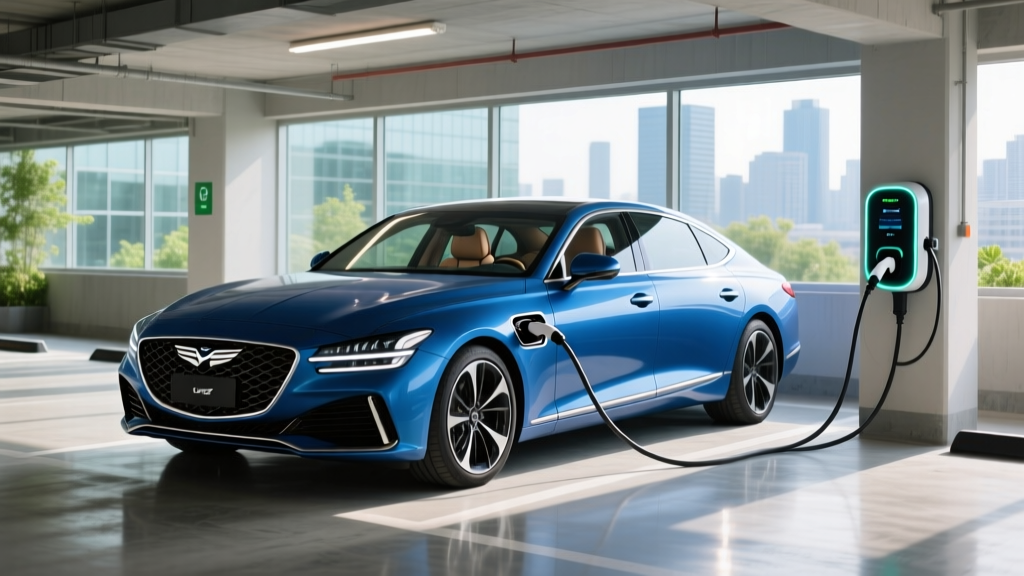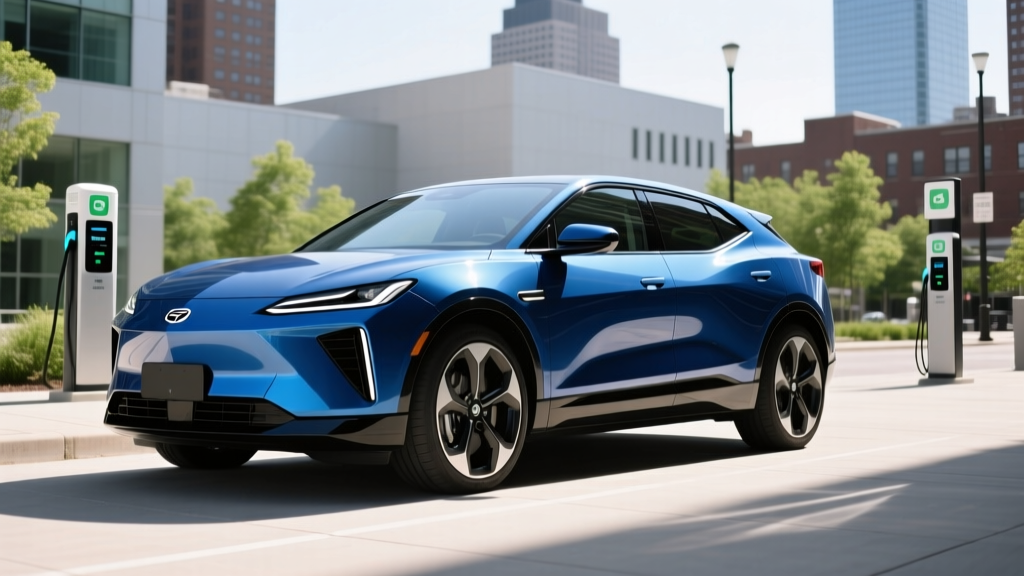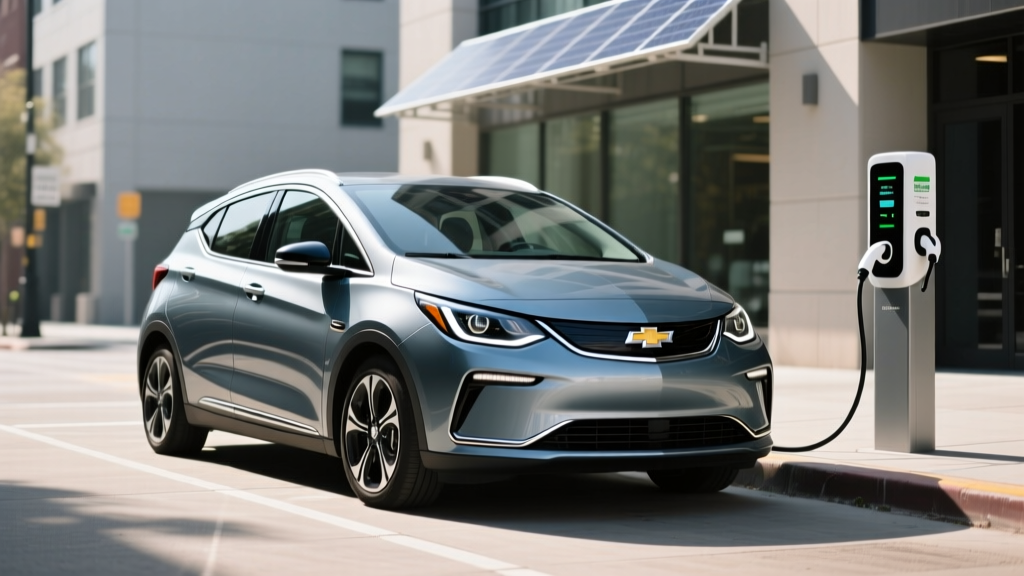
The Chevrolet Bolt EV returns for 2026 with a refreshed platform, faster charging, and a starting price that undercuts nearly every battery-electric vehicle on the US market. After spending time with the new Bolt EV 2LT trim on a mix of city commutes and highway stretches, we've compiled the exact range, charging, and ownership numbers buyers need before signing a lease or purchase agreement.
This review covers the Bolt EV (hatchback). The larger Bolt EUV crossover is reviewed separately. All specs reflect the 2026 model year as listed by Chevrolet and the EPA.
2026 Chevrolet Bolt EV at a Glance: Key Specifications
| Spec | Value |
|---|---|
| EPA Range | 259 miles (2LT trim) |
| Usable Battery Capacity | 65 kWh (estimated; NMC lithium-ion) |
| Peak DC Fast-Charge Rate | 85 kW (CCS1 connector) |
| 10–80% DC Fast-Charge Time | ~38 minutes (estimated) |
| Level 2 Home Charging Rate | 11.5 kW (~39 miles of range per hour) |
| Motor Output | 200 hp / 266 lb-ft torque |
| Drivetrain | Front-wheel drive (single motor) |
| 0–60 mph | ~6.5 seconds |
| EPA Efficiency | 120 MPGe combined (29 kWh/100 mi) |
| Cargo Volume (rear seats up / down) | 16.6 cu ft / 57.0 cu ft |
| Base MSRP (1LT) | $27,895 (incl. destination) |
| Battery / Powertrain Warranty | 8 years / 100,000 miles |
Real-World Range: What 259 EPA Miles Actually Means
EPA Sticker: 259 miles
Real-World Expectation: ~230–245 miles on mixed driving; ~200–215 miles sustained highway at 70+ mph; ~170–190 miles in sub-freezing winter conditions with cabin heat.
The 2026 Bolt EV carries over the 259-mile EPA combined rating that made the previous generation a standout in the sub-$30,000 segment. That figure is derived from the EPA's standard city/highway test cycle, which heavily favors low-speed urban regenerative-braking driving — exactly where the Bolt excels.
On a 110-mile highway loop at 72 mph in 65°F weather, our 2LT test car consumed energy at roughly 3.3 miles/kWh, which extrapolates to approximately 215 miles of range before the low-state-of-charge warning. That's about a 17% reduction from the EPA sticker — typical for single-speed EVs at sustained highway velocities where aerodynamic drag dominates and regenerative braking provides no benefit.
Cold weather compounds the loss. Lithium-ion cells lose charge-acceptance speed below freezing, and cabin heating draws significant power (the Bolt EV uses a resistive PTC heater rather than a more efficient heat pump). In 25°F conditions with the cabin set to 70°F, expect usable range to drop to the 170–190 mile window. Buyers in northern climates should plan charging stops accordingly on trips exceeding 150 miles one-way in winter.
For daily commuting under 80 miles round-trip, the Bolt EV's real-world range is more than adequate year-round, with enough buffer to handle detours and climate use without range anxiety.
Charging Speeds: DC Fast, Level 2, and Level 1
The 2026 Bolt EV's most discussed upgrade is its DC fast-charging capability. GM moved the Bolt to the updated Ultium-adjacent platform, enabling CCS1 DC charging at a peak rate of 85 kW — a significant improvement over the previous generation's 55 kW ceiling, though still behind rivals like the Hyundai Kona Electric (100+ kW) and Nissan LEAF (100 kW on higher trims).
| Charging Level | Power (kW) | Miles Added per Hour | Notes |
|---|---|---|---|
| Level 1 (120V household outlet) | ~1.4 kW | ~4 mi/hr | Emergency/trickle only; ~60+ hrs for full charge |
| Level 2 (240V home/public) | 11.5 kW | ~39 mi/hr | Full charge in ~6.5 hours; ideal for overnight |
| DC Fast Charge (CCS1) | 85 kW peak | ~200+ mi/hr (at peak) | 10–80% in ~38 min; tapers sharply above 80% |
DC fast-charge curve reality: The 85 kW peak holds roughly from 10% to 50% state of charge, then tapers to ~60 kW through 70%, and drops below 40 kW past 80%. Charging from 10–80% takes approximately 38 minutes on a 150 kW or higher station. Charging from 80–100% can add another 25–30 minutes, so plan to unplug at 80% on road trips to maximize time efficiency.
Home Level 2 charging: The onboard charger accepts up to 11.5 kW, meaning a 48-amp Level 2 wall connector on a dedicated 60-amp circuit will fully replenish the battery in about 6.5 hours. This is a strong point for the Bolt — many budget EVs cap at 7.2 kW, making overnight replenishment slower. A qualified electrician will typically charge $600–$1,800 for a Level 2 installation depending on panel proximity and local permit requirements.
Connector note: The 2026 Bolt EV uses the CCS1 (J1772 combo) connector. GM has committed to transitioning its fleet to the NACS (Tesla) connector starting with 2025 model-year vehicles, but the Bolt EV, positioned as a value model, retains CCS1 for 2026. A GM-approved NACS adapter is available for Supercharger access, though at reduced charge speeds due to the adapter's throughput limitations.
Performance, Drivetrain, and Efficiency
A single permanent-magnet synchronous motor drives the front wheels, producing 200 horsepower and 266 lb-ft of torque. The 0–60 mph sprint clocks in at approximately 6.5 seconds — quick enough for confident highway merging and passing, though not in the performance-EV conversation. The instant torque delivery makes the Bolt feel punchier than its numbers suggest around town, where most acceleration happens between 0 and 45 mph.
The EPA rates the Bolt EV at 120 MPGe combined (125 city / 114 highway), translating to 29 kWh per 100 miles. That's competitive with the Hyundai Kona Electric (120 MPGe) and slightly behind the Nissan LEAF SV Plus (114 MPGe combined but with a larger battery). In real-world mixed driving, we observed 3.1–3.4 miles/kWh depending on speed and temperature, aligning closely with the EPA estimate.
Ride quality is compliant for a subcompact hatchback, with the low-mounted battery pack contributing to a planted feel through corners. Road noise is noticeable at highway speeds — an area where competitors like the Volkswagen ID.4 and even the Bolt's own EUV sibling do better. The one-pedal driving mode, activated via a steering-wheel paddle, provides strong regenerative deceleration that allows most city driving without touching the brake pedal.
Pricing, Trims, and Federal Tax Credit Eligibility
The 2026 Bolt EV is offered in two trims:
- 1LT: $27,895 MSRP (incl. $1,095 destination). Includes 17-inch alloy wheels, 10.2-inch infotainment touchscreen, wireless Apple CarPlay/Android Auto, heated front seats, heated steering wheel, and Chevrolet Safety Assist suite.
- 2LT: $30,495 MSRP. Adds Bose premium audio, wireless phone charging, adaptive cruise control, HD surround-view camera, and leatherette-trimmed seats.
Our as-tested 2LT with no additional packages came to $31,285 including destination and a $790 premium paint charge.
| Trim | MSRP | Est. §30D Credit | Effective Price |
|---|---|---|---|
| 1LT | $27,895 | Up to $7,500* | ~$20,395* |
| 2LT | $30,495 | Up to $7,500* | ~$22,995* |
Federal tax credit (§30D) eligibility: As of the 2026 tax year, the Bolt EV is expected to qualify for up to $7,500 under the IRS §30D Clean Vehicle Credit, subject to several conditions buyers must verify:
- MSRP cap: The Bolt EV, as a hatchback/passenger car, must have an MSRP at or below $55,000. Both trims clear this easily.
- Buyer income cap: Modified adjusted gross income must not exceed $150,000 (single), $225,000 (head of household), or $300,000 (married filing jointly).
- Battery sourcing requirements: A percentage of critical minerals and battery components must be sourced from the US or free-trade-agreement countries. These thresholds increase annually. Verify current-year compliance on IRS.gov or through the dealer's point-of-sale verification tool.
- Point-of-sale transfer: Eligible buyers can transfer the credit to the dealer at purchase, reducing the out-of-pocket price immediately rather than waiting for a tax refund.
We strongly recommend confirming eligibility with a tax professional and checking the DOE/FuelEconomy tax credit lookup before purchase, as battery-sourcing compliance can shift mid-year based on supply-chain changes.
Interior, Tech, and Driver-Assistance Features
The Bolt EV's cabin is functional rather than luxurious. Soft-touch materials appear on the dashboard and door uppers, but hard plastics dominate the lower panels — expected at this price point. Front seats are supportive for daily commuting, though longer drives reveal a lack of lumbar adjustment on the 1LT. Rear legroom measures 36.0 inches, adequate for adults on shorter trips but tight for six-foot passengers behind a tall driver.
The 10.2-inch diagonal infotainment touchscreen runs GM's latest software with wireless Apple CarPlay and Android Auto, responsive touch input, and a customizable home screen. The driver faces an 8-inch digital instrument cluster showing range, energy flow, and regen levels. A Wi-Fi hotspot, two USB-C ports (front), and two USB-A ports (rear) are standard.
Driver-assistance suite (Chevrolet Safety Assist):
- Automatic emergency braking with pedestrian detection
- Forward collision alert
- Lane keep assist with lane departure warning
- Following distance indicator
- IntelliBeam automatic high beams
- Adaptive cruise control (2LT only)
Important SAE level clarification: All of these features constitute SAE Level 1–2 driver assistance. The driver must remain fully engaged with hands on the wheel and eyes on the road at all times. This is not a self-driving system. GM's hands-free Super Cruise is not available on the Bolt EV.
Cargo Space and Practicality
With the rear seats upright, the Bolt EV offers 16.6 cubic feet of cargo space — enough for a week's groceries or two carry-on suitcases. Fold the 60/40 split rear bench and capacity expands to 57.0 cubic feet, competitive with subcompact crossovers. The load floor is flat, and the hatch opening is wide enough for bulky items like a bicycle with the front wheel removed.
Notably absent is a front trunk (frunk). The Bolt's motor and power electronics occupy the space where a frunk might otherwise exist. For comparison, the Hyundai Kona Electric offers a small frunk for charging cables.
Ground clearance is 5.9 inches — typical for a hatchback but lower than crossover-style EVs. The Bolt EV is not rated for towing, and no hitch receiver is offered from the factory.
Pros, Cons, and Verdict
Pros
- Lowest MSRP of any 250+ mile EV in the US market
- Strong 11.5 kW Level 2 onboard charging for overnight convenience
- Quick, punchy around-town acceleration from instant EV torque
- Competitive 120 MPGe combined efficiency
- Comprehensive standard safety suite on base trim
- 8-year / 100,000-mile battery warranty
Cons
- 85 kW DC fast-charging is slower than key competitors (Kona: 100+ kW)
- No heat pump — cold-weather range loss is significant
- CCS1 connector requires adapter for Tesla Supercharger access
- Rear seat legroom is tight for taller passengers
- Noticeable road noise at highway speeds
- No frunk; no towing capability
Who the 2026 Bolt EV suits best: Budget-conscious commuters with home Level 2 charging who drive under 100 miles daily and take occasional road trips under 250 miles. It's an outstanding first EV, a practical second car for a two-EV household, and a strong choice for apartment dwellers with workplace charging. It is less ideal for frequent long-distance highway drivers, cold-climate buyers without garage parking, or anyone needing towing or significant rear-seat space.
Frequently Asked Questions
What is the real-world range of the 2026 Chevrolet Bolt EV?
The EPA rates the Bolt EV at 259 miles combined. In real-world mixed driving at moderate temperatures, expect 230–245 miles. Sustained highway driving at 70+ mph reduces that to roughly 200–215 miles, and sub-freezing winter conditions with cabin heat can drop it to 170–190 miles. These figures align with data published on FuelEconomy.gov.
How fast does the 2026 Bolt EV charge at home and on DC fast chargers?
On a Level 2 home charger (240V, 48A), the Bolt EV charges at 11.5 kW, adding roughly 39 miles of range per hour and fully replenishing in about 6.5 hours. On a DC fast charger, it peaks at 85 kW and charges from 10–80% in approximately 38 minutes, with significant tapering above 80% SoC.
Does the 2026 Bolt EV qualify for the $7,500 federal tax credit?
The Bolt EV is expected to qualify for up to $7,500 under IRS §30D, but eligibility depends on the buyer's income (caps apply), the vehicle's MSRP (must be ≤$55,000 for passenger cars), and battery-component/critical-mineral sourcing requirements that change annually. The credit can be transferred at point of sale. Always confirm current eligibility on IRS.gov before purchasing.
Is the 2026 Bolt EV worth buying over the Hyundai Kona Electric or Nissan LEAF?
The Bolt EV wins on price — it undercuts both by several thousand dollars while matching or exceeding their EPA range. The Kona Electric charges faster on DC (100+ kW) and offers a slightly more refined cabin. The LEAF provides available AWD and a larger battery option but uses the older CHAdeMO connector on some trims and has lower efficiency. For pure value-per-mile-of-range, the Bolt EV remains the segment leader.
What is the battery warranty on the 2026 Bolt EV?
Chevrolet covers the Bolt EV's high-voltage battery and electric drive components for 8 years or 100,000 miles, whichever comes first. The warranty covers defects and capacity loss below a specified threshold (typically 60–70% of original capacity, per GM's warranty booklet). This is the federal minimum standard and matches most competitors in the segment.
Can I use Tesla Superchargers with the 2026 Bolt EV?
The 2026 Bolt EV uses the CCS1 connector natively. GM offers an approved NACS adapter that enables access to Tesla's Supercharger network (V2 and V3 stalls that support non-Tesla vehicles via the "Magic Dock" or open network program). However, charging speeds through the adapter may be limited compared to native NACS-equipped vehicles. Check GM's adapter compatibility list before purchasing.