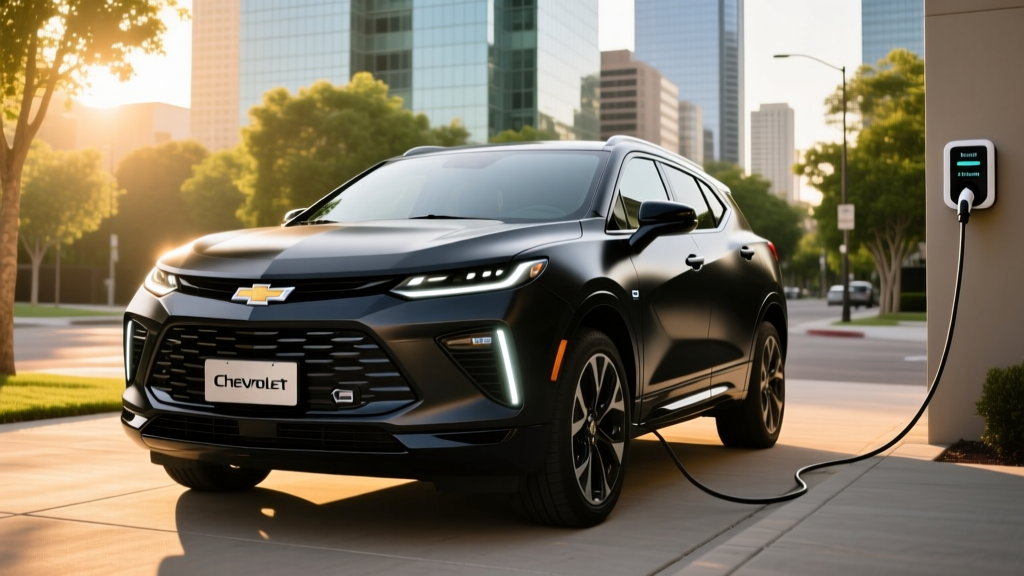
Quick Verdict: Is the Chevrolet Blazer SS EV Worth It?
The 2026 Chevrolet Blazer SS EV is a 557-hp, dual-motor performance SUV that prioritizes acceleration and styling over maximum range. With an EPA-estimated 294 miles on the SS trim (324 miles on the RS), it competes with the Ford Mustang Mach-E GT and Tesla Model Y Performance. Starting around $52,300 before destination, it may qualify for up to $7,500 in federal tax credits under IRS §30D, depending on your income, battery sourcing, and MSRP caps. Buy it if you want a muscular electric daily driver with GM's Super Cruise. Skip it if maximizing range per dollar is your priority.
Range, Battery, and the Real-World Reality
The Blazer EV rides on GM's Ultium platform and packs a usable battery capacity of approximately 102 kWh (NMC chemistry). The high-output SS variant trades some efficiency for its dual-motor performance tune.
| Specification | Blazer EV SS (2026) | Blazer EV RS AWD (2026) |
|---|---|---|
| EPA Range | 294 miles | 324 miles |
| Battery (Usable) | ~102 kWh (NMC) | ~102 kWh (NMC) |
| Horsepower | 557 hp | 293 hp |
| 0-60 mph | ~4.0 seconds | ~7.0 seconds |
| Drivetrain | AWD (dual motor) | AWD (dual motor) |
| MPGe (Combined) | ~89 MPGe | ~97 MPGe |
| Base MSRP | $52,300 | $49,300 |
| Battery Warranty | 8 years / 100,000 miles | 8 years / 100,000 miles |
EPA Sticker vs. Real-World Expectations
EPA: 294 miles (SS) — In mixed driving at 65-70 mph, expect roughly 255-275 miles. In cold weather (below 30°F), plan for 210-240 miles. Highway-only road trips at 80 mph will yield closer to 230-245 miles. The SS's performance tune and wider tires extract an efficiency penalty versus the RS.
Charging Speed: Peak, Sustained, and the Curve
The Blazer EV supports DC fast charging at a peak rate of up to 190 kW on a compatible CCS connector (or NACS with GM's adapter rollout). At a 350 kW Electrify America or Tesla Supercharger (with adapter), you'll see peak speeds in the 180-190 kW band between roughly 10-40% State of Charge (SoC), tapering to under 80 kW above 70%.
| Charging Level | Power (kW) | Speed (miles of range/hour) | Typical Use |
|---|---|---|---|
| Level 1 (120V) | 1.2-1.4 kW | ~3-4 mi/hr | Overnight top-up, emergencies |
| Level 2 (240V, 48A) | 11.5 kW | ~30-34 mi/hr | Home daily charging |
| DC Fast (Peak) | Up to 190 kW | ~550+ mi/hr (at peak) | Road trips, quick stops |
10-80% DC fast charge time: approximately 27-30 minutes under optimal battery preconditioning. Without preconditioning (navigating to a charger in the infotainment system), cold-soaked batteries can add 10-15 minutes to that figure. Always precondition before a fast-charge stop — it's the single biggest variable in real-world charging speed.
For home Level 2 charging, a full 0-100% session takes roughly 9.5 hours on a 48-amp hardwired unit. Most owners charging from 20-80% daily will plug in for 5-6 hours overnight.
Cost Breakdown: Purchase, Charging, and 5-Year Ownership
Let's put real numbers behind what it costs to buy and run the Blazer SS EV versus a comparably equipped gas SUV like the Chevrolet Blazer (ICE) with a V6 and AWD.
| Cost Category | Blazer SS EV (AWD) | Gas Blazer RS (AWD V6) |
|---|---|---|
| Base MSRP | $52,300 | $44,400 |
| Federal Tax Credit (§30D) | Up to $7,500* | $0 |
| Effective Purchase Price | ~$44,800 | $44,400 |
| Fuel/Energy (5 yr, 75k mi) | ~$3,900 (home charging)** | ~$9,400 (gas at $3.40/gal, 22 MPG) |
| Maintenance (5 yr) | ~$1,200 | ~$3,800 |
| Insurance (5 yr avg) | ~$12,500 | ~$10,200 |
| 5-Year Total Cost | ~$62,400 | ~$67,800 |
* §30D credit eligibility depends on adjusted gross income caps ($150k single / $300k joint), MSRP limits ($80k for SUVs), and battery critical-mineral/sourcing requirements. Confirm at IRS.gov and with your tax professional. Point-of-sale transfer is available from participating dealers.
** Assumes 80% home charging at $0.14/kWh and 20% public DC fast charging at $0.40/kWh. Your rate varies by utility and state.
The EV pulls ahead on total cost within roughly 3-4 years for most drivers who can charge at home. Public-charging-only owners will see the fuel-cost advantage shrink significantly, since DC fast charging at $0.35-$0.50/kWh can approach the per-mile cost of a 25-MPG gas vehicle.
EV vs. Gas: Efficiency and Performance Compared
| Metric | Blazer SS EV | Gas Blazer RS (3.6L V6 AWD) |
|---|---|---|
| Powertrain | Dual-motor electric | 3.6L V6 + 9-speed auto |
| Horsepower | 557 hp | 308 hp |
| 0-60 mph | ~4.0 sec | ~6.5 sec |
| Efficiency | 89 MPGe / 3.0 mi/kWh | 22 MPG combined |
| Energy Cost per Mile | ~$0.05 (home) | ~$0.15 (gas) |
| Cargo (behind 2nd row) | ~25 cu ft | ~30 cu ft |
| Towing Capacity | 1,500 lbs | 4,500 lbs |
The performance gap is enormous — the SS EV hits 60 mph nearly 2.5 seconds faster than the gas V6 Blazer. But trade-offs exist: cargo space is slightly reduced by the Ultium battery floor, and towing capacity is far lower. If you tow a boat or camper regularly, the gas Blazer remains the practical choice.
Myths vs. Facts: Common Misconceptions
| Myth | Fact |
|---|---|
| "The battery will need replacing in 5 years." | NMC Ultium batteries are warrantied for 8 years/100,000 miles with a capacity retention threshold (~70%). Real-world data from similar GM Ultium packs suggests 10-15% degradation over 150,000 miles under normal use. |
| "You can't drive an EV in winter." | You can, but expect 20-30% range loss below 30°F due to battery chemistry and cabin heating. The Blazer EV's heat pump (standard on most trims) recovers some of this loss. Preconditioning while plugged in minimizes the hit. |
| "EVs are worse for the environment because of battery mining." | Lifecycle emissions analyses by the EPA and Argonne National Lab show EVs produce fewer lifetime emissions than gas vehicles in nearly every US grid region, even accounting for battery manufacturing. |
| "Public charging is always broken." | Reliability varies by network. Tesla Superchargers (accessible via GM's NACS adapter) consistently show 95%+ uptime. Electrify America and EVgo have improved but still lag. Plan routes using PlugShare or A Better Routeplanner for real-time charger status. |
| "I need to charge to 100% every night." | NMC batteries last longest when kept between 20-80% SoC for daily use. Set your charge limit to 80% for routine driving and reserve 100% for road trips. |
Home Charging: What First-Time Buyers Need to Know
Level 2 home charging is the backbone of EV ownership. If you can install a 240V, 48-amp circuit (hardwired or NEMA 14-50 outlet), you'll wake up every morning with a full battery and rarely visit a public charger except on road trips.
Typical Level 2 Home Installation Costs
| Item | Cost Range |
|---|---|
| Level 2 Charger (Emporia, ChargePoint, Wallbox) | $350 - $700 |
| Electrician labor (50-ft run, 60A circuit) | $800 - $2,000 |
| Permit and inspection | $100 - $350 |
| Electrical panel upgrade (if needed, 100A → 200A) | $1,500 - $3,500 |
| Total (without panel upgrade) | $1,250 - $3,050 |
| Total (with panel upgrade) | $2,750 - $6,550 |
Get 2-3 quotes from licensed electricians. Ask specifically about your panel's available amperage headroom — a 200A panel with existing heavy loads (electric oven, dryer, HVAC) may need an upgrade or a smart load-management device like an Emporia V2 with automatic derating.
No home charging access? The Blazer SS EV is still viable if you have reliable workplace charging or a nearby Level 2 public station you can use 2-3 times per week. But relying exclusively on DC fast charging will cost roughly 3-4x more per mile than home charging and accelerates battery degradation slightly due to sustained high-current sessions.
Decision Framework: Should You Buy the Blazer SS EV?
Choose the Chevrolet Blazer SS EV if:
- You want 557 hp and sub-4-second 0-60 performance in an electric SUV
- You can install Level 2 charging at home or have consistent workplace charging
- Your daily commute is under 80 miles round-trip (most US commutes are)
- You value GM's Super Cruise (Level 2 hands-on-wheel highway assist) for long drives
- You qualify for the §30D federal credit and/or state incentives, narrowing the price gap with gas SUVs
Choose something else if:
- Maximum range is your priority: The Hyundai Ioniq 5 (310+ mi) or Tesla Model Y Long Range (330+ mi) deliver more miles per dollar
- You tow regularly: The Rivian R1S or Ford F-150 Lightning offer 5,000-10,000 lb towing
- You live in a charging desert: If no reliable DC fast chargers exist within 30 miles of your regular routes, a PHEV like the Toyota RAV4 Prime may be a safer bridge
- Budget is the main constraint: The Chevy Equinox EV (315+ mi, ~$33,000) offers similar Ultium tech at a lower entry point
- You need 3-row seating: Look at the Kia EV9 or the gas Blazer instead
Frequently Asked Questions
Does the 2026 Chevrolet Blazer SS EV qualify for the $7,500 federal tax credit?
It may, but eligibility depends on several factors under IRS §30D: your modified adjusted gross income must be under $150,000 (single) or $300,000 (joint), the vehicle MSRP must be under $80,000 (SUV threshold), and the battery must meet critical-mineral and component-sourcing requirements that tighten each year. The Blazer SS EV's MSRP clears the cap. Check the latest qualified vehicle list at fueleconomy.gov and confirm with a tax professional before relying on the credit.
How does the Blazer SS EV compare to the Tesla Model Y Performance?
The Model Y Performance offers approximately 303 miles of EPA range (vs. 294 for the Blazer SS), faster DC charging via Tesla's 250 kW Supercharger network, and a more mature software/charging ecosystem. The Blazer SS counters with a more traditional SUV interior layout, GM Super Cruise compatibility, and a design that doesn't look like every rideshare vehicle on the road. Performance is comparable in the 3.5-4.0 second 0-60 range.
What is the real-world highway range of the Blazer SS EV?
In sustained 70-80 mph highway driving at moderate temperatures (60-75°F), expect approximately 245-265 miles before needing to charge. In winter conditions (below 30°F) at highway speeds, plan for 210-235 miles. Always build a 15-20% buffer into your route planning.
How long will the Blazer EV battery last?
GM warranties the Ultium battery for 8 years or 100,000 miles against defects and excessive capacity loss (typically below 60-70% of original capacity). Based on degradation data from similar NMC packs, you can expect roughly 85-90% capacity retention at 100,000 miles with normal charging habits (20-80% daily, avoiding frequent 100% charges and DC fast charging in extreme heat). Full battery replacement, if ever needed out of warranty, currently costs in the $12,000-$18,000 range for packs of this size — though prices continue to decline.
Can I use Tesla Superchargers with the Blazer EV?
Yes. GM has adopted the NACS (North American Charging Standard) connector. Depending on your model year and production date, your Blazer EV will either ship with a native NACS port or include a CCS-to-NACS adapter for Supercharger access. This opens up Tesla's 20,000+ Supercharger stalls nationwide, significantly improving road-trip charging options. Confirm your specific vehicle's connector configuration with your dealer.
Is Super Cruise self-driving?
No. Super Cruise is an SAE Level 2 driver-assistance system. It provides hands-free steering, acceleration, and braking on pre-mapped divided highways, but you must remain attentive — a driver-monitoring camera tracks your eye gaze. You are legally and practically responsible for the vehicle at all times. It does not navigate city streets, construction zones, or unmapped roads autonomously.
Sources: EPA range and efficiency data from fueleconomy.gov; federal tax credit rules from IRS.gov §30D; vehicle specifications from Chevrolet's official media site. Prices and credit eligibility reflect 2026 model-year information and are subject to change.