Quick Verdict: A Spacious Midsize EV With a Caveat or Two
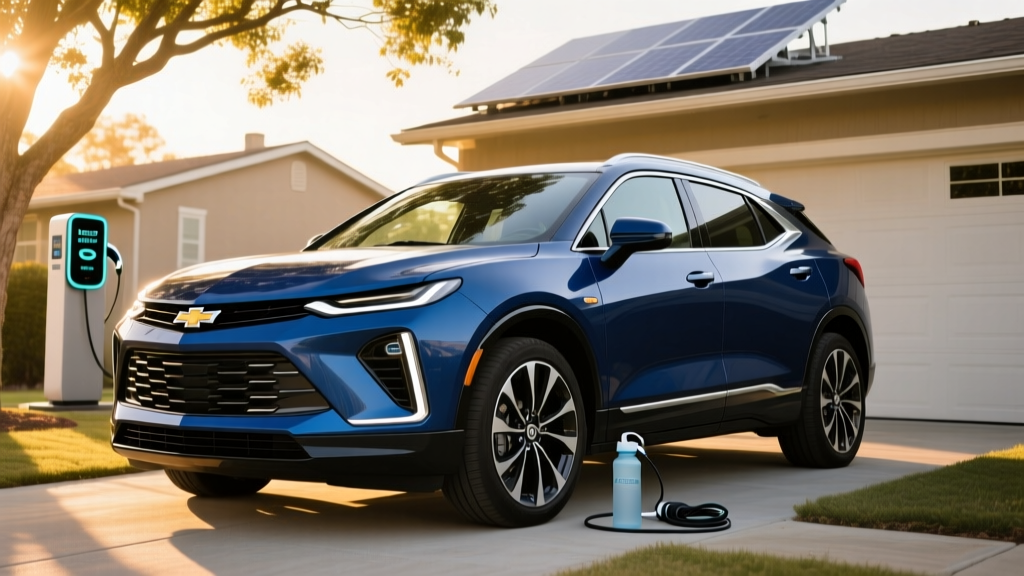
The 2026 Chevrolet Blazer EV is a midsize two-row crossover built on GM's Ultium platform, offering up to 324 miles of EPA-estimated range, a spacious cabin, and a starting price that undercuts several rivals. After a rocky 2024 launch marred by software recalls, the 2026 model year arrives with substantially improved infotainment stability and refined powertrain calibration. It's a compelling option for families and commuters who need cargo space and comfortable highway cruising — but buyers prioritizing cutting-edge driver-assist tech or blistering acceleration should cross-shop carefully.
Range, Battery, and Efficiency
The Blazer EV LT (FWD) carries an EPA-estimated 324 miles of range. The RS and SS trims with larger batteries and AWD drop to between 279 and 307 miles EPA depending on configuration. In real-world highway driving at 70-75 mph, expect roughly 250–275 miles from the LT and 230–255 miles from AWD trims. In sub-freezing winter conditions (below 32°F), range loss of 20–30% is typical for NMC-based Ultium packs, bringing effective winter highway range down to approximately 190–220 miles for AWD models.
The Blazer EV uses GM's Ultium battery platform with NMC (nickel manganese cobalt) chemistry. Usable battery capacity varies by trim:
- LT (FWD): ~85 kWh usable (102 kWh gross)
- RS / SS (AWD): ~102 kWh usable
Efficiency for the FWD LT is rated at approximately 97 MPGe combined, translating to about 34 kWh per 100 miles. The heavier AWD SS drops to roughly 89 MPGe combined. These figures are competitive with the Ford Mustang Mach-E Extended Range but trail the Hyundai Ioniq 5's class-leading efficiency.
| Spec | LT (FWD) | RS (AWD) | SS (AWD) |
|---|---|---|---|
| EPA Range | 324 mi | 307 mi | 279 mi |
| Battery (usable / gross) | ~85 / 102 kWh | ~102 / 102 kWh | ~102 / 102 kWh |
| Chemistry | NMC (Ultium) | NMC (Ultium) | NMC (Ultium) |
| Horsepower | 220 hp | 293 hp | 557 hp (Wide Open Watts) |
| 0-60 mph | ~7.9 sec | ~6.2 sec | ~3.8 sec |
| Drivetrain | FWD (single motor) | AWD (dual motor) | AWD (dual motor) |
| Max DC Fast Charge | 190 kW | 190 kW | 190 kW |
| Level 2 Charge Rate | 11.5 kW | 11.5 kW | 11.5 kW |
| MPGe (combined) | 97 | 93 | 89 |
| Base MSRP | $44,600 | $52,200 | $60,200 |
Source: fueleconomy.gov, Chevrolet official specifications.
Charging Speed: DC Fast and Home Level 2
Charging is where the Blazer EV is adequate rather than exceptional. The Ultium platform supports a peak DC fast-charge rate of 190 kW on properly equipped trims. In practice, the charge curve peaks near 190 kW from approximately 10–30% State of Charge, then tapers progressively. A 10–80% charge takes approximately 30 minutes at a 200+ kW DC fast charger (such as Electrify America or EVgo stations with adequate power delivery).
| Charge Level | Power | Connector | Approx. Time / Rate |
|---|---|---|---|
| Level 1 (120V) | ~1.4 kW | Standard outlet | ~3–4 mi/hr added |
| Level 2 (240V home) | 11.5 kW | J1772 / NACS (2025+) | ~30 mi/hr; full charge in ~9–10 hrs |
| DC Fast Charge | Up to 190 kW | CCS1 / NACS | 10–80% in ~30 min |
Home charging reality: With an 11.5 kW onboard charger, a full overnight recharge on a Level 2 home station (48-amp circuit, hardwired 60-amp breaker) replenishes roughly 30 miles of range per hour. A completely depleted 102 kWh pack reaches full in about 9–10 hours. Installation costs for a Level 2 home charger typically run $800–$2,500 depending on whether your electrical panel needs an upgrade to 200 amps — consult a licensed electrician for a site-specific quote.
Charging-curve reality check: While 190 kW peak sounds competitive, the Blazer EV sustains peak rate for a narrower window than rivals like the Hyundai Ioniq 5 (which peaks at 240 kW on its 800V architecture and charges 10–80% in ~18 minutes). If frequent DC fast charging is central to your use case, this is worth noting for road-trip planning.
Performance and Driving Dynamics
The Blazer EV's performance range is wide. The base FWD LT with 220 hp and a single rear-mounted motor (confusingly badged FWD in some markets but using a rear-drive Ultium layout — confirm drivetrain at point of sale) delivers relaxed, adequate acceleration at roughly 7.9 seconds to 60 mph. It's perfectly suited for commuting and highway merging but won't excite.
The SS trim with Wide Open Watts (WOW) mode is the performance headliner: 557 hp, 648 lb-ft of torque, and a 3.8-second 0–60 mph time. Engaging WOW mode requires sufficient State of Charge (typically above 80%) and preconditions the battery for maximum discharge. In everyday driving without WOW, the SS behaves like a torquey but composed grand-touring crossover.
Ride quality is a strong suit. The Blazer EV's long wheelbase and well-damped suspension absorb highway imperfections effectively. Cabin noise levels are low for the segment. Regenerative braking offers adjustable levels via paddle shifters, and one-pedal driving is available but not as aggressive as some competitors — expect to use the friction brake for final stops.
Interior, Cargo, and Technology
The cabin is the Blazer EV's strongest argument against rivals. Rear-seat legroom measures 38.4 inches, and headroom accommodates adults comfortably on longer trips. Cargo volume behind the second row is 25.5 cubic feet, expanding to approximately 55.1 cubic feet with the rear seats folded — competitive with the Honda Passport and exceeding the Mustang Mach-E.
Notably, the Blazer EV does not have a front trunk (frunk). GM opted to use that space for HVAC and power electronics, which is a missed opportunity for buyers accustomed to the Mach-E's 4.7 cu ft frunk or the Rivian R1S's 11.1 cu ft front compartment.
Infotainment: A 17.7-inch diagonal touchscreen dominates the dashboard, running GM's latest Ultifi-based software. The 2026 model year brings improved responsiveness and fewer of the freezing/blank-screen issues that plagued early 2024 models. Wireless Apple CarPlay and Android Auto are standard. An 11-inch digital instrument cluster faces the driver.
Driver assistance: The Blazer EV offers Super Cruise (on equipped trims) — GM's hands-free highway driving system. Super Cruise is an SAE Level 2 driver-assist system, meaning the driver must remain attentive and ready to take over at any time. It operates on over 400,000 miles of mapped highways in the US and Canada. It is not autonomous driving; it is a sophisticated lane-centering and adaptive cruise system with an eye-monitoring camera.
Super Cruise is an SAE Level 2 system. It requires the driver to remain alert, keep eyes on the road (monitored by infrared camera), and be prepared to resume steering and braking immediately. It does not operate on unmapped roads, in construction zones, or in severe weather. It is not self-driving.
Pricing, Trims, and Federal Tax Credit
The 2026 Blazer EV is offered in three primary trims. Pricing below reflects base MSRP before destination charges:
| Trim | Base MSRP | Est. As-Tested | §30D Credit Eligibility | Effective Price (est.) |
|---|---|---|---|---|
| LT (FWD) | $44,600 | $47,000–$49,500 | Up to $7,500 (if sourcing + income met) | ~$37,100–$42,000 |
| RS (AWD) | $52,200 | $55,000–$58,500 | Up to $7,500 (if sourcing + income met) | ~$44,700–$51,000 |
| SS (AWD) | $60,200 | $63,000–$66,000 | Up to $7,500 (if sourcing + income met) | ~$52,700–$58,500 |
Federal tax credit (IRS §30D) — critical details:
- MSRP cap: The Blazer EV qualifies as an SUV under IRS vehicle classifications, so the MSRP cap is $80,000. All current trims fall below this threshold.
- Buyer income limits: Modified Adjusted Gross Income (MAGI) must not exceed $150,000 (single), $225,000 (head of household), or $300,000 (joint filers).
- Battery sourcing requirements: The full $7,500 credit requires meeting both critical-mineral and battery-component sourcing thresholds set by the IRS. Partial credit ($3,750) may apply if only one threshold is met. GM has worked to shift Ultium battery sourcing to North America, but exact credit amounts can vary by build date and supply chain changes. Always verify current eligibility on IRS.gov before purchasing.
- Point-of-sale transfer: As of 2024, buyers can transfer the credit to the dealer at point of sale, reducing the purchase price directly rather than waiting for a tax refund. This applies to the Blazer EV if eligible.
Consult a tax professional for your specific situation. Credit rules are subject to legislative change.
Warranty and Long-Term Ownership
Chevrolet provides the following warranty coverage for the 2026 Blazer EV:
- Battery & propulsion components: 8 years / 100,000 miles (whichever comes first), covering defects and capacity loss below approximately 60% of original capacity.
- Bumper-to-bumper (limited): 3 years / 36,000 miles.
- Powertrain (non-battery): 5 years / 60,000 miles.
The 8-year/100,000-mile battery warranty is industry-standard and aligns with federal minimum requirements. However, GM's capacity retention threshold (~60%) is less generous than Hyundai/Kia's approach, which guarantees 70% capacity retention over a similar period. For buyers planning to keep the Blazer EV beyond 8 years, this is worth factoring into long-term cost projections.
Maintenance advantage: As a BEV, the Blazer EV eliminates oil changes, spark plugs, transmission fluid, and exhaust system maintenance. Brake pad life is extended significantly by regenerative braking — many EV owners report original brake pads lasting 80,000+ miles.
Pros, Cons, and Who Should Buy
Pros
- Spacious rear seat (38.4" legroom) and generous cargo volume (55.1 cu ft max)
- Competitive EPA range up to 324 miles (LT FWD)
- Super Cruise hands-free highway driving on equipped trims
- SS trim delivers genuine sports-car acceleration (3.8s 0–60)
- All trims under the $80K MSRP cap for §30D tax credit
- Improved infotainment stability for 2026
Cons
- No front trunk (frunk) — uncommon for the segment
- 190 kW peak DC charging is slower than Ioniq 5 / EV6 (240 kW, 800V)
- 30-minute 10–80% charge time lags behind 18–22 minute rivals
- Battery warranty capacity threshold (~60%) less generous than some competitors
- Early model-year software issues may affect resale perception
- FWD LT's 7.9s 0–60 feels leisurely for the price
Who Is the Blazer EV For?
Choose the Blazer EV if: You prioritize cabin space and comfort over charging speed, want Super Cruise for highway commutes, and value a mainstream dealer network for service. The LT FWD at ~$37K after the tax credit is one of the most spacious midsize EVs available under $40K.
Look elsewhere if: You road-trip frequently and need the fastest possible DC charging (consider the Ioniq 5 or EV6), you want a frunk for gear storage, or you prioritize the latest SAE Level 2+ driver-assist features (Tesla's FSD Supervised has broader operational coverage, albeit with full driver attention required).
Frequently Asked Questions
What is the real-world range of the Blazer EV?
The FWD LT delivers an EPA-estimated 324 miles. In real-world mixed driving, expect 270–300 miles. Highway-heavy trips at 75 mph reduce this to approximately 250–275 miles. In cold weather (below freezing), expect 190–260 miles depending on trim and use of cabin heating (the Blazer EV uses a heat pump, which mitigates some winter loss).
How fast does the Blazer EV charge at home and on the road?
On a Level 2 home charger (11.5 kW), the Blazer EV adds roughly 30 miles of range per hour, with a full charge taking 9–10 hours. On a DC fast charger, it peaks at 190 kW and charges from 10–80% in approximately 30 minutes. This is adequate for road trips but slower than 800V competitors.
Does the 2026 Blazer EV qualify for the $7,500 federal tax credit?
It can, but eligibility depends on three factors: (1) your income must be below IRS MAGI caps ($150K single / $300K joint), (2) the vehicle MSRP must be under $80K (all Blazer EV trims qualify), and (3) the battery must meet current-year critical-mineral and component sourcing thresholds. The credit amount may be $7,500 or $3,750 depending on sourcing compliance. Verify on fueleconomy.gov and IRS.gov before purchase.
Is the Blazer EV worth buying over the Mustang Mach-E or Ioniq 5?
It depends on your priorities. The Blazer EV wins on cargo space (55.1 vs. 50.7 cu ft in the Mach-E) and available Super Cruise. The Mustang Mach-E offers a frunk and slightly sportier handling. The Hyundai Ioniq 5 charges significantly faster (10–80% in ~18 min vs. ~30 min) and has a more distinctive design. If interior room and highway comfort are paramount, the Blazer EV is the stronger pick. If fast-charging road trips are your priority, the Ioniq 5 or EV6 has a measurable advantage.
Does the Blazer EV have a front trunk (frunk)?
No. GM allocated the front compartment to HVAC and power electronics. If front cargo storage matters for your use case (storing charging cables, groceries, or gear), this is a notable omission compared to the Mach-E, F-150 Lightning, and Rivian models.
What is the battery replacement cost if it fails out of warranty?
Full Ultium battery pack replacement for a Blazer EV is estimated at $15,000–$22,000 out of warranty (parts + labor), based on current GM service pricing. This is comparable to other midsize EVs but represents a significant potential expense after the 8-year/100,000-mile warranty expires. Battery degradation data for the Ultium platform is still accumulating — early indications suggest 5–8% capacity loss over the first 100,000 miles under normal use.