Is Leasing the Chevrolet Blazer EV in Rochester the Smartest Move in 2026?
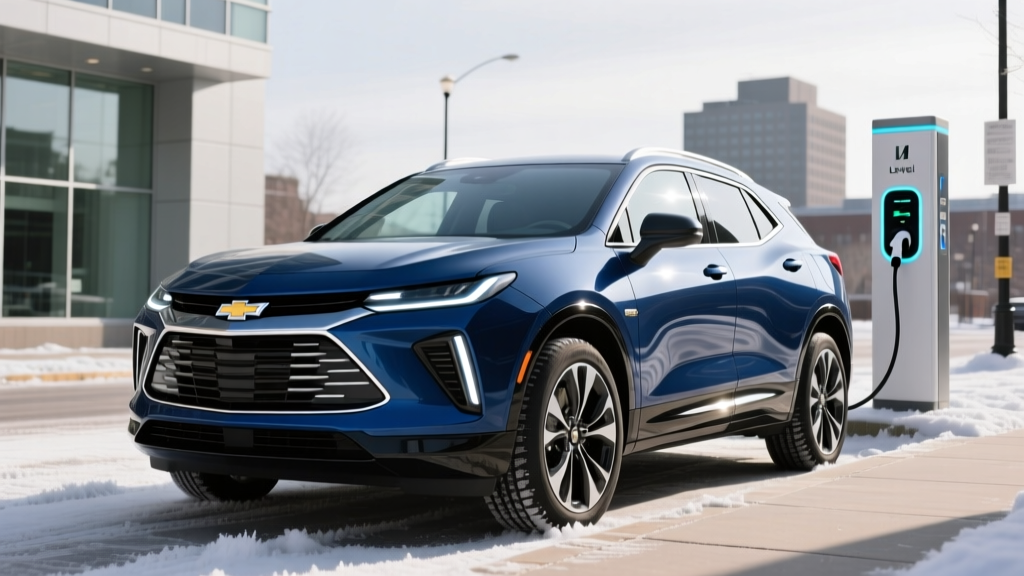
Rochester, New York, sits in an unusual sweet spot for electric vehicle adoption: cheap hydropower-dominated electricity, a growing public charging network along the I-490 and I-590 corridors, and state incentives that stack on top of federal credits. If you've been searching for a Chevrolet Blazer EV lease Rochester deal, you're likely weighing whether the midsize electric crossover's sticker price makes sense compared to a gas Equinox or a competing EV like the Hyundai Ioniq 5.
This guide runs the full ownership math on the 2026 Chevrolet Blazer EV — from lease structure and federal §30D tax credit eligibility to real-world charging costs in Monroe County, insurance premiums, and what happens at trade-in time. We'll use concrete numbers so you can decide whether signing that lease sheet at a Rochester-area Chevy dealer is the right financial call.
| Spec | 2LT (FWD) | RS (AWD) | SS (AWD) |
|---|---|---|---|
| EPA Range | ~307 mi | ~293 mi | ~290 mi |
| Battery (usable) | 85 kWh (est.) | 102 kWh (est.) | 102 kWh (est.) |
| Chemistry | NMC | NMC | NMC |
| Peak DC Fast Charge | ~190 kW | ~190 kW | ~190 kW |
| 10–80% DC Time | ~32 min | ~34 min | ~34 min |
| Level 2 (240V) Rate | 11.5 kW | 11.5 kW | 11.5 kW |
| Horsepower | 220 hp | 340 hp | 557 hp |
| 0–60 mph | ~7.5 sec | ~5.5 sec | ~3.4 sec |
| MPGe (combined) | ~91 MPGe | ~86 MPGe | ~79 MPGe |
| Starting MSRP | ~$44,600 | ~$50,600 | ~$60,400 |
| Battery Warranty | 8 years / 100,000 miles | ||
Real-World Range Note: The EPA estimates above assume mixed driving at moderate temperatures. In a Rochester winter — where January averages hover around 25°F — expect range to drop 20–30% due to battery heating demands and cabin climate use. A 293-mile RS AWD model may deliver closer to 200–230 miles on a full charge in deep cold. Highway-only driving at 75 mph on the Thruway will also reduce range to roughly 250–265 miles even in mild weather.
Lease vs. Buy: How the Blazer EV Deal Structure Works
Leasing an EV involves a nuance that catches many buyers off guard: the federal §30D tax credit technically goes to the vehicle's owner — which in a lease is the leasing company (GM Financial), not you. However, most automakers, including Chevrolet, pass the credit's value through as a lease cash incentive that reduces your capitalized cost. This effectively lowers your monthly payment by an amount equivalent to the credit.
Here's why leasing can be strategically smart for the Blazer EV in 2026:
- Depreciation protection: EVs have experienced volatile resale values. A lease locks in the residual value at signing — if market values tank, that's GM Financial's problem, not yours.
- Lower monthly outlay: You're financing the depreciation portion only, not the full vehicle price.
- Upgrade cycle: Battery tech and charging speeds are advancing rapidly; a 36-month lease lets you step into newer tech sooner.
- Commercial clean vehicle credit workaround: Under current IRS rules, the §30D credit's strict battery-sourcing and critical-mineral requirements can make purchase credits hard to qualify for. But the leasing company can claim the commercial clean vehicle credit (IRC §45W) on leased vehicles with fewer sourcing restrictions, and pass savings to you.
A typical 2026 Blazer EV RS lease in the Rochester area might look like this: $449–$529/month for 36 months with $3,500 due at signing, assuming the lease cash incentive is applied. Exact terms depend on your credit tier, dealer markup, and current GM Financial programs.
Federal Tax Credit: Do You Actually Qualify for §30D?
The federal EV tax credit under IRS §30D offers up to $7,500 for qualifying new EVs — but "up to" is doing heavy lifting. The credit has layered requirements that change yearly, and for 2026 the rules are tighter than when the Blazer EV first launched.
2026 §30D Eligibility Checklist (Purchase, Not Lease):
- MSRP Cap: SUVs/pickups must be under $80,000; sedans under $55,000. All Blazer EV trims currently fall under the $80,000 SUV cap.
- Buyer Income Cap: Modified AGI must not exceed $300,000 (joint filers), $225,000 (head of household), or $150,000 (single). You can use the prior year's or current year's income, whichever is lower.
- Battery Component Manufacturing: A percentage of battery components must be manufactured or assembled in North America — the threshold increases each year.
- Critical Minerals Sourcing: A percentage of critical minerals must be sourced from the U.S. or a free-trade-agreement country — this threshold also escalates annually.
- Point-of-Sale Transfer: You can transfer the credit to the dealer at purchase, reducing your out-of-pocket price immediately rather than waiting for a tax refund.
- Foreign Entity of Concern (FEOC): Vehicles with battery components or critical minerals from certain restricted foreign entities are disqualified.
The leasing loophole: If you lease rather than purchase, the leasing company claims the commercial clean vehicle credit (§45W), which has no buyer income caps, no MSRP caps, and more flexible battery-sourcing rules. The savings are typically passed through as lease cash. This is why many Rochester shoppers find leasing the Blazer EV is the more reliable path to capturing the full $7,500 in value.
Important: Tax credit rules are subject to legislative change. Always verify current eligibility on IRS.gov and consult a tax professional before making purchase decisions based on credit assumptions.
5-Year Total Cost of Ownership: Blazer EV vs. Gas Crossover
To answer the core question — how much does it really cost to own the Blazer EV over 5 years? — we modeled a Rochester-area ownership scenario against a comparably priced gas-powered midsize SUV (think a loaded Equinox or Honda Passport). Assumptions: 12,000 miles/year, home Level 2 charging, Rochester Gas & Electric residential rates, and New York state fuel prices.
| Category | Blazer EV RS (AWD) | Gas SUV (25 MPG combined) |
|---|---|---|
| Purchase/Lease (net of incentives) | ~$28,500 (lease total) | ~$30,200 (lease total) |
| Fuel / Electricity | ~$3,240 | ~$8,400 |
| Maintenance | ~$1,200 | ~$3,800 |
| Insurance (5 years) | ~$11,500 | ~$9,200 |
| Depreciation (est. resale loss) | ~$18,000 | ~$15,500 |
| Total 5-Year Cost | ~$62,440 | ~$67,100 |
EV electricity cost assumes $0.15/kWh average (RG&E residential with off-peak optimization). Gas assumes $3.50/gallon at 25 MPG combined. Lease totals represent sum of monthly payments + due-at-signing, net of incentives. Actual costs vary by driving pattern, electricity rate, and insurance profile.
The Blazer EV comes out roughly $4,660 ahead over five years in this scenario, but the savings aren't uniform across every category. Let's break down where you win and where you pay more.
Charging vs. Gas: The Per-Mile Cost Math
Rochester benefits from some of the lowest electricity rates in the country thanks to New York's hydroelectric infrastructure. According to EIA data, New York State averages around $0.20/kWh for residential service, but RG&E customers who optimize for off-peak charging can push effective rates to $0.13–$0.15/kWh.
| Metric | Blazer EV RS | Gas SUV (25 MPG) |
|---|---|---|
| Energy consumption | ~36 kWh/100 mi (2.78 mi/kWh) | 4.0 gal/100 mi |
| Home charging ($0.15/kWh) | $0.054/mi | — |
| Public DCFC ($0.40/kWh avg) | $0.144/mi | — |
| Gasoline ($3.50/gal) | — | $0.14/mi |
| Blended cost (80% home / 20% DCFC) | $0.072/mi | $0.14/mi |
At 12,000 miles per year, charging primarily at home saves roughly $816 annually compared to gasoline. Over five years, that's $4,080 back in your pocket. Even if you rely heavily on public DC fast chargers — say, 50% of your charging — you're still near parity with gas, not paying a premium.
For context, the Blazer EV RS's 102 kWh battery (usable) charges from 10–80% in roughly 34 minutes at a 190 kW DC fast charger. Note that peak charge rate is not sustained across the entire session — the charge curve tapers significantly above 80%, which is why we quote 10–80% times rather than 0–100%. At home on an 11.5 kW Level 2 charger, a full 10–80% session takes about 6–7 hours, ideal for overnight top-ups.
Maintenance Savings: Fewer Parts, Lower Bills
EVs eliminate the maintenance items that dominate gas-car service schedules. The Blazer EV has no engine oil, no transmission fluid, no spark plugs, no timing belt, and no exhaust system. Regenerative braking dramatically reduces friction brake wear — many EV owners report original brake pads lasting 80,000+ miles.
| Service Item | Blazer EV | Gas SUV |
|---|---|---|
| Oil changes | $0 | ~$600 |
| Transmission fluid | $0 | ~$250 |
| Brake pads (front) | $0–$200 | ~$400 |
| Air filters (engine) | $0 | ~$150 |
| Cabin air filter | ~$100 | ~$100 |
| Tire rotation/replacement | ~$900 | ~$800 |
| Coolant / misc. | ~$0 | ~$400 |
| Total | ~$1,200 | ~$3,800 |
The one area where the EV costs slightly more: tires. The Blazer EV's heavy battery pack (adding roughly 1,000 lbs compared to a gas equivalent) and instant torque can accelerate tire wear by 15–25%. Budget for a set of EV-optimized tires around the 35,000–45,000 mile mark.
Insurance Reality: The Cost EV Owners Don't Anticipate
Here's where the ownership math gets less rosy. EV insurance premiums run 15–30% higher than equivalent gas vehicles, and the Blazer EV is no exception. In the Rochester area, expect annual premiums of $2,100–$2,500 for the RS trim with a clean driving record, compared to $1,700–$2,000 for a gas Equinox.
Why the premium?
- Higher repair costs: Battery packs are expensive to replace after collision damage, and EV-specific components (power electronics, thermal management) add to claim severity.
- Specialized labor: High-voltage system repairs require certified technicians, which limits the repair shop pool and increases labor rates.
- Total-loss frequency: Insurers sometimes total EVs after battery-damaging incidents that would be repairable on a gas car.
- Vehicle price: The Blazer EV's MSRP is higher than many gas alternatives, which drives up comprehensive and collision premiums.
Shop quotes from EV-friendly insurers (Geico, Progressive, and State Farm have improved their EV underwriting). Some companies offer low-mileage discounts that benefit Rochester commuters who work from home part of the week.
Depreciation and Resale: The EV Wildcard
EV depreciation has been volatile. Between 2023 and 2025, several EV models experienced steeper-than-expected value drops driven by aggressive price cuts from Tesla, rapid improvements in newer models, and consumer uncertainty about battery longevity. The Blazer EV, being a relatively newer nameplate, doesn't yet have a robust multi-year resale track record.
Current projections suggest midsize electric SUVs depreciate 45–55% over five years, compared to 35–45% for popular gas crossovers. That's a meaningful gap, and it's one reason leasing can be protective — the residual value is contractually locked in, insulating you from market swings.
Factors that may help Blazer EV resale:
- GM's 8-year/100,000-mile battery warranty transfers to second owners
- NACS (Tesla Supercharger) compatibility is now standard, expanding charging access
- Growing consumer familiarity with the Blazer nameplate
Factors that may hurt:
- Accelerating competition from newer, faster-charging models
- Potential battery degradation concerns as vehicles age
- Uncertainty around future federal incentive structures
New York & Rochester-Area Incentives: Beyond the federal credit, New York State has historically offered additional EV incentives through programs like the Charge Ready NY initiative and utility-specific rebates from RG&E for home Level 2 charger installation ($500–$1,500 depending on the program year). The New York State Energy Research and Development Authority (NYSERDA) maintains current incentive listings. Additionally, New York's EV Make-Ready Program helps offset the cost of charging infrastructure. Incentive availability, amounts, and eligibility change frequently — always verify current programs through official state and utility sources before relying on them in your budget.
Frequently Asked Questions
How much does it really cost to own a Chevrolet Blazer EV over 5 years in Rochester?
Based on our modeling — 12,000 miles/year, home charging at $0.15/kWh, New York insurance rates — the 5-year total cost of ownership for a Blazer EV RS lands around $62,000–$65,000 including lease payments, energy, insurance, maintenance, and depreciation. That's roughly $4,000–$5,000 less than a comparable gas SUV, though your specific insurance profile and driving habits will shift the balance.
Do I qualify for the $7,500 federal tax credit on the Blazer EV?
If you purchase, eligibility depends on your income (under $300K joint / $150K single), the vehicle's MSRP (under $80K for SUVs — all Blazer EV trims qualify), and whether the specific vehicle's battery meets 2026 critical-mineral and component-sourcing thresholds. If you lease, the leasing company claims the commercial credit and typically passes the value through as lease cash — no income or sourcing restrictions on your end. Always verify on IRS.gov before committing.
How much do I save on fuel and maintenance with the Blazer EV?
Combined fuel and maintenance savings run approximately $7,760 over 5 years in our Rochester scenario ($4,080 in fuel + $2,600 in maintenance savings vs. a gas SUV at $3.50/gallon and 25 MPG combined). The savings are largest if you charge at home on off-peak electricity rates and smallest if you rely heavily on expensive public DC fast chargers.
Are EVs more expensive to insure than gas cars?
Yes — typically 15–30% more. For the Blazer EV in Rochester, budget an extra $300–$500 per year compared to a gas equivalent. Higher repair costs, specialized high-voltage labor, and the vehicle's higher MSRP all contribute. Shopping multiple insurers and bundling with home insurance can narrow the gap.
How well does the Blazer EV hold its value?
EV resale values have been volatile, with midsize electric SUVs currently depreciating 45–55% over five years versus 35–45% for gas crossovers. Leasing protects you from this risk by locking in the residual value at signing. If you purchase, GM's transferable 8-year/100,000-mile battery warranty provides some resale support.
Can I charge the Blazer EV on Tesla Superchargers?
Yes. The 2026 Blazer EV comes equipped with the NACS (North American Charging Standard) port, giving it native access to Tesla's Supercharger network — the largest and most reliable DC fast-charging network in the U.S. This eliminates the need for adapters and significantly expands your road-trip charging options along routes like I-90 through Syracuse and Albany.
What home electrical work do I need for Level 2 charging?
A Level 2 home charger requires a 240V circuit — typically a NEMA 14-50 outlet or a hardwired wall unit on a 50–60 amp breaker. Installation costs in the Rochester area range from $500–$2,500 depending on panel capacity, run distance, and whether a service upgrade is needed. Always get a quote from a licensed electrician; your home's existing 200-amp panel may or may not have sufficient capacity. RG&E may offer rebates to offset installation costs — check current utility programs.
Sources: EPA fuel economy data via fueleconomy.gov, IRS clean vehicle credit guidance via irs.gov, Chevrolet official specifications. All pricing and incentive figures are estimates based on available 2026 model-year data and are subject to change. Consult a tax professional for credit eligibility and a licensed electrician for home charging installation.