Why the Blazer EV Lease Math Matters Now
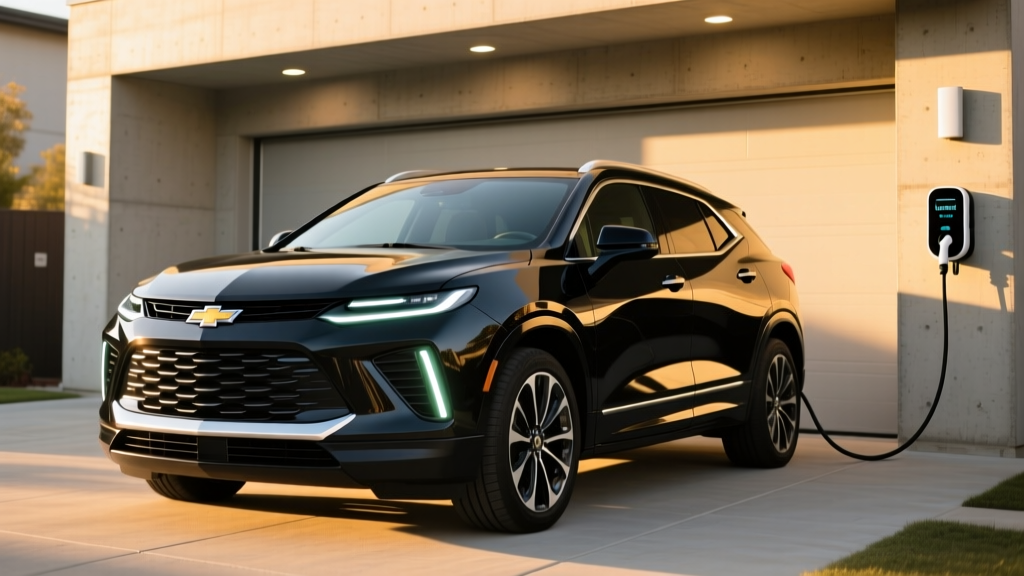
The 2026 Chevrolet Blazer EV enters its second full model year with revised pricing and a clearer picture of its place in the midsize electric SUV segment. For buyers weighing a Chevrolet Blazer EV lease against purchasing outright — or against a gas-powered crossover — the decision comes down to numbers, not marketing. A lease can insulate you from EV depreciation risk, while the federal tax credit, when routed as a point-of-sale reduction, can compress the effective monthly payment significantly.
But the real ownership equation extends beyond the sticker price. Charging costs, insurance premiums, maintenance savings, and residual value all factor into what you actually spend over five years. Below, we run the full calculation using the 2026 Blazer EV 2LT AWD — the volume trim — with concrete figures sourced from the EPA, IRS, and Chevrolet's published specifications.
2026 Chevrolet Blazer EV 2LT AWD: Key Specifications
| Attribute | Value |
|---|---|
| EPA Range | 279 miles (real-world highway: ~240–255 mi; cold weather: ~210–230 mi) |
| Battery (usable) | 102 kWh, NMC chemistry |
| Peak DC Fast Charge | 190 kW (10–80% in ~28 min; tapers sharply above 85%) |
| Level 2 AC Charge | 11.5 kW (adds ~31 mi/hr; full charge in ~9.5 hrs) |
| Horsepower | 288 hp (dual-motor AWD) |
| 0–60 mph | ~5.9 seconds |
| EPA Efficiency | 89 MPGe combined / 38 kWh/100 mi |
| Base MSRP (2LT AWD) | $48,600 (before destination or incentives) |
| Battery/Powertrain Warranty | 8 years / 100,000 miles (≥70% capacity retention) |
Federal Tax Credit: What You Actually Qualify For
The federal EV tax credit under IRS §30D remains the single largest incentive for most EV buyers, but eligibility is far from automatic. As of the 2026 tax year, the credit is worth up to $7,500, split into two $3,750 halves tied to battery-sourcing requirements. Crucially, for leased vehicles, the credit technically flows to the lessor (the leasing company), though most major automakers — including GM — pass it through as a capitalized-cost reduction, effectively lowering your monthly payment.
§30D Eligibility Checklist (2026 Rules)
- MSRP Cap: SUVs, vans, and trucks must have an MSRP ≤ $80,000; sedans ≤ $55,000. The Blazer EV qualifies across all trims.
- Income Limits: Modified AGI must not exceed $300,000 (joint), $225,000 (head of household), or $150,000 (single). Checked against the current or prior tax year.
- Battery Sourcing — Critical Minerals ($3,750): A percentage of critical minerals must be extracted or processed in the U.S. or a free-trade-agreement country, or recycled in North America. Thresholds increase annually.
- Battery Sourcing — Components ($3,750): A percentage of battery components must be manufactured or assembled in North America. Foreign entity of concern (FEOC) restrictions disqualify batteries with Chinese-sourced components above set thresholds.
- Point-of-Sale Transfer: You may elect to transfer the credit to the dealer at purchase, receiving it as an immediate price reduction rather than a tax-time credit. This is allowed for purchases and is effectively mirrored in lease cap-cost reductions.
- Lease Loophole (Commercial Clean Vehicle Credit §45W): Leased EVs may qualify for the full $7,500 via §45W without the same MSRP, income, or sourcing restrictions, as the lessor claims the credit. Most captive lenders pass this through.
For the 2026 Blazer EV 2LT AWD at $48,600, the full $7,500 is typically achievable through a lease, even when purchase-side sourcing rules might reduce the credit. Always verify current sourcing compliance on the IRS qualified vehicles list, as battery supply chains shift throughout the year.
State, Local & Utility Incentives
Beyond the federal credit, many states and utilities offer additional rebates — but these vary dramatically by ZIP code. California's CVRP, Colorado's innovative motor vehicle credit, and various utility off-peak charging rebates can stack between $1,000 and $5,000 on top of federal incentives. Check the AFDC state incentive database for your specific location, and contact your local utility about EV-specific rate plans and charger rebates before signing.
5-Year Total Cost of Ownership: Blazer EV vs. Gas Midsize SUV
To make the Blazer EV lease decision concrete, we compared it against a comparably priced gas midsize SUV (the 2026 Chevrolet Blazer 3LT AWD with the 2.0L turbo, MSRP ~$44,000) over a 5-year, 75,000-mile ownership horizon. All figures assume 15,000 miles/year, a national-average electricity rate of $0.16/kWh, and regular gasoline at $3.40/gallon.
| Cost Category | 2026 Blazer EV 2LT AWD | 2026 Blazer Gas 3LT AWD |
|---|---|---|
| Purchase/Lease Effective Price | $41,100 (after $7,500 credit) | $44,000 |
| Fuel / Charging (75,000 mi) | $4,560 (38 kWh/100 mi × $0.16/kWh) | $10,200 (24 MPG combined × $3.40/gal) |
| Maintenance | $1,800 (cabin filter, tire rotation, wipers, brake fluid) | $4,200 (oil, filters, plugs, belts, brake pads) |
| Insurance (5-yr average) | $11,250 (~$2,250/yr) | $8,750 (~$1,750/yr) |
| Depreciation (est.) | $20,550 (~50% residual) | $19,800 (~55% residual) |
| 5-Year Total | $79,260 | $86,950 |
| Cost Per Mile | $1.06/mi | $1.16/mi |
The Blazer EV comes out approximately $7,690 ahead over five years, or about 10 cents per mile cheaper. The bulk of the savings come from fuel and maintenance, which together save roughly $8,040 — more than offsetting the ~$2,500 insurance premium increase and the modestly steeper depreciation.
Lease-specific note: If you lease rather than buy, depreciation risk transfers to the lessor. A well-structured 36-month Blazer EV lease at $499–$579/month (with $7,500 cap-cost reduction applied) can yield a lower effective monthly outlay than financing, while sidestepping residual-value uncertainty entirely.
Charging vs. Gasoline: The Per-Mile Reality
| Metric | Blazer EV 2LT AWD | Gas Blazer 3LT AWD |
|---|---|---|
| Energy Source | Electricity ($0.16/kWh avg; $0.12 off-peak utility rate) | Regular unleaded ($3.40/gal avg) |
| Consumption | 38 kWh/100 mi (EPA) | 24 MPG combined (EPA) |
| Cost Per Mile (Home Charging / Regular Gas) | $0.061/mi (at $0.16/kWh) | $0.142/mi (at $3.40/gal) |
| Cost Per Mile (Off-Peak Utility Rate) | $0.046/mi (at $0.12/kWh) | $0.142/mi |
| Cost Per Mile (Public DC Fast Charging) | $0.13–$0.19/mi (at $0.35–$0.50/kWh) | $0.142/mi |
| Annual Fuel/Charging (15,000 mi) | $912 (home) to $2,850 (all DCFC) | $2,125 |
The takeaway: home charging is where the economics work decisively. At a national-average residential rate of $0.16/kWh, the Blazer EV costs less than half per mile to fuel compared to its gas counterpart. If your utility offers an off-peak EV rate — common with providers like PG&E, Xcel Energy, and ConEdison — that drops to under five cents per mile. However, if you rely exclusively on public DC fast charging at $0.35–$0.50/kWh, the Blazer EV can actually cost more per mile than the gas Blazer. This is the single most important variable in EV ownership economics: reliable access to Level 2 home charging is non-negotiable for cost savings.
Maintenance: Where EVs Quietly Win Big
| Maintenance Item | Blazer EV | Gas Blazer |
|---|---|---|
| Oil Changes | None — ever | Every 7,500 mi (~$50–$80 each; ~$500 over 75k mi) |
| Transmission Fluid | Single-speed reducer; check at 100k mi | 9-speed auto; flush at 60k mi (~$250) |
| Engine Air Filter | N/A | Every 30k mi (~$40 each) |
| Spark Plugs | N/A | Every 60k mi (~$300) |
| Brake Pads | Rarely needed before 80k+ mi (regen handles ~70% of deceleration) | Front pads typically at 35k–50k mi (~$350/axle) |
| Coolant | Battery thermal loop; check at 150k mi | Every 60k mi (~$150) |
| Cabin Air Filter | Every 20k mi (~$40) | Every 20k mi (~$40) |
| Tire Rotation | Every 7,500 mi (~$30; EV tires wear ~15% faster due to weight/torque) | Every 7,500 mi (~$30) |
| Estimated 5-yr Total | ~$1,800 | ~$4,200 |
The Blazer EV's 102 kWh battery and dual motors have far fewer wear items than a turbocharged gas powertrain. Regenerative braking alone saves most owners $700–$1,000 in brake-pad replacements over five years. The one area where EVs cost slightly more: tires. The Blazer EV's ~5,600 lb curb weight and instant torque accelerate tire wear by roughly 15% compared to the gas Blazer. Budget for a tire replacement around year four if you drive 15,000+ miles annually.
Insurance: The Line Item That Catches Buyers Off Guard
EV insurance premiums typically run 20–35% higher than equivalent gas vehicles. For the Blazer EV, expect to pay approximately $2,100–$2,400 per year for a standard full-coverage policy (liability + comprehensive + collision), compared to roughly $1,650–$1,850 for the gas Blazer.
The reasons are structural, not arbitrary:
- Higher repair costs: Battery packs are expensive to diagnose and replace after collision damage. Even minor rear-end impacts can trigger battery-safety inspections that total the vehicle in borderline cases.
- Specialized labor: High-voltage system repairs require certified EV technicians, who command higher shop rates.
- Parts availability: EV-specific body panels, battery modules, and power electronics can carry longer lead times and higher costs than mass-produced gas-car components.
- Vehicle weight: Heavier vehicles cause more damage to other cars in multi-vehicle accidents, increasing liability exposure.
What to do: Get quotes from at least three insurers before signing a lease. GEICO, Progressive, and State Farm have become more competitive on EV premiums, and some insurers now offer specific EV policies with battery-coverage riders. Bundling home and auto can close the gap to within 10–15% of a gas-vehicle premium.
Depreciation & Resale Value: The Lease Advantage
EV depreciation has been volatile since 2022, when a wave of Tesla price cuts, new model introductions, and shifting consumer sentiment compressed used EV values faster than the broader market. The Blazer EV, as a relatively new nameplate, lacks the long-term residual data of a Model Y or Bolt EV.
Current projections for the midsize electric SUV segment place 5-year residual values at approximately 45–52% of MSRP, compared to 50–58% for comparable gas SUVs. Several factors shape this:
- Battery health uncertainty: Used buyers discount EVs due to unknown battery degradation. GM's 8-year/100,000-mile battery warranty (guaranteeing ≥70% capacity retention) helps, but the uncertainty persists for vehicles outside warranty.
- Technology obsolescence: Newer EVs with faster charging, better range, and updated ADAS features can make 3–4 year-old models feel dated faster than gas cars.
- Tax credit compression: When a new Blazer EV buyer can subtract $7,500 via incentives, the used market must price accordingly — effectively lowering the residual floor.
- Price wars: Aggressive new-vehicle pricing by Tesla, Hyundai, and others has repeatedly reset consumer expectations for what an EV should cost.
This is precisely why leasing can be the smartest financial move for a Blazer EV. A 36-month lease transfers residual risk to GM Financial. If EV values continue to soften, you walk away. If they stabilize or rebound, you can negotiate a purchase at the predetermined residual. Either way, you've locked in your maximum exposure at signing.
Blazer EV Lease: Structuring the Deal
A realistic 2026 Blazer EV 2LT AWD lease, using the $7,500 federal credit as a cap-cost reduction, typically looks like this:
- MSRP: $48,600 + $1,395 destination = $49,995
- Cap-cost reduction: $7,500 (federal credit via lessor) + $2,000 (dealer/customer cash) = $9,500
- Adjusted cap cost: ~$40,495
- Residual (36 months, 36k mi): ~55% = ~$27,500
- Money factor: ~0.00225 (equivalent to ~5.4% APR)
- Estimated monthly payment: ~$510–$560/month (before tax, varies by state)
Compared to financing the same vehicle at 6.5% APR over 60 months with the $7,500 credit applied: ~$645/month. The lease frees up roughly $90–$135 per month in cash flow, at the cost of never building equity in the vehicle — a tradeoff that makes sense given EV depreciation uncertainty.
Frequently Asked Questions
How much does it really cost to own a Chevrolet Blazer EV over 5 years?
Based on our analysis, the 2026 Blazer EV 2LT AWD costs approximately $79,260 over five years and 75,000 miles when accounting for purchase price (after incentives), charging, maintenance, insurance, and depreciation. That works out to roughly $1.06 per mile. For context, the gas-powered Blazer 3LT AWD runs about $86,950 over the same period — a difference of nearly $7,700 in the EV's favor.
Do I qualify for the $7,500 federal EV tax credit on a Blazer EV lease?
Leased EVs typically qualify for the full $7,500 through the commercial clean vehicle credit (§45W), which the leasing company claims and passes to you as a cap-cost reduction. This pathway generally avoids the strict MSRP caps, income limits, and battery-sourcing requirements that apply to direct purchases under §30D. However, lessor policies vary, so confirm with your dealer that the credit is being applied to your lease terms. Rules can change — verify current regulations at IRS.gov.
How much do I save on fuel and maintenance with the Blazer EV?
Charging at home at the national average of $0.16/kWh, you'll spend roughly $912 per year on electricity for 15,000 miles — compared to about $2,125 for gasoline in the gas Blazer. That's a fuel savings of ~$1,213 per year, or ~$6,065 over five years. Maintenance savings add another ~$2,400 over the same period, primarily from eliminating oil changes, spark plugs, and most brake-pad replacements. Combined: approximately $8,465 in operational savings over five years.
Are EVs more expensive to insure than gas cars?
Yes, typically by 20–35%. For the Blazer EV, expect annual premiums of $2,100–$2,400 versus $1,650–$1,850 for the gas Blazer. The gap stems from higher repair costs (especially battery-related), specialized labor requirements, and greater vehicle weight. Shop multiple insurers and ask about EV-specific policies — the gap has been narrowing as EV adoption increases and claims data matures.
How well does the Chevrolet Blazer EV hold its value?
Midsize electric SUVs currently retain approximately 45–52% of MSRP after five years, somewhat below the 50–58% typical of gas counterparts. Battery health uncertainty, rapid technology advancement, and new-vehicle incentive compression all pressure EV residuals. This depreciation uncertainty is a primary reason leasing is attractive for the Blazer EV — it caps your downside risk and lets you reassess at lease-end.
Is home charging necessary to make the Blazer EV affordable?
For cost savings, yes. At residential rates ($0.12–$0.16/kWh), home Level 2 charging costs $0.05–$0.06 per mile — less than half the cost of gasoline. Public DC fast charging at $0.35–$0.50/kWh pushes costs to $0.13–$0.19 per mile, which can exceed the gas Blazer's $0.14/mile. If you cannot install a Level 2 charger at home, the financial case for the Blazer EV weakens considerably, though convenience and environmental motivations may still justify the choice.
What happens if the battery degrades during my lease?
You are protected. GM's battery warranty covers 8 years and 100,000 miles against capacity loss below 70%. During a typical 36-month lease, you'll accumulate roughly 36,000 miles — well within warranty coverage. NMC batteries in modern thermal-managed packs like the Blazer EV's typically lose only 5–8% capacity over the first three years under normal use. If degradation exceeds warranty thresholds, GM replaces or repairs the battery at no cost, and as a lessee, this is the lessor's concern, not yours.