The Quick Answer
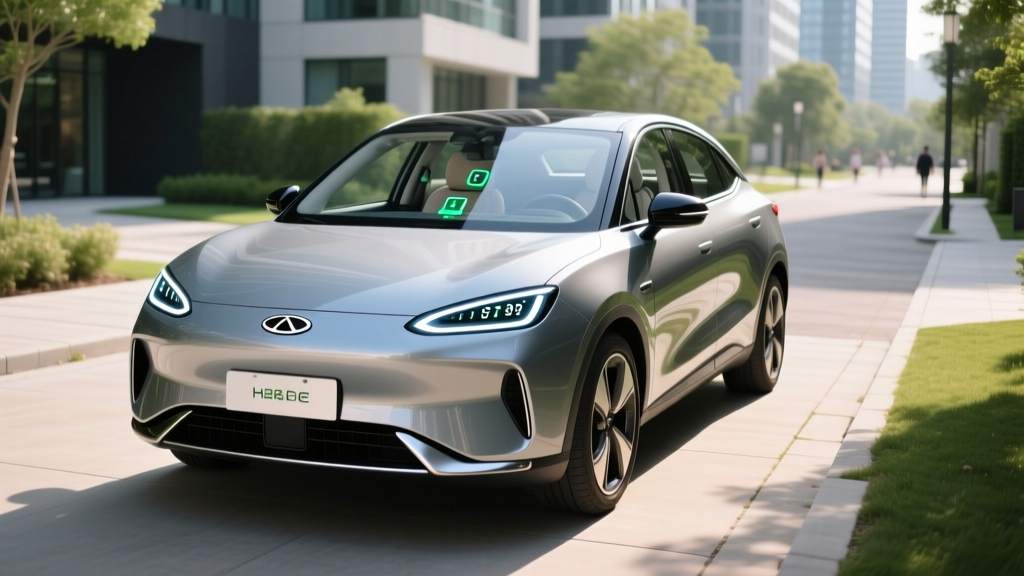
The Chery Electric Breeze 1 (also known as the QQ Ice Cream EV in some markets) is a compact, ultra-affordable battery-electric city car aimed at emerging markets and budget-conscious urban commuters. For the 2026 model year, the Breeze 1 offers an estimated 125–185 miles of range (depending on battery pack size) from a ~10–17 kWh LFP battery, with pricing starting around $15,000–$22,000 USD equivalent in markets where it's sold. It is not currently available in the United States, and US buyers should not expect it to qualify for the federal §30D tax credit. This guide covers what the Breeze 1 offers, how it compares to gas and hybrid alternatives, and what real EV ownership costs look like for budget EVs in this class.
What Is the Chery Electric Breeze 1?
The Electric Breeze 1 is Chery Automobile's entry into the micro-EV segment — a category dominated in China by the Wuling Hongguang Mini EV and increasingly popular across Southeast Asia, Latin America, and parts of Europe. Chery positions the Breeze 1 as a step up from bare-bones micro-EVs, offering a slightly larger footprint, more conventional styling, and available fast-charging capability that many competitors in the sub-$20K segment lack.
For 2026, Chery has expanded the Breeze 1 lineup with multiple battery options and a refreshed interior with a larger infotainment screen. The vehicle seats four (tightly) and targets daily urban commutes of 20–40 miles round-trip, with enough buffer for errands and occasional longer drives.
Key point for US readers: Chery does not sell vehicles in the United States as of 2026. The Breeze 1 is available in select Asian, Middle Eastern, and Latin American markets. If you're researching this vehicle, you're likely in one of these regions or considering an import. Pricing and incentives discussed below reflect international markets; US-specific tax credits do not apply.
Electric Breeze 1 Specs: Range, Battery, and Charging
Understanding the Breeze 1's capabilities requires separating the energy capacity of its battery (measured in kilowatt-hours, or kWh — think of it as the size of the fuel tank) from the charging power it can accept (measured in kilowatts, or kW — the speed of refueling). These two numbers are frequently confused but critical to evaluate.
| Spec | Standard Range | Extended Range |
|---|---|---|
| Battery Capacity (usable) | ~10 kWh | ~17 kWh |
| Battery Chemistry | LFP (Lithium Iron Phosphate) | LFP |
| Claimed Range (CLTC/NEDC) | ~155 mi (250 km) | ~215 mi (345 km) |
| Estimated Real-World Range | ~100–125 mi | ~145–185 mi |
| Motor Output | ~30 kW (40 hp) | ~45 kW (60 hp) |
| 0–50 km/h (0–31 mph) | ~6.5 sec | ~5.0 sec |
| Top Speed | ~62 mph (100 km/h) | ~75 mph (120 km/h) |
| AC Charging (Level 2) | 3.3 kW (~7 hrs 0–100%) | 6.6 kW (~3 hrs 0–100%) |
| DC Fast Charging | Not available | ~30 kW peak (30–80% in ~35 min) |
| Estimated MSRP (Intl.) | ~$15,000 USD equiv. | ~$22,000 USD equiv. |
| Battery Warranty | 8 years / 100,000 mi (typical Chery) | |
Real-World Range vs. Sticker Numbers
The Breeze 1's published range figures use the CLTC (China Light-Duty Vehicle Test Cycle), which is known to be optimistic compared to the US EPA standard or real-world driving. Expect a 20–35% reduction from CLTC figures in mixed driving. In cold weather (below 40°F / 4°C), LFP batteries experience more pronounced range loss than NMC chemistry — plan for 30–40% less range in winter conditions without a heat pump (which the Breeze 1 does not appear to include at base trims).
EV vs Gas vs Hybrid: What Actually Saves You Money?
The Breeze 1's appeal rests on its rock-bottom purchase price and minimal running costs. But how does it stack up against a comparable gas-powered city car or a hybrid? Let's compare the Breeze 1 Extended Range against two benchmarks: a fuel-efficient gasoline hatchback (think Toyota Yaris-class) and a compact hybrid (think Toyota Prius-class).
| Cost Factor | Breeze 1 Ext. Range (EV) | Gas Hatchback (35 MPG) | Compact Hybrid (55 MPG) |
|---|---|---|---|
| Purchase Price | $22,000 | $18,000 | $28,000 |
| Fuel / Electricity (60K mi) | $1,500 (home charging) | $5,830 ($3.40/gal) | $3,710 ($3.40/gal) |
| Maintenance (60K mi) | $450 | $2,800 | $2,400 |
| Insurance (est. 5 yr) | $4,500 | $3,800 | $4,200 |
| Depreciation (est.) | $11,000 | $7,200 | $9,800 |
| Total 5-Year Cost | $39,450 | $37,630 | $48,110 |
What this table reveals: The Breeze 1's fuel and maintenance savings are substantial — you'll spend roughly $1,500 on electricity vs. $5,830 on gasoline over 60,000 miles when charging at home. That's a $4,330 fuel savings alone. Maintenance is minimal: no oil changes, no spark plugs, no transmission fluid, and regenerative braking extends brake pad life significantly.
However, depreciation is the wildcard. Budget Chinese-market EVs from lesser-known brands tend to lose value faster than established gas cars or Toyota hybrids. The Breeze 1 may shed 50% or more of its value in five years, which erodes its running-cost advantage. This is the single biggest financial risk of buying a budget EV from a brand without strong local resale value.
Real-World Ownership: What First-Time EV Buyers Must Know
If you're considering the Breeze 1 or any budget EV, these practical factors will determine whether the experience is genuinely convenient or frustrating:
Home Charging Is Non-Negotiable for Budget EVs
The Breeze 1's Standard Range trim lacks DC fast charging entirely, and even the Extended Range's ~30 kW peak charge rate is modest by 2026 standards (mainstream EVs like the Hyundai Ioniq 5 accept 240+ kW). This means public fast-charging sessions will take 35+ minutes for a partial charge and may not be worth the detour.
The practical solution is Level 2 home charging. At 6.6 kW (Extended Range), a full charge takes roughly 3 hours — easily done overnight. If you're limited to a standard 120V outlet (Level 1, ~1.4 kW), expect 10–14 hours for a full charge, which works if your daily driving is under 40 miles but leaves no margin for heavier use.
If you cannot charge at home or at work, the Breeze 1 — especially the Standard Range model — becomes impractical. Public charging infrastructure for non-Tesla, non-CCS vehicles is limited in most markets, and the time cost of slow charging adds up quickly.
Climate Matters More Than You Think
LFP battery chemistry, used in the Breeze 1, offers excellent longevity and safety (lower thermal runaway risk than NMC) but suffers more in cold temperatures. If you live in a climate with sustained sub-40°F winters:
- Expect 30–40% range reduction without a heat pump
- Charging speeds slow significantly when the battery is cold
- The Breeze 1's already modest 145–185 mile range could drop to 90–120 miles in winter
For tropical and temperate climates (most of the Breeze 1's target markets), this is a non-issue. But buyers in regions with real winters should strongly consider a vehicle with a heat pump and battery preconditioning — features typically found in EVs priced $10,000+ higher.
Driving Patterns: The Breeze 1 Is a City Car, Period
With a top speed of 62–75 mph and motor output of 40–60 hp, the Breeze 1 is designed for urban streets and suburban arterials, not highway merging or mountain passes. If your commute involves sustained 70+ mph highway driving, steep grades, or regular passenger/cargo loads, you'll quickly find the Breeze 1 underpowered and range-starved.
Common EV Misconceptions — Fact-Checked
| Myth | Fact |
|---|---|
| "EV batteries need replacing every few years" | Modern LFP batteries like the Breeze 1's are rated for 2,000–3,000+ charge cycles before reaching 80% capacity. At one cycle per day, that's 5.5–8+ years of daily use. Chery's 8-year/100,000-mile battery warranty covers premature degradation below a threshold (typically 70% state of health). |
| "Charging an EV costs as much as gas" | At the US average electricity rate of ~$0.17/kWh (EIA data), charging a 17 kWh Breeze 1 from empty costs about $2.89 for ~145 miles of range — roughly $0.02 per mile. A 35 MPG gas car at $3.40/gallon costs $0.097/mile — nearly 5x more. |
| "All EVs qualify for the $7,500 tax credit" | The US federal §30D credit (IRS rules) requires vehicles to meet battery sourcing, critical minerals, MSRP caps, and buyer income limits. The Breeze 1 is not sold in the US and would not qualify regardless. Always verify eligibility on fueleconomy.gov before assuming credit availability. |
| "EVs are more expensive to insure" | Sometimes true, sometimes not. EV insurance premiums average 10–20% higher than comparable gas cars due to higher repair costs for battery damage. But for a $22,000 budget EV, premiums may actually be lower than a $35,000 gas car simply due to lower vehicle value. |
| "You can't take an EV on a road trip" | True for the Breeze 1 specifically — its slow charging and modest range make road trips painful. But this is a segment limitation, not an EV limitation. EVs with 250+ mile range and 150+ kW DC fast charging handle road trips with 20-minute charging stops every 2–3 hours. |
Cost Breakdown: Purchase, Charging, Maintenance, and Insurance
Let's break down the Breeze 1's total ownership costs over 5 years with concrete numbers, assuming 12,000 miles/year and home charging at $0.17/kWh:
| Category | Annual Cost | 5-Year Total | Notes |
|---|---|---|---|
| Purchase Price | — | $22,000 | No US incentives available |
| Electricity (home) | $282 | $1,410 | ~250 Wh/mi × 12,000 mi ÷ $0.17/kWh |
| Maintenance | $90 | $450 | Cabin filter, tire rotation, wiper fluid |
| Insurance | $900 | $4,500 | Est.; varies by market and driver profile |
| Tires (replacement at ~40K mi) | — | $400 | One set of budget replacement tires |
| Registration / Taxes | $150 | $750 | Varies widely by jurisdiction |
| Depreciation | — | $11,000 | Est. 50% residual at 5 years (budget EV risk) |
| Total | $40,510 |
For comparison, a gas hatchback at 35 MPG over the same period and mileage would cost approximately $37,630 total (including $5,830 in fuel and $2,800 in maintenance). The Breeze 1's fuel and maintenance savings of ~$6,770 are largely offset by higher depreciation of ~$3,800.
The break-even point depends heavily on your local electricity vs. gasoline prices, how long you keep the vehicle, and whether the brand establishes strong resale value in your market.
Decision Framework: Should You Buy the Electric Breeze 1?
Choose the Electric Breeze 1 If:
- You live in an urban area with daily commutes under 40 miles round-trip
- You have reliable home or workplace charging (Level 2 strongly preferred)
- Your climate is mild — tropical, subtropical, or temperate with rare freezing temperatures
- Budget is the top priority and you want the lowest possible purchase price for a new EV
- This is a second car — a city runabout alongside a longer-range vehicle for road trips
- You plan to keep the car 7+ years, minimizing the impact of steep depreciation
Choose a Gas Car or Hybrid Instead If:
- You cannot charge at home or work — the Breeze 1's slow charging makes public-only charging impractical
- Your commute includes highways with sustained 65+ mph speeds — the Breeze 1 is underpowered for this
- You experience real winters with regular sub-freezing temperatures — range loss will be severe
- You regularly carry 3–4 passengers or cargo — the Breeze 1 is cramped and low-powered when loaded
- You plan to sell within 3–4 years — depreciation will erase your fuel savings
- You need road-trip capability — consider a PHEV (plug-in hybrid) for electric commuting plus gas range, or a mainstream EV with 250+ mile range and 100+ kW DC fast charging
Frequently Asked Questions
Can I buy the Chery Electric Breeze 1 in the United States?
No. As of 2026, Chery does not have a US dealer network or sell vehicles in the American market. The Breeze 1 is available in select Asian, Middle Eastern, and Latin American markets. Importing one to the US would face significant regulatory hurdles (NHTSA compliance, EPA certification) and is not practical for individual buyers.
How long does the LFP battery last before needing replacement?
LFP batteries are among the longest-lasting lithium-ion chemistries available, typically rated for 2,000–3,500 full charge cycles before degrading to 80% of original capacity. At one full cycle per day, that translates to 5.5 to 9.5 years before you'd notice meaningful range reduction — and the battery doesn't suddenly fail at that point; it simply holds less energy. Chery's 8-year/100,000-mile battery warranty provides a safety net. Full battery replacement for a pack this size would likely cost $3,000–$5,000 USD equivalent, though pricing varies by market and is expected to decline as LFP cell costs continue dropping.
Is the Breeze 1 safe? Does it have crash-test ratings?
Budget micro-EVs in this segment typically have minimal crash-test data from major bodies like NHTSA, IIHS, or Euro NCAP. The Breeze 1's lightweight construction (estimated ~1,800–2,200 lbs curb weight) puts it at a physics disadvantage in collisions with larger vehicles. It likely includes basic airbags and ABS but should not be expected to match the safety performance of a mainstream compact car. If safety is a top priority, consider a larger, crash-tested EV or hybrid.
What's the difference between kW and kWh, and why does it matter?
kWh (kilowatt-hour) measures energy capacity — how much electricity the battery stores. The Breeze 1's ~17 kWh battery is like a 2.5-gallon gas tank. kW (kilowatt) measures power — how fast energy flows. The Breeze 1's ~30 kW DC charging rate means it can accept 30 kWh of energy per hour (though charging slows as the battery fills). Confusing these leads to bad expectations: a "30 kW charger" doesn't give you 30 kWh in an hour if your car can't accept that rate, and a 17 kWh battery doesn't give you 17 kW of power.
How does the Breeze 1 compare to a used EV like a Nissan Leaf or Chevy Bolt?
In markets where both are available, a used 2022–2024 Nissan Leaf (40–62 kWh, 149–226 mi EPA range) or Chevy Bolt EV (65 kWh, 259 mi EPA range) offers significantly more range, faster charging, more power, better safety ratings, and established parts/service networks — often for $15,000–$22,000. The Breeze 1's only advantage is being new with a full warranty. If you're comfortable buying used, a 2–4 year-old Leaf or Bolt is generally the stronger value proposition for most buyers.
Does the Breeze 1 support regenerative braking and one-pedal driving?
Yes, the Breeze 1 includes regenerative braking, which recaptures kinetic energy during deceleration and feeds it back into the battery. Some trims offer adjustable regen levels, though true one-pedal driving (where the car comes to a complete stop using regen alone) may not be available on all configurations. Regen is particularly valuable in stop-and-go city traffic, where it can recover 15–25% of energy that would otherwise be lost to friction brakes.