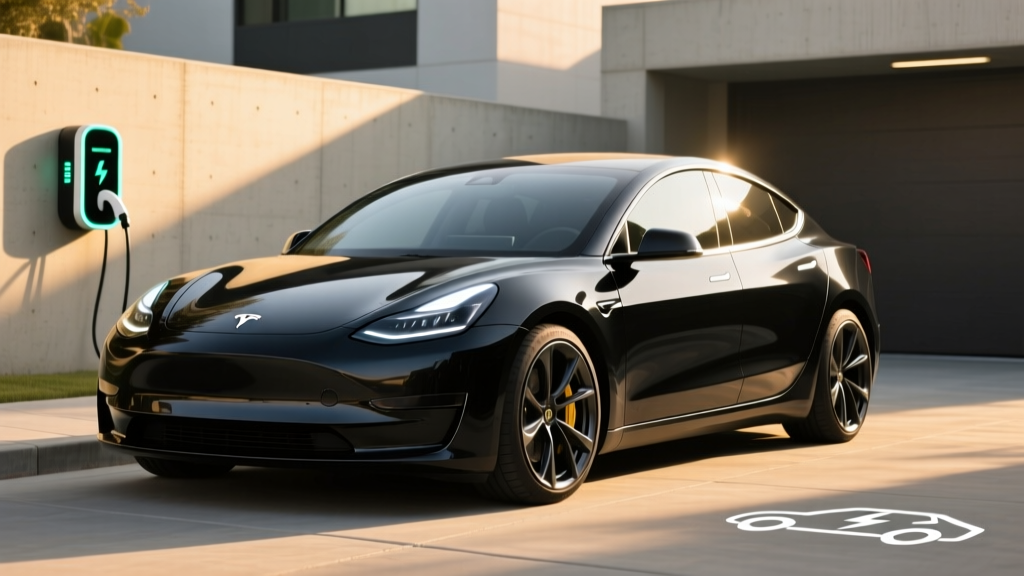
Quick Verdict: The Tesla Model 3 Rear-Wheel Drive Is Still the Entry Point
If you're asking which is the cheapest Tesla you can buy new in 2026, the answer is the Tesla Model 3 Rear-Wheel Drive (RWD). Starting at $38,990 (including destination), the base Model 3 undercuts the next-cheapest option — the Model Y Long Range AWD — by roughly $8,000. But "cheapest" doesn't mean stripped-down. The RWD Model 3 packs a 272-mile EPA range, a 170 kW DC fast-charge peak, Tesla's full software suite, and eligibility for the $7,500 federal EV tax credit for qualifying buyers. It's the most accessible gateway into the Supercharger network and remains one of the most efficient sedans on the market.
Here's everything you need to know before buying, including real-world range, charging logistics, tax-credit math, and how it stacks up against the Hyundai Ioniq 6 and Chevrolet Equinox EV.
2026 Tesla Model 3 RWD: Full Spec Sheet
| Spec | Value |
|---|---|
| Base MSRP (incl. destination) | $38,990 |
| EPA Range | 272 miles |
| Usable Battery Capacity | ~57.5 kWh (LFP chemistry) |
| Drivetrain | Rear-Wheel Drive (single motor) |
| Horsepower | 271 hp |
| 0–60 mph | 5.8 seconds |
| Top Speed | 125 mph |
| Max DC Fast-Charge Rate | 170 kW |
| 10–80% DC Fast Charge | ~25 minutes |
| Level 2 Home Charge Rate | 11.5 kW (~44 mi/hr) |
| EPA Efficiency | 132 MPGe combined (25 kWh/100 mi) |
| Cargo Volume | 23 cu ft (trunk + frunk) |
| Seating | 5 passengers |
| Battery Warranty | 8 years / 100,000 miles (70% retention) |
| Basic Vehicle Warranty | 4 years / 50,000 miles |
Range & Efficiency: EPA vs. the Real World
EPA Estimated: 272 miles
Real-World Highway (70–75 mph, moderate weather): ~240–255 miles
Real-World Highway (freezing temps, 30°F or below): ~200–220 miles
City/Commuter (stop-and-go with regen): ~270–285 miles
The Model 3 RWD uses a lithium iron phosphate (LFP) battery — a chemistry that trades some energy density for longer cycle life, lower cost, and greater thermal stability. LFP cells tolerate frequent charging to 100% better than NMC batteries, which is a genuine advantage for daily commuters who want to maximize available range every morning. Tesla actually recommends periodic 100% charges for LFP packs to help the battery management system recalibrate cell voltage estimates.
Efficiency is where the Model 3 shines. At 25 kWh per 100 miles (combined), it sips electrons compared to most competitors. The Hyundai Ioniq 6 SE RWD achieves a slightly better 24 kWh/100 mi, but the Model 3's efficiency remains excellent for a sedan with this much performance. On the highway, expect consumption to rise to roughly 28–30 kWh/100 mi at sustained 75 mph speeds — that's where the 240–255 mile real-world estimate comes from. In winter, the lack of a heat pump in some earlier builds (2024+ Highland models include one) means cold-weather range loss can hit 20–25%, particularly on short trips where the cabin and battery must heat from cold.
For context on how the EPA calculates range and what the combined cycle means, see EPA test procedures on fueleconomy.gov.
Charging: Speeds, Connectors, and the Supercharger Advantage
| Charging Level | Power (kW) | Miles Added per Hour | Notes |
|---|---|---|---|
| Level 1 (120V outlet) | ~1.4 kW | ~5 mi/hr | Emergency/trickle only |
| Level 2 (240V, 48A) | 11.5 kW | ~44 mi/hr | Full charge in ~5.5 hours |
| DC Fast Charge (peak) | 170 kW | ~650 mi/hr (at peak) | 10–80% in ~25 min |
kW vs. kWh refresher: kW (kilowatts) measures charging power — how fast energy flows into the battery. kWh (kilowatt-hours) measures battery capacity — how much energy it stores. Think of kW as the width of the hose and kWh as the size of the tank.
The Model 3 RWD's 170 kW peak DC charge rate is respectable but not class-leading. The Hyundai Ioniq 6 peaks at 240 kW on an 800V architecture, and the Chevrolet Equinox EV hits around 190 kW. However, Tesla's charging curve is well-managed: the car sustains near-peak rates through roughly 50% state of charge before tapering gradually. You'll see 10–80% in approximately 25 minutes at a V3 Supercharger (250 kW capable) or a comparable third-party CCS/NACS station.
The real differentiator is network access. The Tesla Supercharger network includes over 25,000 stalls in North America, and reliability consistently outpaces Electrify America, EVgo, and ChargePoint in third-party uptime surveys. Since 2025, non-Tesla EVs have gained broader Supercharger access via NACS adapters, but Tesla owners still enjoy the most seamless plug-and-charge experience — no fumbling with payment apps or RFID cards.
For home charging, a Tesla Wall Connector on a 60A circuit delivers the full 48A / 11.5 kW the car can accept. That's roughly 44 miles of range per hour of charging — enough to replenish a full day's driving in 2–3 hours. Budget $500–$800 for the Wall Connector hardware and $800–$2,000 for professional installation by a licensed electrician, depending on your panel capacity and run length.
Performance, Handling, and Daily Drivability
With 271 horsepower and 5.8 seconds to 60 mph, the RWD Model 3 is genuinely quick for a base-trim sedan. The single rear motor delivers instant torque with no turbo lag or shift hesitation. It's not the 3.1-second thrill ride of the Model 3 Performance, but it's faster than most gas-powered Camrys and Accents off the line.
The 2024-refreshed "Highland" chassis carries into 2026 with a quieter cabin (acoustic glass front and rear), retuned suspension for better ride compliance, and ventilated front seats. The steering is precise and communicative by EV standards, and the low center of gravity keeps body roll minimal through corners. Regenerative braking remains strong enough for one-pedal driving in most scenarios, though Tesla removed the low-regen option in recent software updates.
Where the RWD model shows its limitations: there's no all-wheel-drive option at this trim (you'd need to step up to the Long Range AWD for $46,990), and towing is not rated. This is a commuter and road-trip sedan, not a hauler.
Interior, Cargo, and Tech
The Model 3's interior remains polarizing. There is no instrument cluster — all information routes through the 15.4-inch center touchscreen. Speed, range, and navigation directions appear in a compact readout at the top-left of the display. The 2024+ Highland refresh added rear-seat ventilation controls on a small 8-inch rear touchscreen, ambient lighting, and improved materials.
Cargo: 23 cubic feet total (19.8 cu ft trunk + 3.1 cu ft frunk). That's competitive with the BMW 3 Series and significantly more than many gas sedans thanks to the frunk. Rear seats fold 60/40 for longer items.
Passenger space: Front legroom is generous at 42.3 inches; rear legroom measures 35.2 inches — adequate for adults on moderate trips but tighter than a Hyundai Sonata or Toyota Camry.
Tech highlights:
- Tesla Autopilot (SAE Level 2) — adaptive cruise + lane centering, standard
- Full Self-Driving (Supervised) — $8,000 option, still requires active driver engagement
- Over-the-air software updates that add features post-purchase
- Dashcam and Sentry Mode (surveillance recording while parked)
- Native Spotify, Netflix, YouTube, and gaming on the center display
- Phone-as-key with Bluetooth LE
Tesla Autopilot and FSD (Supervised) are SAE Level 2 driver-assistance systems. You must keep your hands on the wheel and eyes on the road at all times. These are not self-driving systems. True driverless operation (SAE Level 4) is currently limited to geofenced robotaxi services like Waymo in select cities.
Pricing, Trims, and Federal Tax Credit Eligibility
| Trim | MSRP | Est. Price After $7,500 Credit* |
|---|---|---|
| Rear-Wheel Drive | $38,990 | $31,490 |
| Long Range AWD | $46,990 | $39,490 |
| Performance AWD | $54,990 | $47,490 |
*Federal tax credit estimates assume buyer eligibility. See rules below.
The base Model 3 RWD at $38,990 is the answer to "which is the cheapest Tesla," and it qualifies for the full $7,500 federal EV tax credit under IRS §30D — assuming you meet all requirements. As of 2026, the key eligibility criteria include:
- Income caps: Modified AGI ≤ $150,000 (single), $225,000 (head of household), $300,000 (married filing jointly)
- MSRP cap: Sedans must be ≤ $55,000 (all Model 3 trims qualify)
- Battery sourcing: Critical minerals and battery components must meet phased-in domestic/free-trade-agreement sourcing thresholds that tighten annually
- Point-of-sale transfer: Since 2024, you can transfer the credit to the dealer at purchase, reducing your out-of-pocket cost immediately rather than waiting for tax filing
The battery-sourcing requirements are the moving target. Tesla has worked to onshore supply chains, and the Model 3 RWD (with its LFP battery) has maintained $7,500 credit eligibility through early 2026. However, IRS sourcing rules tighten periodically — always verify current eligibility on the IRS qualified vehicles list before purchasing.
Also note: if you owe less than $7,500 in federal income tax, the credit is non-refundable (you can't get back more than you owe). The point-of-sale transfer option effectively circumvents this for most buyers, as the dealer applies it as a down-payment reduction.
How It Compares: Model 3 RWD vs. Key Competitors
| Spec | Tesla Model 3 RWD | Hyundai Ioniq 6 SE RWD | Chevy Equinox EV LT (FWD) |
|---|---|---|---|
| Price | $38,990 | $39,950 | $34,900 |
| EPA Range | 272 mi | 305 mi | 319 mi |
| Battery (kWh) | ~57.5 (LFP) | 77.4 (NMC) | 85 (NMC) |
| Max DC Charge | 170 kW | 240 kW | |
| 10–80% Time | ~25 min | ~18 min | ~32 min |
| 0–60 mph | 5.8 sec | 6.9 sec | 7.9 sec |
| EPA Efficiency | 132 MPGe | 140 MPGe | 117 MPGe |
| Charging Network | Supercharger (native NACS) | CCS (NACS adapter avail.) | CCS (NACS adapter avail.) |
The Hyundai Ioniq 6 beats the Model 3 on range (305 mi) and charging speed (240 kW, 10–80% in ~18 minutes), making it the better road-trip EV. The Chevrolet Equinox EV undercuts on price and offers more range, though it's a crossover with slower charging and a less refined driving experience.
The Model 3's advantages are performance (quickest of the three), the Supercharger network (still the gold standard for reliability), software integration, and over-the-air updates that keep the car current. If you charge primarily at home and take road trips 3–4 times a year, the Model 3 RWD is an outstanding all-around value. If you road-trip monthly and want the fastest charging, the Ioniq 6 is worth a serious look.
Pros, Cons, and Who Should Buy
- Lowest entry price into Tesla's ecosystem
- 272 mi EPA range is ample for most commutes
- Supercharger network access (best-in-class reliability)
- LFP battery tolerates daily 100% charging
- 132 MPGe efficiency keeps charging costs low
- Strong OTA update track record
- Excellent safety ratings (IIHS Top Safety Pick+)
- No instrument cluster — all info on center screen
- Rear legroom tighter than midsize sedans
- 170 kW peak charge rate trails Ioniq 6 / Ioniq 5
- Minimal physical controls (turn signals on stalk, but wiper/hazard on screen)
- FSD option is expensive ($8,000) and still Level 2
- No AWD or towing at this trim
- LFP battery loses more range in extreme cold vs. NMC
Who the Model 3 RWD is best for:
- Commuters driving 30–80 miles round-trip who can charge at home overnight
- Tech-forward buyers who value OTA updates, app integration, and minimalist design
- First-time EV buyers who want the simplest path into electric ownership (Supercharger network removes public-charging friction)
- Cost-conscious shoppers who want a premium-badge EV near $31,000 after the federal credit
Who should look elsewhere:
- Families needing spacious rear seats and easy child-seat access (consider the Model Y)
- Frequent road-trippers who want maximum range and fastest charging (Ioniq 6 or Model 3 Long Range)
- Cold-climate drivers in areas with limited charging infrastructure (LFP cold-weather loss is real; AWD may be needed)
Frequently Asked Questions
What is the real-world range of the cheapest Tesla Model 3?
The EPA rates the 2026 Model 3 RWD at 272 miles. In real-world highway driving at 70–75 mph in moderate temperatures, expect 240–255 miles. In freezing weather (below 30°F), that drops to roughly 200–220 miles due to cabin heating demands and reduced battery efficiency. City driving with regenerative braking can push range slightly above the EPA estimate, to around 275–285 miles.
How fast does the Model 3 RWD charge at home and on the road?
On a Level 2 home charger (240V, 48A), the Model 3 RWD charges at 11.5 kW, adding about 44 miles of range per hour. A full 0–100% charge takes roughly 5.5 hours. On a DC fast charger, it peaks at 170 kW and charges from 10–80% in about 25 minutes at a Tesla V3 Supercharger or equivalent NACS station.
Does the Tesla Model 3 RWD qualify for the $7,500 federal tax credit?
Yes — as of early 2026, the Model 3 RWD qualifies for the full $7,500 federal EV tax credit under IRS §30D, provided you meet income caps (≤$150K single / ≤$300K joint), the MSRP is under $55,000 (it is, at $38,990), and the battery meets current-year critical-mineral and component sourcing requirements. You can apply the credit at the point of sale as a down-payment reduction. Always verify on the fueleconomy.gov tax credit page before purchasing, as sourcing rules update periodically.
Is the Model 3 RWD worth buying over the Model Y or competitors?
If you don't need crossover cargo space or AWD, the Model 3 RWD is the better value. It's cheaper, more efficient (132 vs. ~120 MPGe), and quicker than the Model Y. Against the Hyundai Ioniq 6, the choice hinges on priorities: the Ioniq 6 charges faster and goes farther, but the Model 3 has the superior charging network and stronger software ecosystem. For most home-charging commuters, the Model 3 RWD at ~$31,500 after the credit is difficult to beat.
How long will the LFP battery last?
Tesla warranties the Model 3 RWD battery for 8 years or 100,000 miles, guaranteeing at least 70% capacity retention. LFP chemistry is known for excellent longevity — many industry analyses suggest LFP packs can endure 3,000+ full charge cycles before significant degradation, which translates to well over 200,000 miles in typical use. Real-world data from high-mileage Teslas shows 10–15% degradation at 100,000 miles, which is consistent with the warranty threshold.
What does the cheapest Tesla cost after incentives?
The 2026 Model 3 RWD starts at $38,990. After the $7,500 federal tax credit (if eligible), the effective price drops to approximately $31,490. Some states offer additional rebates — California's Clean Fuel Rebate has been $0–$1,000 in recent years, and Colorado offers up to $5,000 in state tax credits. Check your state's energy office for current programs. Total out-of-pocket cost varies by jurisdiction and individual tax situation — consult a tax professional for personalized guidance.